At Montecampione, ownership of the destination’s two main hospitality assets has now been consolidated under a single investor. At 1,800 metres, the redevelopment of the Le Baite complex is progressing, while several options remain open for Hotel 1200 — from an outright sale to third-party management — with a potential return to operations around 2027-2028. But the real investment is not simply about two properties. It is about synchronising commercially available beds, ski infrastructure, demand and management. Because in a mountain destination there is one risk capable of destroying value even when each individual project makes sense: having the hotels ready before the lifts, or having the lifts ready without sufficient rotating accommodation capacity. The equation is straightforward: Beds Ready Before Lifts = Cash Burn. Lifts Ready Before Beds = Lost Destination Revenue. Beds + Lifts + Demand Ready Together = Value Creation.
In the hotel investment market, there are turnarounds where value can largely be rebuilt within the boundaries of the hotel itself.
Rooms.
F&B.
Management.
Revenue.
CAPEX.
Montecampione is different.
Here, the equation is:
Hospitality
Ski Infrastructure
Destination Services
Demand Generation.
If one of these components fails, the others lose value as well.
Single Ownership Changes the Governance Equation
Consolidating ownership of the assets at 1,200 and 1,800 metres under a single investor is strategically significant.
It can make it easier to:
set priorities;
allocate CAPEX;
select operators;
coordinate timelines;
negotiate potential disposals;
avoid conflicting strategies.
This reduces:
Shareholder Coordination Risk.
But it creates a greater responsibility:
Portfolio Coordination.
Having one decision-maker does not guarantee a good project.
It does, however, make it easier to build one coherent strategy.
The Scale of the Opportunity Is Significant
Historically, the two assets included:
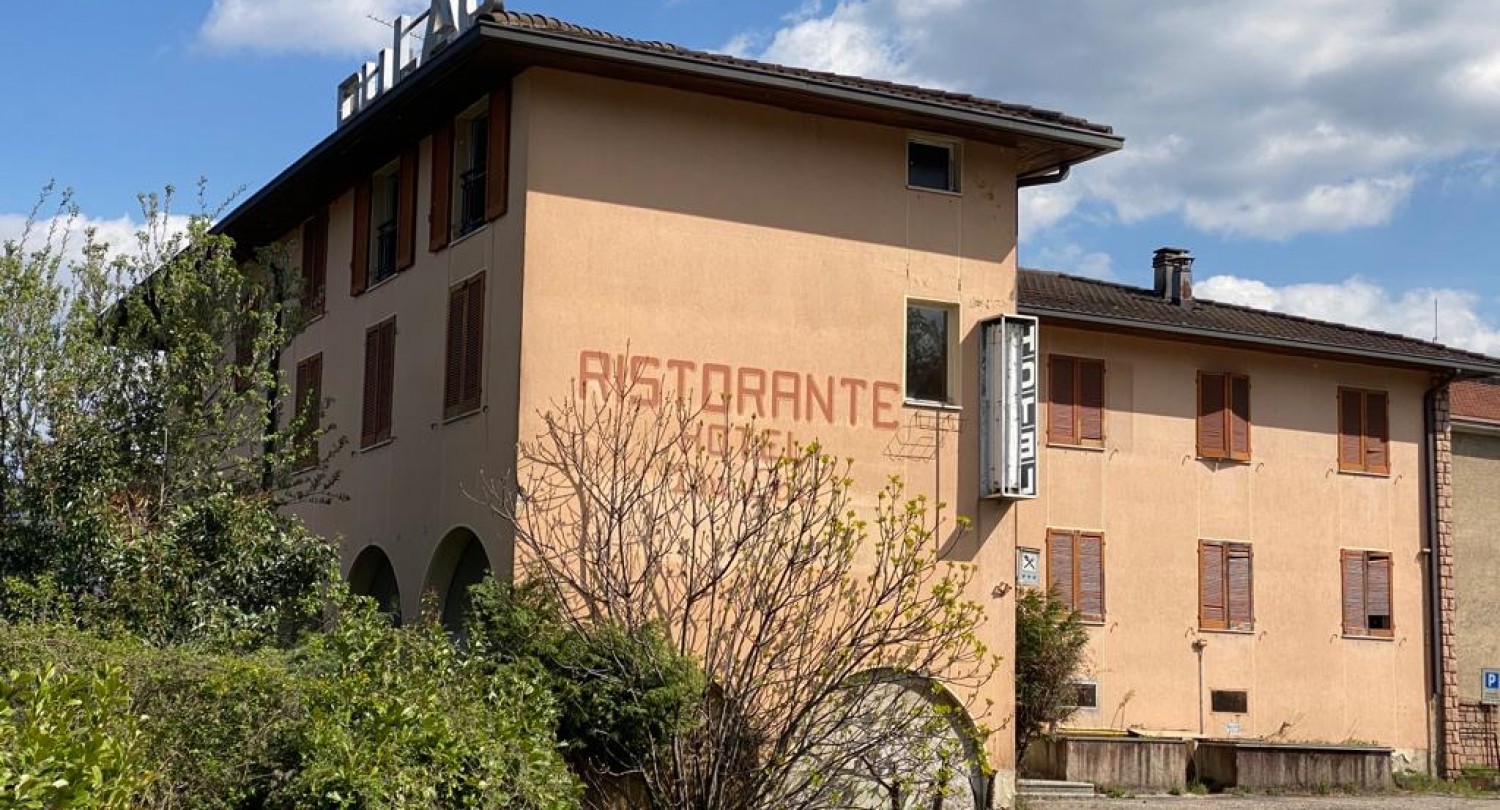
At 1,200 Metres
approximately 10,000 sqm;
140 rooms;
kitchen;
restaurant;
nightclub;
swimming pool.
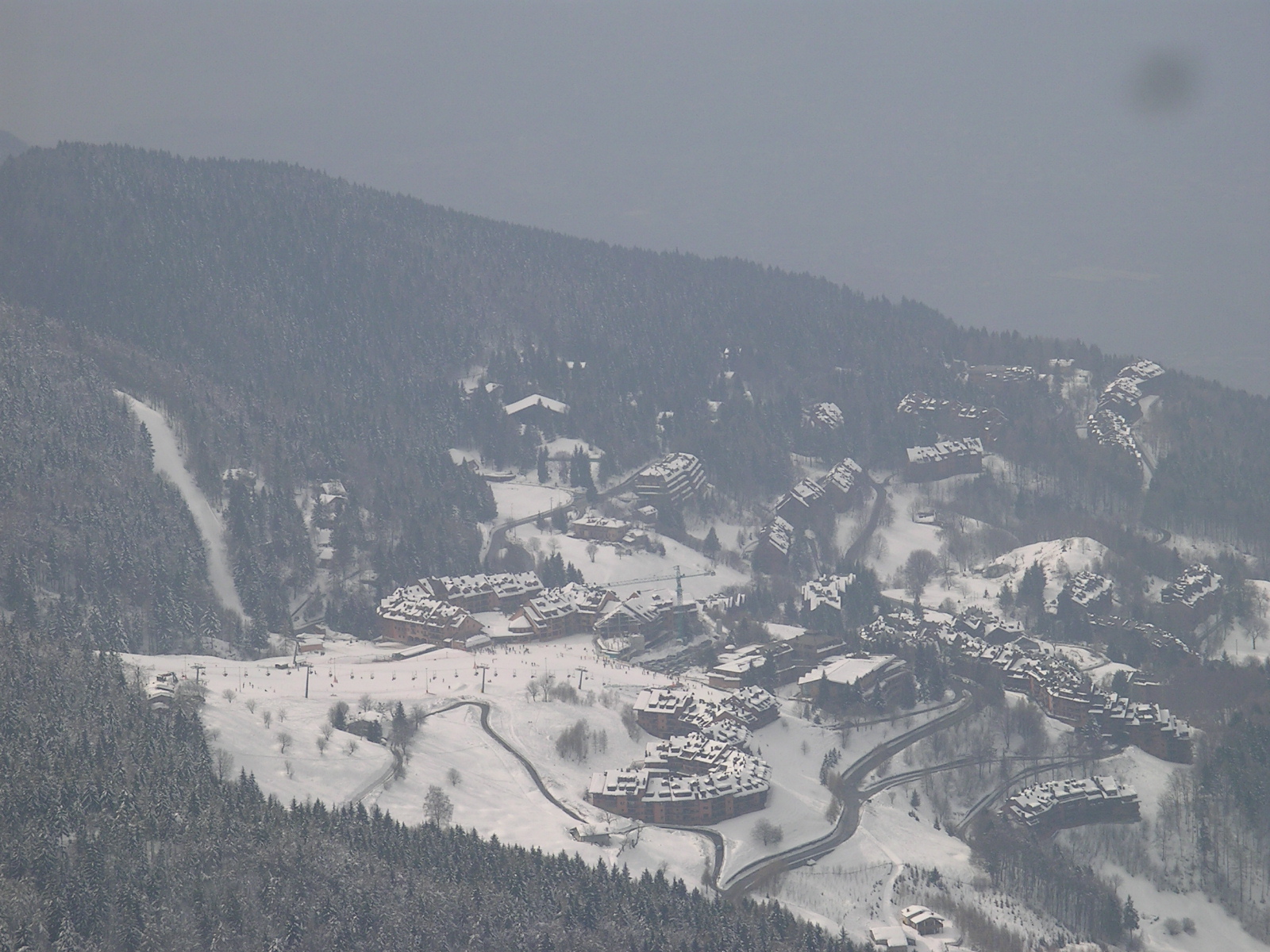
At 1,800 Metres
the Le Baite complex with approximately:
142 apartments;
amphitheatre;
bar;
relaxation area;
recreational spaces.
These are not two small Alpine hotels.
They represent hospitality capacity that, if fully brought back to market, could materially influence the economics of the destination itself.
The Real Asset Is Rotating Beds
In a mountain destination with a strong concentration of second homes, the number of residential units does not automatically translate into:
commercial accommodation capacity.
Second homes generate presence.
Hotels and serviced residences generate:
distribution;
packages;
tour operating;
short stays;
groups;
events;
yield management;
international demand.
The difference is:
Rotating Beds.
Reactivating 140 hotel rooms and 142 apartments therefore means rebuilding the destination’s ability to generate organised tourism demand.
1200 and 1800 Should Not Be the Same Product
One of the most obvious strategic mistakes would be to develop the two assets as variations of the same concept.
Altitude itself is a positioning variable.
One potential strategic framework is:
1200 = Destination Base Camp
and
1800 = Mountain Experience Product.
This is not necessarily the only solution.
But it is a much stronger industrial thesis than simply having:
two hotels in the same resort.
1200 = Destination Base Camp
Hotel 1200 historically operated at a scale of:
140 rooms.
It is therefore the asset with the potential to provide the destination with:
volume;
groups;
families;
events;
schools;
corporate retreats;
clubs;
sports tourism;
organised travel.
The 1200 asset could therefore become the more:
scalable
and
multi-segment
product.
Its advantage would not be the mountain alone.
It could become:
the operating base of the destination.
1800 = Mountain Experience Product
At 1,800 metres, the logic is different.
The location should allow the product to monetise:
immersion in the mountain environment;
closer access to the ski experience;
outdoor activities;
snow;
short breaks;
weekends;
premium location.
The economic driver may therefore be less about:
volume
and more about:
experience premium.
Altitude needs to become:
pricing power.
Different Altitude = Different Positioning
That is the key point.
The difference in altitude should produce a difference in product.
The relationship could be:
1200 → Scale + Accessibility + Groups + Destination Services
1800 → Experience + Ski Proximity + Outdoor + Premium Positioning.
If both assets are sold to the same:
guest;
price point;
channel;
period,
the result is:
Internal Cannibalisation.
If the products are complementary:
the result is:
Portfolio Optimisation.
The Real Risk: Timing Mismatch
This is the variable capable of deciding the entire turnaround.
A destination investment does not fail only because of:
incorrect CAPEX;
insufficient ADR;
weak management.
It can fail because:
the right components arrive at the wrong time.
Case 1 — Beds Ready Before Lifts
The hotels have been renovated.
Staff has been recruited.
Pre-opening costs have been incurred.
But the ski infrastructure is not yet fully competitive.
Result:
Fixed Costs + Weak Demand = Cash Burn.
Case 2 — Lifts Ready Before Beds
The ski infrastructure is upgraded.
The destination becomes more attractive.
But there is insufficient commercially available accommodation.
Result:
Demand Potential + Insufficient Beds = Lost Destination Revenue.
Case 3 — Beds + Lifts + Demand Ready Together
Accommodation is ready.
The lift system is competitive.
Marketing is live.
Operators are organised.
Products are bookable.
Result:
Value Creation.
That is the synchronisation that matters.
The Turnaround Needs a Master Timeline
Montecampione should not be managed through separate:
hotel timelines
and
ski infrastructure timelines.
It needs an:
Integrated Destination Master Timeline.
Covering at least:
hotel CAPEX;
lift CAPEX;
operator selection;
brand / positioning;
pre-opening;
sales activation;
winter launch;
summer product;
staffing;
distribution.
The timeline is therefore part of the business plan.
Not an operational appendix.
At 1,800 Metres, Risk Is Shifting from Real Estate to Operations
Le Baite is already in the more advanced stage of the turnaround.
When a project moves from:
construction
to
opening readiness,
the nature of the risk changes.
The question is no longer simply:
“Can we complete the works?”
It becomes:
“Who will sell and operate the product?”
Once CAPEX has been deployed, the following need to be ready:
operator;
PMS;
channel manager;
pricing;
staffing;
housekeeping;
maintenance;
F&B;
marketing;
pre-opening;
working capital.
The sequence becomes:
Renovation
→
Operator Selection
→
Commercial Setup
→
Pre-opening
→
Ramp-up
→
Stabilisation.
Operator Search Should Begin Before Completion
If the management team enters only after:
guestrooms;
reception;
back of house;
services
have already been defined, many operational decisions become difficult and expensive to change.
The operator should contribute earlier to:
guest journey;
housekeeping flow;
storage;
F&B;
technology;
reception;
staffing;
maintenance.
Hotel management should therefore not be:
the final step.
It should be part of the:
development process.
At 1,200 Metres, the Real Issue Is Deal Structure
Hotel 1200 is at a different stage.
The question here is not merely:
“When will it reopen?”
It is:
“Who invests, who operates and who carries the risk?”
The principal alternatives are:
Sale
Lease
Management.
These are three very different investment theses.
Scenario 1 — Sale
The owner sells the asset.
Advantages:
liquidity;
no future owner CAPEX;
transfer of execution risk.
Disadvantage:
loss of future upside.
Scenario 2 — Lease
Ownership retains the real estate and transfers operating risk to an operator.
The critical number becomes:
Fair Rent.
Not the theoretical real estate value.
Scenario 3 — Management
Ownership funds the project and retains the economic risk while appointing a professional operator.
Potentially greater upside.
But also:
Higher Capital Exposure.
The Contract Should Be the Output of the Business Plan
The choice between sale, lease and management should not be ideological.
The correct process is:
Demand
→
ADR
→
Occupancy
→
Revenue
→
GOP
→
CAPEX
→
Working Capital
→
Operator Return
→
Asset Value.
Only then should ownership compare:
Sale Value
Lease Value
Managed Value.
This is the same logic used in hotel restructuring and value-enhancement assignments by Investhotel.it.
140 Rooms Require Commercial Scale
If Hotel 1200 retains an inventory close to:
140 rooms,
the required demand will be significant.
If open year-round:
140 × 365 = 51,100 available room nights.
A mountain hotel may, of course, decide to operate only during economically sustainable periods.
Which makes the concept of:
Operating Days
even more important.
Annual Occupancy Is Not the Right KPI
A more useful metric may be:
Revenue per Available Operating Day
together with:
ADR;
Occupancy;
RevPAR;
GOPPAR;
Payroll per Occupied Room;
Energy Cost per Occupied Room.
The real question is:
how many days per year can the hotel open while producing positive contribution margin?
Not:
how many days can it technically remain open?
A 140-Room Hotel Cannot Survive on Ski Weekends Alone
An asset of this scale requires multiple demand engines.
Winter
Ski leisure.
Families.
Schools.
Groups.
Clubs.
Shoulder Season
Corporate retreats.
Training.
Events.
Sports.
Summer
Bike.
Hiking.
Outdoor.
Camps.
Families.
Events.
Sustainability requires:
Demand Diversification.
Not merely:
winter occupancy.
Summer Operations Must Be Profitable, Not Symbolic
Opening during the summer does not automatically create a:
four-season strategy.
The real equation is:
Incremental Operating Days
with
Positive Contribution Margin.
Every additional segment must cover:
staff;
utilities;
housekeeping;
F&B;
marketing;
maintenance.
Otherwise season extension becomes:
cost extension.
Ski Infrastructure Is Part of Hotel Underwriting
In a ski destination, the hotel business plan cannot be separated from the lift system.
This creates:
Dependency Risk.
The hotel controls:
service;
rooms;
pricing;
marketing;
staffing.
But it does not fully control:
lift infrastructure;
snow conditions;
public approvals;
external CAPEX;
destination timelines.
The equation becomes:
Hotel Performance = Internal Execution × Destination Infrastructure.
If either component approaches zero, the outcome deteriorates rapidly.
No Lifts, No Beds. No Beds, Weaker Lift Economics
The relationship works both ways.
The ski infrastructure generates destination appeal.
Hotels generate:
overnight stays;
skier days;
spending;
longer stays.
The positive cycle is:
Better Lifts
→
Higher Destination Appeal
→
More Overnight Demand
→
Higher Hotel Occupancy
→
More Skier Days
→
Stronger Lift Economics.
This is the:
Destination Flywheel.
The Real Underwriting Requires Three Layers
1. Asset Underwriting
What returns can be generated by:
Hotel 1200;
Le Baite?
2. Platform Underwriting
What can be centralised?
Revenue;
Sales;
Marketing;
Technology;
Finance;
HR;
Procurement;
Maintenance.
3. Destination Underwriting
How dependent are results on:
lifts;
events;
outdoor activities;
services;
accessibility;
destination marketing;
seasonality?
Only by combining all three layers can the real risk be understood.
The Platform Can Reduce Cost per Key
Two assets within the same destination may be able to share:
Revenue Management;
Sales;
Digital Marketing;
Finance;
HR;
Maintenance;
Technology;
Procurement.
The equation becomes:
Different Products
Shared Infrastructure
=
Lower Cost per Key.
But these efficiencies need to be real.
Not theoretical.
Shared Services, Yes. Shared Positioning, No.
The more effective strategy should be:
Centralise what the guest does not see.
Differentiate what the guest does see.
That means centralising systems and specialist functions.
While differentiating:
rooms;
experience;
pricing;
segments;
F&B;
product.
That is how 1200 and 1800 become complementary rather than competing assets.
Hotel 1200 May Become the Real Test of Operator Appetite
The ability to attract a professional operator for Hotel 1200 will be an important market signal.
A credible operator process should provide:
technical data room;
business plan;
CAPEX assumptions;
historical demand;
competitive set;
room layouts;
contract structure;
reopening timeline;
lift infrastructure scenarios.
An operator is not simply taking on:
140 rooms.
It is taking on:
140 rooms
seasonality
staffing risk
lift dependency
destination risk.
Those risks need to be reflected in the commercial and contractual structure.
Fair Rent Should Be the Last Number
If a lease model is selected:
Fair Rent
cannot be derived primarily from real estate value.
It should flow from:
Revenue
→
Normalised GOP
→
Operator CAPEX
→
Working Capital
→
Required Operator Return
→
Fair Rent.
In hospitality:
the business determines the rent.
Not the other way around.
Three Destination Underwriting Scenarios
Downside Case
Lift redevelopment is delayed.
The 1800 product enters the market slowly.
Hotel 1200 requires greater-than-expected CAPEX.
Operators and investors demand stronger downside protection.
Summer operations fail to generate sufficient margin.
Result:
Timing Mismatch + High Capital Exposure + Slow Ramp-up.
Base Case
Le Baite progressively completes its redevelopment.
Hotel 1200 secures a sustainable operating structure and returns to market within the expected timeframe.
The ski infrastructure improves in phases.
Outdoor activities and events add profitable operating days.
Result:
Phased Destination Recovery.
Upside Case
1200 and 1800 are positioned as complementary products.
The commercial platform is shared.
Improved lift infrastructure strengthens competitiveness.
Outdoor and summer demand extend the operating season.
The destination regains meaningful rotating tourism demand.
Result:
Destination Re-rating.
Value Is Not Simply the Sum of the Properties
The final equation may become:
Hotel 1200 Value
Le Baite Value
Platform Value
Destination Re-rating Effect
=
Total Hospitality Ecosystem Value.
Naturally, the value created by the destination does not belong entirely to the hotel owner.
But it affects:
ADR;
Occupancy;
Exit Yield;
Liquidity;
Operator Interest;
Asset Value.
A stronger destination increases the value of the assets within it.
Exit Value Depends on Destination Quality
A stabilised hotel in a weak destination may continue to suffer from:
higher exit yields;
lower liquidity;
limited institutional interest.
The same hotel in a destination perceived as:
growing;
four-season;
well-infrastructured;
commercially organised
may benefit from:
Asset Re-rating.
This is why investment in destination quality can ultimately be reflected in real estate value.
The Ten Questions That Will Determine the Turnaround
What is the correct positioning for 1200?
What complementary positioning should 1800 adopt?
What final inventory is economically optimal?
How much CAPEX remains to be deployed?
Sale, lease or management for Hotel 1200?
What stabilised ADR is achievable?
Which shared services make economic sense?
How many summer operating days can generate positive margin?
How should timing risk with the ski infrastructure be managed?
What Stabilised Asset Value is realistic?
These are the questions that transform two properties awaiting relaunch into a genuine destination strategy.
Further analysis on business planning, hotel valuation, contracts and asset management is available through the specialist guides published on Robertonecci.it.
Conclusion: Montecampione Does Not Need to Reopen Two Properties. It Needs to Synchronise an Ecosystem
Montecampione now has several potentially important building blocks:
a single ownership structure;
a project already in execution at 1,800 metres;
a roughly 140-room asset at 1,200 metres still requiring a definitive strategy;
a ski-infrastructure redevelopment process;
potential for four-season demand development.
But none of these elements creates value in isolation.
The correct sequence is:
Ownership Concentration
→
Different Positioning
→
Asset Repositioning
→
Operator Strategy
→
Lift Infrastructure
→
Demand Generation
→
Four-Season Operations
→
Stabilised GOP
→
Destination Re-rating.
The real challenge is not simply:
reopening Hotel 1200.
It is not simply:
completing the 1800 project.
It is not simply:
upgrading the ski lifts.
It is ensuring that:
beds, lifts, demand and management arrive at the same appointment.
Because:
Beds Ready Before Lifts = Cash Burn.
Lifts Ready Before Beds = Lost Destination Revenue.
Beds + Lifts + Demand Ready Together = Value Creation.
That is the real Montecampione investment thesis.
Not simply reopening:
140 rooms and 142 apartments.
But rebuilding a destination capable of giving those beds, once again:
an economic reason to be full.
InvestimentiAlberghieri.it Advisory
InvestimentiAlberghieri.it analyses hotel acquisitions, turnarounds, repositioning projects, operator searches and hospitality special situations, including mountain-destination redevelopment and multi-asset hospitality projects.
For business plans, feasibility studies, CAPEX analysis, hotel valuation, due diligence, operator search, fair-rent analysis, management strategy and hospitality transaction structuring:
info@investimentialberghieri.it
Complementary expertise and insights:
Robertonecci.it — hospitality advisory, valuations and specialist guides
Investhotel.it — hotel acquisitions, disposals, turnarounds and hospitality transactions
HotelManagementGroup.it — hotel management, asset management, repositioning and performance optimisation