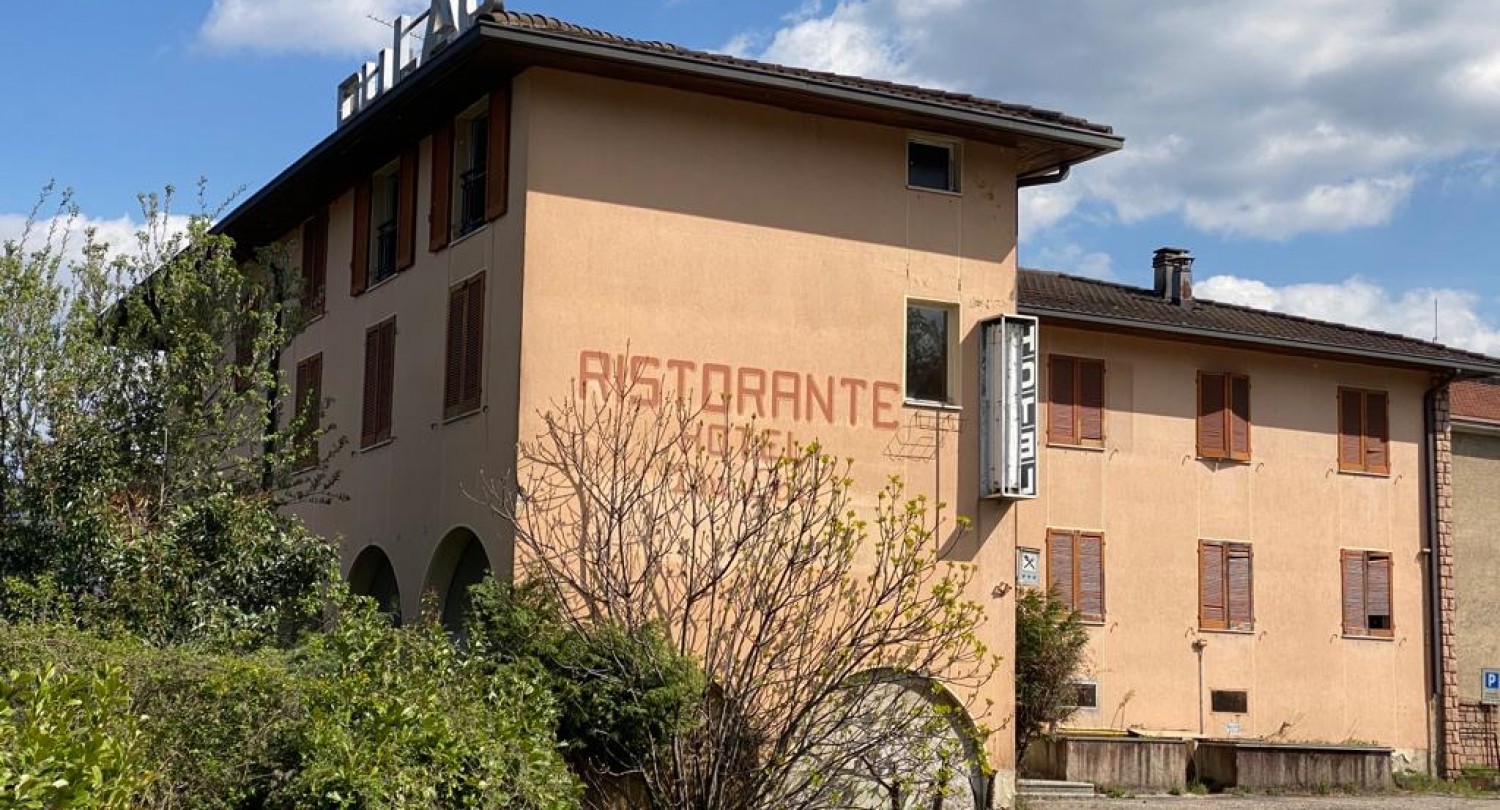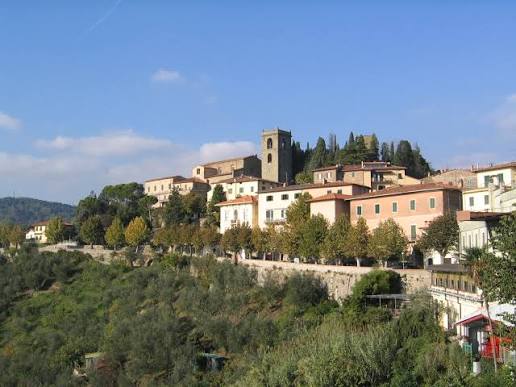
In Montecatini Terme, an international investor linked to a global investment fund is working on the transformation of the former Hotel La Pia into a high-end 5-star product and has also acquired the former Hotel Impero. This completely changes the way the transaction should be viewed: this is no longer simply about redeveloping one hotel, but about two assets controlled by the same capital in the same destination. The real value will not depend solely on the standalone performance of La Pia and Impero. It will depend on the ability to build two differentiated products on top of a shared operating platform, centralising revenue management, sales, technology, procurement and administrative functions without creating internal cannibalisation. The formula is straightforward: Different Positioning + Shared Infrastructure + No Internal Price War. Only then can two hotels be worth more than the simple sum of the two properties.
In the hotel investment market, there is a fundamental difference between:
acquiring multiple hotels
and
building a hospitality platform.
In the first case, the number of assets increases.
In the second, the productivity of capital can increase.
The sequence becomes:
Asset Acquisition
→
Portfolio Architecture
→
Shared Platform
→
Higher GOP
→
Higher ROIC
→
Portfolio Enterprise Value.
That is the most useful framework for analysing the former Hotel La Pia and Hotel Impero today.
La Pia Is Not Simply a Renovation: It Is a Category Migration
The proposed strategy for the former La Pia involves moving from a historic 3-star hotel to a:
5-star product.
The previous configuration included approximately:
37 rooms
together with a restaurant, bar and meeting facilities.
Moving from a:
3-star historical hotel
to a:
5-star hospitality product
does not simply mean improving:
furniture;
façades;
guestrooms.
It means changing the:
economics.
Moving from 3 Stars to 5 Stars Changes the Entire P&L
A high-end product typically requires:
a superior room product;
a different room mix;
higher-quality FF&E;
upgraded bathrooms;
better public areas;
technology;
F&B;
greater service intensity;
more staffing;
stronger sales capability;
distribution;
brand positioning.
The economic relationship is:
Higher Positioning
→
Higher CAPEX
→
Higher Required ADR
→
Higher Required GOP.
If the incremental ADR does not remunerate the incremental capital:
the category migration destroys value.
It does not create it.
Five Stars Is Not an Aesthetic Decision
The wrong question would be:
“How do we create a beautiful 5-star hotel?”
The right question is:
“What ADR and GOP must La Pia generate to remunerate the Total Invested Capital required to turn it into a 5-star hotel?”
The correct process should therefore be:
Market Analysis
→
Competitive Set
→
Target Guest
→
Target ADR
→
Required Product
→
CAPEX
→
Business Plan.
The hotel category is the outcome.
Not the starting point.
The Historical 37 Rooms Should Not Automatically Become the Future 37 Rooms
Moving into a higher category may require:
larger guestrooms;
suites;
connecting rooms;
better bathrooms;
different circulation;
new common areas;
more efficient back-of-house space.
The final scheme may therefore still contain:
37 keys
or:
fewer keys with higher ADR and higher GOP per room.
The relevant metric should not be:
Maximum Keys.
It should be:
Maximum Sustainable GOP per sqm.
A hotel can lose rooms and increase value at the same time.
La Pia’s Underwriting Needs to Start With All-in Cost per Key
The formula should be:
Acquisition Cost
Transaction Costs
Technical CAPEX
FF&E
OS&E
Brand / Pre-opening Costs
Working Capital
=
Total Invested Capital.
Then:
Total Invested Capital / Final Keys
=
All-in Cost per Key.
That number should be assessed against:
ADR
Occupancy
RevPAR
GOPPAR
EBITDA
Yield on Cost
ROIC
Stabilised Asset Value.
Only then is it possible to determine whether moving the asset into the high-end segment genuinely creates value.
Impero Starts From a Different Industrial Problem
The former Hotel Impero has a different history.
Its prolonged inactivity means the starting point should not be the previous commercial configuration, but rather:
Asset Re-Diagnosis.
The redevelopment should reassess:
building systems;
structure;
layout;
guestrooms;
bathrooms;
roofing;
façades;
fire safety;
accessibility;
back of house;
technology;
energy efficiency.
Historical online sources referred to an inventory of approximately:
60 rooms.
But that number belongs to the history of the property.
Not necessarily to its future.
Historical Keys Do Not Mean Economically Optimal Keys
After years of inactivity, the right question is not:
“How many rooms did Hotel Impero have?”
It is:
“How many rooms should the new Hotel Impero have to maximise returns?”
That distinction is fundamental.
The real asset is not:
the historic inventory.
It is:
the area that can be converted into cash flow.
La Pia Can Become the Flagship. But Impero Should Not Become a Copy
This is where the two-asset strategy becomes particularly interesting.
If La Pia genuinely becomes the:
high-end flagship
of the portfolio, Hotel Impero should be designed with that positioning already in mind.
There are two broad approaches.
Same Positioning
Two hotels targeting similar guests, with similar service levels and price points.
Complementary Positioning
Two differentiated products targeting different segments.
In a multi-asset strategy, the second option may create considerably more value.
Because it reduces:
Internal Cannibalisation.
The Hidden Risk: Owning Two Hotels That Compete Against Each Other
This is the real portfolio risk.
Two assets under the same ownership in the same city can create synergies.
But they can also:
compete for the same guest;
undercut each other on price;
duplicate services;
duplicate F&B;
duplicate commercial teams;
steal demand from each other during softer periods.
The paradoxical result would be:
more capital invested
but
no genuine platform advantage.
The portfolio strategy should therefore begin with a simple rule:
Different Positioning
Shared Infrastructure
No Internal Price War.
Centralise What the Guest Does Not See. Differentiate What the Guest Does See
That should be the operating philosophy.
Centralise:
Revenue Management;
Sales;
CRM;
Finance;
HR;
Procurement;
Technology;
Maintenance;
Administration.
Differentiate:
brand;
room product;
service;
design;
F&B;
experience;
price point;
guest segment.
In short:
Centralise what the guest does not see.
Differentiate what the guest does see.
That is one of the most effective ways to structure a multi-property hospitality platform.
Portfolio Strategy Also Means Deciding What Each Hotel Should Not Become
La Pia and Impero should not be designed in isolation.
If La Pia becomes the:
luxury / high-end flagship,
Impero could theoretically target another segment:
upscale;
upper-midscale;
group-oriented;
international leisure;
bleisure;
wellness-oriented;
efficient full service.
This does not mean that any one of these options is necessarily correct.
It means the two hotels should occupy:
different economic spaces.
The question is therefore not:
“What is the best possible project for La Pia?”
plus:
“What is the best possible project for Impero?”
It is:
“What combination of the two assets maximises Portfolio ROIC?”
Asset Optimisation vs Portfolio Optimisation
A single hotel is normally optimised for:
Asset-Level GOP.
A platform needs to maximise:
Portfolio-Level GOP.
The formula is:
La Pia GOP
Impero GOP
Platform Synergies
−
Platform Costs
=
Portfolio GOP.
That is the number that really matters.
Because a decision that may appear slightly less profitable for one property can still be entirely rational if it improves the return generated by the portfolio as a whole.
The Real Economics Are in the Shared Services
Two hotels in the same destination can potentially centralise:
Revenue Management
Sales
Digital Marketing
Finance
Administration
HR
Procurement
Maintenance
Technology
Distribution.
The potential result is twofold:
Lower Operating Cost per Key
Higher Commercial Capability per Key.
That is where platform economics begin.
One Central Platform, Two Different Guest Experiences
The optimal model could involve a:
Central Platform
for specialist functions.
And:
Property Teams
focused on:
operations;
guest experience;
quality;
local execution.
This avoids duplicating expensive skills such as:
revenue management;
digital;
finance;
procurement;
sales.
While preserving distinct identities at property level.
Portfolio Revenue Management Could Be a Major Lever
Managing two hotels as a portfolio allows the transition from:
Hotel A Revenue Management
Hotel B Revenue Management
to:
Portfolio Revenue Management.
This allows coordinated management of:
price points;
restrictions;
groups;
events;
compression dates;
length of stay;
inventory allocation;
overflow demand.
The revenue manager is no longer optimising:
one room.
The objective becomes to optimise:
the capital invested across the entire portfolio.
No Internal Price War
This is where differentiation becomes essential.
If La Pia and Impero:
sell to the same guest;
at the same ADR;
through the same channels;
with the same level of service,
the portfolio risks creating an:
internal price war.
If instead the segmentation is clear:
High-End Individual Leisure → La Pia
Groups / Upscale / Value-Sensitive Demand → Impero
then revenue management can redirect demand without destroying price.
The objective should be:
Portfolio Revenue Optimisation
not:
Asset-to-Asset Competition.
Cross-Selling Instead of Cannibalisation
A well-structured platform can convert a rejected booking into an internal sale.
For example:
guest not aligned with La Pia’s price point → Impero;
group unsuitable for the flagship → Impero;
La Pia sold out → Impero;
Impero guest seeking a premium stay in future → La Pia.
The logic becomes:
Keep the Guest Inside the Portfolio.
This can improve:
conversion;
customer lifetime value;
direct booking;
portfolio revenue.
Montecatini Has Sufficient Scale for a Sophisticated Strategy
Montecatini continues to generate significant tourism volumes, in the region of approximately:
1.5 million overnight stays per year,
while also undergoing a period of competitive pressure and market transformation.
That combination is interesting:
Large Existing Demand
Legacy Hotel Supply
Asset Repricing
New Capital.
This is precisely the kind of environment in which repositioning strategies can create value.
But 1.5 Million Overnight Stays Do Not Guarantee Returns
Tourism volume needs to be segmented.
The analysis needs to understand:
ADR;
groups;
FIT;
international guests;
seasonality;
channel mix;
length of stay;
price sensitivity;
compression periods.
The relevant question is not:
“How many people stay overnight in Montecatini?”
It is:
“Which demand segments can generate the GOP required by the new investment?”
Montecatini Does Not Simply Need More Rooms
The issue is the:
economic productivity of rooms.
The key metric should not be:
Number of Reopened Keys.
It should be:
Revenue per Available Room
and, above all:
GOP per Available Room.
A new 5-star hotel only creates value if it converts capital into superior economic productivity.
Thermal-Sector Recovery Should Be Upside, Not Base Case
Montecatini remains structurally linked to its thermal identity.
A broader improvement in the thermal offering could support:
demand;
ADR;
internationalisation;
length of stay.
But the investment should not work only if:
the thermal sector is successfully relaunched;
the destination accelerates;
competitors remain static.
The Base Case needs to be sustainable today.
A broader destination recovery should represent:
Upside.
Not:
Investment Requirement.
La Pia’s Competitive Set May Extend Beyond Montecatini
If La Pia genuinely reaches a high-end positioning, it may no longer compete only with other hotels in Montecatini.
The relevant demand may also consider:
Florence;
Lucca;
central Tuscany;
wellness destinations;
luxury touring;
Tuscan experiences.
This means moving from:
Market Share Capture
to:
Demand Creation.
The new product needs to be compelling enough to persuade part of the market to choose Montecatini specifically because that product exists.
That is a much higher threshold.
A 5-Star Hotel Needs to Create Incremental Demand
A midscale hotel largely competes for existing demand.
A genuine high-end hotel should also be capable of generating:
incremental demand
through:
design;
brand;
wellness;
F&B;
service;
experience;
international distribution.
Otherwise it risks competing for the same existing demand at a materially higher operating and capital cost.
The Brand Needs to Create Enterprise Value
For La Pia, potential structures may include:
Independent
Soft Brand
Collection
Franchise
Management Agreement.
The question should not be:
“Which brand is the most prestigious?”
It should be:
“Which brand generates the highest Incremental Enterprise Value after fees, CAPEX and required standards?”
The relationship is:
Brand Cost
→
Incremental ADR / Occupancy
→
Incremental GOP
→
Incremental Asset Value.
The brand needs to be economically accretive.
Impero’s Brand Strategy Should Also Depend on La Pia
The platform may choose:
the same brand;
different brands;
La Pia branded + Impero independent;
two different soft brands.
Each structure affects:
distribution;
loyalty;
cross-selling;
fees;
standards;
pricing architecture.
Once again:
the decisions are not independent.
Procurement: The Least Visible Synergies May Create the Most GOP
A platform may negotiate more efficiently across:
linen;
amenities;
food;
beverage;
technology;
maintenance;
utilities;
insurance;
professional services.
These savings rarely drive the investment narrative.
But they flow directly into:
GOP.
And GOP is what turns operational synergies into value.
A Labour Platform Can Become a Competitive Advantage
Two properties in the same destination can create:
job rotation;
shared training;
career paths;
coverage flexibility;
more efficient staffing;
centralised specialist functions.
Some roles that would not be economically viable within one small hotel can make sense at platform level.
Examples include:
revenue management;
sales;
digital marketing;
finance;
engineering.
This is why hotel management should be designed as part of the investment thesis itself.
Synergies Must Be Proven, Not Described
The word:
synergy
is one of the most overused terms in business plans.
A synergy only exists if it produces:
Cost Saving
or:
Revenue Increase
or:
CAPEX Reduction
or:
Asset Value Increase.
Every synergy should therefore have:
Owner
Timing
Implementation Cost
Financial Impact.
Otherwise:
it is not a synergy.
It is an assumption.
The Platform Should Be Built Before the Hotels Open
Centralised revenue management.
CRM.
PMS.
Booking engine.
Finance.
Sales.
Procurement.
Management reporting.
These systems should be designed early.
Because building two independent infrastructures and integrating them later means paying twice.
The technology stack should be:
portfolio-ready.
Asset P&L First, Portfolio P&L Second
A platform should never hide weak performance at individual-property level.
There should be:
La Pia P&L
and
Impero P&L.
Separately.
Then:
Platform Costs
and
Platform Synergies.
Finally:
Consolidated Portfolio P&L.
Ownership should always understand:
which asset creates value;
which destroys it;
what the platform is actually worth.
The Same Principle Applies to CAPEX
Capital should be separated into:
La Pia Asset CAPEX
Impero Asset CAPEX
Platform CAPEX.
Platform CAPEX may include:
technology;
CRM;
revenue infrastructure;
booking systems;
central operations;
shared pre-opening costs;
management systems.
Every euro needs:
a destination
and
an expected return.
The More Subtle Risk Is Overcapitalisation
Access to capital is an advantage.
But it can also become a risk.
The issue is:
Overcapitalisation.
Investing more money than the market can remunerate.
The maximum sustainable CAPEX is not:
how much the investor can spend.
It is:
how much future cash flow can support.
The formula should therefore be read backwards:
Achievable ADR
Sustainable Occupancy
→
RevPAR
→
GOP
→
Maximum Sustainable Investment.
Returns first.
Capital second.
Three Portfolio Underwriting Scenarios
Downside Case
La Pia absorbs significant CAPEX but fails to achieve the required ADR.
Impero requires more work than expected.
The two products become too similar and begin competing on price.
Operational synergies take longer to materialise.
Result:
High Capital Exposure + Cannibalisation + Low Portfolio ROIC.
Base Case
La Pia becomes a credible high-end flagship.
Impero targets a complementary segment.
Revenue, sales, technology, procurement and selected administrative functions are centralised.
Each hotel produces sustainable standalone GOP.
The platform increases margins without reducing product differentiation.
Result:
Asset Sustainability + Platform Synergies + No Internal Price War.
Upside Case
La Pia creates incremental international demand.
Impero captures complementary segments.
Cross-selling and portfolio revenue management improve conversion and pricing power.
A broader recovery in the destination provides further upside.
Result:
Destination Re-rating + Portfolio Re-rating.
From Real Estate Value to Portfolio Enterprise Value
The objective should not simply be:
what are La Pia and Impero worth as real estate assets?
The question needs to become:
what is the stabilised hospitality platform worth?
The sequence is:
Real Estate
→
Hotel Operations
→
Shared Platform
→
Portfolio GOP / EBITDA
→
Enterprise Value.
The final value may exceed the sum of the two properties.
But only if:
the synergies are real
and
cannibalisation is avoided.
Exit Strategy Needs to Be Designed Today
Future options may include:
Long-Term Hold
Refinancing
Individual Asset Sale
Portfolio Sale
PropCo / OpCo Separation
Operating Platform Sale.
The choice affects:
brand;
contracts;
management;
technology;
governance;
CAPEX.
The exit should not be considered only when the time comes.
It should be made possible:
today.
Further analysis on hotel valuation, governance, asset management and investment structures is available through the specialist guides published on Robertonecci.it.
The Ten Questions That Will Determine the Value of the Platform
What positioning for La Pia?
What complementary positioning for Impero?
How many final keys for each hotel?
What All-in Cost per Key?
What stabilised ADR?
What brand architecture?
Which functions should be centralised?
How should internal cannibalisation be avoided?
What are the platform synergies really worth?
What is the exit strategy?
If the answers are coherent:
a platform is created.
If they are not, the result will simply be:
two hotels under the same ownership.
Conclusion: The Real Investment Is Not Buying Two Hotels. It Is Making Them Work as a Portfolio
The same investment group is working on the transformation of the former La Pia into a high-end product and has also acquired the former Hotel Impero.
La Pia historically operated with approximately:
37 rooms
and a 3-star classification.
Impero previously had an inventory of approximately:
60 rooms,
although the future configuration will need to be redefined through the redevelopment project.
Montecatini continues to generate meaningful tourism volumes, but is also undergoing a period of transformation.
That creates:
Opportunity
but also:
Execution Risk.
The real investment sequence is:
Acquisition
→
Asset Repositioning
→
Differentiated Positioning
→
Shared Infrastructure
→
Portfolio Revenue Management
→
Stabilised GOP
→
ROIC
→
Portfolio Enterprise Value.
La Pia needs to become a hotel capable of justifying its investment.
Impero needs to do the same.
But superior value creation will only emerge if the two assets can become, at the same time:
commercially different
and
operationally integrated.
That is the real thesis.
Different products.
Shared platform.
No internal price war.
Because buying two hotels creates real estate scale.
Making them work as a portfolio creates value.
InvestimentiAlberghieri.it Advisory
InvestimentiAlberghieri.it analyses acquisitions, turnarounds, portfolio strategies, repositioning projects and hospitality special situations, with particular focus on multi-asset transactions and the conversion of real estate capital into operating returns.
For business plans, feasibility studies, CAPEX analysis, hotel valuation, due diligence, portfolio strategy, operator search, brand selection and hospitality transaction structuring:
info@investimentialberghieri.it
Complementary expertise and insights:
Robertonecci.it — hospitality advisory, valuations and specialist guides
Investhotel.it — hotel acquisitions, disposals, turnarounds and hospitality transactions
HotelManagementGroup.it — hotel management, asset management, repositioning and performance optimisation