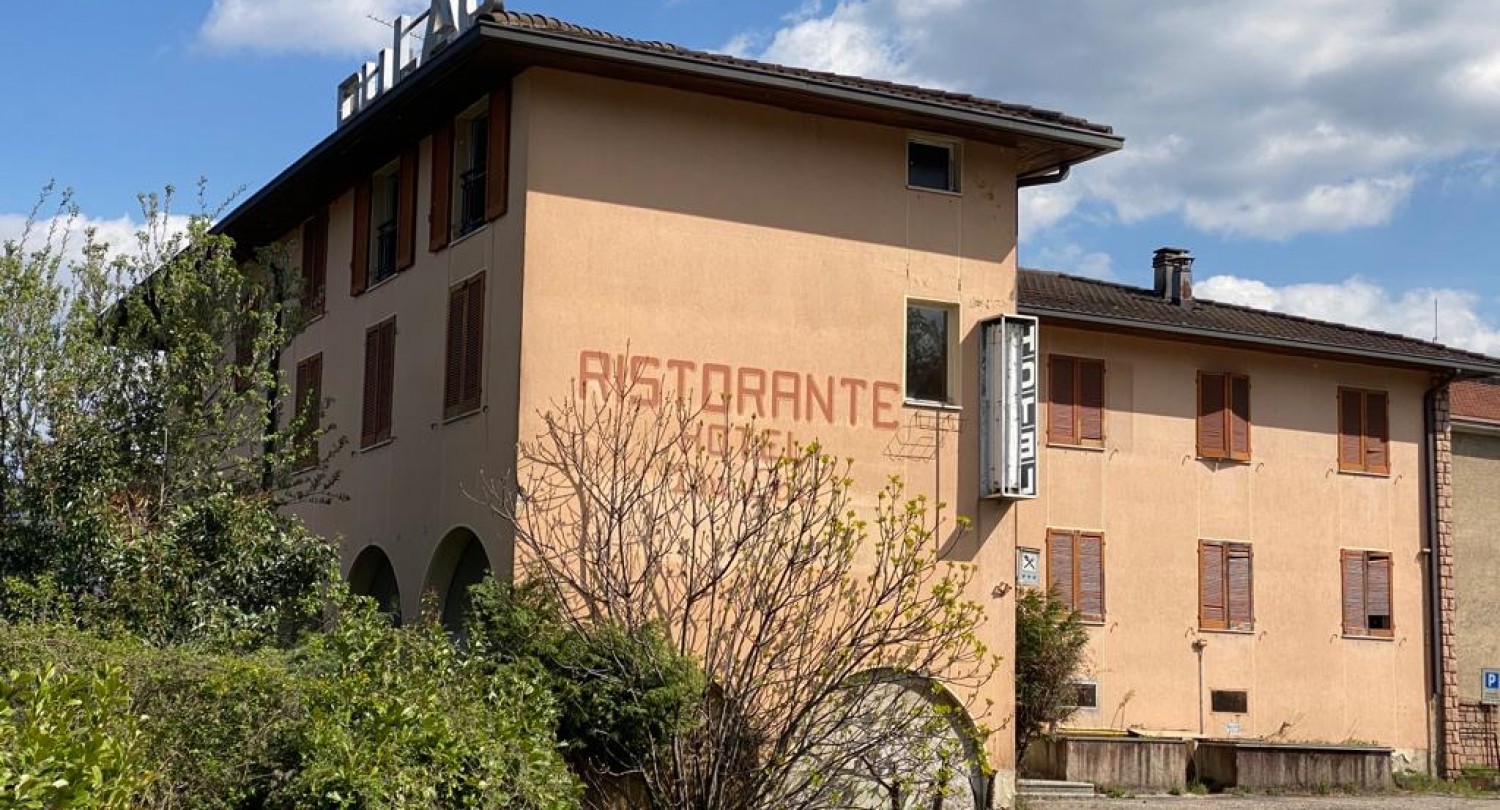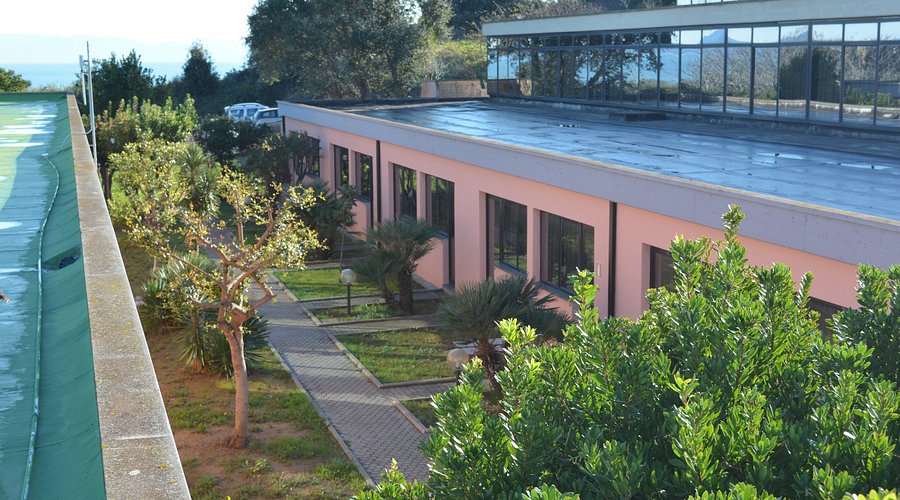
The former Hotel Phalesia in Piombino has found a buyer: a hospitality operator based in the Val di Cornia area whose identity has not been publicly disclosed. The reported acquisition price is €1,025,156, against an auction base that had fallen to €1,366,875 and a previous property valuation of €4.32 million. Yet the most eye-catching figure — approximately €8,100 for each of the 126 existing rooms — is also the easiest one to misinterpret. In distressed hospitality, the purchase price is only the point of entry. The real return will depend on what happens next: due diligence, CAPEX, repositioning, brand strategy, operating model, commercial ramp-up and stabilised GOP.
In the hotel investment market, there is a fundamental difference between:
acquiring a hotel
and
creating value from a hotel acquisition.
The first is a transaction.
The second is an industrial investment thesis.
The former Hotel Phalesia, located on Via Vannucci in Piombino, provides a particularly useful case study for understanding that distinction.
The property has gone through different uses over the years and a lengthy judicial process.
Today, the central question is no longer:
who will control the asset?
It is:
what should the asset become, and how much capital will be required to get it there?
These Are Not Simply “More Than 100 Rooms”: They Are 126 Keys That Need to Be Repositioned
The scale of the property is significant.
The complex includes:
22 rooms on the ground floor;
52 rooms on the first floor;
52 rooms on the second floor.
Total:
126 rooms.
It also includes:
lobby;
reception;
bar;
restaurant;
meeting room;
conference hall;
management offices;
warehouses;
laundry;
storage areas;
technical rooms.
This is therefore not simply a hotel reopening.
It is a genuine:
hospitality platform.
And scale fundamentally changes the investment problem.
A €1.025 Million Acquisition Does Not Mean a €1.025 Million Investment
The acquisition price is:
€1,025,156.
Divided across 126 rooms, that produces a nominal acquisition cost of approximately:
€8,100 per key.
At first sight, that figure may appear exceptionally low.
But it is almost meaningless until we understand:
CAPEX;
FF&E;
OS&E;
building systems;
compliance requirements;
pre-opening costs;
technology;
working capital;
commercial ramp-up.
The correct equation is:
Acquisition Price
Transaction Costs
Technical CAPEX
FF&E / OS&E
MEP & Compliance
Pre-opening Costs
Technology
Working Capital
=
Total Invested Capital.
Only then can we calculate the true:
All-in Cost per Key.
And that is the number that really matters.
The Real Risk Is Miscalibrated CAPEX
In distressed hospitality, the acquisition discount can be completely wiped out by the wrong CAPEX assumption.
A simple stress test makes the point.
At:
€20,000 per key
room-related CAPEX alone would reach:
€2.52 million.
At:
€40,000 per key
it would reach:
€5.04 million.
At:
€60,000 per key
it would reach:
€7.56 million.
And those figures may still exclude:
restaurant;
meeting facilities;
central plant;
external areas;
façades;
back of house;
technology;
pre-opening expenditure.
The point is not to predict the actual Phalesia CAPEX today.
That requires a full technical assessment.
The point is that:
€8,100 per key of acquisition cost does not mean €8,100 per key of investment cost.
The difference between the two can be enormous.
CAPEX per Key and ADR Must Be Underwritten Together
Another common mistake is to analyse CAPEX without linking it to revenue potential.
As Total Invested Capital per room increases, the business must also generate:
higher ADR;
higher occupancy;
higher RevPAR;
higher GOP.
The relationship to monitor is:
All-in Cost per Key → Required GOP per Key → Required ADR / Occupancy.
For example, a finished product costing:
€50,000 per key
does not carry the same return requirement as one costing:
€100,000 per key.
The more capital committed to each room, the greater the economic productivity that room needs to generate.
This is where CAPEX and positioning become inseparable.
CAPEX Can Create Value — or Destroy It
Not all CAPEX is equal.
There is:
Maintenance CAPEX
required simply to restore or preserve operational functionality.
And there is:
Value-Accretive CAPEX
that enables the hotel to increase:
ADR;
occupancy;
customer mix;
profitability;
brand perception;
asset value.
The relevant question should therefore not be:
“How much will it cost to renovate the Phalesia?”
It should be:
“Which part of that CAPEX will actually generate a return?”
If an additional €1 of investment does not produce:
higher revenue;
higher GOP;
higher asset value,
that capital may simply remain trapped in the property.
Positioning Comes Before CAPEX
The correct process is therefore not:
renovate → reopen → sell.
It is:
Market Analysis
→
Competitive Set
→
Positioning
→
Product Definition
→
CAPEX
→
Business Plan.
An efficient:
3-star product
requires one investment standard.
A:
4-star leisure-business hotel
requires another.
An:
upper-upscale property
requires something different again.
That affects:
rooms;
bathrooms;
FF&E;
lobby;
F&B;
technology;
meeting facilities;
staffing;
brand standards.
CAPEX should be the consequence of positioning.
Not the other way around.
Piombino Is a Different Market Today
The local tourism environment has changed.
Piombino exceeded one million tourist overnight stays in 2025 for the third consecutive year.
Average length of stay has also increased.
But that does not automatically mean the market can absorb 126 additional hotel rooms.
It means that the Phalesia needs to be redesigned around demand for:
2027–2030.
Not around the demand profile that existed when the hotel previously operated.
The analysis therefore needs to rebuild:
seasonality;
leisure/business mix;
international demand;
groups;
corporate;
MICE;
transit demand;
price sensitivity;
compression nights;
competitive set.
One Million Tourist Nights Do Not Equal One Million Hotel Room Nights
This distinction is essential.
The local accommodation market also includes:
non-hotel accommodation;
open-air resorts;
second homes;
campgrounds;
holiday villages;
other forms of lodging.
Therefore:
tourist overnight stays ≠ addressable hotel demand.
The business plan must determine how much of that demand can realistically be captured by a 126-room hotel.
Only then can a credible occupancy model be built.
A 126-Room Hotel Requires Multi-Segment Demand
An asset of this scale is unlikely to succeed by relying solely on:
summer leisure demand.
It needs multiple demand engines.
Leisure
Coastline, Val di Cornia and the surrounding destination.
Corporate
Local economic and industrial activity.
Groups
The size of the hotel may be well suited to organised groups.
MICE
The conference facilities create a platform for meetings, events and training.
Transit
Demand linked to regional mobility flows.
Events
Local events and destination programming.
Seasonality is not solved through marketing alone.
It is mitigated through:
segment diversification.
The Conference Hall Could Become a Genuine Demand Generator
The conference space should not be evaluated only through potential:
room rental revenue.
Its real value is:
Meeting → Rooms + F&B + Ancillary Revenue.
A venue with capacity for around 150 people can support:
corporate meetings;
training;
conferences;
associations;
events;
cultural programmes;
groups.
The more relevant KPI is therefore not:
Revenue per Meeting Room.
It is:
Total Revenue per Event.
If a meeting produces room nights, breakfast revenue, dinners and ancillary spend, the facility becomes a genuine demand generator.
The Restaurant Should Also Be Underwritten Separately
With 126 rooms, F&B can become:
a profit centre;
a demand generator;
or a source of losses.
The business plan should separate:
Rooms P&L
and
F&B P&L.
Only then should they be consolidated.
The restaurant strategy should determine whether the venue will primarily serve:
resident guests;
the local market;
groups;
MICE;
events.
The key metric is not:
F&B Revenue.
It is:
F&B Contribution Margin.
The New Phalesia Needs a Clear Value Proposition
The strategic question is straightforward:
why should a guest choose the new Phalesia?
Potential answers may derive from:
scale;
accessibility;
meeting facilities;
value for money;
restaurant;
destination;
groups;
coastline;
Val di Cornia;
events.
But the concept must be coherent.
A property that simultaneously attempts to be:
a business hotel;
a resort;
a family hotel;
a group hotel;
a conference hotel;
a budget hotel
risks being genuinely competitive in none of them.
Repositioning is fundamentally about choosing.
Independent or Branded?
A 126-room asset also raises the question of branding.
The main alternatives include:
Independent
Soft Brand
Franchise
White-Label Management
Management Agreement
Third-Party Operator + Brand.
A brand can deliver:
distribution;
loyalty;
corporate accounts;
international demand;
revenue systems.
But it also introduces:
fees;
Property Improvement Plans;
brand standards;
additional CAPEX;
reduced operating flexibility.
The right question is not:
“Does the hotel need a brand?”
It is:
“Does the incremental value generated by the brand exceed its total economic cost?”
Owner-Operated or Third-Party Managed?
The buyer already operates in hospitality.
That may naturally support a direct-management strategy.
But different operating models should still be compared.
Owner-Operated
Maximum control, with full operating exposure.
Management Agreement
Specialist operating capabilities while ownership retains capital risk.
Franchise
Brand and distribution with independently controlled operations.
Third-Party Operator + Brand
Separation between the management company and the hotel brand.
Lease
Potential future separation between real estate ownership and operating risk.
The right structure should align with:
holding period;
CAPEX;
internal capabilities;
cost of capital;
exit strategy.
This is the type of analysis developed by Investhotel Capital Partners in hotel acquisitions, turnarounds and repositioning transactions.
The Surrounding Land May Create Strategic Optionality
Land parcels and areas associated with the wider complex may represent a second strategic layer.
Subject to:
planning rules;
restrictions;
authorisations,
they may influence:
parking;
accessibility;
landscaping;
amenities;
future development;
master planning.
These areas should not automatically be embedded in the hotel’s value.
But they should be analysed as:
Strategic Optionality.
Control over the wider perimeter can materially influence the quality and value of the future asset.
The Business Plan Must Start With Total Invested Capital
The central metric should be:
Total Invested Capital.
From there:
Total Invested Capital / Keys = All-in Cost per Key.
Then:
Revenue per Key
GOP per Key
EBITDA per Key
Return on Invested Capital
Potential Stabilised Value.
The auction price belongs in the model.
But it does not determine the model.
Returns Must Be Measured Against Total Capital
The correct question is not:
how much of a discount was achieved relative to the valuation?
It is:
what return will the total capital invested generate?
The key metric becomes:
ROIC — Return on Invested Capital.
And from a real estate perspective:
Yield on Cost.
If final Total Invested Capital is €X and stabilised GOP or EBITDA is €Y, the quality of the transaction will depend on the relationship:
Y / X.
That is the metric the CAPEX ultimately needs to justify.
The Auction Discount Can Disappear Very Quickly
This is one of the most important points.
The real estate narrative says:
previously valued at €4.32 million.
acquired for approximately €1.025 million.
But the hotel investment narrative must continue:
Acquisition Discount
→
CAPEX
→
Repositioning
→
Ramp-up
→
Stabilised GOP
→
Asset Value.
If CAPEX rises too far or stabilised GOP fails to reach the required level, the initial discount can be entirely consumed.
Buying cheaply does not necessarily mean investing well.
Three Scenarios for the New Phalesia
Downside Case
CAPEX above expectations.
Delayed reopening.
Highly seasonal demand.
Weak ADR.
Underdeveloped MICE demand.
Inefficient F&B.
This scenario should primarily measure:
Maximum Capital Exposure
and
Cash Burn.
Base Case
126 appropriately repositioned rooms.
ADR and occupancy aligned with the market.
Structured revenue management.
Balanced leisure/corporate/group segmentation.
Economically sustainable F&B and meeting operations.
This is the case on which the investment should be underwritten.
Upside Case
The Phalesia becomes a genuine hospitality platform for the Val di Cornia, supported by:
strong brand positioning;
international demand;
MICE;
groups;
destination experiences;
season extension;
greater integration with the surrounding market.
This is the value-creation case.
The KPI to Avoid: “How Much Did We Pay?”
The purchase price matters.
But it should not become the project’s defining KPI.
A more relevant scorecard should include:
All-in Cost per Key
ADR
Occupancy
RevPAR
GOPPAR
EBITDA
ROIC
Yield on Cost
Stabilised Asset Value.
That is the correct language of post-acquisition hospitality strategy.
A Local Buyer May Have an Advantage
The buyer’s reported position as a hospitality operator based in the Val di Cornia area may represent a competitive advantage.
Local market knowledge can potentially reduce risk around:
demand;
staffing;
suppliers;
seasonality;
customer profiles;
competitive set;
local stakeholder relationships.
But local knowledge needs to be translated into:
execution capability.
Understanding the territory reduces risk.
It does not replace the business plan.
Piombino Does Not Simply Need More Rooms
The local market is growing.
But to create value, the new Phalesia should not simply add:
126 rooms.
It should add:
126 competitive rooms.
The distinction is critical.
A hotel room does not generate value simply because it exists.
It creates value when:
it is sold;
at the right price;
to the right segment;
with a sustainable operating cost;
within a clearly differentiated product.
The Seven Decisions That Will Determine the Value of the New Phalesia
1. What Is the Real CAPEX?
A full technical due diligence is required, not a generic €/key estimate.
2. What Is the Positioning?
The product should be derived from the market.
3. What Is the Competitive Set?
Piombino, Val di Cornia and, where relevant, the broader Costa degli Etruschi market.
4. Independent or Branded?
The choice should be based on incremental value creation.
5. What Is the Operating Model?
Owner-operated, management agreement, franchise or hybrid structure.
6. How Should F&B and Conference Facilities Be Monetised?
They need to function either as measurable profit centres or as measurable demand generators.
7. What Is the Exit Strategy?
Long-term hold, refinancing, stabilised sale or future PropCo/OpCo separation.
The exit strategy should be considered before committing the CAPEX.
Not afterwards.
Conclusion: The Auction Is Over. Value Creation Starts Now
The former Hotel Phalesia now has:
a new owner;
126 rooms;
a restaurant;
a bar;
meeting facilities;
a conference hall;
an acquisition price of €1,025,156.
But that price represents only the:
Entry Cost.
The next task is to determine:
Total Invested Capital
and, most importantly:
Stabilised Cash Flow.
That is where the investment case will ultimately be decided.
The final question is not:
“Was it bought well at €1.025 million?”
It is:
“What All-in Cost per Key will the completed project reach, what ADR and GOP will be required to remunerate that capital, and what will the asset be worth once stabilised?”
That is the question that turns a judicial sale into a genuine hotel investment.
Because in distressed hospitality:
the purchase price creates the opportunity.
CAPEX defines the risk.
Management creates the return.
The Phalesia auction may be over.
The real investment thesis starts now.
InvestimentiAlberghieri.it Advisory
InvestimentiAlberghieri.it analyses hotel acquisitions, disposals, auctions, turnarounds, repositioning strategies and hospitality special situations, with particular focus on converting acquisition price into sustainable returns on invested capital.
For business plans, feasibility studies, CAPEX analysis, due diligence, repositioning, operator searches, brand selection and hospitality transaction structuring:
info@investimentialberghieri.it
Complementary expertise and insights:
Robertonecci.it — hospitality advisory, valuations and specialist guides
Investhotel.it — hotel acquisitions, disposals, turnarounds and hospitality transactions
HotelManagementGroup.it — hotel management, asset management, repositioning and performance optimisation