Selling the real estate and continuing to operate the hotel can be a powerful financial move. But only if the future rent does not become the owner’s new trap.
Many hotel owners sell the real estate to save the business. Some, however, realize too late that they sold the very asset that was protecting them.
Hotel sale & leaseback is one of the most delicate transactions in the hospitality investment market. It allows the owner to sell the real estate, generate immediate liquidity and continue using the property through a lease or leaseback structure. On the surface, it looks like an elegant solution. In reality, it is a high-impact financial lever: if structured correctly, it frees up capital, reduces debt, funds capex and strengthens the business; if structured poorly, it turns a temporary financial problem into a long-term contractual burden.
The issue is not selling well. The issue is surviving well after the sale.
That is why a hotel sale & leaseback cannot be evaluated only by looking at the real estate price. It must be analyzed together with taxation, rent, lease term, GOP, EBITDA, capex, operating risk, property condition, management quality and the financial sustainability of the hotel.
A hotel is not just another real estate asset. It is an operating business attached to a building. And when the owner sells the building but continues to run the business, the real risk is not in the closing documents. It is in the profit and loss statement for the next ten or fifteen years.
For further insights on hotel valuations, investments, contracts and operations, see the analysis published on InvestimentiAlberghieri.it, Investhotel.it and the hotel guides on RobertoNecci.it.
What a hotel sale & leaseback really is
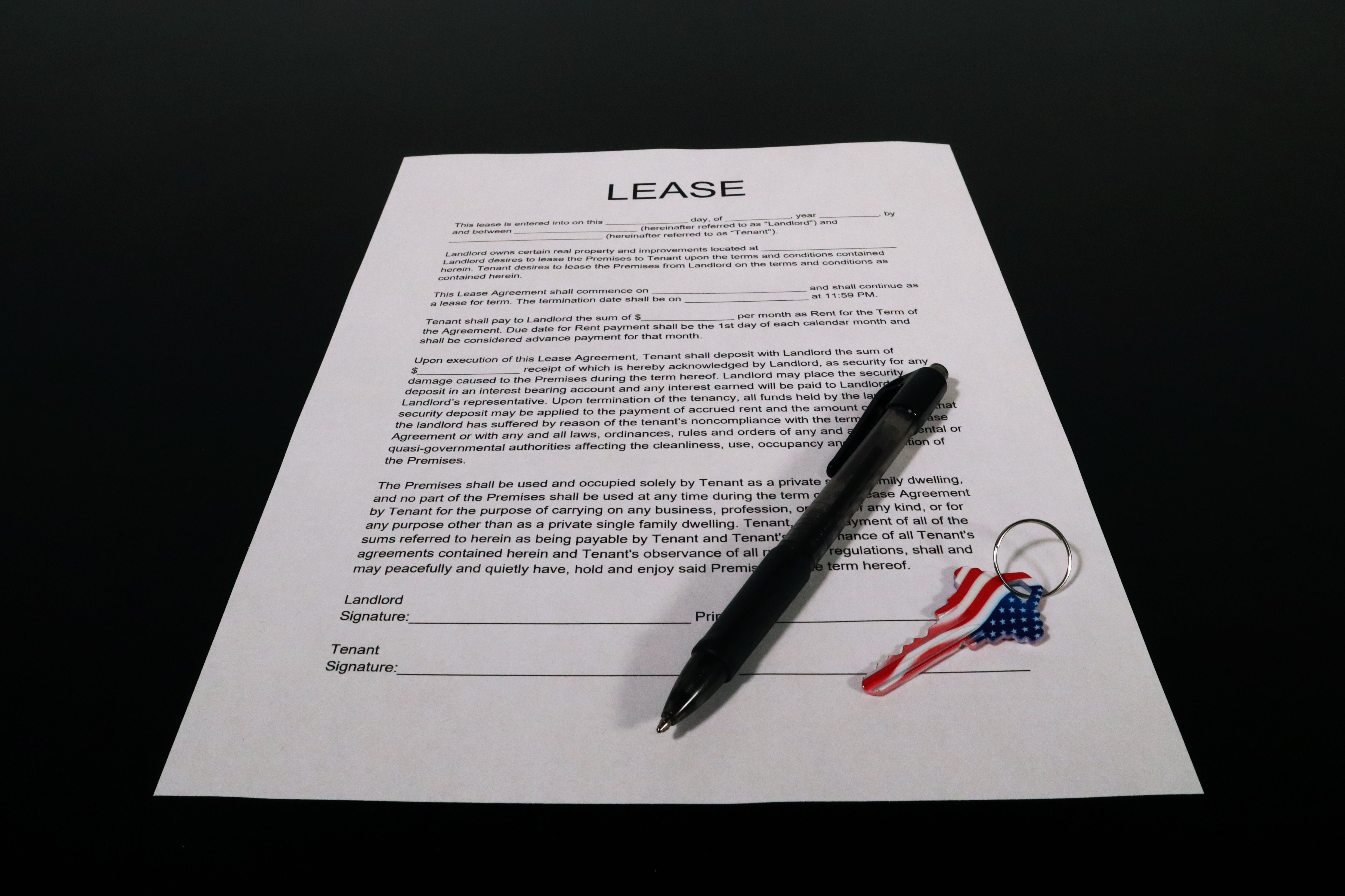
A sale & leaseback is a transaction in which the owner sells the hotel real estate to an investor, a leasing company, a fund or another real estate buyer and, at the same time, signs a contract that allows the owner to keep using the hotel.
In the hotel sector, it can take several forms:
-
sale of the real estate to a leasing company with a financial leaseback;
-
sale to a real estate investor with a hotel lease agreement;
-
sale to a fund with a long-term lease;
-
transaction with a repurchase option;
-
hybrid structure involving debt reduction, renovation works and operational turnaround;
-
lease with fixed rent, variable rent or a mixed structure;
-
transaction with rent indexation and capex obligations borne by the operator.
The apparent logic is simple: turning an illiquid asset into cash.
The real economic logic is more complex: replacing real estate ownership with a future contractual obligation. Before the transaction, the entrepreneur owns the property and carries the operating risk. After the transaction, the entrepreneur receives liquidity but takes on a rent obligation that must be paid even when the market slows down, costs increase, demand weakens, OTAs compress margins or rooms require new investment.
Sale & leaseback does not eliminate risk. It changes its form.
Why a hotel owner considers a sale & leaseback
A sale & leaseback can make sense in many situations.
It can be used to reduce bank exposure, repay expensive debt, release guarantees, fund renovations, support a commercial repositioning, strengthen liquidity, ease pressure from lenders or create capital for new acquisitions.
In some cases, it is a strategic decision: the owner wants to release capital from the real estate and focus on hotel operations. In other cases, it is a defensive decision: the hotel needs liquidity and the real estate is the only asset that can actually be monetized.
The difference between a smart transaction and a dangerous one lies in how the proceeds are used.
If the liquidity is used to finance a serious industrial plan, the sale & leaseback can increase the overall value of the business. If, instead, it is used only to cover operating losses, tax arrears, overdue suppliers, bank pressure or management inefficiencies, the transaction can become an elegant form of balance sheet weakening.
Liquidity does not cure a poorly managed hotel. It buys time.
And if that time is not used to correct product, revenue, costs, staffing, distribution and positioning, it eventually turns into a new problem: rent.
The decisive issue: future rent
The heart of every hotel sale & leaseback is the rent.
Not the sale price. Not the liquidity received. Not the investor’s name. The rent.
After the transaction, rent becomes a structural cost in the profit and loss statement. It must be paid every year, often for many years, often with indexation, often with guarantees and with maintenance or investment obligations.
For this reason, rent should not be determined only as the real estate yield expected by the buyer. It must be tested against the hotel’s actual ability to generate margin.
A sustainable rent must leave room for:
-
payroll costs;
-
energy;
-
ordinary maintenance;
-
extraordinary maintenance;
-
OTA commissions;
-
marketing;
-
revenue management;
-
insurance;
-
taxes;
-
FF&E;
-
room renovation;
-
any remaining debt;
-
return for entrepreneurial risk;
-
operating profit.
If there is not enough margin left after rent, the transaction has not created liquidity. It has simply brought forward future cash by selling present balance sheet stability.
This is where many transactions fail: the initial price looks attractive, but the future rent becomes incompatible with the hotel’s actual economic cycle.
Numerical example: when liquidity becomes a trap
Let us assume a hotel with the following simplified figures:
-
estimated real estate value: €12 million;
-
annual rooms and ancillary revenue: €4 million;
-
GOP: €1.2 million;
-
normalized EBITDA before rent: €900,000;
-
remaining bank debt: €4 million;
-
required capex over the next three years: €1.5 million.
The owner receives a sale & leaseback proposal for €12 million, with annual rent of €720,000, equal to 6% of the price.
At first glance, the transaction looks very attractive: €12 million comes in, the debt is repaid, liquidity is released and the entrepreneur continues to operate the hotel.
But after the transaction, the profit and loss statement changes.
If EBITDA before rent is €900,000 and annual rent is €720,000, only €180,000 remains before taxes, unforeseen events, extraordinary maintenance and future investment.
In a strong year, the hotel survives. In a normal year, it has very little breathing room. In a difficult year, it comes under pressure.
Now add a 7% increase in payroll costs, higher energy prices, elevated OTA commissions and unavoidable works. The residual margin can disappear quickly.
The problem was not selling the real estate. The problem was accepting a rent built around the investor’s yield, not around the industrial sustainability of the hotel.
This is the rule: a sale & leaseback must be stress-tested under conservative scenarios, not optimistic business plans.
Taxation of sale & leaseback: the apparent benefit must be measured after taxes and costs
Taxation is one of the most delicate aspects of the transaction.
In a hotel sale & leaseback, several tax and accounting issues may come into play:
-
VAT;
-
direct taxes;
-
capital gain;
-
indirect taxes;
-
accounting treatment;
-
deductibility of rent payments;
-
possible repurchase;
-
civil law classification of the transaction;
-
consistency between contractual form and economic substance;
-
impact on financial statements and bank covenants.
The first issue is the capital gain.
The sale of the real estate may generate a capital gain compared with the book value of the asset. In certain sale and financial leaseback structures, civil law rules may require the capital gain to be spread over the term of the financial lease. But this does not mean that every transaction is automatically efficient, neutral or fiscally optimized.
The real question is not only when the capital gain is taxed. The real question is how much net value remains after:
-
taxes;
-
notary costs;
-
advisory fees;
-
potential bank penalties;
-
indirect taxes;
-
implicit financial charges;
-
new rent;
-
required guarantees;
-
maintenance obligations;
-
future capex.
A transaction that produces significant gross liquidity may generate far less net liquidity than it initially appears.
The second issue is VAT.
The VAT treatment of a sale & leaseback must be analyzed case by case. It cannot be assumed that every contractual structure produces the same tax effect. The nature of the asset, the structure of the transaction, the role of the parties, the existence of an actual sale, the financing function of the transaction and the connection between the sale and the leaseback must all be assessed.
In the hotel sector, this analysis is even more important because the real estate is often connected to an operating business, contracts, licenses, permits, works, systems and obligations that are essential to business continuity.
The third issue is the deductibility of rent.
After the transaction, rent becomes a central item in the profit and loss statement. Its deductibility, accounting treatment and compatibility with the hotel’s economic structure must be verified before signing.
A tax or accounting mistake can turn a transaction designed to create liquidity into one that consumes liquidity.
That is why a hotel sale & leaseback must be analyzed by an integrated team: accountant, tax advisor, lawyer, hotel advisor and financial consultant. None of these professionals, alone, sees the entire risk.
The greatest risk: losing the asset without solving the industrial problem
Sale & leaseback becomes dangerous when it is used to cover an operating crisis.
If the hotel has outdated rooms, weak ADR, uncontrolled payroll costs, excessive OTA dependence, fragile reputation, high energy costs, deferred maintenance and inadequate management, selling the real estate does not solve the problem. It temporarily funds it.
In fact, it can make it worse.
Before the transaction, the owner had a real estate asset. After the transaction, the owner has liquidity, but also rent. If the liquidity is consumed without repositioning the hotel, after a few years the owner may be in a weaker position:
-
less asset backing;
-
more contractual rigidity;
-
lower margin;
-
reduced investment capacity;
-
greater dependence on the property owner;
-
higher risk of contractual default.
This is the paradox of a poorly structured sale & leaseback: the entrepreneur sells the real estate to save the hotel, but after the transaction the hotel becomes less free, less resilient and less bankable.
When sale & leaseback truly creates value
Sale & leaseback creates value when it is not an emergency maneuver, but an asset strategy decision.
It can work if:
-
the sale price is consistent with the market;
-
the rent is sustainable against GOP;
-
the contract leaves real operating margin;
-
taxation has been properly modeled;
-
the released liquidity has a clear purpose;
-
the capex plan is already defined;
-
the hotel has a credible commercial strategy;
-
management is capable of increasing revenue and margin;
-
the lease term is compatible with the investment cycle;
-
default clauses are not excessively punitive;
-
maintenance obligations are clear;
-
the structure protects business continuity.
In other words, sale & leaseback works when the owner does not sell in order to breathe, but in order to grow, reduce financial risk or reallocate capital more efficiently.
The question is simple: after the transaction, will the hotel be stronger, more liquid and more competitive, or just less owned?
Contract clauses that can change everything
In a hotel sale & leaseback, the contract can be more important than the price.
The decisive clauses concern:
-
term;
-
fixed rent;
-
possible variable rent;
-
indexation;
-
guarantees;
-
security deposit;
-
bank guarantees;
-
insurance obligations;
-
ordinary maintenance;
-
extraordinary maintenance;
-
capex;
-
FF&E;
-
mandatory works;
-
permits and authorizations;
-
permitted use;
-
replacement of the operator;
-
change of control;
-
termination;
-
default;
-
cure period;
-
repurchase;
-
purchase option;
-
right of first refusal;
-
penalties;
-
force majeure events;
-
management of temporary distress.
An aggressive indexation clause can become devastating during periods of inflation. Extraordinary maintenance borne entirely by the operator can reduce residual liquidity. Automatic default for short payment delays can endanger business continuity. A ban on operator replacement can prevent the owner from changing management in case of difficulty.
In the hotel sector, clauses must be designed around the real life of the hotel, not around standard real estate templates.
A hotel has systems, rooms, bathrooms, kitchens, common areas, fire safety, laundry, technology, furniture, reputation, seasonality and investment cycles. It cannot be treated like an office leased to a generic tenant.
Sale & leaseback and hotel valuation
A common mistake is to evaluate sale & leaseback purely as a real estate transaction.
In the hotel sector, at least four dimensions must be evaluated:
-
value of the real estate;
-
value of the hotel operating business;
-
sustainability of the contract;
-
residual value for the owner after the transaction.
The sale price can be high and the transaction can still be wrong.
This happens when the price is supported by rent that is too high. The investor pays a high price because the yield is attractive, but that yield becomes the hotel operator’s fixed cost. If rent compresses operating margin too much, the high price is simply an advance payment on a future problem.
A proper valuation must start from:
-
historical revenue;
-
projected revenue;
-
GOP;
-
normalized EBITDA;
-
payroll costs;
-
energy costs;
-
distribution commissions;
-
room condition;
-
required works;
-
maintenance capex;
-
competitive positioning;
-
online reputation;
-
seasonality;
-
market risk;
-
management quality;
-
debt structure;
-
alternative value of the real estate;
-
exit scenario.
Only after this analysis can one understand whether the sale & leaseback creates value or merely shifts value from one side of the contract to the other.
Questions to ask before signing
Before accepting a sale & leaseback proposal, the owner should answer these questions:
-
Why are we doing this transaction?
-
Will the liquidity be used to relaunch the hotel or cover losses?
-
What is the net liquidity after taxes and costs?
-
How much does the rent absorb from GOP?
-
Is the rent still sustainable under a conservative scenario?
-
What happens if occupancy falls by 10%?
-
What happens if payroll costs increase?
-
What happens if urgent works are required?
-
Who pays for extraordinary maintenance and capex?
-
Does the contract allow a change of operator?
-
Are default clauses balanced?
-
Is there a repurchase option?
-
Has taxation been properly simulated?
-
Does the transaction improve business value or only cash?
-
After five years, will the owner be stronger or weaker?
If one of these answers is vague, the transaction is not ready.
In the hotel market, haste is often the first enemy of capital.
The role of the hotel advisor
A sale & leaseback should never be evaluated only by the party proposing the transaction.
It requires independent due diligence on:
-
financial statements;
-
debt;
-
taxation;
-
contracts;
-
real estate value;
-
management accounts;
-
budget;
-
forecast;
-
payroll costs;
-
maintenance;
-
capex;
-
distribution channels;
-
reputation;
-
positioning;
-
operating risk;
-
rent sustainability;
-
residual value for the owner.
A hotel advisor must answer one precise question: does this transaction protect the capital or expose it?
For this type of analysis, the support of HotelManagementGroup.it can be decisive, because hotel sale & leaseback requires an integrated view of real estate, operations, taxation, contracts, debt and industrial strategy.
Conclusion: initial liquidity must not buy a future crisis
Hotel sale & leaseback can be a powerful transaction. It can release capital, reduce debt, finance renovations, support growth and turn an illiquid property into a strategic lever.
But it can also be one of the most dangerous transactions for a hotel owner.
The risk is not selling the real estate. The risk is selling the real estate and being left with a hotel that does not generate enough margin to pay rent, invest in the product and withstand market cycles.
Sale & leaseback should not be judged by the liquidity received on closing day. It should be judged by the strength of the hotel in the years that follow.
Before signing a proposal, the owner must simulate sustainable rent, taxation, downside scenarios, future capex, contractual risk and residual value.
Because the real question is not: “how much do I collect by selling the real estate?”.
The real question is: “after selling the real estate, will the hotel still be mine from an economic standpoint?”.
To evaluate a hotel sale & leaseback transaction, verify taxation, sustainable rent, contractual risk, impact on GOP and real liquidity creation, contact Investimenti Alberghieri.
Write now to info@investimentialberghieri.it.
Before selling the real estate, have the transaction analyzed. Because one wrong signature can turn today’s liquidity into tomorrow’s crisis.
Roberto Necci - r.necci@robertonecci.it