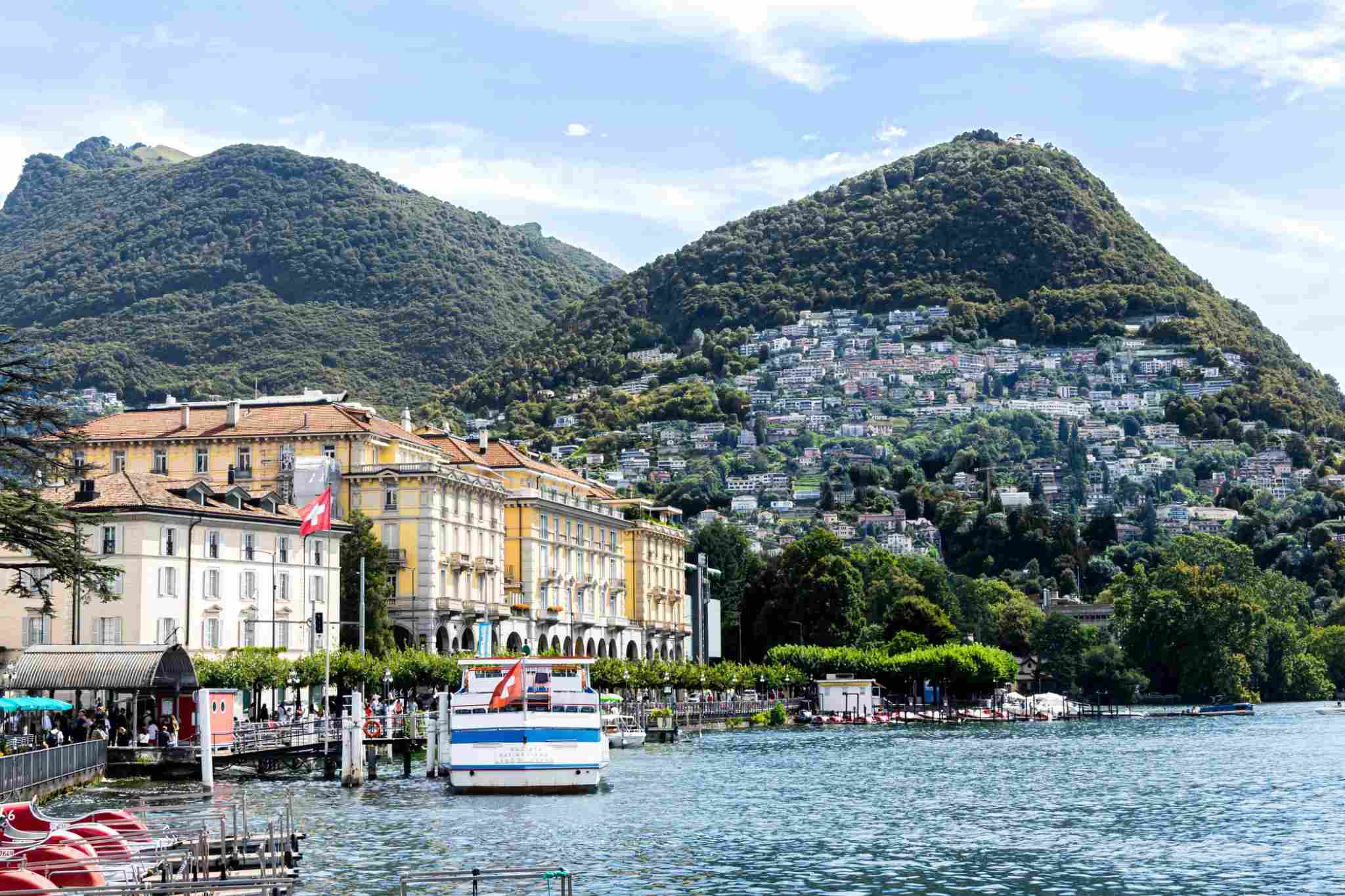
A fully booked hotel is not automatically a financeable hotel.
This is one of the most uncomfortable truths in hotel lending. Many owners look at occupancy, room revenue, online reputation and the location of the property and assume that a bank should finance the transaction without hesitation. But a bank does not think like a hotelier, a real estate broker or an emotionally involved investor.
A bank does not finance “full occupancy”.
It finances the hotel’s stable, proven and prudent ability to generate enough cash to repay the debt.
This is why a hotel that appears to be performing well can still be considered non-bankable. Not because it does not trade, but because trading activity does not always translate into margin, cash flow and financial sustainability.
The major misunderstanding: revenue does not mean bankability
The first mistake is confusing revenue with repayment capacity.
A hotel may have occupied rooms, an attractive ADR, strong reviews and solid commercial visibility, yet still generate limited cash after paying staff, suppliers, utilities, OTA commissions, maintenance, rent, taxes, insurance, capex and debt service.
The bank looks at one very simple question: after all operating, structural and financial costs, how much cash is actually left?
The issue is not whether the hotel is busy.
The issue is whether the hotel produces free cash flow.
A hotel may be full because it sells too cheaply, relies too heavily on expensive intermediaries, accepts low-margin groups, carries an oversized payroll or pays an excessive rent. In these cases, occupancy becomes a positive commercial snapshot, but not a banking guarantee.
For further insight into the relationship between management, financial numbers, corporate distress and the sustainability of hotel businesses, the blog Investhotel.it provides specific analysis on the operational and financial weaknesses of hotel companies.
Banks care about DSCR, not occupancy
In hotel financing, one of the most important indicators is the DSCR, the debt service coverage ratio, which measures the relationship between available cash flow and debt service.
In simple terms, the bank wants to understand whether the hotel generates enough cash to repay principal and interest with an adequate safety margin.
A hotel can be fully booked and still have an insufficient DSCR. This happens when the operating result does not adequately cover the mortgage instalments.
Occupancy shows how much the hotel sells.
DSCR shows whether the hotel can repay the debt.
They are completely different pieces of information.
A hotel running at 85% occupancy may be less bankable than a hotel running at 68% occupancy if the second hotel has better rates, lower intermediation, tighter cost control, sustainable capex and a more balanced financial structure.
In hotel lending, the winner is not the property that fills the most rooms.
The winner is the property that generates cash consistently.
Practical example: a full hotel that is not bankable
Imagine a hotel with the following figures:
-
annual revenue: €2,400,000;
-
average occupancy: 82%;
-
strong online reputation;
-
attractive commercial location;
-
operating GOP: €480,000;
-
annual rent or property cost: €210,000;
-
average required capex: €80,000;
-
taxes, charges and other structural outflows: €60,000.
The cash actually available before debt service may fall to approximately €130,000.
If the annual mortgage payment is €120,000, the hotel may appear able to repay the debt on paper. But the safety margin is too thin. A drop in occupancy, an increase in labour costs, higher OTA commissions, a technical issue with the building systems or a rise in interest rates would be enough to put repayment under pressure.
In this case, the hotel is full, but fragile.
For the owner, it is a hotel that is trading well.
For the bank, it is an exposed transaction.
For the investor, it is a risk that must be corrected before taking on debt.
The problem is not revenue.
The problem is the quality of cash flow.
A hotel property is not just bricks and mortar
A hotel is not an apartment, an office or a retail unit. It is an operating real estate asset. Its value depends on the interaction between the property, management, profitability, contracts, reputation, market conditions, capex and the quality of the management team.
This is why the bank does not only look at the theoretical value of the building. It also analyses:
-
historical profitability;
-
stability of cash flows;
-
sustainability of the business plan;
-
quality of management;
-
revenue composition;
-
dependence on OTAs, groups or a limited number of clients;
-
labour cost;
-
future investment requirements;
-
maintenance level of the property;
-
liquidity of the asset in the event of default;
-
strength of the local market;
-
credibility of the borrower.
A hotel may have a high real estate value but still be difficult to finance if its management cannot demonstrate a stable ability to generate cash. Conversely, a less spectacular property with clean numbers, solid margins and clear governance may be far more financeable.
The hotel guides on RobertoNecci.it explore precisely the relationship between real estate value, management, investments, contracts, asset management and hotel risk.
Capex is often the risk that destroys the loan
Many hotel business plans underestimate capex.
This is one of the most serious mistakes in hotel financing applications. A hotel may be full today, but have rooms that need refurbishment, obsolete systems, dated common areas, high energy costs, regulatory compliance issues or a product that may lose competitiveness in the coming years.
If these investments are not properly accounted for, the financial plan appears stronger than it really is.
The bank, however, does not only look at the current year. It looks at the hotel’s ability to remain competitive throughout the life of the loan.
The real issue is not only how much the hotel generates today.
It is how much it will need to reinvest in order to keep generating revenue tomorrow.
A hotel that requires €1 million of works over the following three years, but presents a business plan without a real capex reserve, is not a prudent hotel. It is a hotel postponing the problem.
And the bank can see it.
Rent, leases and contracts can make a hotel non-bankable
The contractual structure has a direct impact on bankability.
An owner-operated hotel, a hotel operated under a business lease, a hotel under a management agreement, a franchised hotel and a hotel under a lease all have different risk profiles.
If the rent is too high, the margin available for debt service is compressed. If the hotel management agreement includes heavy fees, capex obligations or rigid clauses, repayment capacity is reduced. If the franchise imposes expensive brand standards, the plan must reflect them. If the lease term is not aligned with the duration of the financing, the bank may consider the transaction riskier.
The bank does not finance only the building.
It finances the overall balance between asset, management, contracts and cash flows.
This is why the analysis published on InvestimentiAlberghieri.it often insists on one fundamental principle: before debt, there must be an industrial diagnosis of the transaction.
A full hotel can be full in the wrong way
Not all occupancy has the same value.
A hotel can be full because it sells well, protects its average rate, selects demand, reduces intermediation and controls costs. Or it can be full because it discounts rooms, buys occupancy through OTAs, accepts low-margin groups and operates with an unsustainable cost structure.
From a commercial perspective, the two hotels may look similar.
From a banking perspective, they are completely different.
The bank wants to understand the quality of revenue, not only its volume.
A hotel with full rooms but fragile revenue may be less financeable than a hotel with lower occupancy but stronger margins. Full occupancy, if built in the wrong way, does not protect value: it consumes it.
The right question is not: how many rooms do I sell?
The right question is: what margin do those rooms generate?
Hotel management is part of the guarantee
In hotel financing, the quality of management is an implicit guarantee.
A bank assesses who manages the hotel, with which tools, with what experience, with what cost control, with what ability to read the numbers and with what financial discipline.
A hotel with weak reporting, improvised budgets, unreliable forecasts, no management control and unclear accounting is more difficult to finance. Even if it is full.
By contrast, a hotel with clear data, monitored KPIs, a realistic budget, labour cost control, a credible capex plan, transparent governance and competent management sends a much stronger signal of reliability.
Bankability is not created on the day the loan application is submitted.
It is built beforehand, through solid numbers, consistent management and orderly documentation.
On the subject of hotel operations and management, the blog NecciHotels.it explores organisational, operational and managerial dynamics that directly affect hotel value and economic sustainability.
The business plan must not impress: it must survive stress testing
A hotel business plan must not sell dreams. It must survive stress testing.
Many plans presented to banks are built around the best-case scenario: growing revenue, controlled costs, rising ADR, stable occupancy, limited capex and favourable interest rates.
But the bank wants to know what happens if the scenario changes.
What happens if occupancy falls by 10%?
What happens if labour costs increase?
What happens if OTA commissions rise?
What happens if capex is higher than expected?
What happens if the market slows down?
What happens if interest rates remain high?
What happens if a renovated competitor enters the market?
A bankable hotel is not one that works only under the optimistic scenario.
It is one that can sustain debt even under a prudent scenario.
Loan-to-value: perceived value is not financeable value
Another common mistake is assuming that the value of the hotel automatically determines the amount of the loan.
It does not.
The bank applies prudent criteria. Loan-to-value depends on the value of the asset, but also on its liquidity, market conditions, profitability, quality of management, borrower profile and predictability of cash flows.
The value perceived by the owner does not necessarily match the banking value. The bank may apply adjustments, discounts, stress tests and conservative assumptions on profitability.
Emotional value does not finance debt.
Banking value does.
And banking value comes from the combination of real collateral and repayment capacity.
When does a hotel become truly bankable?
A hotel becomes bankable when it can demonstrate a coherent combination of elements:
-
stable revenue;
-
solid operating margins;
-
sufficient cash flow;
-
adequate DSCR;
-
sustainable capex;
-
balanced contracts;
-
defensible real estate value;
-
professional management;
-
transparent documentation;
-
understandable market conditions;
-
prudent business plan;
-
reliable governance.
The bank is not looking only for collateral. It is looking for predictability.
And in hospitality, predictability comes from readable numbers, orderly management, a competitive asset and a credible financial plan.
Before the mortgage, the hotel needs a banking due diligence
Before applying for hotel financing, the owner should ask a number of uncomfortable questions:
Is the income statement truly representative?
Is GOP stable or occasional?
Does cash flow really cover debt service?
Is DSCR sufficient even under a prudent scenario?
Has capex been correctly estimated?
Is the property value consistent with profitability?
Do the contracts protect or compress value?
Is the management credible to a lender?
Is the dossier bankable or merely commercial?
Does the bank understand the project, or is it receiving generic documentation?
A hotel mortgage application should not be prepared like an ordinary real estate file. It must be built as an industrial, financial and property dossier.
A bankable dossier must explain not only how much the hotel is worth, but why that hotel can sustain that debt.
Conclusion: full occupancy is not enough. Cash flow is what matters
A fully booked hotel can be a positive signal, but it is not proof of bankability.
The bank does not finance occupancy. It finances repayment capacity.
It does not look only at revenue. It looks at cash flow.
It does not look only at the building. It looks at the business operating inside the building.
It does not look only at the present. It looks at the future resilience of the transaction.
For a hotel investor, a bank, a fund, an asset manager, a family office or an owner, the decisive point is to understand whether the hotel creates real value or merely commercial movement.
A full hotel may not be bankable.
A less visible hotel, but one that is more orderly, more profitable and more transparent, may be far more financeable.
Before applying for a loan, before signing an offer, before acquiring an asset or refinancing a property, an independent assessment is required: asset, management, contracts, capex, cash flow, DSCR, banking risk and real value.
Do you want to know whether your hotel is truly financeable?
Hotel Management Group assists owners, investors, banks, funds and hotel operators with the analysis of real estate and operating transactions, hotel valuations, business plans, due diligence, management control, turnaround plans and the preparation of financing dossiers.
Learn more at HotelManagementGroup.it.
If you are buying, selling, refinancing or restructuring a hotel, do not wait for the bank to reject the transaction.
Write immediately to r.necci@robertonecci.it.
The earlier you analyse the risk, the earlier you can correct the dossier.
The earlier you correct the dossier, the greater your chances of obtaining financing.
The earlier you understand whether the hotel is truly bankable, the less capital you risk losing.
A full hotel can create illusions.
Banking numbers do not.
Roberto Necci