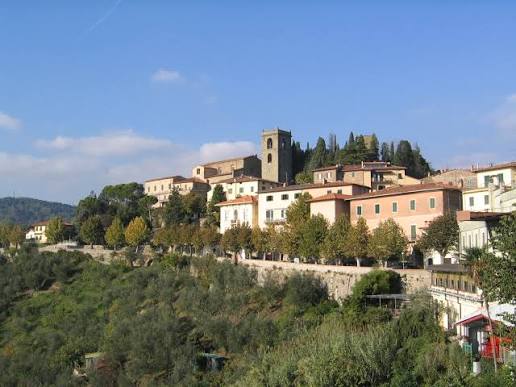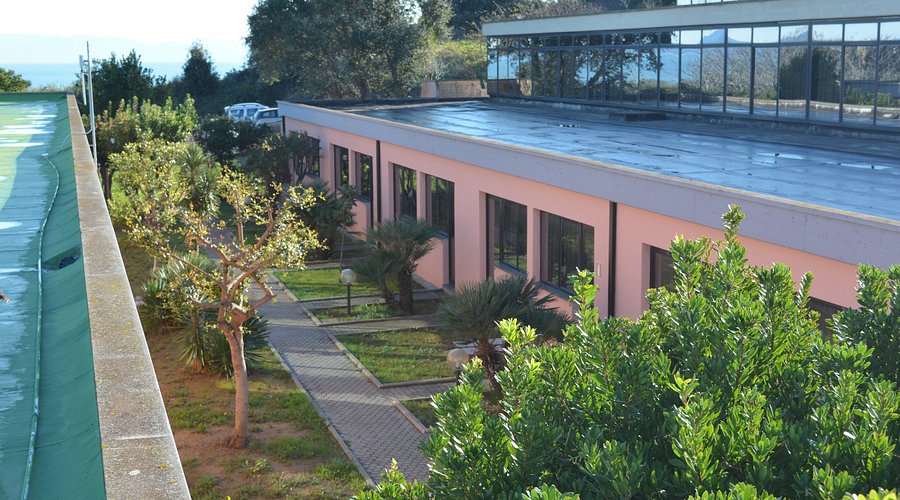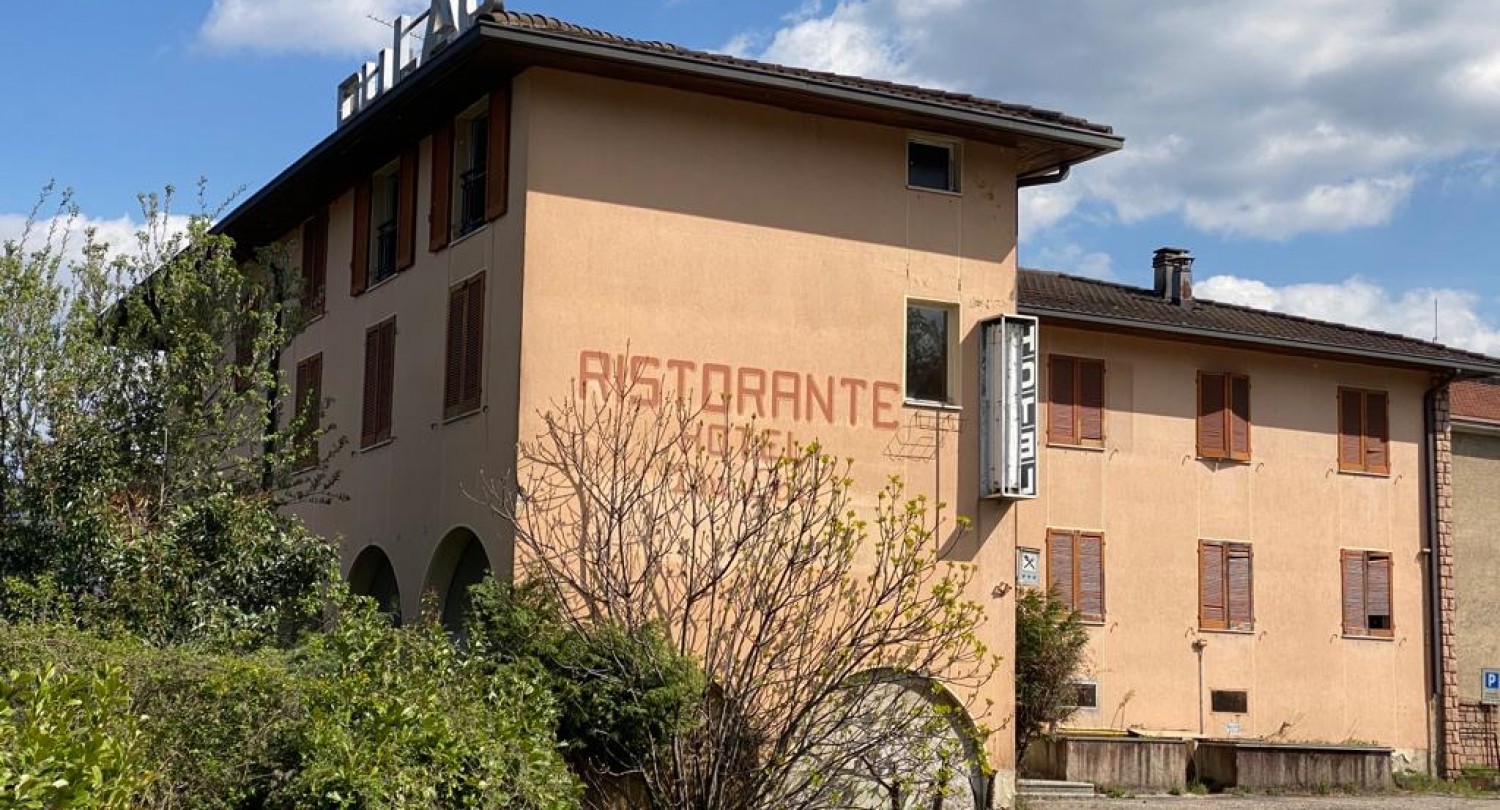
After decades of abandonment, Hotel Du Lac in Lavena Ponte Tresa has a new owner, already active in the tourism sector, and the first works have begun. Overgrown vegetation that had gradually engulfed the property has been cleared, bringing back into view a three-storey building originally developed between the late 1960s and early 1970s, with more than twenty rooms, a restaurant and kitchen directly on Lake Ceresio. But clearing the site is only the first signal. The real turnaround still needs to be built: hotel or aparthotel? Which category? How many keys? How much CAPEX? What sustainable ADR? What operating model? In distressed hospitality, reopening a property is not simply a matter of renovating it. It means choosing today a concept capable of generating cash flow for the next ten or fifteen years.
In the hotel investment market, there is a particularly delicate phase.
It is the period immediately following the acquisition of an asset that has been inactive for years.
The ownership has changed.
The building exists.
The location exists.
But the business does not yet exist.
The former Hotel Du Lac in Lavena Ponte Tresa is precisely at this stage.
The new owner has already provided the first tangible signal through the clearance and clean-up of the external areas.
That matters.
But from an investment perspective, it is only the first step.
After Decades of Abandonment, the First CAPEX Is Understanding the Building Properly
A property that has remained inactive for many years should be treated as an asset to be diagnosed before it is redesigned.
The first meaningful metric is not:
Acquisition Price per Key.
It is:
Technical Condition per Key.
A proper due diligence process should assess at least:
structure;
roofing;
façades;
windows and doors;
guestrooms;
bathrooms;
electrical systems;
plumbing;
HVAC;
fire safety;
lifts;
kitchen;
restaurant;
back of house;
accessibility;
energy efficiency;
planning and regulatory compliance.
Before asking:
“How much should we invest?”
the better question is:
“Where should we invest, and why?”
Cleaning Up the Asset Is Not the Same as Starting the Turnaround
The removal of vegetation has both symbolic and operational value.
It shows that the new owner has started to act.
But in hotel investment terms, it is essential to distinguish:
Site Activation
from
Asset Repositioning.
The first makes the building visible again.
The second must make it economically competitive.
Between the two sit:
design;
authorisations;
CAPEX;
concept development;
business planning;
financing;
pre-opening;
commercialisation;
management.
The real project starts now.
Hotel or Aparthotel? The Decision That Changes Everything
The new Du Lac could theoretically evolve into either:
a traditional hotel
or
an aparthotel.
This is not a naming exercise.
It is an industrial decision.
The two models generate different economics.
| Variable | Hotel | Aparthotel |
|---|---|---|
| ADR | Potentially higher with stronger service and positioning | Potentially lower nightly rate, but offset by longer stays |
| Length of Stay | Generally shorter | Generally longer |
| Payroll | Higher | Leaner |
| Housekeeping | More frequent | Less frequent |
| F&B | More relevant | More optional |
| Front Office | Higher service intensity | Greater potential for automation |
| CAPEX per Unit | Depends on service level | May increase due to kitchenettes and larger units |
| Target Market | Leisure, short stay, couples, groups | Families, long stay, cross-border and corporate |
| Distribution | OTAs, direct, tour operators, groups | OTAs, direct, long stay, relocation |
| Margins | Highly sensitive to staffing and F&B | May benefit from greater operating efficiency |
The right question is not:
“Which format is more modern?”
It is:
“Which format generates the best risk-adjusted return for this asset and this market?”
Market First, Architecture Second
An architectural concept already exists that envisages a significant visual transformation of the building.
It is an interesting proposition.
But it is essential to separate:
Architectural Concept
from
Investment Case.
A landmark building can increase:
brand awareness;
perceived value;
ADR;
appeal;
terminal value.
But it can also increase:
CAPEX;
technical complexity;
delivery times;
future maintenance.
The correct sequence should therefore be:
Market Analysis
→
Positioning
→
Product Strategy
→
Architectural Concept
→
CAPEX
→
Business Plan.
Not:
Rendering → Construction → Search for the Customer.
The Greatest Risk Is Locking in the Wrong Concept Today
This is one of the most underestimated risks in hotel redevelopment.
A design decision made today can influence the asset’s returns for the next ten or fifteen years.
If the project creates:
rooms that are too small;
too much F&B space;
oversized back-of-house areas;
units misaligned with the target market;
inflexible layouts,
those mistakes will not be easy to correct after reopening.
Concept risk works like this:
Wrong Product Decision
→
Wrong CAPEX
→
Wrong Cost Structure
→
Wrong Market Positioning
→
Lower GOP
→
Lower Asset Value.
A concept error can therefore destroy more value than an acquisition-price mistake.
The Architectural Project Needs an ROI
In hospitality, design creates value when it changes at least one economic variable.
For example, when it:
increases ADR;
improves occupancy;
reduces energy consumption;
increases sellable space;
creates premium room categories;
generates F&B revenue;
improves digital conversion;
supports a higher positioning.
The equation should be:
Incremental CAPEX
→
Incremental Revenue / GOP
→
Incremental Asset Value.
Architecture should support the investment thesis.
It should not exist independently from it.
The Real Asset at Du Lac Is the Lake
The main competitive advantage is written into the name:
Du Lac.
The property faces Lake Ceresio.
That should become the centrepiece of the repositioning strategy.
The project should not simply be:
“a new hotel in Lavena Ponte Tresa.”
It should become:
“a lake hospitality product on Lake Ceresio.”
That difference affects:
storytelling;
photography;
room segmentation;
pricing;
outdoor areas;
F&B;
brand identity;
experiences;
international targeting.
The lake should become a revenue generator.
Not merely a view.
Lake View Needs to Become Pricing Power
If part of the inventory enjoys lake views, the room architecture could potentially differentiate between:
Standard;
Lake View;
Premium Lake View;
Terrace;
Suite,
subject to the final layout.
The objective is not to create excessive room categories.
It is to build a:
Room Type Pricing Architecture.
The key metric becomes:
Lake View ADR Premium.
If the redevelopment improves the relationship between the rooms and the lake, that enhancement should be monetised.
There Is No Need to Imitate Lake Como
Lake Ceresio needs its own identity.
The positioning could build on:
nature;
slow tourism;
landscape;
lake mobility;
proximity to Switzerland;
greater authenticity;
lower congestion.
A potential value proposition might be:
Lake Experience + Italian Hospitality + Swiss Proximity.
That is more credible than trying to replicate models developed in very different destinations.
The Swiss Border Is a Potential Demand Pool
Lavena Ponte Tresa has another commercially relevant feature:
its proximity to Switzerland.
The potential market may include:
Italian leisure;
Swiss leisure;
international travellers;
short breaks;
visiting friends and relatives;
long stay;
corporate demand;
cross-border demand.
For an aparthotel model in particular, some of these segments could be highly relevant.
But geographic proximity should not be confused with guaranteed demand.
It needs to be translated into:
segmentation;
pricing;
distribution strategy.
More Than 20 Rooms: Scale Is a Critical Variable
The historical configuration included more than twenty rooms.
The future layout may change.
And that is a crucial point.
Even a small property still needs to absorb:
management;
front office;
software;
marketing;
maintenance;
compliance;
insurance;
administration.
These costs do not fall linearly with room count.
The right question is therefore:
how many keys maximise the building’s return without compromising the product?
More Rooms Do Not Necessarily Mean More Value
Maximising the number of units may appear rational.
But it is not always the right answer.
A lakefront hotel may create more value with:
fewer rooms
larger room sizes
better views
higher ADR
than with:
more rooms
a weaker product
lower ADR.
The correct metric is not:
Maximum Number of Keys.
It is:
Maximum Sustainable GOP per sqm.
The layout should maximise the economic productivity of the building.
Not simply its capacity.
The Restaurant Should Be Treated as a Separate Business
The historic property included both a restaurant and kitchen.
The future project will need to determine whether to create:
a restaurant primarily for hotel guests;
a restaurant open to the local market;
a lakefront destination restaurant;
breakfast plus light F&B;
outsourced F&B;
directly managed F&B.
For a relatively small property, a traditional full-service restaurant can quickly become expensive.
Payroll.
Food cost.
Energy.
Inventory.
Management complexity.
But the lakefront position may also generate external demand.
That is why the project should build:
Hotel P&L
and
Restaurant P&L
separately.
F&B Could Become the Project’s Second Economic Engine
If the restaurant genuinely capitalises on the lakefront setting, the business may be able to attract non-resident customers as well.
At that point, relevant metrics include:
External Covers
Average Check
Contribution Margin
Revenue per Available Seat.
F&B may reduce dependence on rooms.
But it also increases operating complexity.
It needs to be underwritten with the same discipline as the accommodation business.
CAPEX Should Be Decided After the Concept
The investment requirement may include:
structure;
façades;
roofing;
MEP;
HVAC;
fire safety;
lifts;
windows and doors;
rooms;
bathrooms;
FF&E;
OS&E;
restaurant;
kitchen;
PMS;
Wi-Fi;
access control;
landscaping;
pre-opening;
working capital.
But required capital changes dramatically depending on the concept.
That is why it is necessary to distinguish:
Maintenance CAPEX
from
Value-Accretive CAPEX.
The first makes the property usable again.
The second improves its ability to generate income.
The Number That Matters Is All-in Cost per Key
The underwriting should ultimately arrive at:
Acquisition Cost
Transaction Costs
Technical CAPEX
FF&E / OS&E
Pre-opening
Working Capital
=
Total Invested Capital.
Divided by:
Final Keys
this produces:
All-in Cost per Key.
That figure then needs to be assessed against:
ADR;
Occupancy;
RevPAR;
GOPPAR;
EBITDA;
Yield on Cost;
Stabilised Asset Value.
That is where the real value-creation potential becomes visible.
Spectacular Design Can Reduce ROIC
This risk needs to be stated clearly.
A powerful architectural concept can improve commercial appeal.
But if the required CAPEX exceeds the market’s pricing capacity, returns decline.
The relevant question is:
“How much incremental value does each additional euro of design CAPEX generate?”
The product needs to be:
desirable
but also:
financeable.
Independent, Soft Brand or Franchise?
Brand strategy should be addressed before the final project is locked in.
Potential options could include:
Independent Boutique Hotel
Soft Brand
Collection
Franchise
White-Label Operator.
A brand can bring:
international distribution;
loyalty;
corporate demand;
revenue systems;
reputation framework.
But it also brings:
fees;
PIP requirements;
standards;
CAPEX;
operating constraints.
In a smaller property, every fee carries a greater proportional weight.
Incremental value therefore needs to be demonstrated.
High-End Is Not a Category: It Is an Economic Outcome
A higher positioning cannot be decided on design alone.
“High-end” must result from:
location;
room product;
service;
design;
F&B;
brand;
pricing;
demand.
The right question is:
what stabilised ADR can this market support for this specific product?
That answer should determine the maximum sustainable CAPEX.
Not the other way around.
Three Potential Investment Theses
Scenario 1 — Boutique Lake Hotel
Limited inventory, strong design, premium on lake-view rooms and F&B open to external customers.
Driver:
ADR + Experience + F&B.
Scenario 2 — Lake Aparthotel
More independent units, longer stays, leaner payroll and greater exposure to families, cross-border demand and long-stay segments.
Driver:
Length of Stay + Operational Efficiency.
Scenario 3 — Hybrid Hospitality
Traditional rooms and long-stay units within the same operating ecosystem.
Driver:
Demand Diversification.
The choice should be the result of the business plan.
Not a creative assumption.
Three Financial Scenarios
Downside Case
High CAPEX.
Long authorisation timelines.
Reduced inventory.
Insufficient ADR.
Unprofitable F&B.
The main KPI becomes:
Maximum Capital Exposure.
Base Case
Coherent repositioning.
Efficient inventory.
A real premium on lake-view rooms.
Lean management.
Italian, Swiss and international demand.
Sustainable F&B.
This is the scenario on which the investment should be underwritten.
Upside Case
Du Lac becomes a genuine:
Lake Ceresio Lifestyle Destination
supported by:
distinctive design;
premium pricing;
international guests;
Swiss demand;
destination F&B;
strong digital identity.
This is the value-creation scenario.
Management Needs to Be Lean and Highly Competent
A property with just over twenty rooms cannot support a heavy organisational structure.
Hotel management would likely need to focus on:
multi-skilled staff;
digital check-in;
centralisation;
revenue management;
selective outsourcing;
automation;
direct booking;
continuous payroll control.
In a small hotel, even a few percentage points of inefficiency can absorb a significant share of GOP.
The Real Decision Is Not When to Reopen
The question should not be:
“When can we reopen?”
It should be:
“What business do we want to reopen?”
A rapid reopening reduces the period without revenue.
But reopening with the wrong product can lock in for years:
layout;
CAPEX;
staffing;
brand;
pricing;
positioning.
Time invested in strategy today may protect far more capital than the cost of delaying design decisions.
Due Diligence Needs to Become a Feasibility Study
For an asset like this, technical verification is not enough.
The process needs to combine:
Technical Due Diligence
Market Due Diligence
Commercial Due Diligence
Financial Feasibility.
The ultimate objective is to answer one question:
which product maximises the risk-adjusted return of the property?
The specialist guides published on Robertonecci.it explore precisely these areas, including hotel valuation, contracts, asset management and due diligence.
From Building Renovation to a Genuine Hotel Turnaround
The turnaround does not end when:
the guestrooms are new;
the façade is refurbished;
the landscaping is complete.
It ends when the asset consistently produces:
Revenue;
GOP;
cash flow;
return on invested capital.
The same principle applies to the acquisition and turnaround situations analysed by Investhotel Capital Partners.
The correct sequence is:
Acquire
→
Diagnose
→
Position
→
Design
→
Invest
→
Pre-open
→
Ramp-up
→
Stabilise.
Skipping one stage increases the risk of the next.
The Seven Decisions That Will Determine the Value of the New Du Lac
1. Hotel or Aparthotel?
The decision that influences almost everything else.
2. How Many Keys?
Not the maximum possible number.
The economically optimal number.
3. How Much CAPEX?
Defined after product strategy.
4. What Positioning?
Midscale, upscale, boutique or lifestyle?
5. What Role Should the Restaurant Play?
Amenity, profit centre or destination restaurant?
6. Independent or Branded?
Incremental distribution must justify fees and standards.
7. What Operating Model?
Owner-operated, third-party management or a hybrid structure?
These seven decisions will create far more value than the physical renovation alone.
Conclusion: Du Lac Is Visible Again. Now It Needs to Become Investable Again
After decades of abandonment, something has genuinely changed.
Du Lac now has:
a new owner;
an investor already active in tourism;
the first works underway;
more than twenty rooms in its historical configuration;
a restaurant and kitchen;
a location directly on Lake Ceresio;
a project potentially capable of radically transforming its image.
But these elements do not yet constitute an investment thesis.
The real questions remain:
Hotel or aparthotel?
How many keys?
Which category?
How much CAPEX?
What ADR?
What GOP?
What Total Invested Capital?
What ROIC?
The site clearance has removed the most visible signs of abandonment.
Now the industrial uncertainty needs to be removed.
Because the value of the new Du Lac will not depend only on the quality of the renovation.
It will depend on the ability to transform:
lakefront real estate
into
sustainable hospitality cash flow.
The real turnaround is not about restoring the building to its former glory.
It is about creating a product capable of generating returns for many years on the capital required to bring it back to life.
The new owner has reopened the story of Hotel Du Lac.
Now it must decide which business will write its next chapter.
InvestimentiAlberghieri.it Advisory
InvestimentiAlberghieri.it analyses hotel acquisitions, relaunches, turnarounds and repositioning projects, including inactive assets and early-stage reactivation opportunities.
For business plans, feasibility studies, CAPEX analysis, due diligence, repositioning, operator search, brand selection and hospitality transaction structuring:
info@investimentialberghieri.it
Complementary expertise and insights:
Robertonecci.it — hospitality advisory, valuations and specialist guides
Investhotel.it — hotel acquisitions, disposals, turnarounds and hospitality transactions
HotelManagementGroup.it — hotel management, asset management, repositioning and performance optimisation