A market dossier on tourism flows, destination positioning and the future of Fiuggi’s hospitality assets
By Roberto Necci — hotel M&A, restructuring and hospitality management advisory
Executive summary
Fiuggi is one of the most interesting — and arguably most misunderstood — spa destinations in the Italian hotel market.
Look at tourism flows alone and this is not a destination in decline.
Overnight stays increased from approximately 694,000 in 2018 to almost 857,000 in 2024. Average length of stay has risen significantly. Fiuggi accounts for roughly 60% of total tourism activity in the Province of Frosinone and has one of the largest accommodation capacities in Lazio outside Rome.
Move from destination-level statistics to the economics of individual hotels, however, and the picture changes.
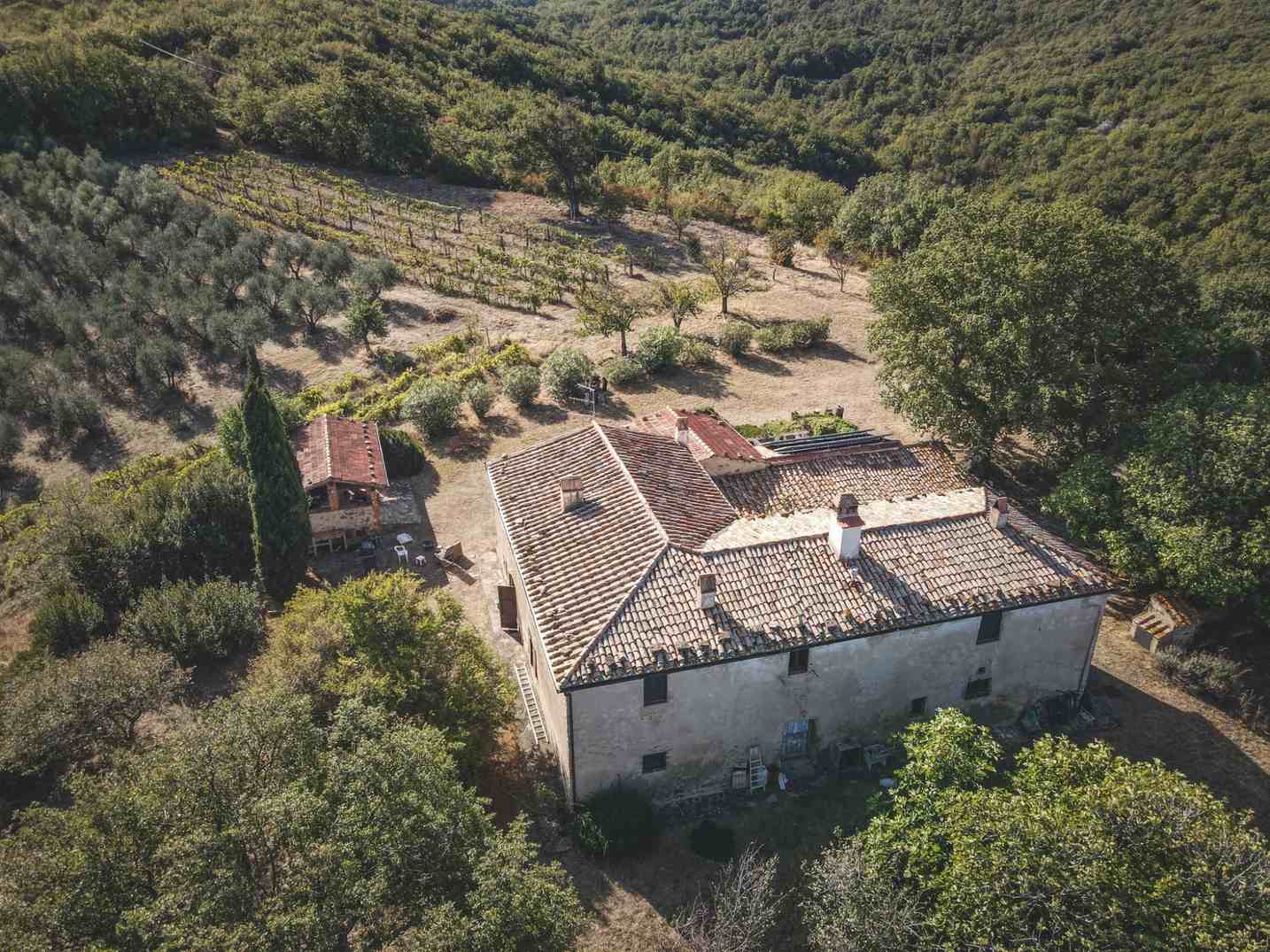
A significant share of Fiuggi’s hotel stock was developed around the traditional post-war thermal tourism model: relatively small guestrooms, oversized restaurant areas, ageing building systems, substantial energy requirements, half-board and full-board packages, and family ownership structures now often reaching their second or third generation.
Fiuggi therefore does not face the same demand problem affecting many other Italian spa destinations. Its core issue is the ability to convert demand into operating profitability and asset value.
That distinction is fundamental.
In my analysis of Montecatini Terme, I examined a market where structural oversupply, the deterioration of the thermal asset base and the commoditisation of the hotel product have contributed to sustained pressure on hotel values.
Fiuggi presents almost the opposite dynamic.
Demand has expanded. Length of stay has increased. The destination brand retains nationwide recognition. And high-end hospitality projects have already demonstrated that Fiuggi can support international-level pricing when the product is positioned correctly.
The problem is that much of the existing hotel stock still operates under an economic model that is unable to capture this revaluation.
The central thesis of this dossier is therefore straightforward: Fiuggi has already created destination value. A significant part of its hotel real estate has yet to convert that value into either profitability or capital appreciation.
The gap between those two values is where one of the most interesting opportunities in the local hotel market currently lies.
1. Fiuggi today: understanding the destination before valuing the hotel
Fiuggi is a town of approximately 8,500 residents in the Province of Frosinone, situated at around 747 metres above sea level in the Ernici Mountains.
The destination has two clearly distinct areas:
-
Fiuggi Città, the historic hilltop town;
-
Fiuggi Fonte, which developed around the thermal springs and hotel industry.
To understand hotel value in Fiuggi, three structural characteristics must be considered first.
Proximity to Rome
Fiuggi lies within easy reach of the largest tourism and population catchment area in Central Italy.
Its distance from Rome should not simply be viewed as a transport advantage.
It provides potential access to:
-
leisure demand;
-
wellness travellers;
-
corporate and meetings business;
-
weekend and short-break demand;
-
senior tourism;
-
international visitors already staying in Rome who may be attracted by a differentiated destination product.
When a destination sits within approximately one hour of Italy’s largest tourism market, accessibility becomes part of the product itself.
Water as a national brand
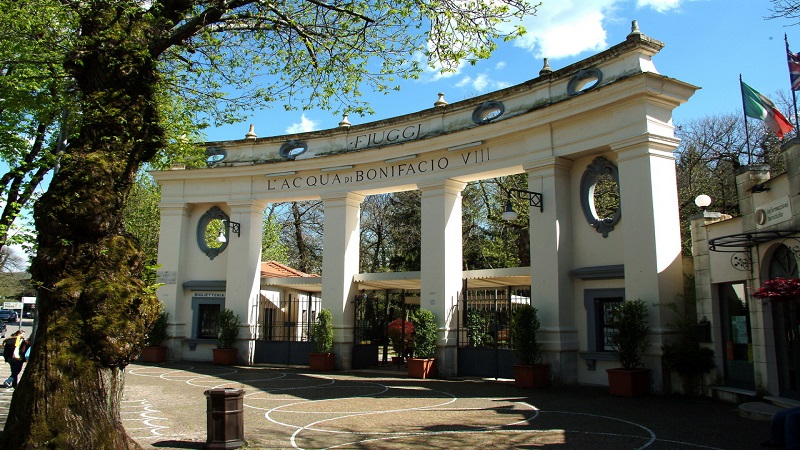
Fiuggi also possesses something many spa towns do not: a name recognised by people who may never have visited the destination.
The Acqua Fiuggi brand extends the identity of Fiuggi far beyond the town itself.
The destination therefore already owns a degree of brand equity that does not need to be created from scratch.
For hotel owners and investors, this matters.
One of the greatest challenges facing secondary destinations is often explaining to prospective guests where they are and why they should visit.
Fiuggi starts from a stronger position.
An existing tourism infrastructure
Hotels, thermal facilities and golf provide an established tourism infrastructure.
This is not a destination that needs to invent an entirely new market.
It is a destination whose existing tourism proposition needs to be reinterpreted and repositioned.
From an investment perspective, that distinction matters.
Creating demand from zero is considerably more expensive than repositioning a destination that already generates hundreds of thousands of overnight stays.
2. The transition: from prescribed thermal treatment to destination-led stays
Fiuggi has experienced the same structural shift that affected Italy’s traditional spa industry: the gradual decline of thermal treatments prescribed and subsidised through the national healthcare system.
Many spa destinations never successfully replaced that demand model.
Fiuggi, at least in terms of visitor flows, appears to have undergone a more meaningful transition towards demand driven by:
-
wellness;
-
leisure stays;
-
proximity tourism;
-
meetings and events;
-
outdoor activity;
-
sport;
-
short breaks.
A comparison with Montecatini helps explain the difference.
| Indicator | Montecatini Terme | Fiuggi |
|---|---|---|
| Overnight stays, 2024 | ~1.564 million | ~857,000 |
| Average length of stay | ~2.5 nights | ~3.8 nights calculated |
| International share | ~70% | ~36% |
| Predominant demand model | Intermediated/group tourism | Destination stay |
| Traditional hotel formula | Mainly bed and breakfast | Half/full board |
| Historic demand driver | Price and location | Water, thermal wellness, stay experience |
The purpose of this comparison is not to decide which destination is stronger.
It is to recognise that the two markets face different industrial problems.
Montecatini has a substantial hotel stock operating in an environment where oversupply and pricing pressure can trigger a progressive decline in asset values.
The full analysis is available in Montecatini Terme: anatomy of an anticipated hotel crisis on InvestimentiAlberghieri.it.
Fiuggi faces a different challenge:
guests stay longer, but a significant part of the hotel industry is still selling a product and operating model designed for a different market and a different era.
3. Demand: arrivals, overnight stays and length of stay
3.1 Historical performance
| Year | Total overnight stays | Reported average stay |
|---|---|---|
| 2016 | 619,311 | n/a |
| 2018 | 693,993 | 2.27 |
| 2024 | 856,929 | 4.07 reported |
2024 breakdown
| Segment | Arrivals | Overnight stays | Calculated average stay |
|---|---|---|---|
| Domestic | 134,802 | 549,020 | 4.07 |
| International | 91,300 | 307,809 | 3.37 |
| Total | 226,102 | 856,929 | 3.79 |
Source: municipal tourism data released by the Fiuggi administration and reported by local media.
Methodological note
The officially communicated overall average length of stay was 4.07 nights.
However, dividing 856,929 overnight stays by 226,102 arrivals produces an average of approximately 3.79 nights.
Since 4.07 corresponds exactly to the domestic segment, it is possible that the domestic figure was subsequently reported as the overall figure.
For the purposes of this analysis I therefore use the mathematically reconstructible and more conservative figure of 3.79 nights.
The distinction is not academic.
A hotel business plan is built through a chain of assumptions:
arrivals → length of stay → rooms sold → occupancy → ADR → revenue → profit.
A small error at the beginning of that chain, projected over five or ten years, can materially distort both asset valuation and debt capacity.
4. What the figures actually tell us
Growth is more than a post-pandemic rebound
The most relevant comparison is not with 2020 or 2021.
It is with 2018.
An increase from approximately 694,000 to almost 857,000 overnight stays represents growth of around 23.5%.
For a destination historically linked to traditional thermal tourism, that deserves attention.
Length of stay may be the most important metric
Moving from approximately 2.27 nights in 2018 to a calculated 3.79 nights in 2024 represents a substantial increase in the destination’s ability to retain visitors.
That has meaningful economic consequences.
A longer stay can generate:
-
lower acquisition cost per occupied night;
-
less turnover pressure;
-
more efficient housekeeping;
-
greater ancillary spending opportunities;
-
more time to sell a destination experience;
-
less dependence on transient one-night demand.
Fiuggi has therefore achieved something many destinations have been trying to achieve for years:
it has created a guest who stays.
The real question is how much profit is generated during that stay.
Domestic demand is not necessarily a weakness
Approximately 64% of overnight stays are generated by Italian guests.
A superficial analysis could interpret this as insufficient internationalisation.
That would be too simplistic.
A strong domestic base can provide a relatively stable platform from which to expand into international markets.
Fiuggi’s strategic challenge is not to replace Italian guests with foreign ones.
It is to segment both markets more effectively.
International demand remains the largest untapped growth opportunity
International visitors generated approximately 308,000 overnight stays in 2024.
There is therefore material upside if Fiuggi can strengthen its position in wellness, medical, active and premium travel.
However, historic international volumes should not automatically be treated as a forecast.
Past performance demonstrates market potential, not guaranteed future demand.
Any meaningful increase in international business will depend on:
-
product quality;
-
distribution;
-
accessibility;
-
destination branding;
-
transport;
-
hotel-level sales capabilities;
-
coordinated destination strategy.
5. The economic model: what does a room in Fiuggi actually generate?
To translate destination statistics into an initial hotel-level framework, we can build an indicative operating model.
This is not a valuation of any individual property.
Its purpose is to establish an order of magnitude.
Working assumptions
-
total overnight stays: 856,929;
-
estimated hotel share: 92%;
-
estimated hotel guest nights: approximately 788,000;
-
average room occupancy: 1.9 guests per occupied room;
-
estimated room nights sold: approximately 415,000;
-
estimated active room inventory: approximately 3,000 rooms;
-
average annual opening period: 220 days.
Indicative result
| Metric | Estimate |
|---|---|
| Available room nights during operating period | ~660,000 |
| Occupancy during opening period | ~63% |
| Equivalent occupancy over 365 days | ~38% |
| Average revenue per occupied room including board | €70–95 |
| RevPAR during opening period | €44–60 |
| Annual accommodation + board revenue per room | ~€9,700–13,100 |
A roughly 63% occupancy rate during the actual operating period is not necessarily poor.
The issue comes afterwards.
A significant number of Fiuggi hotels sell half-board or full-board packages.
The apparent room revenue therefore incorporates food and beverage components that carry a very different cost structure from pure rooms revenue:
-
food cost;
-
kitchen labour;
-
restaurant labour;
-
utilities;
-
cleaning;
-
equipment;
-
maintenance;
-
waste;
-
depreciation.
Headline revenue per occupied room may therefore look acceptable while the actual contribution margin remains modest.
Fiuggi’s core issue is not necessarily how many rooms are sold. It is how much economic value remains after those rooms have been sold.
This is why occupancy alone is not enough.
The critical metrics are:
ADR, RevPAR and, above all, GOPPAR.
On Investhotel.it, hotel valuation is approached from precisely this perspective: a hotel is not valuable simply because it contains a certain number of guestrooms. Its value derives from the sustainable ability of those rooms to generate profit and cash after taking into account the investment required to keep the property competitive.
6. The real constraint: capex and the commercial model
Consider a 50-room hotel.
Using the assumptions above, annual accommodation and board revenue could fall broadly within the range of:
€485,000–€655,000.
Now introduce the real issue.
Bringing a hotel built in the 1960s or 1970s up to contemporary standards can require work on:
-
guestrooms;
-
bathrooms;
-
MEP systems;
-
façades;
-
insulation;
-
windows;
-
fire safety;
-
heating and cooling;
-
public areas;
-
restaurants;
-
wellness facilities;
-
energy efficiency.
A capital expenditure requirement of €1.5–€2.5 million can therefore be entirely plausible.
The right question is not:
“Will the bank finance the refurbishment?”
The right question is:
“Will the operating model after refurbishment generate enough cash to service and remunerate that investment?”
If the answer is no, the refurbishment alone solves nothing.
It simply creates a better-looking hotel with the same underlying economic problem.
Capex therefore has to be accompanied by:
-
repositioning;
-
improved segmentation;
-
distribution strategy;
-
ADR growth;
-
redesigned food and beverage economics;
-
greater use of room-only or bed-and-breakfast pricing where appropriate;
-
ancillary revenue;
-
potentially proprietary wellness;
-
season extension;
-
a different commercial strategy.
Fiuggi does not need to renovate the old model. It needs to finance the transition to a new one.
7. Supply: a hotel stock that has not moved at the same speed as demand
Fiuggi has a very high accommodation capacity relative to the size of the town.
A significant portion of this stock was developed during the strongest years of subsidised and medically driven thermal tourism.
The resulting product has several recurring characteristics.
Low energy efficiency
At this altitude, heating costs matter.
An energy-inefficient building is not merely an environmental issue.
It is a GOP issue.
Guestroom and bathroom size
Many hotels were designed according to room standards that are difficult to reconcile with current upper-upscale or luxury expectations.
In some cases, successful repositioning may actually require a reduction in room count.
This is counterintuitive but important:
for some hotels, the path to higher revenue is not more rooms. It is fewer rooms capable of commanding materially higher rates.
Oversized restaurant areas
The traditional full-board model created dining rooms that can be disproportionately large for a contemporary hospitality product.
These spaces have to be:
-
heated;
-
maintained;
-
cleaned;
-
lit;
without necessarily generating proportionate revenue.
Limited proprietary wellness
For a destination seeking to compete in wellness, relying entirely on external thermal facilities limits the hotel’s ability to capture guest spending directly.
Fragmented ownership
Generational transition is another key issue.
When an asset is divided among several heirs with different objectives, the problem becomes more than operational.
It becomes financial and strategic.
The owner can gradually move from entrepreneur to custodian of a complex and capital-intensive property.
8. Distressed and inactive hotel stock: what does €172 per square metre actually mean?
Fiuggi also has inactive hotel properties and distressed situations.
Examples emerging from public notices and documentation include:
| Case | Relevant element |
|---|---|
| Former Hotel Tripoli | Confiscated complex close to Fonte Bonifacio VIII; auction base reportedly €874,000 on a site of approximately 5,090 sq m |
| Hotel on Via San Emiliano | Disused hospitality property involved in enforcement proceedings |
| Mid-sized hotel assets | Other properties offered for sale or entering procedures |
In the former Hotel Tripoli case, the ratio between the indicated auction value and the relevant surface produces an indicative value of approximately €172 per square metre.
That figure should not be interpreted as:
“Hotels in Fiuggi are worth €172 per square metre.”
That would be a methodological error.
Distressed pricing reflects far more than the physical building.
It may incorporate:
-
deterioration;
-
execution risk;
-
timing risk;
-
planning uncertainty;
-
refurbishment requirements;
-
regulatory issues;
-
financing costs;
-
the nature of the legal process;
-
transaction complexity.
The market is not discounting the building alone. It is discounting what it cannot quantify.
This leads to one of the most important principles in hotel M&A:
reducing uncertainty creates value.
A complete technical dossier, clear planning status, verified licences, a credible capex plan and a robust operating model can materially change the way an investor assesses the same property.
This is precisely the type of analysis that should precede the sale or repositioning of a hotel asset and is explored both on InvestimentiAlberghieri.it and through the advisory activity presented on robertonecci.it.
9. Fiuggi and Montecatini: two hotel crises that may look similar but are not
The comparison with Montecatini is valuable because it prevents us from applying the same solution to structurally different problems.
In Montecatini Terme: anatomy of an anticipated hotel crisis, I examined a market facing significant pressure across its hotel stock, with numerous properties competing for buyers at the same time.
When many owners sell simultaneously, something simple happens:
hotels stop competing only for guests. They also begin competing for capital.
When the supply of assets exceeds available investor demand, bargaining power moves towards the buyer.
Fiuggi currently presents different characteristics.
Distressed or inactive assets exist, but the phenomenon is not necessarily of the same systemic scale.
At the same time:
-
overnight stays are increasing;
-
average length of stay has improved;
-
the brand retains strong recognition;
-
luxury wellness has already established a proof of concept;
-
Rome provides an exceptional nearby source market.
The implication is important.
Applying distressed-market pricing logic to Fiuggi can mean transferring a portion of future destination upside directly to the buyer.
10. Acqua e Terme di Fiuggi: why the industrial repositioning also matters to hotel owners
The water, thermal and golf assets are linked to Acqua e Terme di Fiuggi S.p.A.
Recent financial performance shows a complex transition.
| Year | Revenue | Water production |
|---|---|---|
| 2018 | €16.2m | 27.0m litres |
| 2019 | €16.8m | 28.0m litres |
| 2020 | €16.1m | 25.6m litres |
| 2021 | €18.4m | 30.5m litres |
| 2022 | €18.0m | 23.5m litres |
| 2023 | €14.7m | 20.1m litres |
| 2024 | €14.5m | 24.0m litres |
The 2023 accounts recorded a significant net loss.
At the same time, an industrial and commercial repositioning of the Fiuggi brand has been underway since 2024.
Publicly disclosed initiatives have included:
-
brand and product segmentation;
-
repositioning of the range;
-
industrial investment;
-
recovery in production from the 2023 low;
-
stronger focus on distribution;
-
investment in destination-related assets.
For hotel owners, the key question is not to predict the future financial performance of the company.
It is to understand the possible impact of a stronger territorial brand.
If the Fiuggi name increasingly appears in premium channels, hospitality, retail and national communications, destination recognition strengthens.
Every investment in the Fiuggi brand can create a positive externality for the local hotel market.
But that externality does not automatically become ADR.
An outdated hotel cannot fully monetise a premium destination narrative.
The correct conclusion is therefore not:
“The revival of the water brand will automatically increase hotel values.”
It is:
“The revival of the brand gives hotels another opportunity to capture value — provided their product and positioning are capable of doing so.”
11. The pricing proof: when Fiuggi demonstrates that it can sell at a completely different level
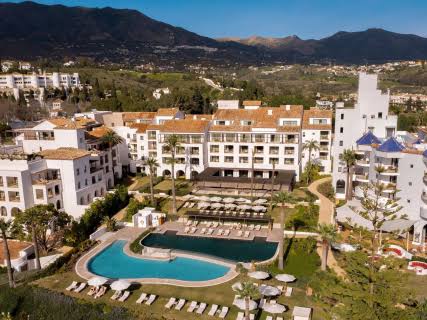
The reopening of the former Palazzo della Fonte as a high-end medical wellness retreat introduced a new benchmark into the economic analysis of Fiuggi.
The historic 1913 property was redeveloped into a product featuring:
-
132 guestrooms, including numerous suites;
-
several thousand square metres of medical wellness facilities;
-
treatment rooms;
-
medical consultation rooms;
-
extensive landscaped grounds;
-
a high-end food and beverage proposition.
Its strategic importance extends beyond the performance of one hotel.
The development demonstrated that a Fiuggi address does not, by itself, impose a ceiling on international-level pricing.
That changes the valuation conversation.
The same destination can support:
-
traditional hotels;
-
midscale products;
-
wellness hotels;
-
medical hospitality;
-
upscale properties;
-
luxury resorts.
Price is therefore not determined solely by geography.
It is determined by the ability to turn location, history, water, services, guestrooms and distribution into a coherent product.
And this is where Fiuggi’s largest gap becomes visible.
The destination has moved faster than part of its hotel stock.
12. Why the gap does not close automatically
There are three main reasons.
12.1 The product has not been re-engineered
A guestroom designed for subsidised thermal stays in the 1970s does not become a wellness product simply because the furniture and colour palette are changed.
In many cases, owners need to rethink:
-
room size;
-
bathroom configuration;
-
lighting;
-
soundproofing;
-
technology;
-
public spaces;
-
food and beverage;
-
wellness facilities;
-
the entire allocation of space.
12.2 The commercial model protects today while preventing tomorrow
Traditional full board has one major advantage:
it fills rooms.
But it can also become a barrier.
Repeat guests know the historic price point, benchmark one year against the next and often expect continuity.
Operators fear raising rates too aggressively because they may lose their existing base.
The result is a particularly difficult strategic position:
the hotel is occupied, but it cannot easily move into a new market.
That transition has to be planned.
Moving from an ADR of €80 to €180 is not achieved by uploading a new rate.
It requires:
-
product;
-
distribution;
-
reputation;
-
marketing;
-
segmentation;
-
time;
-
working capital.
12.3 The current P&L cannot finance the transformation
This is the real constraint.
The old product may not generate sufficient free cash flow to finance the new product.
The new product cannot be built without capital.
That is where the discussion expands to include:
-
debt;
-
equity;
-
investors;
-
new operators;
-
business leases;
-
management contracts;
-
joint ventures;
-
public incentives.
The issue is therefore no longer only operational.
It becomes financial and corporate.
That is precisely the point at which hotel operations, ownership and M&A converge across the areas of expertise coordinated through HotelManagementGroup.it.
13. The asset thesis: value can exist before it appears in the accounts
Fiuggi presents an unusually interesting situation.
The destination is producing revaluation signals.
Part of the hotel stock is not yet reflecting them.
This creates what can be described as a value-capture gap.
Potential value comes from:
-
growing demand;
-
longer stays;
-
destination brand recognition;
-
proximity to Rome;
-
wellness positioning;
-
proven premium demand;
-
relative scarcity of genuinely repositionable and transaction-ready hotel assets.
But potential value is not the same as price.
To become price, it must be demonstrated.
That requires:
-
a plan;
-
operating assumptions;
-
capex;
-
product positioning;
-
licences;
-
ADR assumptions;
-
occupancy assumptions;
-
GOP;
-
EBITDA;
-
investor returns;
-
exit strategy.
Professional investors do not pay for potential simply because the seller describes it. They pay for potential when they can quantify it.
14. Chianciano: when price replaces value
The opposite mechanism is illustrated by a case I documented in Chianciano Terme.
One hotel asset moved from a valuation of €996,000 to a realised price of €89,000 within just 21 months.
The full analysis is available here:
The point is not that the hotel suddenly became economically “worth” €89,000.
The point is to understand how a legal procedure, successive discounts and the absence of credible alternatives can gradually cause procedural price to replace economic value in the market’s perception.
In Chianciano the depreciation clock was visible.
Every auction produced a new reference point.
Fiuggi may face the opposite risk.
The destination can appreciate while the owner remains inactive.
The asset does not necessarily lose nominal value.
The owner loses the opportunity to capture part of the destination’s appreciation.
That is an opportunity cost.
And because it does not appear in the accounts, it is much harder to recognise.
Selling a hotel before measuring its realistic repositioned value means negotiating with only half the equation.
A professional buyer will usually know the other half.
15. Four types of hotel owner in Fiuggi
Profile A — The family hotel that is operating, occupied and apparently healthy
Current position
The hotel trades.
It has loyal repeat guests.
Occupancy is satisfactory.
Debt may be modest.
The owner therefore believes there is no urgent problem.
The risk
The issue may not be today.
It may be tomorrow’s customer base and tomorrow’s rate.
High occupancy at low ADR, supported by an ageing customer profile, can become a fragile equilibrium.
What to do
Before any refurbishment, the hotel needs a transition plan.
Management should establish:
-
which segment will gradually replace the historic customer;
-
what product that segment requires;
-
what ADR the market can support;
-
how much capex is needed;
-
what temporary occupancy loss may result from changing market position;
-
how that transition will be funded.
Point five is often underestimated.
Hotel transformation costs twice: once in construction, and once in the time required for the market to accept the new product.
16. Profile B — The hotel under capex pressure
Fire safety, building systems, energy efficiency and deferred maintenance can no longer be postponed.
The issue is not simply how to raise financing.
It is whether the investment will earn an adequate return.
Grants and subsidised financing can reduce the cost of capital, but no incentive can turn a poor investment into a good one.
The business plan comes first.
The financing comes second.
Where capex materially exceeds the owner’s financial capacity, alternative structures may include:
-
business lease;
-
operating lease;
-
management agreement;
-
equity investment;
-
joint venture;
-
partial disposal;
-
separation between property ownership and hotel operations.
Owning 100% of an asset that cannot be funded is not always more valuable than owning part of an asset that has returned to growth.
17. Profile C — The closed hotel or asset approaching enforcement
Once a hotel closes, time stops being neutral.
Every month may generate:
-
further physical deterioration;
-
higher future capex;
-
licensing complications;
-
financing costs;
-
property taxes;
-
litigation;
-
weaker negotiating leverage.
The Chianciano case demonstrates how quickly a formal process can change market expectations.
The strategy should therefore be built before the procedure makes price the only remaining variable.
Potential tools may include:
-
negotiated restructuring;
-
debt restructuring plans;
-
agreements with lenders;
-
investor entry;
-
negotiated disposal;
-
discounted debt settlements;
-
broader restructuring of the capital structure.
Fiuggi adds one specific consideration:
an inactive hotel in a destination showing genuine demand growth may possess option value that an equivalent asset in a structurally declining destination does not.
But this value also needs to be demonstrated.
It cannot simply be asserted to creditors.
18. Profile D — The owner who wants to sell
This is often the most delicate situation.
Reasons may include:
-
lack of succession;
-
age;
-
disagreement among heirs;
-
portfolio diversification;
-
inability to fund capex;
-
a simple strategic decision to exit.
The expensive mistake is putting the property on the market immediately and asking:
“What will you offer me?”
Before marketing the asset, the owner should have:
-
legal and technical due diligence;
-
planning verification;
-
licensing review;
-
building systems assessment;
-
capex estimate;
-
operating analysis;
-
alternative business scenarios;
-
repositioning business plan;
-
real-estate valuation;
-
income-based valuation;
-
a defined buyer universe.
Only then can the asset be matched with the right type of counterparty.
A hotel should not necessarily be marketed indiscriminately.
Potential buyers may include:
-
hotel operators;
-
family offices;
-
investment funds;
-
entrepreneurs;
-
wellness groups;
-
real-estate investors;
-
investors pursuing permitted alternative uses.
On Investhotel.it, this is a core principle: selling should not be the starting point of the analysis.
It should be one possible outcome.
19. Five mistakes that can be particularly expensive in Fiuggi
1. Confusing occupancy with profitability
A full hotel can still be economically weak.
A hotel with lower occupancy can generate materially higher GOP.
The real question is:
how much operating profit does each available room generate?
2. Confusing package price with room revenue
When breakfast, lunch and dinner are included, revenue should be separated by profit centre.
Otherwise management cannot determine which department is creating margin and which is consuming it.
3. Assuming destination revaluation automatically transfers to the hotel
It does not.
Destination value has to be captured through the product.
An outdated property does not become premium because a luxury resort opens nearby.
4. Asking the bank for money before building the plan
A financing request explains a need.
A business plan explains how the capital will be repaid.
They are two very different conversations.
5. Selling based on current value without calculating transformed value
This may be the most important asset-management mistake.
Before accepting an offer, an owner should understand at least three figures:
value as-is;
required capex;
potential post-repositioning value.
The appropriate transaction value sits in the relationship between these variables and the return required by the investor.
20. Three scenarios for Fiuggi, 2026–2030
I do not attach numerical probabilities to these scenarios because the available evidence does not justify that level of precision.
Three broad trajectories can nevertheless be identified.
Scenario A — Existing owners capture the upside
A meaningful share of Fiuggi’s hotel stock is repositioned by current owners.
They change:
-
product;
-
ADR;
-
distribution;
-
commercial formula;
-
target markets.
In this scenario, much of the increase in asset value remains with existing ownership.
It is the most attractive scenario for incumbents, but it requires both capital and expertise.
Scenario B — External capital acquires the value gap
Investors and operators identify the difference between current asset value and potential value following repositioning.
They acquire.
They invest.
They reprice.
The destination improves, but a significant share of the upside is captured by incoming capital.
There is nothing inherently negative about this from the market’s perspective.
It may, however, be less attractive for owners who sell before properly measuring the full potential of their assets.
Scenario C — Fiuggi becomes a structurally two-tier destination
The premium segment continues to grow.
Part of the traditional market remains anchored to the legacy operating model.
Weaker assets gradually leave the market.
Fiuggi effectively develops two parallel hotel systems:
one international and high-value;
one traditional and increasingly fragile.
This is the inertia scenario.
It requires the fewest decisions in the short term and may ultimately produce the highest long-term cost.
21. The method: identify where the value actually sits
After thirty years in the hotel industry and more than 150 completed transactions, one lesson appears repeatedly:
value is rarely destroyed in a single moment.
More often, it disappears through a sequence of delayed decisions.
My approach is structured around four areas.
Economic and asset diagnosis
Revenue and cost centres are separated across:
-
rooms;
-
food and beverage;
-
wellness;
-
ancillary activities.
The analysis then focuses on:
-
occupancy;
-
ADR;
-
RevPAR;
-
GOP;
-
GOPPAR;
-
EBITDA;
-
DSCR.
The objective is not to produce ratios for their own sake.
It is to understand where value is created and where it is being absorbed.
Repositioning
The work includes defining:
-
target segment;
-
product;
-
capex;
-
pricing;
-
distribution;
-
commercial model;
-
transition period.
Operations and repositioning may require specialist expertise coordinated through HotelManagementGroup.it.
Financial restructuring
Where the problem is also financial, the analysis can cover:
-
negotiated restructuring;
-
lender agreements;
-
recovery plans;
-
debt restructuring;
-
distressed positions;
-
capital injections.
Hotel M&A
Where the solution involves a sale, acquisition or investor entry:
-
transaction perimeter;
-
due diligence;
-
business plan;
-
valuation;
-
investor memorandum;
-
counterparty selection;
-
negotiation;
-
closing.
That is the difference between simply putting a hotel on the market and structuring an M&A transaction.
22. Fiuggi should not ask whether the past will return
This may be the most important conclusion.
The wrong question is:
“Will the Fiuggi of the 1960s and 1970s ever come back?”
Probably not.
Nor should any strategy rely on the return of mass-market thermal tourism in its historic form.
The useful question is:
“What could Fiuggi be worth if it uses the hotel infrastructure created for yesterday’s market to serve the market emerging today?”
That completely changes the perspective.
A hotel does not need to be restored to its past.
It can become something different.
A property originally designed around full-board thermal tourism can be:
-
resized;
-
redesigned;
-
converted;
-
repositioned;
-
entrusted to another operator;
-
aggregated with other assets;
-
sold;
-
refinanced.
The goal is not to preserve every hotel.
It is to avoid destroying value through the absence of a strategy.
23. Who this analysis is for
This dossier is primarily intended for hotel owners, operators, entrepreneurial families, investors and creditors dealing with situations such as:
-
good occupancy but stagnant margins;
-
full-board pricing that is difficult to increase;
-
significant refurbishment requirements;
-
energy-efficiency capex;
-
lack of generational succession;
-
closed hotels;
-
financial distress;
-
deteriorating banking relationships;
-
acquisition offers;
-
planned disposal;
-
search for a new operator;
-
need for external capital;
-
uncertainty over whether a refurbishment makes financial sense.
In these situations, the first question should not be:
“What is my hotel worth today?”
It should be:
“What could my hotel be worth if it were positioned where the destination has already moved?”
Those are two different numbers.
The gap between them is the real subject of the analysis.
24. From destination analysis to the individual hotel transaction
The analyses published on InvestimentiAlberghieri.it examine what happens to hospitality assets when destination fundamentals, hotel operations, finance and real-estate markets begin to move at different speeds.
The Montecatini Terme case shows what can happen when oversupply and deterioration across the wider ecosystem progressively compress asset values.
The Chianciano Terme case demonstrates how deeply distressed-sale mechanisms can separate price from economic value.
Fiuggi adds a third model:
a destination where territorial value is showing signs of appreciation while part of the hotel stock remains unable to capture it.
Fiuggi is therefore more than a thermal tourism case.
It is a case of hotel asset management.
Further analysis of hotel valuations and investment transactions is available on Investhotel.it, while Roberto Necci’s professional profile, publications and advisory activity are available on robertonecci.it.
Operational capabilities and specialist hospitality services are coordinated through HotelManagementGroup.it.
Confidential enquiry
If you own or operate a hotel in Fiuggi, elsewhere in Ciociaria or in another Italian spa destination and are considering:
-
refurbishment;
-
disposal;
-
financial restructuring;
-
investor entry;
-
operator replacement;
-
repositioning;
-
acquisition;
-
asset enhancement;
you can submit the case directly to:
info@investimentialberghieri.it
In your initial message, it is useful to include:
location, number of rooms, current operating status, commercial model, ownership structure and the nature of the issue.
The purpose of the initial assessment is to identify which question should be answered first:
restructure, reposition, refinance, bring in an operator or sell.
Not every hotel should be rescued.
Not every hotel should be sold.
But almost no hotel should be sold before its owner understands what it could realistically be worth under a credible alternative strategy.
Roberto Necci
📧 info@investimentialberghieri.it
🌐 InvestimentiAlberghieri.it
🌐 Investhotel.it
🌐 robertonecci.it
🌐 HotelManagementGroup.it
Methodology and sources
Tourism-flow data for Fiuggi used in this dossier are based on statistics released by the municipal administration and subsequently reported by local and provincial media.
Financial data relating to the thermal and mineral-water business are based on company filings, published financial statements, public economic-information databases and institutional communications.
Information on distressed properties and legal procedures is based exclusively on publicly available notices, auction documents and other public records.
National and territorial context, where relevant, refers to institutional and industry sources including Istat, Federalberghi and Confindustria Alberghi.
The quantitative model presented in this dossier is an indicative simulation based on explicitly stated assumptions.
It does not constitute a property valuation or company valuation and should not replace a property-specific assessment based on proprietary data including revenue, occupancy, ADR, operating costs, staffing, capex, debt and the technical condition of the building.
The estimated active room inventory is used solely as a working assumption and should be validated against official regional accommodation-capacity statistics.
This dossier does not make any assessment regarding the solvency or conduct of individual parties.
References to companies, transactions and individuals concern exclusively information already available in the public domain.
Updated August 2026. Second chapter in the series examining the transformation of Italy’s spa destinations, following the analysis of Montecatini Terme.