The takeaway is clear: a hotel rebrand is no longer a marketing decision. It is a financial lever for value creation.
The case of W South Beach in Miami Beach, set to leave the Marriott system and be repositioned under the Waldorf Astoria flag, shows just how much a hotel brand can influence the value of an asset. This is not a simple logo change, nor a cosmetic refurbishment. It is a full industrial and real estate repositioning involving a hotel acquired for more than 400 million dollars, taken offline for renovation, stripped of revenue for more than a year and redesigned to capture a higher-spending, more international and more profitable demand segment.
But the Miami Beach case also reveals the other side of rebranding: full property closure, hundreds of layoffs, months of zero revenue, execution risk, significant capex and the need for a capital structure strong enough to absorb the transition.
That is precisely why this case matters for the Italian market as well. Many Italian hotels are not low-value assets. They simply generate less income than their underlying potential would justify.
The facts: W South Beach enters a new phase
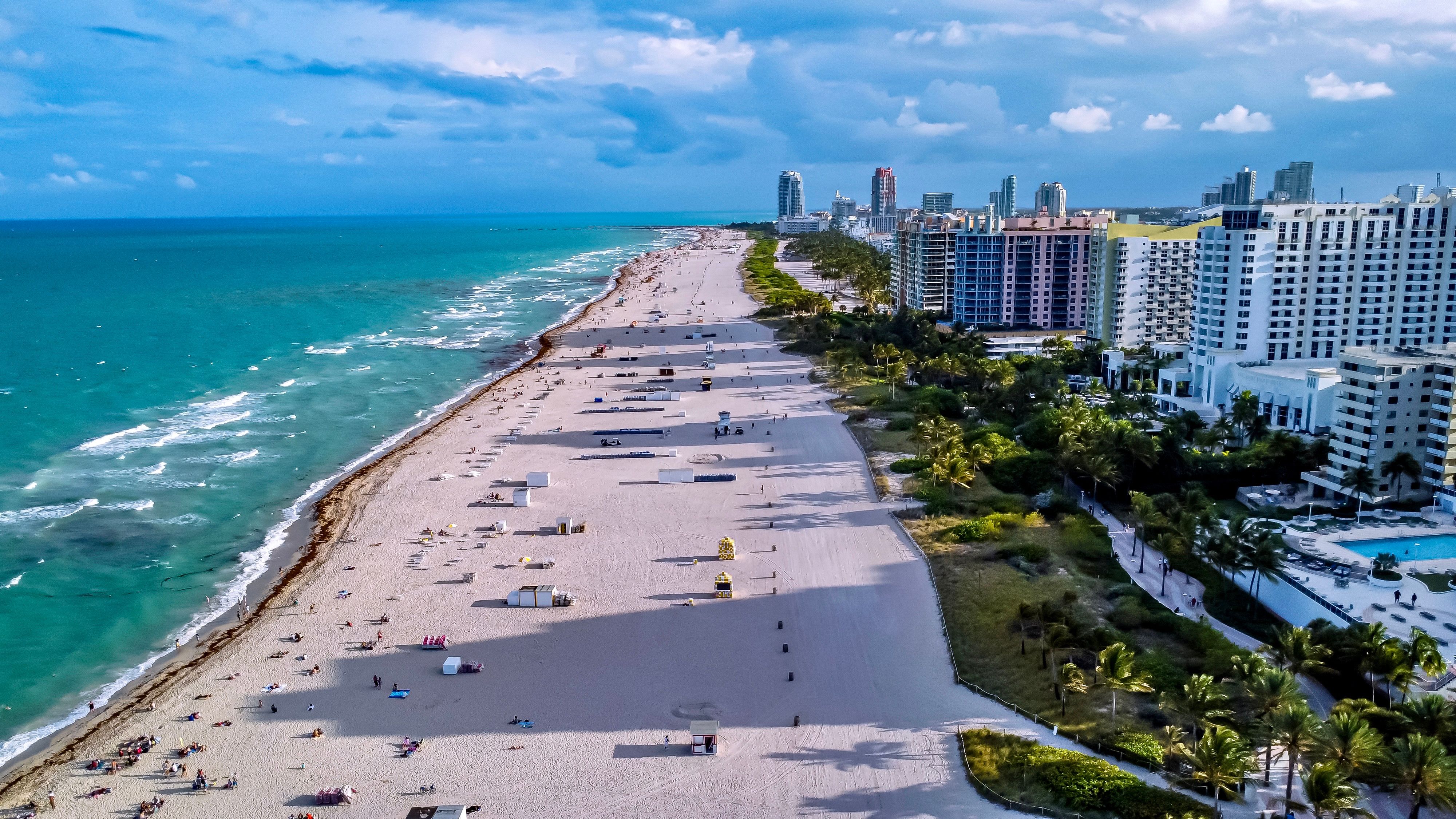
In 2024, Reuben Brothers acquired W South Beach, the iconic oceanfront hotel in Miami Beach, in a transaction worth more than 400 million dollars. The property, located at 2201 Collins Avenue, includes 348 units across its hotel and condo-hotel components.
In July 2026, the asset entered a new phase: exit from the Marriott system, closure for renovation starting in August 2026, the layoff of 337 employees and a planned reopening in winter 2027 with a new luxury positioning.
The project includes redesigned ocean-view suites, a new lobby, a renewed food and beverage programme, an upgraded spa and a pool deck of approximately 48,000 square feet. The objective is not simply to reopen a renovated hotel. The objective is to transform an already prestigious asset into a higher-end product capable of competing in the pure luxury segment.
For Waldorf Astoria, the project represents a strategic entry into the Miami Beach market. For Reuben Brothers, it is a classic value-enhancement play: acquire a prime asset, deploy capex, change the brand, reposition the product, increase operating income and potentially re-rate the property.
Why an investor changes brand
An investor that acquires a hotel for more than 400 million dollars does not change flags for aesthetic reasons. It does so because it has identified a spread between the asset’s current value and its potential value.
W is a lifestyle-luxury brand: recognised, powerful and international, but still tied to a specific demand profile. Waldorf Astoria, by contrast, is a more institutional and asset-driven luxury brand, better positioned to attract high-spending guests, premium stays, international demand, private events, ancillary revenues and a higher willingness to pay.
In other words, the brand does not merely change how the hotel is perceived. It changes the investment thesis.
With the same number of rooms, the same location and the same physical footprint, a stronger brand can affect:
-
average daily rate;
-
revenue per available room;
-
food and beverage positioning;
-
ability to attract international demand;
-
quality of the guest profile;
-
operating margin;
-
asset value at exit.
The point is decisive: the brand becomes a financial multiplier.
The mathematics of rebranding
A simple simulation explains the logic of the operation.
A 348-unit hotel that, after repositioning, manages to generate just 150 dollars more in average daily rate, with stabilised occupancy at 70%, would produce more than 13 million dollars in additional gross room revenue per year.
The calculation is straightforward:
348 rooms × 365 days × 70% occupancy × 150 dollars of incremental ADR = approximately 13.3 million dollars in additional annual room revenue.
If the ADR uplift were 200 dollars, the delta would rise to approximately 17.8 million dollars per year.
And this does not include the impact on food and beverage, spa, events, beach club, ancillary services, meetings, memberships, branded residences and the overall reputation of the asset.
Even assuming that only part of this increase converts into GOP, the result can be substantial. In the upper-end hotel market, value is not driven by revenue alone, but by operating income capitalised through multiples consistent with the segment, location, brand, contract structure and quality of the operator.
This is why a successful rebranding can generate tens, if not hundreds, of millions in potential value.
A hotel does not change flags simply to sell more rooms.
It changes flags to alter the financial trajectory of the asset.
The move from Marriott to Hilton: not only distribution, but strategic negotiation
The second relevant element is the move from one global hotel system to another.
In transactions of this scale, the brand is not a simple commercial supplier. It is a strategic partner. A group such as Hilton, through Waldorf Astoria, may have a very strong interest in securing a presence in a market like Miami Beach through an iconic oceanfront asset.
That interest can translate into meaningful contractual economics: capex contributions, key money, conversion support, more favourable commercial terms, greater initial flexibility, investment in the launch, distribution priority and support during the ramp-up phase.
For the owner, the right question is not: “Which brand do I like most?”
The right question is: “Which brand maximises the net value of my asset, after costs, restrictions, capex, contract duration and operating risk?”
That is the difference between a hotel decision and a financial decision.
The risk: what can go wrong in a brand change
It would be superficial, however, to read the Miami Beach case only as a value-creation story. Hotel rebranding is one of the most powerful strategies available to an owner, but also one of the riskiest.
First risk: revenues fall to zero
The property closes in August 2026 and is expected to reopen only in winter 2027. This means more than a year without ordinary hotel revenues on an asset acquired for more than 400 million dollars.
An owner with excessive leverage may not withstand such a transition. Debt continues to exist even when the hotel is closed. Financial charges do not stop because a construction site is open. Design, consultancy, permitting, insurance, security and extraordinary management costs continue to run.
This is why similar operations are usually sustainable only for family offices, well-capitalised investors, funds with patient capital or operators with a very solid financial structure.
Second risk: social and reputational cost
The layoff of 337 employees is a significant figure. No value-enhancement operation can ignore the employment impact of a full closure.
In the US market, certain dynamics are managed through tools that differ from those available in Italy. In Italy, a comparable operation would require far more sophisticated labour, union, reputational and communication planning.
The reputational capital of the transaction must be managed with the same discipline as the financial capital.
Third risk: post-reopening ramp-up
A hotel that reopens under a new brand does not automatically reach its stabilised potential.
The previous customer base must be replaced or repositioned. Distribution channels must be reactivated. Staff must be trained. The new standard must be absorbed. Reviews must be rebuilt. The market must recognise the new positioning.
The first 24 to 36 months after reopening are often a delicate phase. Anyone assessing this type of investment must model not only the stabilised scenario, but also the path required to get there.
The greatest risk is building a business plan around the dream, rather than around the transition.
Fourth risk: loss of control
A management agreement with a major international group brings distribution, standards, reputation, procedures, systems, commercial strength and access to global demand.
But it also brings restrictions.
Long contract duration, mandatory standards, periodic capex, centralised approvals, reduced operational flexibility, restrictions in the event of a sale, penalties, brand compliance obligations and possible limitations on entrepreneurial freedom.
The owner gains commercial strength, but gives up part of the control.
This trade-off must not be accepted passively. It must be negotiated.
The real lesson for Italy
The W South Beach–Waldorf Astoria case is not only about Miami Beach. It is directly relevant to Italy.
Rome, Milan, Venice, Florence, Naples, the Amalfi Coast, Lake Como, Sardinia and Sicily are full of hotel assets with extraordinary locations and positioning below their potential.
Many of these hotels do not have a real estate problem. They have a management, brand, product, distribution, pricing, capex, governance or strategic vision problem.
In other words, they are not weak assets. They are assets that are not fully expressing their potential.
And this is precisely the misalignment international investors target: they buy assets that currently underperform, reposition them, assign them to a stronger brand or operator, invest in the product, improve margins and capture the value delta.
The problem is that Italian owners often sell by looking at current EBITDA.
Investors buy by looking at potential EBITDA.
The difference between these two perspectives is the value the owner risks giving away to the buyer.
A brand change is not always the answer
Caution, however, is essential: not every hotel should become branded. Not every property should move under an international chain. Not every independent hotel is underperforming. Not every change of operator creates value.
The brand is a lever, not a guarantee.
Before considering a rebranding, several fundamental questions must be answered:
-
does the location justify an upgrade in positioning?
-
can the market absorb a higher rate?
-
can the physical product support the required standard?
-
is the required capex consistent with the expected incremental value?
-
does the owner have the financial strength to withstand the transition?
-
does the new operator truly improve GOP and asset value?
-
does the contract increase or reduce future exitability?
-
is the chosen brand the most suitable for the market or simply the most prestigious?
-
does the business plan account for ramp-up, real costs and execution risk?
-
does the operation create value for the owner or only for the operator?
These questions are decisive. A poorly executed rebranding can destroy value rather than create it.
A brand that is too high for the market can generate unsustainable costs.
A poorly negotiated management agreement can lock the asset for decades.
Disproportionate capex can turn repositioning into a financial trap.
An overly optimistic ADR forecast can compromise the entire investment.
Value is created before the transaction
The central point is this: the value of a hotel is not created at the moment of sale. It is created before.
It is created when the owner understands the real potential of the asset.
It is created when the delta between current management and potential management is measured.
It is created when the owner assesses whether the hotel is better suited to remain independent, join a soft brand, move to a franchise, be entrusted to a third-party operator or be repositioned through an international management agreement.
It is created when capex is linked to a measurable increase in profitability.
It is created when negotiation with the brand is approached not as a request for affiliation, but as a financial operation.
This is where many Italian hotel owners need to make a cultural leap.
A hotel is not only an operating business. It is a capital asset whose value depends on its ability to generate future cash flows, the quality of its management, its positioning, perceived risk and its attractiveness to future buyers.
For this reason, analysis must come before any decision: brand change, business lease, management contract, sale, renovation, equity search or entry of an industrial partner.
The role of the Necci ecosystem
Within the Italian hotel ecosystem, this theme is central.
The analyses published on RobertoNecci.it have long explored the relationship between hotel management, asset value, corporate distress, governance, margins and competitive positioning.
Investhotel.it is the reference point for advisory, acquisitions, disposals, value enhancement and hotel finance operations.
InvestimentiAlberghieri.it was created precisely to read operations like this one: not as simple real estate news, but as industrial case studies from which to extract logic, numbers and practical guidance for investors, banks, funds, asset management companies, family offices and hotel owners.
NecciHotels.it represents direct experience in hotel operations, the operational dimension without which any financial analysis risks remaining theoretical.
Finally, HotelManagementGroup.it integrates advisory, management, control, asset management, due diligence, restructuring and repositioning for owners who want to professionalise their asset before the market forces them into a decision.
Conclusion: brand is finance, not communication
The W South Beach–Waldorf Astoria case confirms three principles that every Italian hotel owner should internalise.
The first: brand is a financial variable, not a decorative element. A flag can change ADR, demand, GOP, perceived risk and asset value.
The second: repositioning creates value only if the capital structure can withstand the transition. Without capital, planning and risk control, even a great operation can become a liquidity crisis.
The third: negotiating with major international groups requires specialist expertise. Receiving an affiliation proposal is not enough. One must understand what creates value, what absorbs it, what restricts the asset and what may limit its attractiveness to future buyers.
The real lesson for Italy is simple: many hotels are worth more than they currently generate. But that value does not emerge by itself. It must be measured, designed, financed, negotiated and managed.
Those who do it before selling capture the delta.
Those who do not often leave it to the buyer.
Is your hotel worth more than it currently generates?
If you own, manage or represent a hotel property and want to understand whether a change of brand, management, contract or positioning could increase its value, the right time to assess it is before an external investor does it in your place.
Through the Hotel Management Group ecosystem, we confidentially analyse the potential for repositioning, value enhancement and restructuring of independent, family-owned, underperforming or not fully expressed hotel assets.
The goal is not to sell a brand.
The goal is to understand whether there is hidden value and how to capture it.
For a first confidential assessment, write to:
info@investimentialberghieri.it
Market windows do not wait. International capital is already mapping underperforming Italian hotel assets.
Confidentiality is guaranteed.
Inertia, on the other hand, can cost millions.