JHSF Participações is not simply a Brazilian real estate investor. It is one of the most compelling case studies for understanding where international capital is moving in luxury hospitality.
Behind Fasano’s global expansion, behind the projects in Sardinia, Milan, London, Miami, Cascais and Punta del Este, there is a group that understood a decisive point earlier than many others: today, a high-end hotel is no longer just a property with rooms, restaurants and services. It is a value platform.
A platform capable of generating hotel revenues, management fees, real estate upside, branded residences, memberships, restaurant income, reputation and financial capital.
That is what makes JHSF an investor worth studying.
This is not the traditional hotel owner. It is not a conventional developer. It is not even a pure hotel operator. JHSF represents a more advanced formula: capital, brand, real estate, hospitality, operations and lifestyle brought together within a single ecosystem.
For the Italian market, the case is particularly relevant. When a Brazilian group chooses Sardinia and Milan for the international expansion of Fasano, the message is clear: Italy remains one of the most attractive luxury hospitality platforms in the world, but only when the property is transformed into an investment-grade operating project, not when it remains a passive real estate asset.
Who is JHSF Participações?
JHSF Participações S.A. is a Brazilian holding company listed on the Novo Mercado segment of B3, the Brazilian stock exchange. The group operates in high-end real estate and recurring-income businesses.
Founded in 1972, JHSF has built an ecosystem spanning luxury shopping centres, real estate development, high-end residential projects, hospitality, gastronomy, private clubs, executive aviation and asset management.
The company presents itself as one of the largest high-end ecosystems in Latin America. This is not just corporate language. It is the key to understanding the JHSF model.
For JHSF, the hotel is never isolated. It is part of a wider value system.
The restaurant reinforces the brand. The brand increases real estate value. The real estate generates demand. The club creates belonging. Branded residences monetise prestige. Asset management attracts third-party capital. Hotel operations convert positioning into cash flow.
This is the difference between buying hotels and building hospitality platforms.
In the hotel valuation and hospitality investment guides published on robertonecci.it, this principle is central: the value of a hotel is not measured only through bricks and mortar, but through the asset’s ability to generate income, reputation, control, qualified demand and long-term strategic value.
Fasano: the brand that turns hotels into an ecosystem
The core of JHSF’s hospitality strategy is Fasano.
Fasano is a Brazilian luxury brand originally rooted in high-end gastronomy and later developed into luxury hospitality. JHSF acquired control of the Fasano platform in 2007 and subsequently strengthened its position through restaurants, brand rights and international expansion.
That decision was pivotal.
JHSF did not merely acquire a hotel brand. It acquired a positioning engine.
In the luxury market, a brand does not simply allow a hotel to charge higher room rates. It creates trust, desirability, recognition, belonging and a value premium across connected assets.
A Fasano hotel is not perceived as just another hotel. It belongs to an international language of luxury, capable of speaking to high-net-worth guests, real estate investors, buyers of premium residences and destinations seeking to elevate their own positioning.
That is the real point.
Fasano allows JHSF to operate hotels, but also to create real estate value. It allows the group to sell rooms, but also to enhance properties. It allows the company to generate operating revenues, but also to build reputational capital.
On investhotel.it, this model is particularly relevant because it reflects a deeper transformation in hotel investment: the asset no longer derives its value only from its direct profit and loss account, but from the wider value system it is able to activate.
JHSF’s hotel portfolio
JHSF’s hospitality perimeter includes operating hotels and development projects across Brazil, Uruguay, the United States and Europe.
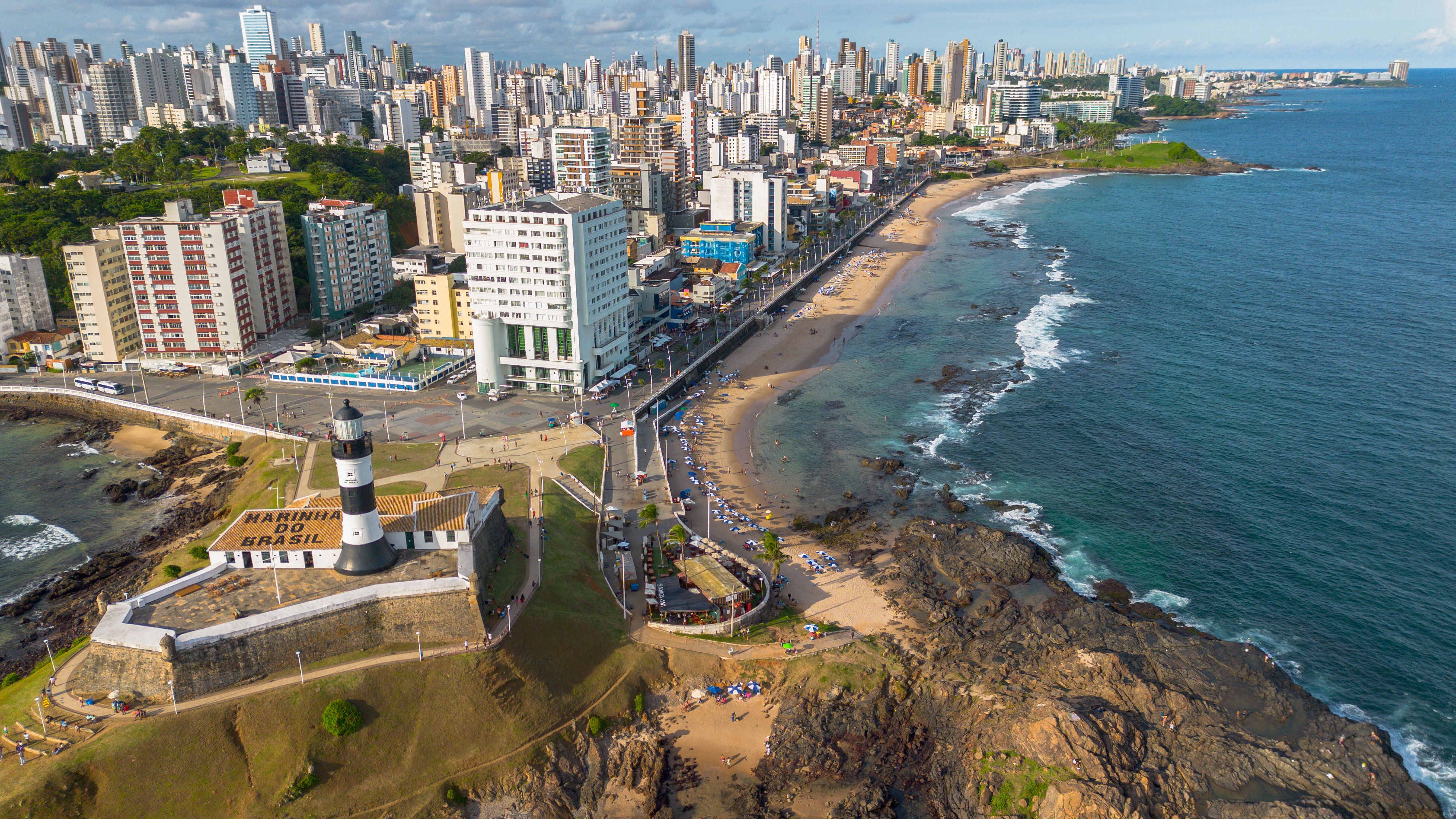
Among the most relevant operating assets are Fasano São Paulo, Fasano Rio de Janeiro, Fasano Boa Vista, Fasano Angra dos Reis, Fasano Trancoso, Fasano Salvador, Fasano Punta del Este and Fasano Fifth Avenue in New York.
Alongside the operating portfolio, the international pipeline includes high-profile projects such as Fasano Miami Beach, Fasano London, Fasano Milan, Fasano Sardinia, Fasano Cascais and the Fasano Península project linked to the Enjoy Punta del Este transaction.
The geographic logic is clear: JHSF is not pursuing ordinary destinations. It is targeting places with strong symbolic power.
New York, Miami, London, Milan, Sardinia, Cascais, Punta del Este: these are not merely tourism markets. They are locations where hospitality can become status, relationships, real estate and reputational capital.
For investimentialberghieri.it, the JHSF case is a perfect lens through which to read three trends reshaping the market:
the rise of international capital in luxury hospitality;
the integration of hotels, branded residences, private clubs and restaurants;
the shift from the hotel as a real estate asset to the hotel as a financial and operating platform.
Sardinia and Milan: why Italy is central to the Fasano strategy
Italy plays a special role in JHSF’s international trajectory.
Sardinia represents the resort dimension: high-end Mediterranean appeal, iconic landscapes, international clientele and the potential to combine hospitality, residences and lifestyle.
Milan represents a different value proposition: Italy’s economic, financial, cultural and luxury capital. It is the city of fashion, design, investment, international events and corporate relationships.
They are very different markets, but they share one essential feature: both allow a brand like Fasano to create value beyond the room.
In Sardinia, value is linked to the destination, the resort experience, the landscape, privacy, the residential component and the scarcity of truly premium product.
In Milan, value is linked to urban centrality, international luxury, high-spending business demand, fashion, lifestyle and the potential to develop high-end membership and restaurant concepts.
This dual Italian presence says a great deal.
JHSF does not look at Italy as a generic market. It looks at Italy as a global reputation platform.
And this is exactly what many Italian hotel owners still underestimate: location alone is no longer enough. The real question is what operating, financial, brand and investment strategy is built around that location.
The asset-light model: fewer walls, more control over value
One of the most important aspects of JHSF’s strategy is its evolution towards asset-light models.
The available documentation shows clearly that the company does not necessarily aim to own every property. On the contrary, its international growth appears increasingly based on management contracts, branding agreements, funds, dedicated vehicles, partnerships and third-party capital structures.
This is a fundamental point.
Real estate ownership allows investors to capture capital appreciation, but it absorbs capital, increases financial exposure, requires debt, capex and long investment horizons.
An asset-light model, by contrast, allows faster growth, fee generation, lower equity absorption and greater brand scalability.
In JHSF’s case, this model is particularly effective because the group is not merely selling hotel management. It is selling an ecosystem.
It sells Fasano.
It sells gastronomy.
It sells lifestyle.
It sells access to a specific clientele.
It sells reputation.
It sells the ability to enhance complex real estate projects.
This is an important lesson for the Italian market. Many hotel assets are still treated as properties to be leased, sold or renovated. But the true value step-up occurs when the property becomes part of an integrated investment and operating strategy.
The numbers behind the hospitality segment
JHSF does not publish a complete profit and loss account for each individual hotel. This makes it difficult to reconstruct capex, EBITDA, ownership structure, contract economics and returns on an asset-by-asset basis.
However, segment-level data helps to understand the scale of the business.
In 2025, the Hospitality & Gastronomy segment recorded gross revenue of approximately R$ 501.1 million, net revenue of approximately R$ 459.1 million and Adjusted EBITDA of approximately R$ 95.7 million.
In the first quarter of 2026, the same segment reported gross revenue of approximately R$ 116.5 million and Adjusted EBITDA of approximately R$ 17.7 million.
The consolidated hotel KPIs are even more revealing. In the first quarter of 2026, the hotel portfolio recorded an ADR of approximately R$ 5,038, RevPAR of approximately R$ 2,825 and occupancy of 56.1%.
These figures confirm an ultra-premium positioning.
An ADR at this level cannot be achieved with a generic product. It requires brand, destination, service, reputation, architecture, gastronomy, clientele and operating discipline.
This is where luxury becomes highly selective.
Selling rooms at high rates is possible only if the brand promise is delivered every day by the hotel organisation.
On neccihotels.it, dedicated to hotel management, this theme is central: there is no sustainable hotel value without operational control, management quality, reputation, service standards, KPI analysis and the ability to convert positioning into margin.
JHSF Capital: finance as an accelerator of hospitality
Another decisive element is JHSF Capital.
JHSF’s international expansion does not rely solely on the industrial holding company. It also relies on investment vehicles, dedicated funds and capital-raising structures.
The Fasano London Fund, the vehicle for Fasano Milan, the Enjoy Punta del Este transaction and the wider international pipeline all point in the same direction: JHSF uses finance to multiply the development capacity of the brand.
This is one of the most relevant differences compared with many traditional hotel operators.
The traditional hotelier often thinks in terms of operations, property, mortgage, lease or management contract.
A group like JHSF thinks in terms of platform: brand, capital, vehicle, project, asset, fees, development, exit, return and reputation.
It is a mindset closer to real estate private equity than to traditional hotelkeeping.
And this is precisely the mindset that is entering the Italian hotel market with increasing force.
Why JHSF matters to Italian owners, banks and investors
The JHSF case should be studied by hotel owners, lenders, investors, developers and advisors.
Because it clearly shows that the market is polarising.
On one side are hotels without a strategy, often relying only on location, family history or ordinary management.
On the other side are platforms capable of combining capital, brand, management, finance, marketing, gastronomy, residential development and asset management.
The value gap between these two worlds can be enormous.
An independent hotel, even in an extraordinary location, can remain undervalued if it lacks management control, brand strategy, distribution power, leadership and an industrial plan.
The same asset, placed inside a coherent platform, can become part of a broader value proposition and generate a significant premium.
This does not mean that every hotel should become Fasano. It means that every hotel owner must ask a more demanding question: what is the real investment thesis behind the asset?
What is the positioning?
Who is the target guest?
What margin does the asset generate?
What capital is required?
Which brand could increase value?
Which contract protects ownership?
Which management structure maximises GOP?
Which risks remain hidden inside the income statement?
These are the questions that now separate a hotel that is merely operated from a hotel that is truly enhanced.
The weak point: asset-by-asset transparency
The JHSF case is strong, but it is not without critical issues.
The main limitation for an analyst is asset-by-asset transparency.
The company publishes aggregated segment data, operating KPIs and corporate information, but it does not always disclose capex, EBITDA, economic interest, actual property ownership, management contract terms, contract duration or dedicated financial leverage for each individual hotel.
This means simplistic readings must be avoided.
It is not enough to say that a group is developing luxury hotels.
One must understand who owns the property.
Who operates the hotel.
Who collects the fees.
Who funds the capex.
Which vehicle holds the asset.
Which risk remains with the holding company.
Which actual return is generated by the project.
This distinction is essential in the Italian market as well, where many transactions are presented as major hotel investments, while only a technical analysis can determine whether the value is real, sustainable and transferable.
The risks behind JHSF’s strategy
JHSF’s strategy has significant potential, but it also carries material risks.
The first risk is execution. Projects in Miami, London, Milan, Cascais or Sardinia require permits, long timelines, capital, local expertise, reputation management and cost control.
The second risk is the luxury cycle. Ultra-high-net-worth demand is more resilient than average tourism demand, but it is not immune to interest rates, currencies, geopolitical instability, financial crises and shifts in international travel demand.
The third risk is regulatory and territorial. Coastal resorts, historic buildings and sensitive destinations require careful management of relationships with institutions, local communities, the environment, landscape protection and public opinion.
The fourth risk is operational. Luxury promises a great deal, but forgives very little. A premium hotel must maintain extremely high standards every day: service, staff, maintenance, restaurants, housekeeping, guest experience, privacy, security and online reputation.
The fifth risk is financial. Funds, partnerships and dedicated vehicles increase growth capacity, but they also make it more complex to assess actual value creation and risk allocation.
The sixth risk is margin. A high ADR does not automatically guarantee a high margin. In luxury hospitality, labour, service, capex, maintenance and brand standards are far more demanding. Management must be surgical.
This is where luxury hospitality separates itself from glossy storytelling. Real value does not come from announcing a brand. It comes from turning that brand into sustainable income.
The lesson for Italy
The JHSF case offers a very clear lesson for the Italian market.
Italy owns some of the most desirable hotel assets in the world. Yet many of these assets are still managed with approaches that are inadequate compared with their potential value.
There are hotels in extraordinary locations without advanced management control.
There are premium properties without an investment-grade business plan.
There are family owners who do not know whether to sell, operate, lease, refinance or open up the capital structure.
There are transactions presented as hotel investments that are, in reality, simple real estate deals without a true hospitality strategy.
And there are foreign investors reading the Italian market with a level of clarity that is often superior to that of local operators.
JHSF proves it: having the destination is not enough. One must build the product.
Having the property is not enough. One must build the brand.
Having rooms is not enough. One must build demand.
Having revenue is not enough. One must build margin.
Having the appearance of luxury is not enough. One must build measurable value.
Conclusion: JHSF does not buy hotels, it builds value platforms
JHSF Participações is one of the most interesting investors to watch in the international luxury hospitality market.
Through Fasano, the Brazilian group is building a global platform that combines hotels, restaurants, branded residences, private clubs, funds, asset management and high-end real estate development.
Its model is very different from that of the traditional hotelier. It is the model of the lifestyle investor: less dependence on the single property, more control over brand, fees, management, capital and reputation.
For Italy, the arrival of operators such as JHSF is a strong signal.
Italian hotel assets continue to attract international capital, but capital is not simply looking for walls. It is looking for credible projects, solid operations, strong brands, defensible destinations and measurable returns.
Hotel owners need to understand this before the market imposes the price.
Those who want to sell must know what they are selling.
Those who want to buy must know what they are really buying.
Those who want to enhance value must build a strategy, not wait for the location to do all the work.
To analyse a hotel transaction, value an asset, structure due diligence, build a value enhancement plan or understand whether an investment truly generates value, a professional, independent and integrated approach is required.
Learn more at hotelmanagementgroup.it.
If you have a hotel to enhance, an investor to assess, a transaction to structure or a hotel investment dossier to build, do not wait for someone else to decide the value of your asset.
Write now to info@investimentialberghieri.it.
The best transactions do not happen when the market has already arrived. They happen when someone understands the value before everyone else.