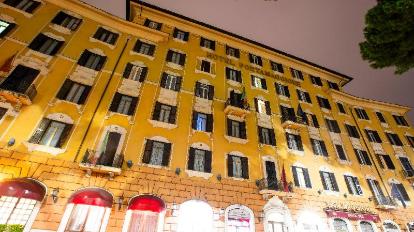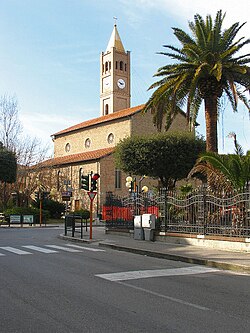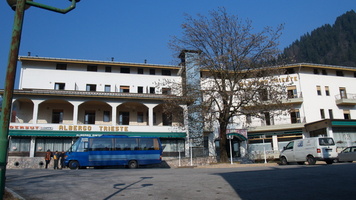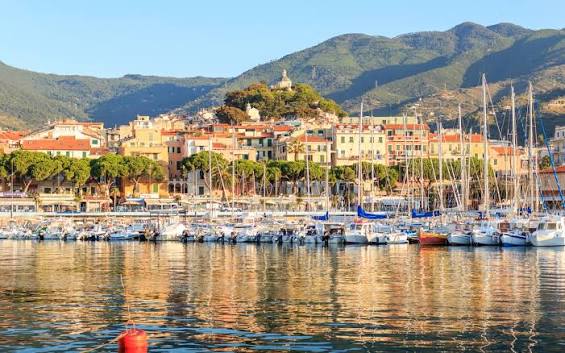
On 25 September 2026, a significant portion of the hospitality complex at Strada Solaro 134 in Sanremo will return to market. Lot 20892, within Composition with Creditors Proceeding No. 3/2018 before the Court of Imperia, comprises two buildings known as the “Fontana Building” and the “Pool Building”: a total of 43 guestrooms, one additional residential unit, approximately 1,772 sqm of hospitality space, a swimming pool, landscaped park, garden, covered parking and coach parking. The reserve price is €2.48 million and the minimum admissible offer is €1.86 million. But the most important number is not the price. It is the perimeter. The main building of the historical hotel complex — containing reception, restaurant facilities and the principal common areas — is not included in this sale and is being dealt with through a separate process. For a hotel investor, therefore, the real question is not whether 43 rooms at approximately €43,300 per key look inexpensive. The real questions are whether those 43 rooms can support a standalone hotel, how much capital is required to make them operationally independent, what value they could generate if recombined with the main building and, above all, how much a standalone buyer can rationally bid compared with a strategic buyer. In this transaction, value does not depend solely on the real estate. It depends on the identity of the buyer, the synergies that buyer can capture and the way the transaction is structured.
The equation that best summarises the case is:
Legal Sale Perimeter ≠ Operational Hotel Perimeter.
But another should immediately be added:
Same Asset + Different Buyer = Different Investment Value.
That is where the transaction becomes genuinely interesting.
In the hotel investment market, some assets require an investor to:
renovate the property.
Here, the problem may be more sophisticated:
reconstruct the operating perimeter.
First Certainty: Composition with Creditors and the 25 September 2026 Sale
The proceeding is a:
Composition with Creditors
identified as:
No. 3/2018
before the:
Court of Imperia.
The asset is:
Lot 20892.
The sale is scheduled for:
25 September 2026.
The deadline for offers is:
24 September 2026.
Reserve Price: €2,480,000
Minimum Offer: €1,860,000
Minimum Bid Increment: €10,000
This is therefore a genuine:
Pre-Auction Hospitality Special Situation.
The First Mistake Would Be to Call It Simply “a Hotel”
The lot does not comprise a complete, autonomous hotel.
It includes:
two secondary hospitality buildings
within a larger hotel complex.
The third building is the:
main building
historically accommodating:
reception;
F&B;
common areas;
administration;
offices;
bar;
kitchen;
central services.
This fundamentally changes the underwriting.
Because:
Hotel Complex
≠
Hotel Lot.
Fontana Building: 22 Rooms with Clear Operational Dependence
The:
Fontana Building
comprises approximately:
878 sqm
and:
22 rooms.
But the most important point is that its historical access and a number of hotel functions depend on the:
main building.
This creates a genuine:
Operational Dependency.
The buyer acquires:
the guestrooms.
But does not automatically acquire:
the complete infrastructure that enables those guestrooms to function as a hotel.
Pool Building: 21 Rooms, One Residential Unit and Significant Leisure Infrastructure
The:
Pool Building
comprises approximately:
894 sqm of hospitality space
with:
21 guestrooms
and:
1 residential unit.
The building is associated with:
a swimming pool;
parkland;
landscaped grounds;
play areas;
seating areas;
a small bar structure;
parking;
coach parking.
Visually and commercially, the property can appear almost:
resort-like.
But:
Resort Amenities ≠ Standalone Resort Operation.
Forty-Three Rooms for €1.86 Million
The first calculation is immediate:
€1,860,000 ÷ 43 = approximately €43,256 per Physical Key.
The hospitality area across the two buildings is approximately:
1,772 sqm.
Therefore:
€1,860,000 ÷ 1,772 ≈ €1,050 per sqm of hospitality space.
These are attractive figures for Sanremo.
But neither reflects:
the true economics of the transaction.
Because:
€43,256 per Physical Key
is not:
All-in Cost per Standalone Operating Key.
43 Physical Keys ≠ 43 Standalone Hotel Keys
The 43 rooms historically operated as part of:
an integrated hotel system.
The lot does not automatically include:
central reception;
core F&B areas;
full back office;
all common areas;
administration;
the full operating infrastructure.
The correct metric is therefore not:
Physical Keys.
It is:
Standalone-Ready Keys.
The sequence becomes:
43 Physical Keys
→
Operational Dependency Analysis
→
Standalone Conversion
→
Final Standalone Saleable Keys.
Hospitality Perimeter Gap
We can define the:
Hospitality Perimeter Gap
as the distance between:
what is legally acquired
and:
what is economically required to operate an autonomous hotel.
Conceptually:
Required Operating Perimeter
−
Legal Sale Perimeter
=
Hospitality Perimeter Gap.
The larger the gap:
the higher the:
CAPEX;
timing;
service duplication;
working capital;
execution risk.
The Lot May Contain the Rooms Without Containing the Heart of the Hotel
The equation is:
43 Rooms + Pool + Park
−
Central Reception + Core F&B + Main Common Areas
=
Incomplete Standalone Hotel Platform.
This does not mean:
uninvestable.
It means:
buyer-specific.
And that is the defining feature of the transaction.
Strategy One: Standalone Hospitality
The first option is to transform the two buildings into an:
autonomous hospitality platform.
This requires creating or reallocating:
reception;
lounge;
breakfast area;
storage;
housekeeping;
back office;
staff areas;
technical rooms;
potential F&B.
The equation is:
Existing Accommodation Infrastructure
New Core Hotel Infrastructure
Technical Adaptation
Licensing
FF&E / OS&E
=
Standalone Hotel Platform.
But Standalone Independence May Create Diseconomies
Forty-three rooms would then need to support:
their own reception;
administration;
housekeeping;
breakfast operation;
IT;
sales;
maintenance;
back office.
Therefore:
Duplicated Fixed Costs
÷
43 Keys
=
Potential Operating Diseconomies.
The issue is not only:
“Can the lot be made autonomous?”
It is:
“Can it be made autonomous while maintaining sustainable GOP?”
Dependency Discount
For a standalone buyer, value should incorporate a:
Dependency Discount.
The formula may be:
Gross Standalone Hospitality Value
−
Standalone Conversion CAPEX
−
Duplicated Fixed-Cost Penalty
−
Access / Easement Risk
−
Operating Dependency Risk
−
Execution Contingency
=
Standalone Investment Value.
This is the first value that needs to be built.
Not:
€1.86M ÷ 43 keys.
Strategy Two: Assemblage
The main building is being dealt with separately.
That creates an:
Assemblage Option.
An investor can therefore compare:
Lot 20892 Standalone
with:
Lot 20892 + Main Hotel Platform.
These are two completely different investment cases.
Assemblage Value
If the main building and the two ancillary buildings are recombined:
Main Hotel
Fontana
Pool Building
Swimming Pool
Park
Parking
=
Integrated Hospitality Platform.
The equation becomes:
Integrated Hospitality Value
−
Acquisition & Integration Cost
=
Assemblage Value Creation.
But Assemblage Optionality ≠ Executable Assemblage
The fact that the main building may be separately acquired does not mean:
it will certainly be acquired;
it will be awarded to the same buyer;
timing will align;
prices will be compatible;
the perimeters can be economically recombined.
Therefore:
Assemblage Optionality
≠
Executed Assemblage.
The standalone case must work:
without assigning free value to synergies that are not yet controlled.
Operating Synergy
In the integrated case, the major advantage is:
shared infrastructure.
Reception.
Administration.
Sales.
F&B.
Back office.
Maintenance.
Technology.
Management.
This produces:
Operating Synergy.
The equation is:
Standalone Fixed Costs
−
Allocated Integrated Fixed Costs
=
Operating Synergy Value.
The greater that value:
the stronger:
the strategic buyer case.
Avoided Duplicate CAPEX
There is also a second synergy.
If the lot is integrated with the main building, the buyer may not need to build from scratch:
reception;
breakfast facilities;
certain BOH functions;
certain operating facilities.
Therefore:
Standalone CAPEX
−
Integrated Incremental CAPEX
=
Avoided Duplicate CAPEX.
This value belongs:
only to the buyer capable of integrating the lot.
Strategy Three: Alternative Use
Available information also points to a historic planning pathway involving:
release from hotel-use restrictions
and potential:
residential conversion.
This creates:
Alternative-Use Optionality.
But:
Historical Planning Release ≠ Current Development Right.
Before assigning value to conversion, the investor needs to verify:
effectiveness;
transferability;
charges;
parking requirements;
planning standards;
permits;
validity;
volumes;
tax treatment;
timing.
Residential Optionality ≠ Residential Value
Saying:
“it could potentially be converted into apartments”
is not enough.
The proper calculation is:
Residential GDV
−
Conversion CAPEX
−
Planning Charges
−
Professional Fees
−
Sales Costs
−
Financing
−
Time
−
Developer Margin
=
Residential Residual Value.
Only then can the residential case be compared with:
Hospitality Investment Value.
Highest & Best Use
The asset should be underwritten through at least three scenarios.
Scenario A — Standalone Hospitality
43 rooms.
Pool.
Park.
Parking.
New core hotel functions.
Driver:
Standalone GOP.
Scenario B — Integrated Hospitality
Recombination with the main building.
Shared services.
Larger platform.
Driver:
Integrated Operating Leverage.
Scenario C — Alternative Use
Residential or other adaptive reuse, if legally feasible.
Driver:
Residual Value.
The true:
Highest & Best Use
will be the option generating the greatest:
Risk-Adjusted Investment Value.
The Pool: Significant Potential, Significant Cost
The swimming pool is commercially important.
It may influence:
conversion;
family demand;
summer ADR;
guest experience;
leisure positioning.
But it also creates:
energy costs;
water costs;
chemicals;
maintenance;
staffing;
insurance.
The equation is:
Pool-Driven ADR Uplift
Pool-Driven Occupancy Uplift
F&B / Day-Use Contribution
−
Pool Operating Cost
=
Net Pool Contribution.
Pool Premium ≠ Pool Profit
A swimming pool may increase room rates.
But if:
costs > incremental contribution,
it becomes:
Asset Intensity.
Therefore:
Pool Ownership
≠
Pool Profitability.
The Park: Asset or OPEX?
The lot includes:
parkland;
garden;
landscaping;
outdoor areas.
These may support:
family positioning;
events;
premium room categories;
leisure demand;
outdoor F&B.
But they also generate:
maintenance;
irrigation;
lighting;
security;
landscaping costs.
Therefore:
Large Grounds
≠
High Value.
The correct test is:
Incremental Revenue / GOP Generated by Grounds
vs
Incremental OPEX Required by Grounds.
Parking and Coach Area
The lot includes parking and capacity dedicated to coaches.
This can support:
self-drive demand;
groups;
coach business;
events.
But:
Parking Availability ≠ Parking Economics.
The investor needs to verify:
capacity;
access;
manoeuvring;
compliance;
security;
EV charging;
easements;
operating costs.
Sanremo: A Genuine Destination Premium, but Not an Unlimited One
Sanremo brings:
brand recognition;
the sea;
events;
the Festival;
leisure demand;
climate;
international visibility.
This supports a:
Destination Premium.
But:
Destination Premium ≠ Unlimited ADR.
And, above all:
Festival Premium ≠ Annual RevPAR Premium.
Festival Premium ≠ Annual RevPAR
The Festival can generate:
extraordinary peak demand.
But underwriting must also model:
Festival periods;
summer peak;
shoulder season;
winter;
weekdays;
weekends;
groups;
international leisure.
The equation is:
Annual Room Revenue
=
Peak Revenue
Shoulder Revenue
Low-Period Revenue.
Not:
Festival Week × 52.
Hillside Location: View Premium vs Mobility Friction
The location may offer:
views;
sun exposure;
landscaped surroundings;
privacy;
quiet.
But it is not:
beachfront.
And it is not:
city-centre walkable.
Therefore:
View Premium
−
Mobility Friction
=
Net Location Advantage.
Mobility strategy must be part of the product.
Product Thesis 1 — Sanremo Garden & Pool Hotel
43 rooms.
Pool.
Gardens.
Parking.
Family leisure.
Quiet positioning.
Driver:
Leisure ADR + Pool Premium + Parking.
Product Thesis 2 — Lifestyle Garden Hotel
Contemporary guestrooms.
Pool.
Landscape.
Outdoor F&B.
International leisure.
Digital guest journey.
Driver:
Product Upgrade + ADR Uplift.
Product Thesis 3 — Integrated Resort Platform
If recombined with the main building:
larger inventory;
shared services;
F&B;
pool;
gardens;
parking.
Driver:
Scale + Synergies + Shared Fixed Costs.
Product Thesis 4 — Alternative Use
If legally executable:
residential conversion;
serviced residence;
other adaptive use.
Driver:
Residual Value.
Break-even Occupancy in the Standalone Case
With:
43 keys,
the theoretical annual capacity is:
43 × 365 = 15,695 Available Room Nights.
The model should calculate:
Fixed Operating Costs
−
Pool / F&B / Other Contribution
=
Fixed Costs to Be Covered by Rooms.
Then:
Fixed Costs to Be Covered by Rooms
÷
Contribution per Occupied Room
=
Break-even Occupied Room Nights.
And:
Break-even Occupied Room Nights
÷
15,695
=
Break-even Occupancy.
This should be compared with:
realistic annual occupancy.
Not:
event occupancy.
Integrated Break-even Could Be Completely Different
In the integrated case:
fixed costs are shared.
Therefore:
Integrated Fixed Cost per Key
may be lower than:
Standalone Fixed Cost per Key.
This may produce:
Lower Break-even Occupancy
and:
Higher GOP Margin.
Recombination ROI
For a strategic buyer capable of integrating the lot:
Incremental GOP from 43 Keys + Pool + Grounds
÷
Acquisition + Integration CAPEX
=
Recombination ROI.
This metric may make the lot:
materially more valuable
to a specific buyer.
Buyer Identity Can Genuinely Change the Price
For a:
Standalone Financial Buyer,
the lot contains:
Dependency Risk;
Duplicate CAPEX;
Duplicate OPEX;
Execution Risk.
For a:
Strategic Buyer,
the same lot may offer:
Operating Synergies;
Avoided Duplicate CAPEX;
Shared Services;
Pool Synergy;
Park Synergy;
Inventory Expansion;
Potential Resort Repositioning.
Therefore:
Same Asset
Different Buyer
=
Different Maximum Bid.
Buyer-Specific Maximum Bid
This is the step that completes the underwriting.
There is not necessarily:
one universally correct Maximum Bid.
There are different Maximum Bids depending on each buyer’s ability to create value.
Standalone Maximum Bid
For a buyer acquiring only the lot:
Stabilised Standalone Value
−
Standalone CAPEX
−
Duplicated Fixed-Cost Penalty
−
Dependency Risk
−
Access / Easement Risk
−
Pre-opening
−
Working Capital
−
Financing / Holding Costs
−
Execution Contingency
=
Standalone Maximum Bid.
This is the maximum a financial buyer should pay:
without assigning value to synergies it does not control.
Strategic Maximum Bid
For a buyer that controls or can acquire the main building:
Incremental Integrated Value
Operating Synergies
Pool / Park Synergies
Avoided Duplicate CAPEX
Shared-Service Savings
Potential ADR / Positioning Uplift
−
Integration Costs
−
Incremental CAPEX
−
Execution Contingency
=
Strategic Maximum Bid.
A strategic buyer can therefore:
pay more than a standalone buyer
and simultaneously:
earn a better return.
That is not contradictory.
It is:
synergy economics.
Strategic Buyer Premium
The difference between the two is:
Strategic Maximum Bid
−
Standalone Maximum Bid
=
Strategic Buyer Premium.
This premium does not come from:
emotion;
aggression;
overbidding.
It comes from:
buyer-specific synergies.
But the Strategic Buyer Premium Should Not Be Given Away to the Seller
This is the most important point.
A strategic buyer may:
be able to pay more.
That does not mean it should:
pay away the entire value of its synergies.
The logic is:
Total Synergy Value
−
Required Buyer Share of Synergies
=
Maximum Synergy Value Transferable to Seller.
In other words:
the buyer needs to retain:
a share of the value creation.
Otherwise:
it acquires synergies
but:
pays for all of them upfront.
Synergy Capture Ratio
A useful metric is:
Synergy Value Retained by Buyer
÷
Total Synergy Value
=
Synergy Capture Ratio.
The higher the ratio:
the more value the acquisition creates for the buyer.
If the ratio approaches zero:
most of the synergy is:
capitalised into the purchase price.
At that point:
strategic logic ≠ strategic return.
Strategic Buyer ≠ Unlimited Buyer
Being the most natural buyer does not mean:
having to win at any price.
Quite the opposite.
The strategic buyer should understand better than anyone:
its walk-away price.
Therefore:
Strategic Advantage
should produce:
Higher Investment Value.
Not:
Lower Pricing Discipline.
Competitive Auction Risk
In an auction, the risk is that:
two strategic buyers
both attribute:
synergy value.
At that point, bidding may move from:
Standalone Value
toward:
Strategic Value.
The buyer needs to avoid reaching:
Full Synergy Price.
Because:
Auction Win ≠ Investment Win.
Winning the Auction ≠ Winning the Investment
This is particularly important.
A buyer can:
win the lot
and simultaneously:
lose economically.
If the winning price exceeds:
Buyer-Specific Maximum Bid.
Therefore:
Auction Success
≠
Investment Success.
Repeated Price Discovery Remains a Signal
The lot has passed through several pricing levels over time.
The reduction is material.
But:
Repeated Repricing ≠ Automatic Bargain.
It may represent:
a new entry point;
a market reset;
a different buyer universe.
But also:
compensation for complexity.
65% Price Reduction ≠ 65% Investment Upside
The difference between historical pricing and the current minimum may be substantial.
But:
Discount to Historical Price
is not:
Value Creation.
Value is created only if:
Investment Value > Total Invested Capital.
Total Invested Capital — Standalone Case
In the standalone scenario:
Purchase Price
Transaction Costs
Standalone Conversion CAPEX
Technical CAPEX
FF&E / OS&E
Pool / Landscape CAPEX
Technology
Pre-opening
Working Capital
Holding Costs
Financing
=
Standalone Total Invested Capital.
Then:
Standalone Stabilised GOP
÷
Standalone Total Invested Capital
=
Standalone Yield on Cost.
Total Invested Capital — Integrated Case
In the strategic scenario:
Purchase Price
Integration CAPEX
Incremental FF&E
Technology Integration
Pool / Landscape Repositioning
Incremental Working Capital
Financing
=
Incremental Integrated Capital.
Then:
Incremental Integrated GOP
÷
Incremental Integrated Capital
=
Integrated Incremental Return.
These are:
two different models.
Yield on Cost Before the Discount
The formula remains:
Stabilised Operating Return
÷
Total Invested Capital
=
Yield on Cost.
The question is not:
“How much has the price fallen since 2023?”
It is:
“What return does the total capital required from today to stabilisation generate?”
Development / Repositioning Spread
Then:
Yield on Cost
−
Stabilised Market Yield
=
Development / Repositioning Spread.
If sufficiently positive:
Value Is Created.
If too thin:
the buyer is assuming:
legal risk;
CAPEX risk;
operating risk;
reopening risk;
assemblage risk;
alternative-use risk
without being adequately compensated.
Three Economic Scenarios
Downside Case
Apparently attractive acquisition.
But:
high dependency;
complex possession;
access needing to be restructured;
high standalone CAPEX;
duplicated fixed costs;
expensive pool operations;
43 rooms insufficient to support the platform;
weak annual ADR.
Result:
Low Acquisition Basis + High Dependency + High Standalone Cost = Value Trap.
Base Case
Disciplined acquisition.
Possession clarified.
Manageable access.
Selective CAPEX.
Lean reception.
Light breakfast operation.
Pool properly monetised.
Parking.
Strong leisure positioning.
Professional Revenue Management.
Result:
Sustainable 43-Key Sanremo Leisure Hotel.
Upside Case
Acquisition close to the minimum.
Assemblage with the main building.
Shared services.
Avoided Duplicate CAPEX.
Pool and park fully integrated.
International distribution.
Higher consolidated GOP.
Strong ADR management.
Result:
Low Entry Basis + Strategic Synergies + Strong Recombination ROI + Asset Re-rating.
Fourth Scenario: Alternative Use
If conversion potential were today:
valid;
transferable;
economically executable,
the investor should compare:
Residential Residual Value
with:
Standalone Hospitality Value
and:
Integrated Hospitality Value.
The decision should follow:
Highest & Best Use.
The Real Highest & Best Use Test
The comparison is:
Risk-Adjusted Standalone Hotel Value
vs
Risk-Adjusted Integrated Hotel Value
vs
Risk-Adjusted Alternative-Use Value.
The highest identifies:
the economic frontier.
Maximum Bid Must Always Be Residual
For the standalone buyer:
Standalone Revenue
→
Standalone GOP
→
Standalone Value
→
Required Return
→
Maximum Total Investment
−
Standalone CAPEX
−
Duplicated Cost Penalty
−
Pre-opening
−
Working Capital
−
Financing
−
Risk Contingency
=
Standalone Maximum Bid.
For the strategic buyer:
Incremental Integrated GOP
→
Incremental Integrated Value
Synergies
Avoided Duplicate CAPEX
−
Integration Costs
−
Risk Contingency
=
Strategic Maximum Bid.
This is the real:
bid architecture.
The Sixteen Questions to Answer Before 24 September
What is the exact cadastral and functional perimeter of Lot 20892?
Which accesses depend on the main building?
Which services currently depend on the rest of the hotel complex?
What is the actual occupancy / possession status?
When and how will operational handover take place?
Are all 43 rooms authorised and saleable?
How much does it cost to make the Fontana and Pool Buildings fully autonomous?
What is the Duplicated Fixed-Cost Penalty in the standalone case?
What are the true OPEX requirements of the pool, park and landscaping?
What is the standalone Break-even Occupancy?
What Operating Synergy Value does the integrated model generate?
How much Avoided Duplicate CAPEX does assemblage create?
What is the Recombination ROI?
What is the real Alternative-Use Value?
What is the Standalone Maximum Bid?
What is the Strategic Maximum Bid, and what Strategic Buyer Premium is economically justified?
These are the questions that determine:
the real value of the lot.
Conclusion: This Is Not Simply 43 Rooms with a Pool for €1.86 Million. It Is an Asset Whose Value Changes Depending on Who Buys It
On 25 September 2026, an asset with apparently compelling characteristics will come to market:
43 rooms.
1 residential unit.
Approximately 1,772 sqm of hospitality space.
Swimming pool.
Park.
Garden.
Parking.
Coach area.
Sanremo.
Minimum offer: €1,860,000.
But the lot does not include:
the operational heart of the historical hotel complex.
That is the point.
Because:
43 Physical Keys ≠ 43 Standalone Keys.
Legal Sale Perimeter ≠ Operational Hotel Perimeter.
Pool Ownership ≠ Pool Profit.
Large Grounds ≠ High Value.
Marketing Status ≠ Legal Possession Status.
Historical Planning Release ≠ Current Development Right.
Repeated Price Reduction ≠ Automatic Bargain.
Festival Premium ≠ Annual RevPAR Premium.
Assemblage Optionality ≠ Executed Assemblage.
Auction Win ≠ Investment Win.
And, above all:
Same Asset + Different Buyer = Different Investment Value.
For a standalone buyer:
value is reduced by:
Dependency Discount.
For a strategic buyer:
value increases through:
Operating Synergy
Avoided Duplicate CAPEX
Shared Services
Pool / Park Synergies
Integrated GOP.
Therefore:
Standalone Maximum Bid
≠
Strategic Maximum Bid.
And:
Strategic Maximum Bid
−
Standalone Maximum Bid
=
Strategic Buyer Premium.
But the strategic buyer must avoid an even more dangerous mistake:
paying the seller the full value of its own synergies.
Because:
Strategic Buyer Premium
must still leave the buyer with:
Synergy Capture.
Otherwise:
the industrial logic may be correct,
but:
the investment return is not.
The real underwriting sequence therefore becomes:
Auction Opportunity
→
Legal Perimeter
→
Operational Dependencies
→
Standalone Case
→
Standalone Maximum Bid
→
Assemblage Case
→
Operating Synergies
→
Avoided Duplicate CAPEX
→
Strategic Maximum Bid
→
Strategic Buyer Premium
→
Alternative-Use Case
→
Highest & Best Use
→
Final Bid Strategy.
The buyer should not ask:
“Can I buy 43 rooms in Sanremo for €43,000 each?”
The correct question is:
“What are these 43 rooms worth to me, given the operating structure I can actually build?”
Because in this transaction:
the buyer is part of the valuation.
And this is precisely the type of deal in which:
transaction structuring + buyer-specific synergies
can create — or destroy — more value than:
the auction discount itself.
InvestimentiAlberghieri.it Advisory
InvestimentiAlberghieri.it analyses hotel auctions, composition with creditors proceedings, insolvency situations, distressed hotels, hospitality brownfields and special situations, from pre-auction underwriting through to the design of the future economic and operating model.
For hotel valuation, due diligence, Highest & Best Use, CAPEX analysis, operational dependency analysis, assemblage strategy, Buyer-Specific Maximum Bid, Strategic Buyer Premium, alternative-use analysis, business planning, operator search, Yield on Cost and distressed hospitality underwriting:
info@investimentialberghieri.it
Complementary expertise and insights:
Robertonecci.it — hospitality advisory, valuations and specialist guides covering hotel investment, distressed hotels, contracts, governance and asset management
Investhotel.it — hotel acquisitions, disposals, conversions, repositionings and value-enhancement transactions
HotelManagementGroup.it — hotel management, temporary management, revenue management, asset management and repositioning