One of the most persistent mistakes in the hotel sector is the assumption that real estate prestige automatically translates into hotel value.
It does not.
A prime address commands attention.
A distinguished building creates expectation.
A successful hotel, however, delivers results only when architecture, capital, positioning and management are aligned within a coherent operating model.
That is the only serious lens through which to assess the Via Sicilia 57 project in Rome.
In high-end hospitality real estate, the most important deals are not the ones that merely add keys to a market. They are the ones that test the quality of the capital behind them, the discipline of execution, and management’s ability to turn a property into a hotel product that is credible, differentiated and commercially sustainable. Via Sicilia 57 clearly falls into that category.
Castello Sgr has acquired the property through the Rome Hotel Development Fund, backed by the 1AM Rome Prime Real Estate Development Fund, with Gemini Groupe acting as lead investor alongside a pool of Nordic investors. The stated plan is to develop a luxury hotel in one of the most sensitive micro-locations in central Rome, between Via Venetoand Piazza Barberini.
But for anyone who understands this market properly, the headline is the least interesting part of the story.
The real question is far more demanding: can this project become a benchmark for Roman luxury hospitality, or will it stop short of that ambition and remain an elegant but incomplete investment case?
This deal should be judged by its structure, not its story
Quality deals are not assessed by renderings. They are assessed by structure.
And in this case, the structure is unmistakably institutional. The presence of an asset manager, a dedicated fund, an international lead investor and Nordic capital suggests that this is not an opportunistic trade. It is a project built around governance, risk control and value creation.
That is the first signal that matters.
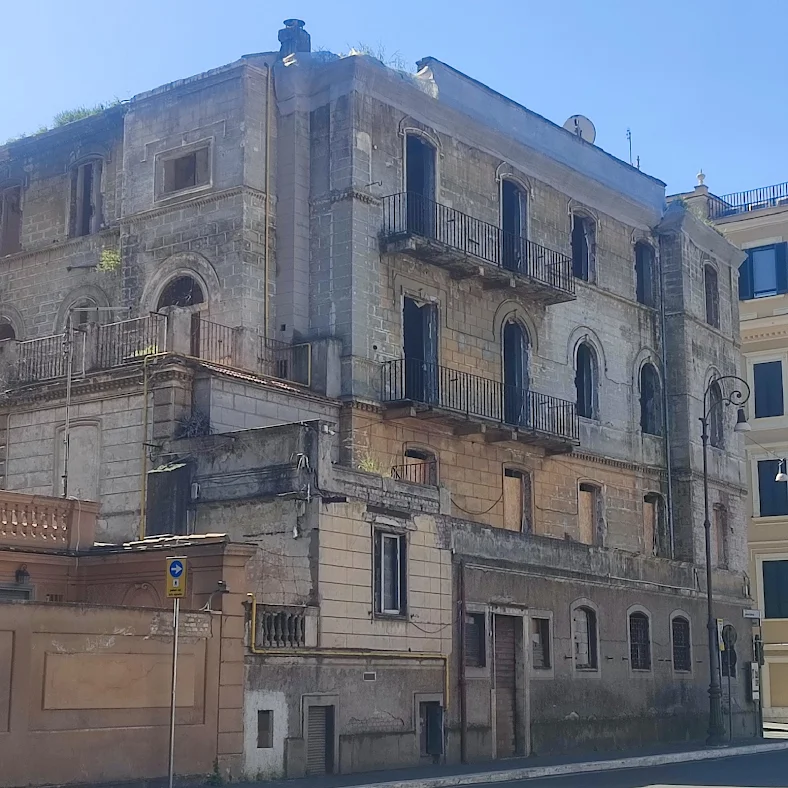
The second lies in the nature of the asset itself. The building carries clear historic and architectural value and includes a highly unusual feature: an internal theatre. This is not incidental. It is the point at which the deal changes character. A prestigious property in central Rome is a strong asset. A prestigious property in central Rome with a cultural component that can be meaningfully embedded in the hotel concept is an asset that may justify a higher market premium.
But that distinction needs to be made carefully: distinctive potential is not the same thing as real competitive advantage.
In luxury hospitality, the distance between the two is significant. And it is bridged only by execution.
The advisory platform is already part of the investment thesis
A high-end hospitality investment should never be judged solely by the amount of capital deployed. It should also be judged by the quality of the professional platform supporting it.
On that front, the transaction appears robust. Lexsential, with Marcello Paduano, advised on banking and finance. Giorgio Bobba of Advant NCTM handled fund regulation. LTRE Studio Legale advised Gemini Groupe through Andrea Di Leo and Vincenzo D’Avino, with a focus on planning, redevelopment and the legal conditions required for hotel conversion. EY was involved on legal and tax matters, while Coldwell Banker Commercial Italy acted as broker.
This is not window dressing.
It shows that the project has been built with multiple layers of control: financial structuring, regulatory soundness, planning compliance, tax architecture, technical feasibility and execution oversight. In transactions of this kind, capital buys the property. The advisory platform is what attempts to turn it into a trophy asset.
And that matters because, at the top end of the market, failure rarely comes from a lack of appeal. More often, it comes from underestimating complexity.
The right classification is not core — it is value-add with material execution risk
One of the most common analytical errors in cases like this is to label the deal “core” simply because it sits in a prime location.
That is too simplistic.
Here, the location protects the downside, but it does not produce the return on its own. The return will have to be created. And that creation will depend on a highly management-intensive chain of decisions: concept definition, redevelopment, positioning, branding, pricing architecture, service model, distribution strategy, reputation building and ramp-up discipline.
For that reason, the most accurate classification is not core. It is an urban value-add investment with elevated execution risk — backed by a strong defensive location, but carrying a far greater degree of operating complexity than the address alone might suggest.
That is the real difference between a great address and a great investment.
The first protects real estate value.
The second produces economic value.
There is no automatic link between them.
The real battleground is not location. It is product clarity
The micro-location is already validated by the international market. That is not in question. But in the upper-upscale and luxury segments, centrality no longer wins by default. What the market increasingly rewards is clarity of product positioning.
So the right question is not whether the hotel will sit in a strong location. The right question is this: why should a high-spending international guest choose this hotel, at this rate, over an established competitor?
That is where the project will be judged.
In urban luxury, the most attractive product does not automatically win. The winning product is the one whose value proposition is immediately understood. If Via Sicilia 57 can deliver a proposition that is clear, memorable and coherent, it can sustain genuine premium pricing. If it cannot, it risks falling into the most dangerous category of all: a luxury hotel that is elegant, correct and fundamentally non-essential.
That outcome is more common than the market cares to admit.
The internal theatre: strategic differentiator or expensive sophistication?
This is the point that will separate a strong project from a well-packaged one.
The internal theatre could become a genuine source of differentiation. It could create identity, reputational capital, experiential depth, partnership opportunities and pricing power. It could allow the hotel to move beyond the standard competitive set of interchangeable luxury properties and give it a clear reason to be chosen.
But it could also do very little of that.
It could remain a beautiful, cultured and highly marketable feature while contributing only marginally to the hotel’s economic model. In that case, it would cease to be a strategic asset and become an expensive form of sophistication.
The difference between those two outcomes will not be decided by design. It will not be decided by narrative. It will not even be decided by architecture.
It will be decided by management.
If the theatre becomes a living part of the hotel’s operating identity — through curated programming, selective events, institutional relationships, brand collaborations, private experiences and real commercial relevance — then it can become a meaningful competitive lever.
If it remains simply an elegant object inside an elegant hotel, the project will have wasted its most distinctive advantage.
In urban luxury, charm is not rewarded in itself. What the market rewards is the ability to turn charm into demand, demand into rate, rate into margin and margin into value.
The hidden constraints of historic assets
Any experienced hotel operator knows that historic buildings rarely offer the operating efficiency of a purpose-built asset.
And that is where a large part of the risk sits — the part the market tends to romanticise away, but the profit and loss account never does. Layout, building systems, back-of-house functionality, vertical circulation, wellness allocation, F&B logic, room mix, housekeeping flow, technical access and maintenance costs can all impose expensive compromises. Those compromises may remain invisible during the announcement phase of the deal, but they become central once the hotel begins to operate.
This is one of the defining contradictions of luxury hotel real estate: the more character a building has, the easier it becomes to underestimate the industrial discipline required to make it perform as a hotel.
And in the end, the market rewards only one thing: the ability to manage complexity without eroding profitability.
SWOT snapshot
Strengths
The micro-location is established and internationally recognised. The asset has genuine architectural identity. The internal theatre could provide meaningful differentiation. The quality of the capital structure and the advisory team strengthens the project’s credibility.
Weaknesses
Historic assets rarely offer optimal operational efficiency. Layout, building systems, back-of-house, F&B and wellness areas may all require costly compromises. In addition, the strength of the address can create a dangerous illusion of simplicity.
Opportunities
If the theatre is properly integrated as a driver of experience, content, events and relationships, the asset could move beyond standard luxury competition and establish a recognisable identity of its own. In that case, it would not merely sell rooms; it would sell a clear reason to choose it.
Threats
The greatest threat is not visible failure. It is underperformance disguised as success: a hotel that is attractive, perhaps even well received, but not distinctive enough to support the value premium embedded in the investment thesis.
The cost of capital is the final test
Every project of this kind carries timing risk, development risk, execution risk and positioning risk. But the final test remains only one: the cost of capital.
It is not enough to create a refined product. The product must be strong enough to outperform less complex, less constrained and potentially more efficient alternatives. That is the point the sector still tends to avoid: the market may respond to a concept, but capital responds to returns.
The managerial conclusion is straightforward: if the project does not generate real, repeatable and defensible premium pricing, the cost of capital will absorb much of its theoretical value.
Many assets are refined.
Many concepts are compelling on paper.
Many hotels are visually flawless.
But institutional capital is not rewarded by aesthetics. It is rewarded by risk-adjusted performance.
Hotel Management Group’s view
From an advisory standpoint, the judgment should be clear.
Via Sicilia 57 is a high-quality transaction. The structure is credible. The industrial logic is serious. The real estate base is compelling. The location is aligned with the target segment. The parties involved strengthen the solidity of the deal. The asset offers a rare point of distinction. The early signals are all sound.
And precisely for that reason, expectations are higher.
Execution risk sits above the segment average not because the deal is weak, but because it is built around an asset with real identity and, therefore, higher ambition. The higher the ambition, the less forgiving the market becomes.
The market will not reward this project for its theoretical elegance. It will reward it only if the finished product proves to be clearer, more desirable and more coherent than its competitors. If the theatre becomes a living part of the experience. If the concept stays disciplined. If the brand is properly aligned with the asset. If management protects quality, reputation and margin at the same time during ramp-up.
Only then can Via Sicilia 57 become a benchmark in Roman luxury hospitality.
Otherwise, it will become what many upper-end deals ultimately become: intelligent, expensive and respectable — but not decisive.
The question that really matters
The real question raised by Via Sicilia 57 is not whether Rome can absorb another luxury hotel.
The real question is deeper: can capital still tell the difference between a property that impresses and a hotel that creates value?
Because the two are not the same thing. And they never were.
A prestigious property attracts attention.
A well-managed hotel generates cash flow.
A great investment exists only when architecture, capital, positioning and management stop functioning as separate components and operate as one coherent system.
That — and only that — is where the future of Via Sicilia 57 will be decided.
At hotelmanagementgroup.it, we assist hotel transactions, hospitality investments, asset repositioning and management strategy through an independent, technical and value-driven lens.
To read senior-level analysis on the hotel industry and understand what truly separates a prestigious property from a successful investment, visit hotelmanagementgroup.it.
Because in high-end hospitality, value is not defined by what impresses. It is defined by what performs.