Not all hotel acquisitions are equal. Some add scale. Some bring a dormant building back into play. Only a handful put a property back on the map that combines local recognition, an established hospitality use, and real repositioning potential.
That is what makes the acquisition of the former Motel Agip in Palermo by FAS Hospitality, part of Spain’s Smy Hotels group, more than a routine real estate transaction. The seller was Gruppo Bulgarella. LCA advised the buyer, with of counsel Elsa Gentile and associate David Ascarelli leading the legal work, while the seller was assisted by its in-house legal team.
The plan is to redevelop the property on Viale Regione Siciliana into a high-end four-star hotel with around 117 rooms, a restaurant, conference space and meeting rooms, with a strong sustainability focus. The latest timetable points to an opening by the end of 2026. Earlier reports published in February suggested completion within the year, a difference that is not merely cosmetic: for investors, delivery timing is part of the economics of the deal.
But the real story is not simply the reopening of a historic hotel. The real story is that Smy Hotels has acquired not an anonymous shell, but an asset with three features that rarely come together in a single property: strong local recognition, a clear hospitality identity, and the scale to support a meaningful repositioning strategy.
From an investment perspective, that matters. This is not a building that needs to be invented from scratch. It needs to be redefined. The market already knows the site. What it has been waiting for is a product that makes sense for today’s demand.
Why this matters to hotel investors
For hotel investors, the appeal of the former Motel Agip begins with its scale and functional mix. A property of roughly 117 rooms with food and beverage and conference facilities does not rely on rooms revenue alone. It has the potential to build a broader income base across accommodation, meetings, events and ancillary spending.
That does not automatically translate into stronger performance, but it does widen the commercial runway. It also reduces dependence on a single demand segment, which is particularly relevant in secondary repositioning plays where flexibility matters.
The second element is the value-add profile of the transaction. In 2023, Gruppo Bulgarella acquired the then-closed property for around €3 million and announced a refurbishment plan worth approximately €6 million, with a redevelopment concept based on 120 rooms. The handover to Smy Hotels confirms that the market still sees clear upside in the asset. What has changed is the execution platform.
That shift is crucial. The story moves from straightforward real estate recovery into full hotel repositioning. That is a different proposition altogether.
The third factor is the strategic fit of the buyer. Smy Hotels already has a presence in Italy and operates within an established cross-border hospitality platform. This is not a one-off opportunistic purchase. It sits within a broader growth trajectory. For investors, that improves the credibility of the business plan. A group with operating standards, distribution capabilities and a defined commercial model is in a much stronger position to turn a renovated building into a functioning hotel asset.
The property’s history adds value, but history alone is not an investment thesis
The former Motel Agip in Palermo is not just another disused building. Its symbolic weight comes from its place in a specific chapter of Italian hospitality history. The Agip motels were part of post-war Italy’s modernisation of mobility and roadside services, and for decades the Palermo property held a distinct place in the city’s urban identity.
That legacy has real value. It gives the asset recognition. It gives it memory. It gives it a place in the local market’s mental map.
But investors know that legacy, by itself, does not generate returns. History may help bring an asset back into relevance. It does not substitute for product-market fit, operating discipline or positioning clarity.
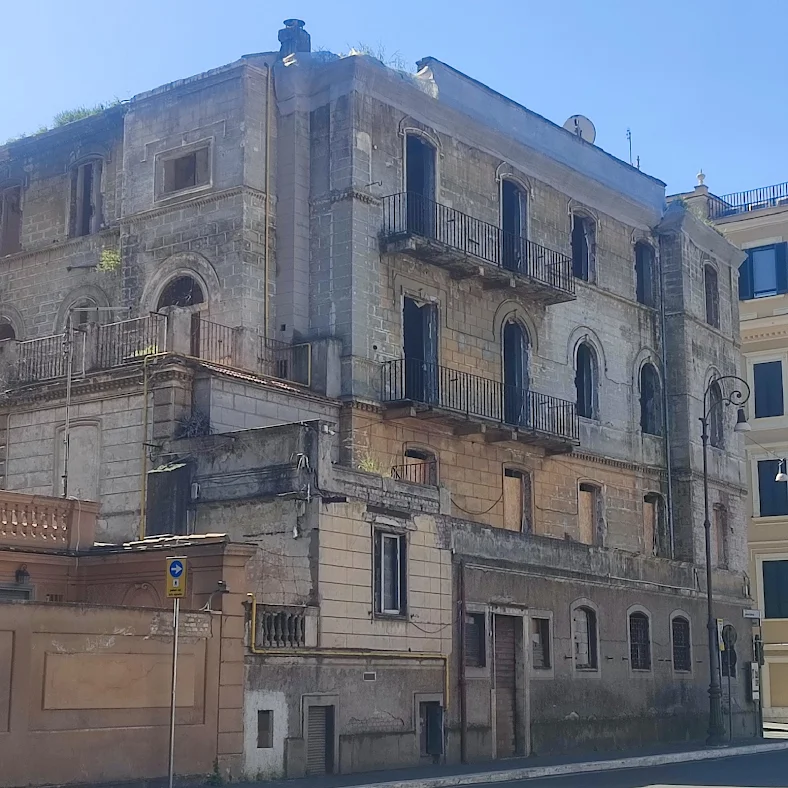
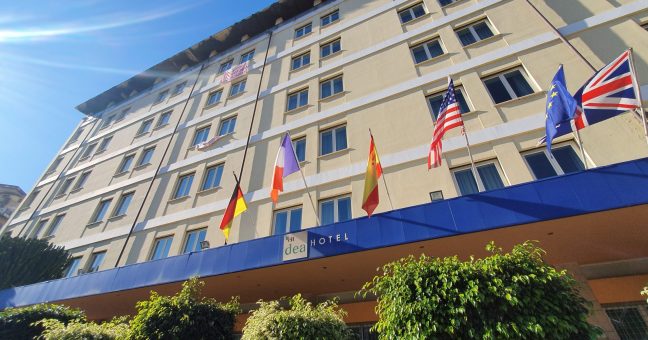
The building’s decline makes that clear. When the former Hotel Idea, previously Motel Agip, closed in 2014, the property stopped being a hospitality landmark and became, instead, a visible reminder of stagnation. For years, it stood less as a hotel than as an unresolved site awaiting a credible second life.
That cuts both ways from an investment standpoint. It raises the reputational upside of a successful relaunch, but it also raises the stakes. The market will judge the execution harshly because the property is so visible and so familiar.
Palermo offers a more supportive backdrop than it did before
The deal also needs to be read in the context of the destination. Palermo is no longer a market that can be discussed purely in symbolic terms. It is a city with a measurable growth trajectory in tourism demand. According to figures released by the municipality, Palermo recorded more than 2 million overnight stays in 2025, with roughly 916,000 arrivals and approximately 2.1 million total stays, up year on year.
That is not a direct performance proxy for the asset itself. But it does matter. For investors underwriting a repositioning story, demand growth at destination level makes the equation more compelling. It improves market visibility. It reduces part of the macro uncertainty around absorption.
Within that context, the former Motel Agip occupies an interesting position. It is not a trophy asset in the historic centre. It is a highly visible urban property with clear accessibility and a recognisable location. That distinction matters because it points to a different commercial logic. The asset may be able to serve not only traditional leisure demand, but also corporate travellers, meetings, events, and guests who value ease of access as much as centrality.
That is precisely why the conference and meeting component matters. It suggests a business model built not only around occupancy, but around segmentation.
Where the value could be created
The investment case rests on three stages of value creation.
The first is capex-led transformation: taking a dormant, discounted building and converting it into an operational hospitality product.
The second is commercial repositioning. A property that has been closed for years does not return to market simply because construction work is complete. It needs distribution. It needs revenue management. It needs service standards. Above all, it needs a clear market position.
The third is stabilisation. That is the point at which the property stops being a redevelopment story and starts being readable as an income-producing hotel asset, with implications for financing, valuation and eventual exit.
At this stage, there is not enough public information to model ADR, margins or prospective yield with any credibility. That limitation matters, and any serious investor should acknowledge it. But the underlying logic of the deal is already clear: this is a classic hospitality value-add play built around repositioning, not passive ownership.
The risks should not be understated
A serious reading of the deal also requires a sober view of the downside.
The first is execution risk. Timing, budget discipline, design quality, construction delivery and operational ramp-up all matter. In value-add hospitality, the concept is rarely the hardest part. Delivery is.
The second is positioning risk. A high-end four-star hotel with a MICE component needs a sharp identity. If the concept is too broad, the asset risks ending up in an uncomfortable middle ground: visible, well-located and newly renovated, but not sufficiently differentiated.
The third is time-to-market risk. When the opening date moves, the cost of capital becomes more burdensome and the revenue start line shifts further out. In a redevelopment story, even modest timetable slippage can alter the investment profile.
What the deal really signals
The significance of this transaction extends beyond Palermo.
It signals that there is still room in Italy for hotel investment strategies built around imperfect but high-potential assets: properties with identity, scale and a clear hospitality use, but which require an experienced operator to unlock value.
In other words, value in hotel real estate is not always bought in finished form. Often, it is built where others see complexity and a structured buyer sees a platform for repositioning.
That is exactly what the former Motel Agip represents.
If Smy Hotels executes well, this project could become a strong case study in how value is created in Italian hospitality today: not by merely buying keys, but by restoring relevance, function and profitability to an asset the market had largely stopped believing in.
The former Motel Agip in Palermo is not simply a hotel waiting to reopen. It is a live test of how a historic hospitality asset can be regenerated in a growing destination.
And for investors, the real question is not whether the property once had a strong past. It is whether it now has a strong enough future to turn capital expenditure into value, and recognition into returns.
Roberto Necci