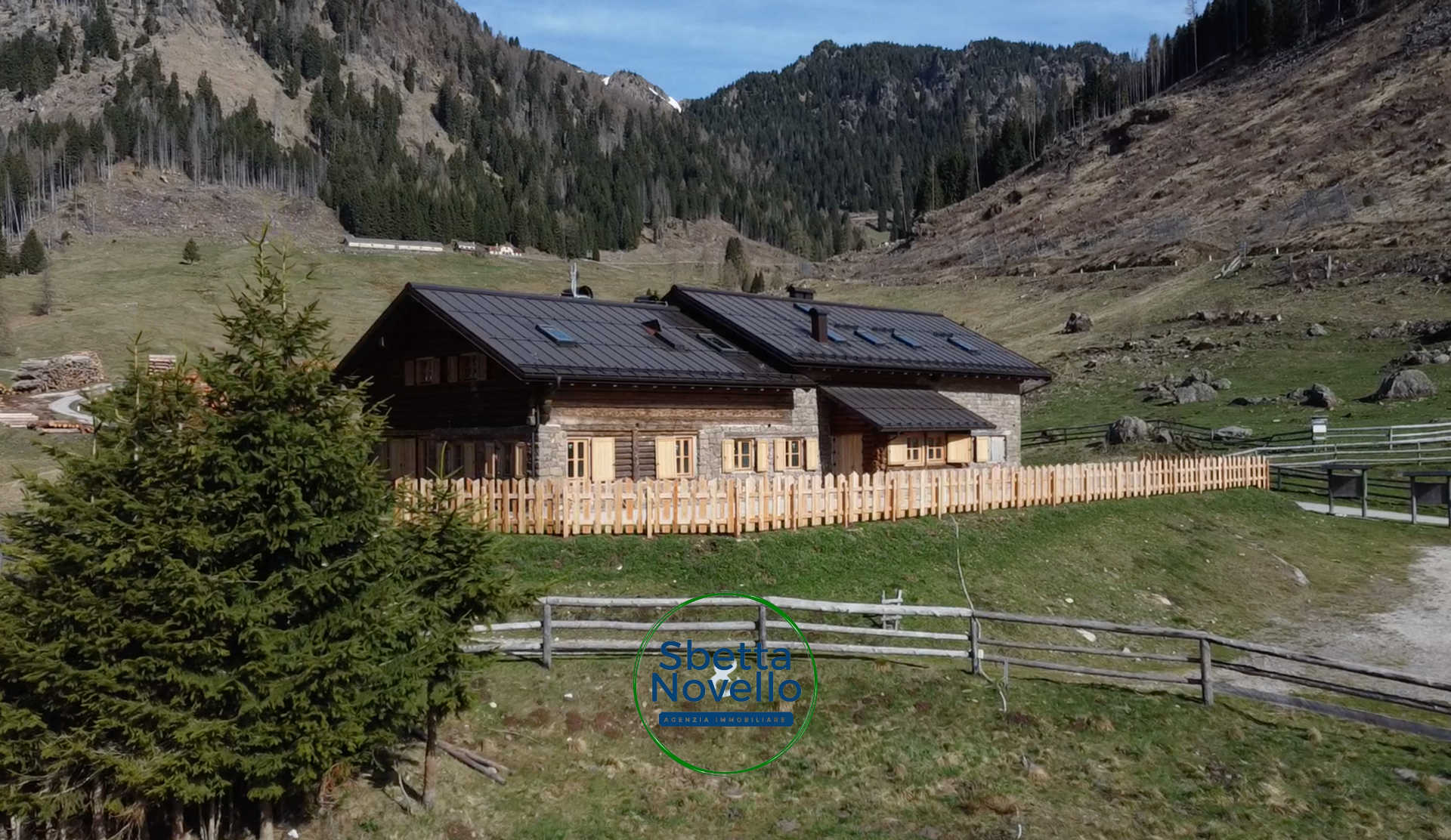
Eight rooms, 15 beds, a restaurant, bar, fully equipped kitchen, parking and direct access to Val Calamento in Trentino’s Lagorai mountain range. In 2026, the Municipality of Carzano sought a new operator for Locanda Alpina Valtrighetta through a six-year concession potentially renewable for a further six. The tender deadline was extended twice, the opportunity was actively marketed to potential hotel operators, and the rental structure was deliberately phased during the first years to reduce the initial burden. Yet the outcome was unequivocal: no bids were submitted. The procedure was formally declared unsuccessful on 2 July 2026. The issue, therefore, is no longer simply how to find an operator. It is determining what combination of rent, concession term, CAPEX, F&B model and operating structure could turn a valid tourism asset into a genuinely investable proposition.
In the hotel investment market, an unsuccessful public tender can sometimes reveal more than a successful award.
When no operator submits a bid, the market is sending a signal.
It does not necessarily mean that the asset has no value.
It means that, under the terms offered, no market participant considered the relationship between risk, required capital and prospective return sufficiently attractive.
That distinction is fundamental.
Locanda Alpina Valtrighetta, owned by the Municipality of Carzano and cadastrally located within the municipality of Telve di Sotto, is an almost textbook example.
The Municipality launched the concession procedure on 23 March 2026.
The original deadline was extended twice:
first to 28 May;
then to 25 June 2026.
On 2 July, the official record confirmed that no bids had been received and the tender was therefore declared unsuccessful.
The real question is no longer why the tender failed administratively.
It is why the market chose not to participate.
A Small Hotel With an F&B Component Far Larger Than Its Room Inventory
Locanda Alpina Valtrighetta is classified as a two-star hotel with a food and beverage operation also open to non-resident customers.
Accommodation capacity is limited:
8 rooms
providing a total of:
15 beds.
Seven are double rooms and one is a single room, all with private bathrooms.
But the accommodation component represents only one part of the operating model.
The ground floor includes:
-
an equipped bar of approximately 57 sqm;
-
two restaurant dining rooms;
-
a professional kitchen;
-
washing area;
-
storage;
-
staff changing facilities;
-
staff amenities.
Outside, the property also provides:
-
green areas;
-
space for outdoor tables;
-
parking;
-
an e-bike charging point.
This configuration makes one point immediately clear.
Eight rooms alone are unlikely to support the entire economics of the property.
The operating model must also capture revenue from:
restaurant customers;
bar customers;
hikers;
cyclists;
local residents;
groups;
day visitors.
The Real Asset Is Not the Eight Rooms — It Is the Destination
The property sits within one of the most attractive natural environments in the Lagorai mountain range.
Val Calamento offers:
trekking;
cycling;
e-biking;
mountain pastures;
nature;
access towards Passo Manghen;
winter activities;
links with the WWF Valtrigona Nature Reserve.
The commercial proposition should therefore not be understood simply as:
room + breakfast.
It should be considered as:
stay + food + outdoor + destination + experience.
That is the shift capable of transforming a small mountain inn into a genuinely destination-driven hospitality business.
But the destination only creates value if it can be converted into paying demand.
Trails, landscapes and natural assets are not enough.
The operator still needs:
distribution;
pricing;
partnerships;
packages;
content;
commercial execution.
The Concession Could Have Run for Up to 12 Years
The tender contemplated an initial term of:
6 years.
A further renewal of:
6 years
was potentially available.
The overall operating horizon could therefore have reached:
12 years.
That is long enough to consider investment in:
-
technology;
-
furniture;
-
equipment;
-
marketing;
-
branding;
-
website infrastructure;
-
distribution;
-
F&B improvement;
-
commercial development.
But duration alone does not make a project investable.
The relevant question remains:
how much capital needs to be committed, and how much cash flow can the operation produce during the first six years?
The Base Rent Was €25,000 Per Year
The tender set an annual base concession fee of:
€25,000 plus VAT.
Financial bids could only improve that amount upwards.
The Municipality had, however, introduced a stepped rental structure designed to reduce the burden during the ramp-up phase.
Based on the minimum bid, the payment profile would have been:
Year 1: €15,000
Year 2: €20,000
Year 3: €25,000
Year 4: €30,000
Year 5: €30,000
Year 6: €30,000
Total:
€150,000 over the first six years.
The logic was reasonable.
The Municipality was implicitly recognising that the business required a ramp-up period.
Yet the market still did not respond.
And that is the information that matters most.
How Heavy Is the Rent on an Eight-Room Hotel?
The mandatory operating period ran from:
1 May to 31 October.
Approximately 184 days.
With eight rooms, this translates into theoretical minimum capacity of approximately:
1,472 available room nights.
An average annual rent of €25,000 therefore equates, purely as a capacity metric, to approximately:
€17 per available room per day during the mandatory season.
And that cost must be absorbed before:
labour;
energy;
food cost;
housekeeping;
OTA commissions;
marketing;
maintenance;
insurance;
operator profit.
If, purely as a stress test, average occupancy were 50%, the rent burden would increase to approximately:
€34 per occupied room night.
This does not automatically mean that €25,000 is excessive.
But it does mean that a property with only eight rooms needs a strong F&B component to support the overall model.
We Cannot Assume the Tender Failed “Because of the Rent”
Analytical discipline matters.
The confirmed fact is:
no bids were submitted.
The reason is not documented.
It would therefore be incorrect to conclude that rent alone caused the failure.
Several variables may have contributed simultaneously:
-
rent;
-
limited room inventory;
-
operating obligations;
-
staffing requirements;
-
F&B risk;
-
mountain location;
-
CAPEX;
-
equipment requirements;
-
opening timetable;
-
contractual structure;
-
expected returns.
The purpose of professional analysis is not to choose the most intuitive explanation.
It is to identify which combination of variables prevented the market from participating.
Two Extensions and Active Operator Outreach Make the Signal Stronger
The tender did not simply expire without attracting interest.
The Municipality actively tried to broaden the market.
The deadline was extended twice.
Specific marketing and hotel-operator search activity was also undertaken.
Despite this:
zero bids.
That makes the signal significantly stronger.
It suggests that the problem was not merely insufficient visibility.
The market was approached.
And operators still did not find the proposition sufficiently attractive.
When an Unsuccessful Tender Becomes a Hospitality Special Situation
An unsuccessful tender creates a strategic problem for the public owner.
The asset exists.
The property is available.
The public objective is to activate it.
But no private operator is willing to assume the operating risk under the proposed terms.
At that point, the available options become strategic.
The Municipality can:
relaunch the same tender;
reduce the rent;
extend the concession term;
modify operating obligations;
contribute more directly to investment;
simplify the operating model;
reconsider seasonality requirements;
redesign the relationship between accommodation and restaurant operations.
This is precisely the point at which an ordinary public concession can become a hospitality special situation.
Not because the physical asset is necessarily distressed.
But because there is a mismatch between:
available real estate
and
the return required by the market.
The Real Entry Cost Was Not Just the Rent
The property already includes part of the equipment and furniture required for operations.
However, additional items needed to open and maintain the hotel classification would have remained partly the responsibility of the concessionaire.
The true initial investment was therefore:
equipment
working capital
pre-opening payroll
marketing
F&B opening inventory
insurance
maintenance
rent.
This total represents the actual:
Initial Investment Requirement.
The operator’s return should be assessed against the total capital absorbed.
Not merely against the concession fee.
This is the same principle applied in the work of Investhotel Capital Partners: headline rent represents only one component of the capital genuinely required to make a hospitality operation economically sustainable.
The Required Opening Timetable Increased Execution Risk
The tender required the property to open approximately:
30 days after execution of the agreement.
Daily penalties applied in the event of delay.
This meant the future operator would need to move quickly to:
complete the fit-out;
manage administrative requirements;
activate suppliers;
recruit staff;
build pricing;
load OTA inventory;
organise F&B;
launch commercially.
For an established operator, this may be manageable.
For a small first-time entrepreneur, however, it represents a meaningful organisational and financial challenge.
The Real Business Could Be the Restaurant
The physical allocation of space raises another important point.
The property has only eight rooms.
Yet it also includes:
a bar exceeding 57 sqm;
two restaurant dining areas;
a professional kitchen.
Clearly, the F&B facilities were not designed exclusively for the 15 overnight guests.
The real target market must also include:
hikers;
local residents;
cyclists;
groups;
day visitors;
traffic towards Passo Manghen;
local events.
The business plan should therefore separate at least:
Hotel P&L
and
Restaurant P&L.
Only then should the two operating statements be consolidated.
The restaurant may ultimately become the principal profit driver.
But it may equally become the principal source of losses.
The relevant metric is not F&B revenue.
It is:
Contribution Margin.
Payroll Is Probably One of the Most Sensitive Variables
For a property of this size, labour costs become particularly important.
One additional employee can have a proportionally much greater impact than in a 100-room hotel.
The model should therefore be built around a fundamental question:
what is the minimum staffing structure capable of maintaining service quality and operational integrity?
Reception.
Housekeeping.
Kitchen.
Restaurant service.
Bar.
Administration.
Maintenance.
Not all of these functions can economically operate as standalone departments.
The model requires:
multi-skilled staff;
efficient processes;
selective outsourcing;
technology.
The quality of hotel management therefore becomes more important in a small asset.
Not less.
Seasonality Should Be Managed, Not Automatically Fought
The tender required a minimum opening period from May through October.
That is already a relatively broad operating season.
The destination also offers potential winter activities such as:
snowshoeing;
ski touring;
outdoor tourism.
But extending opening periods does not automatically improve profitability.
Incremental demand must support:
energy;
payroll;
supplies;
maintenance;
distribution.
The correct sequence should be:
first build demand
→
then extend the season.
Not:
open first
→
then hope the demand arrives.
Technical Quality Carried More Weight Than Price
The award structure allocated:
70 points to the technical proposal
and
30 points to the financial offer.
The Municipality was therefore primarily seeking an operating project.
Not merely a tenant.
That is consistent with the nature of the property.
Its sustainability does not depend on an operator offering a few thousand euros more in annual rent.
It depends on the ability to:
create demand;
manage F&B;
control payroll;
sell effectively online;
integrate with the destination;
build reputation;
operate efficiently.
What Should Change in the Next Tender?
Any future procedure should probably begin by answering five questions.
1. Is the Rent Actually Sustainable?
The rent structure should be tested against a normalised PEF.
The question should not be:
“What is the property worth?”
but:
“How much rent can the operating business sustainably support?”
2. Is the Concession Long Enough Relative to CAPEX?
If the operator is required to invest meaningful capital, it needs enough time and certainty to recover that investment.
The value of a 6+6-year structure therefore needs to be considered in relation to the initial capital commitment.
3. Should the Municipality Assume a Greater Share of CAPEX?
If certain investments primarily create permanent value for the property itself, it may be economically more efficient for those items to remain with the owner.
Transferring too much investment burden to the operator can reduce the number of potential bidders.
4. Could Operating Obligations Be More Flexible?
Greater seasonal flexibility could allow the concessionaire to adapt operations to actual demand during the first years.
5. Should the Hotel and Restaurant Be Underwritten as One Integrated Business?
Probably yes.
But the financial plan must demonstrate that F&B can generate enough contribution margin to support the overall operation.
These are the variables that could make any future tender more closely aligned with market expectations.
The First Number to Determine Is Break-Even
Before modelling upside, the first question should be:
how much revenue does Valtrighetta need to generate simply to avoid losing money?
The operating model should distinguish:
Room Revenue;
Restaurant Revenue;
Bar Revenue;
Other Revenue;
Payroll;
Food Cost;
Utilities;
Distribution;
Maintenance;
Insurance;
Marketing;
Rent.
From this comes:
Break-even Revenue.
Only then should an investor begin modelling returns.
That is the step that turns a tourism property into an investable business.
Three Scenarios for Redesigning the Opportunity
Downside Case
Low occupancy, F&B primarily generated by hotel guests, strong seasonality and limited cost flexibility.
This scenario measures how much capital the operation could consume.
Base Case
Effective integration between rooms, restaurant demand, hiking traffic and day visitors, supported by disciplined distribution and an efficient payroll structure.
This is the scenario that must demonstrate fundamental viability.
Upside Case
Positioning the property as a genuine:
Lagorai Outdoor Lodge
built around:
trekking;
e-biking;
gastronomy;
nature;
groups;
events;
progressive season extension.
This is the value-creation case.
The financial sequence remains:
Revenue → GOP → Rent → CAPEX → Working Capital → Operator Return.
Rent should be an output of the business plan.
Not its starting point.
An Unsuccessful Tender Does Not Mean the Asset Has Failed
This is probably the most important conclusion.
The market did not say:
“Valtrighetta is worthless.”
It said:
“No one considered it sufficiently attractive to invest under the terms offered.”
Those are two completely different statements.
An asset can have:
location;
product;
potential demand;
tourism value;
and still not be investable.
Investability is ultimately determined by the relationship between:
cash flow
and
required capital and risk.
Public Hospitality Concessions Require Underwriting, Not Simply Marketing
The Valtrighetta case illustrates a broader principle.
Activating a publicly owned hospitality asset requires more than:
renovating it;
publishing a tender;
marketing the opportunity;
contacting operators.
The economic structure itself needs to meet the market.
In other words:
the operator should not need to be persuaded to participate.
The operator needs to be able to make money by participating.
That distinction is fundamental.
For this reason, tourism and hotel concessions should ideally be preceded by:
demand analysis;
PEF preparation;
fair-rent analysis;
CAPEX assessment;
operator-return analysis;
market sounding.
Further analysis on hospitality valuations, contracts, operations and transaction sustainability is available through the specialist guides published on Robertonecci.it.
Conclusion: The Next Tender Should Start With the Operator’s Return
Locanda Alpina Valtrighetta offers:
8 rooms;
15 beds;
a bar;
a restaurant;
a professional kitchen;
parking;
e-bike infrastructure;
Val Calamento;
the Lagorai mountains;
the WWF nature reserve.
The Municipality had also provided:
a six-year concession;
potential extension to twelve years;
stepped rent;
a strong weighting towards technical quality;
two deadline extensions;
active operator outreach.
And yet:
zero bids.
That is the fact that should guide any future attempt.
It does not mean the asset has no value.
It means that the market did not recognise a sufficiently attractive risk-return profile under the terms offered in 2026.
The next transaction should therefore not begin with the level of rent the Municipality would like to collect.
It should begin with a different question:
what business model would allow a competent operator to invest capital, assume operating risk and earn an appropriate return?
Once that answer is known, fair rent can be determined.
Not the other way around.
That is the difference between putting a property out to tender and structuring a hospitality investment.
Because a public concession becomes genuinely attractive only when it creates value simultaneously for:
the public owner;
the operator;
the destination.
The unsuccessful 2026 tender should therefore not necessarily be viewed as the end of the story.
It may instead represent the first valuable piece of market evidence about how investors price the operating risk.
And that is where a better structure can begin.
InvestimentiAlberghieri.it Advisory
InvestimentiAlberghieri.it analyses concessions, leases, acquisitions, management opportunities, turnarounds and repositioning strategies across publicly and privately owned hospitality assets, including unsuccessful tenders and properties seeking new operators.
For business plans, valuations, financial and economic plans, rent-sustainability analysis, due diligence, operator searches and hospitality transaction structuring:
info@investimentialberghieri.it
Complementary expertise and insights:
Robertonecci.it — hospitality advisory, analysis and specialist guides
Investhotel.it — hotel acquisitions, disposals and hospitality transactions
HotelManagementGroup.it — hotel management, asset management and performance optimisation