A hotel can be famous, award-winning and in a prime location. That does not mean it is still a good investment
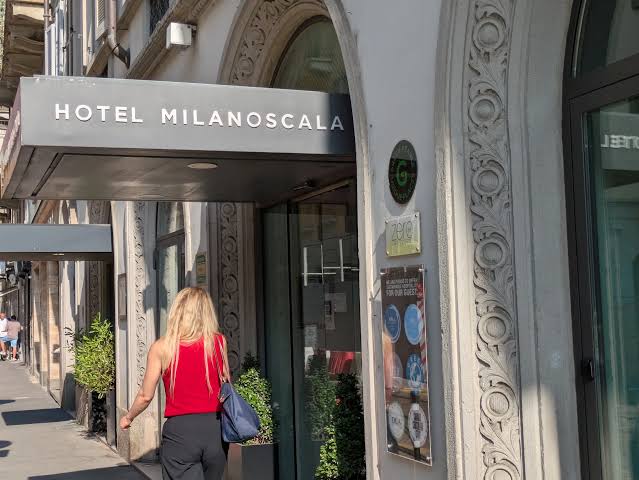
Hotel Milano Scala was no ordinary hotel.
It was a boutique hotel in the heart of Brera. It had been presented as Milan’s first “zero-emission” hotel. It had built a strong reputation around sustainability, music, green identity and an elegant, urban, recognisable positioning.
It had gained television exposure, awards, positive reviews and media attention.
And yet, in 2025, that same hotel entered a phase of discontinuity: sale of the property, suspension of operations, employees affected, union tensions, a planned refurbishment and a possible reopening in 2027.
The point is not whether Hotel Milano Scala was a good hotel.
It was.
For those investing in hospitality, the real question is different: can a hotel that was successful in the past still generate value in the next cycle?
This is the question every investor should ask when looking at a mature hotel asset.
Because in hospitality, value does not equal visibility.
It does not equal location.
It does not even equal reputation.
Value comes from the alignment between real estate, operations, capital, labour, market positioning and the ability to generate future margins.
When even one of these elements breaks down, the hotel stops being just an accommodation business and becomes an industrial case.
Hotel Milano Scala is exactly that: an industrial case disguised as a real estate transaction.
The case in brief
Asset: Hotel Milano Scala, Via dell’Orso 7, Milan, Brera district.
Opening: September 2010.
Original concept: Eco-sustainable boutique hotel, presented as Milan’s first zero-emission hotel.
Historically connected company: Capoberta Srl.
Buyer indicated by available sources: Geos Immobiliare Srl.
Year of operational discontinuity: 2025.
Employees affected: Approximately 30.
Future scenario: Refurbishment, possible reduction in room count, repositioning towards a higher segment, reopening expected in 2027.
Strategic issue: Transformation from an iconic green hotel into a real estate and hospitality value-creation operation.
This article is part of the editorial work of Investimenti Alberghieri, focused on the strategic analysis of hotel assets, real estate transactions, business distress, repositioning processes and capital decisions in hospitality.
For a broader framework on the issues discussed here, see also the technical guides published on robertonecci.it:
-
Hotel investments: how to buy, sell and finance a hotel without capital allocation mistakes
-
Hotel asset management: how to protect capital, control risk and increase the real value of a hotel
The first lesson: reputation does not protect a hotel from a change in cycle
One of the most common mistakes in hotel valuation is confusing reputation with economic resilience.
A hotel may be well known, loved, awarded and recognisable.
That does not mean its business model is still sustainable.
In the case of Hotel Milano Scala, the strength of the narrative was clear: sustainability, music, Brera, boutique hospitality, rooftop garden, green systems, awards and recognition.
In 2010, that positioning was innovative.
By 2025, it was no longer enough.
Milan’s hotel market has changed dramatically. Real estate capital has grown. More structured operators have entered the market. Lifestyle and upper-upscale standards have risen. Operating costs have increased. Labour has become a more complex variable. Distribution has become more technical. Revenue management has become decisive.
What was distinctive fifteen years earlier can now become merely part of the competitive baseline.
Sustainability remains valuable.
But it is no longer enough, on its own, to support a premium rate.
Today, a green hotel must also be high-performing, scalable, well managed, commercially aggressive, financially coherent and supported by an adequate capital strategy.
This is the first real lesson of the Hotel Milano Scala case: reputation can increase the perceived value of an asset, but it cannot replace its ability to generate income.
The second lesson: a hotel is not just a building with rooms inside
In real estate language, people often speak of a “hotel asset”.
Used poorly, that expression can be misleading.
A hotel is not just a building.
It is an operating business housed within a real estate asset.
This distinction is crucial.
When buying an office building, investors look at rents, tenants, lease terms, location, yields and letting risk.
When buying a hotel, they need to look at all of that, but also much more: occupancy, ADR, RevPAR, labour cost, food and beverage, brand, reputation, sales channels, reviews, capex, licences, seasonality, employment contracts, operating continuity and business plan.
In the case of Hotel Milano Scala, the transfer of the property to a new owner cannot be read merely as a sale.
It should be read as the potential redefinition of the entire investment thesis.
The question is not: “What was the property worth?”
The real question is: how much value can the asset generate once it has been rethought?
That is the difference between a real estate acquisition and a hotel investment.
In the first case, the buyer acquires a property.
In the second, the buyer acquires complexity and tries to turn it into return.
The third lesson: when ownership changes, the role of the hotel often changes too
The transition from Capoberta Srl to Geos Immobiliare Srl, according to the available information, marks a significant break.
It is not just a change of owner.
It may also change the economic function of the asset.
A historic, independent, highly distinctive hotel can be run for years under a direct entrepreneurial model. But when it enters a new ownership phase, especially if the transaction has a stronger real estate profile, the hotel may become the object of a different strategy.
The new investment thesis may be based on:
-
property value enhancement;
-
commercial repositioning;
-
room reconfiguration;
-
category upgrade;
-
new management;
-
new brand;
-
new economic structure;
-
new exit strategy.
This is where the case becomes interesting for investors.
Hotel Milano Scala does not appear to be simply a hotel that closes and reopens.
It appears to be an asset taken back to its fundamentals, dismantled in its previous configuration and prepared for a new cycle.
This is an increasingly common phenomenon in the Italian hotel market: hotels are not bought simply to be maintained, but to be repositioned.
The old value was in the existing operation.
The new value lies in the transformation.
The fourth lesson: labour is not a side issue, it is part of due diligence
The situation involving the employees affected by the closure of Hotel Milano Scala was one of the most sensitive aspects of the case.
It is also one of the most instructive.
In hospitality, labour cannot be treated as a residual line in the income statement. It is a structural component of asset value.
A hotel transaction may look attractive from a real estate perspective, but become far more complex when issues emerge around:
-
employment contracts;
-
business continuity;
-
furlough schemes and employee protection measures;
-
collective dismissals;
-
transfer of operations;
-
liabilities of the previous owner;
-
position of the new buyer;
-
reputational risk;
-
media impact.
In the Hotel Milano Scala case, the perceived contradiction was strong: on one side, a hotel symbolising sustainability; on the other, a closure described by the media as traumatic for workers.
For an investor, this point is essential.
Sustainability cannot be only environmental.
It must also be industrial, social and operational.
A hotel that communicates high values but goes through a complex employment transition exposes the future project to reputational risk.
And in today’s hotel market, reputation is not cosmetic: it affects brand perception, the relationship with the city, the ability to attract qualified staff and the credibility of the new positioning.
The fifth lesson: green is no longer enough unless it becomes pricing power
Hotel Milano Scala was built on a strong insight: bringing a sustainable boutique hotel with cultural and environmental identity into the centre of Milan.
That insight worked.
But markets evolve.
Today, sustainability is no longer a sufficient differentiator. It has become an expected condition, especially in the mid-to-upper and upper segments of the market.
The real issue is no longer claiming to be green.
The real issue is whether that green positioning produces:
-
higher ADR;
-
higher occupancy;
-
stronger international reputation;
-
lower energy costs;
-
access to premium demand;
-
higher property value;
-
stronger exit potential.
If it does not generate these effects, sustainability remains a reputational attribute. Important, but not necessarily enough to justify an investment.
This is a central point.
In the next cycle of Hotel Milano Scala, the issue will not simply be preserving the green narrative.
It will be integrating that narrative into a more competitive hotel product, probably higher-end, more international and more aligned with the expectations of the Milan market.
The new project will need to answer a very practical question: will sustainability remain storytelling, or will it become an economic lever?
The real issue: cosmetic refurbishment or true repositioning?
In hospitality, many projects are presented as refurbishments.
But refurbishment can be a weak word.
Changing furniture, updating rooms, refreshing common areas or improving the visual identity does not necessarily create value. It may simply mean spending capital.
The real question is different: does Hotel Milano Scala need cosmetic refurbishment, or does it need true repositioning?
The difference is enormous.
Refurbishment improves appearance.
Repositioning changes the economic trajectory of the asset.
True repositioning requires clear choices:
-
which segment to serve;
-
which average rate to target;
-
which customers to attract;
-
which service level to support;
-
what role to assign to food and beverage;
-
how to use the rooftop;
-
which identity to build;
-
which operator to involve;
-
what return to expect from capex;
-
what value to create in a future sale.
If the expected 2027 reopening is only cosmetic, the risk is returning to the market with a more expensive product that is not necessarily stronger.
If, instead, it is a true repositioning, the operation may turn an iconic but mature hotel into a newly competitive asset.
For an investor, the difference between these two scenarios is everything.
Milan rewards clear assets and punishes assets stuck in the middle
Milan is one of the most attractive hotel markets in Italy.
But it is also one of the most selective.
The market rewards hotels with a clear identity, updated product, evolved management and the ability to sustain rates consistent with their positioning.
It penalises assets stuck in the middle.
Hotels that are too expensive to compete on volume.
Not luxurious enough to compete at the top.
Too independent to benefit from brand distribution.
Too small to absorb certain operating complexities.
Too dated to sustain a premium price.
Too distinctive to be easily repositioned without investment.
This middle ground is now the most delicate part of the market.
Many Italian hotels, even in strong cities, risk finding themselves in this position: good asset, good history, good location, but a model no longer fully aligned with the market.
The Hotel Milano Scala case is representative precisely because it concerns a hotel that was not weak, but mature.
And mature assets are often the most interesting for investors: not because they have no problems, but because their problems can become value-creation levers if properly understood.
What an investor should look at in a case like this
In a transaction of this kind, the question should not be: “Is it a beautiful hotel?”
The question should be: what is the investment thesis?
A real hotel due diligence process should assess at least seven levels.
For a deeper framework on how to read a hotel transaction, see also the guide on how to value a hotel and the guide to hotel investments.
1. Real estate value
Location, constraints, building condition, systems, surfaces, layout, reconfiguration potential, service expansion potential and quality of common areas.
In the case of a central urban hotel, real estate value matters, but it cannot be separated from operating value. A strong location can support the transaction, but it does not automatically fix a weak operating model.
2. Operating value
Historical performance, occupancy, ADR, RevPAR, margins, labour cost, distribution channel mix, OTA dependence and ancillary revenue structure.
The real question is not how much revenue the hotel generated, but how much structural profitability it was able to produce and how much it can generate after repositioning.
3. Brand value
Reputation, recognition, reviews, awards, perceived positioning, strength of the name and coherence with the future market.
The brand can accelerate value, but only if it is integrated into a product that is still competitive. A known name, if not updated, risks becoming a memory of the past rather than a lever for the future.
4. Legal and corporate risk
Beneficial ownership, corporate transfers, contracts, licences, litigation, employment relationships, possible debts and legacy liabilities.
In a hotel transaction, risk is not only real estate risk. It is also labour, corporate, reputational and operational risk.
5. Required capex
Investment required to renovate, upgrade, reposition and relaunch the hotel.
Capex should not be assessed only as a cost, but as a lever to change future profitability. Spending a lot does not automatically create value. Value is created only by capex that changes positioning, supports higher rates, improves margins and makes the asset more attractive.
6. Competitive scenario
Competitive set, new market entrants, rate positioning, leisure and business demand, events, international clientele and competitor dynamics.
Milan is a strong market, but for that very reason it requires very clear products. Undefined assets risk being squeezed between more efficient mid-market operators and stronger upper-segment properties.
7. Exit strategy
Potential value after repositioning, attractiveness for funds, hotel groups, family offices, international operators or real estate investors.
A hotel investment should not be analysed only at entry.
It should also be analysed at exit.
Who could buy the asset tomorrow?
At what multiple?
Under what management structure?
With what stabilised profitability?
With what residual risk?
Only by combining these levels can an investor understand whether the transaction is genuinely attractive.
Because a hotel may be bought at a price that appears fair and still prove expensive to transform.
Or it may appear problematic and become an excellent investment if the new project successfully changes its economic profile.
The blind spot of many real estate investors
Many investors enter hospitality from a purely real estate perspective.
They look at the location.
They look at the building.
They look at square metres.
They look at price.
They look at potential capital appreciation.
All of this is correct.
But it is not enough.
A hotel is an economic machine.
If the machine does not work, the building alone will not save the investment.
A hotel must generate cash flow, margin, reputation, recurring demand and pricing power. It must be managed, sold, positioned, updated and controlled.
This is the blind spot: the real estate investor sees the asset, but often underestimates the operation.
In the Hotel Milano Scala case, the real question will not be only what the property in Brera is worth.
The real question will be how much the new hotel product can generate after repositioning.
And that question cannot be answered by a simple real estate appraisal.
It requires a hospitality reading.
That is why acquisition, sale, renovation and change-of-management processes need to integrate property analysis, industrial planning, contracts, operations and governance. This topic is also addressed in the guide to hotel asset management.
Contracts can create or destroy value
Every mature hotel transaction brings with it a contractual issue.
Who will manage the hotel after the refurbishment?
Under which structure?
Lease of the hotel operating business?
Hotel lease?
Management agreement?
Franchise?
Direct management?
Partnership with a specialised operator?
The answer only appears technical. In reality, it is strategic.
The contract determines who controls operating risk, who benefits from the upside, who bears the downside, who decides on the product, who governs the brand, who oversees costs and who protects the property value.
A bad contract can turn a good asset into a mediocre investment.
A well-structured contract can align owner, operator and capital around the same trajectory.
In the case of a hotel like Milano Scala, this issue will be even more important: the new cycle will probably need to combine real estate capital, operational expertise, commercial positioning and reputation control.
For those who want to explore this topic further, see the guide to hotel management agreements and franchising.
Why the Milano Scala case is a lesson for many Italian hotels
This case is not only about Milan.
It concerns many independent, historic, family-owned or entrepreneur-led Italian hotels that have built a reputation over time but are now facing a competitive leap.
Many of these hotels have good locations.
Many have a story.
Many have decent reviews.
Many have recurring guests.
Many have interesting real estate.
But not all of them still have a model suited to today’s market.
In the coming years, we will likely see more transactions involving:
-
sales;
-
leases of hotel operating businesses;
-
management agreements;
-
franchising;
-
conversions;
-
repositioning;
-
aggregation;
-
entry of real estate capital;
-
involvement of specialised operators.
The issue will not only be who buys.
The issue will be who is capable of transforming.
Value will increasingly shift from passive ownership to industrial capability.
For more cases, analyses and market scenarios, see the Investimenti Alberghieri blog.
The decisive question: how much value can the new cycle of Hotel Milano Scala generate?
The future reopening will be the real test of the operation.
It will not be enough to say that the hotel is reopening.
The question will be how it reopens.
With how many rooms?
In which category?
With which operator?
With what level of investment?
With what ADR target?
With what positioning?
With what role for food and beverage?
With what international identity?
With what economic sustainability?
With what relationship between capex and expected return?
The 2027 reopening, if confirmed, will be interesting not as a news item, but as an industrial test.
If the new project can transform Hotel Milano Scala from a green icon into an upper-upscale or luxury urban hotel product, the operation may create value.
If, instead, the project is limited to an aesthetic renovation, the risk will be bringing back to market a newer hotel, but not necessarily a more competitive one.
In hospitality, capital does not reward restoration.
It rewards profitable transformation.
Conclusion: the past creates visibility, it does not guarantee returns
Hotel Milano Scala is a useful case because it challenges a widespread belief: that a beautiful, well-known and well-located hotel is automatically a good investment.
It is not.
A hotel can have an important history and still be at the end of a cycle.
It can have reputation and still require deep industrial revision.
It can be located in one of Italy’s strongest cities and still need new capital, new management and new positioning.
The past creates visibility.
The future requires strategy.
For hotel investors, this is the main lesson: value is not found in the snapshot of the asset, but in its trajectory.
Hotel Milano Scala was a symbol of sustainable hospitality in Milan.
Now it will have to prove that it can become something different: an asset aligned with a new market, new standards, new demand and a new ability to generate margins.
That is where the quality of a hotel investment is measured.
Not in the charm of the hotel being acquired.
But in the clarity with which one understands what that hotel can become.
Looking to assess a hotel asset before buying, selling or repositioning?
Before buying, selling or repositioning a hotel, a real estate valuation is not enough.
What is needed is a complete hotel diagnosis: asset, operations, contracts, capital, margins, capex and industrial risk.
A hotel should not be read only as real estate. It should be read as an economic, operational, financial and industrial asset.
Hotel Management Group supports owners, investors and operators in the strategic assessment of hotel assets, financial and operational governance, asset management and value-creation processes.
Discover the approach of Hotel Management Group.
In hospitality, value does not simply belong to those who own the property, but to those who can turn it into an economically credible project.