A case study for tourism investors
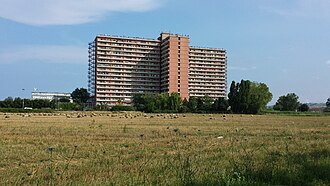
Hotel House in Porto Recanati is not merely a story of urban decay. It is a case study in what happens when a tourism real estate project is developed without the governance needed to sustain it throughout its life cycle.
Its history illustrates a principle every investor should keep in mind: in tourism, value does not come from physical scale. It comes from the ability to preserve a viable, governable economic function over time.
A property may have size, location, views, commercial potential and a compelling promise of appreciation. But if it lacks a management model, if ownership becomes fragmented, if maintenance is deferred, if its economic purpose weakens and no party retains strategic control over the asset, the expected value begins to erode.
It does not disappear overnight.
It is consumed gradually.
First, the quality of demand declines.
Then reputation weakens.
Then the ability to fund shared costs decreases.
Then maintenance becomes inadequate.
Then deterioration becomes visible.
Then the real estate problem becomes an urban problem.
Hotel House is not the failure of a building. It is the failure of a model: one that mistakes tourism development for the mere production and sale of built space.
The original mistake: building does not mean creating tourism value
The project was conceived in a period when Italian coastal tourism seemed capable of absorbing almost any new real estate supply. The logic was straightforward: build a large complex, divide it into individual units, sell them, and capture demand for second homes and seaside stays.
It was a vision consistent with the real estate boom of the time, but fragile from an investment and operating standpoint.
Because tourism is not just location.
It is not just scale.
It is not just proximity to the sea.
It is not just the sale of individual units.
Tourism is an organised economic function. It requires management, services, maintenance, control, safety, reputation, positioning and a coherent relationship with the destination.
When these elements are not designed together with the physical asset, the project may be completed from a construction perspective, but it remains incomplete from an economic one.
The mistake was not simply building too much. The mistake was developing a holiday-residential product without securing the long-term conditions required to govern it.
From tourism asset to residential container
The most important shift in the history of Hotel House is not physical deterioration. It is the loss of function.
A tourism asset is created to serve a specific demand. When that demand fails to consolidate, the property does not remain suspended in place. The market repositions it.
In the case of Hotel House, the original holiday-residential function gradually weakened. Unit values declined. Ownership became fragmented. The building lost its identity. The original demand was replaced by a more fragile residential demand, less solvent and far more difficult to manage.
This is the central lesson for investors: many assets do not fail because they are abandoned; they fail because they change function without anyone governing that change.
That is far more dangerous than simple vacancy.
An empty building creates a repositioning problem.
An occupied but ungoverned building creates a much more complex problem: social, technical, legal, reputational and public.
Non-governability is the real risk
In hotel and real estate investment, the discussion often revolves around price, yield, cap rate, renovation cost, exit value and potential demand.
These variables matter. But they are not enough.
The first question should be different: is this asset governable?
In the case of Hotel House, that question gradually became the structural problem.
A complex made up of hundreds of units, with fragmented ownership, uncertain use, complex maintenance needs, a fragile resident population and limited capacity to fund common costs cannot be managed like an ordinary condominium. It requires strong leadership, appropriate legal tools, financial capacity, technical supervision and a long-term strategy.
Without that framework, every weakness compounds.
Fragmented ownership slows decision-making.
Slow decision-making delays intervention.
Delayed intervention damages the asset.
A damaged asset loses value.
Lower value attracts weaker demand.
Weaker demand reduces the ability to sustain shared costs.
Lower contribution capacity accelerates deterioration.
This is the downward spiral of ungoverned assets.
Once a property enters this cycle, physical renovation is no longer enough. What is needed is a restructuring of governance.
Real estate value is not the same as management value
Hotel House exposes a fundamental distinction: theoretical real estate value is not the same as actual management value.
A building may have surface area, location, volume and potential. But if it cannot be coordinated, maintained, repositioned, financed, insured, managed and controlled, that potential remains theoretical.
In hospitality, this distinction is decisive.
A hotel is not valuable simply because it physically exists. It is valuable because it generates cash flow. Because it captures demand. Because it maintains standards. Because it has management. Because it can be upgraded, refinanced, sold, branded or repositioned.
The same logic applies to residences, hybrid hospitality formats, serviced apartments, holiday villages, student housing, senior living and holiday-residential complexes.
The question is not: how large is the property?
The question is: what sustainable economic function can it maintain over time?
When this question is not asked, the investment is assessed only in its physical dimension. But over time, the market judges its operating dimension.
The underwriting error: failing to stress-test the downside
Every investment is built on assumptions. Demand, pricing, sales timelines, costs, management, returns and exit are all forecast.
The problem is that many investment analyses focus on the upside: what happens if the market absorbs the product, if values rise, if the destination performs, if the transaction closes within the expected timeframe.
The more important question is different: what happens if the original plan does not work?
What if tourism demand fails to consolidate?
What if seasonality reduces utilisation?
What if fractional sales disperse governance?
What if common costs become unsustainable?
What if ordinary maintenance is not carried out?
What if the property loses reputation?
What if the destination changes positioning?
What if the exit strategy is no longer viable?
This is where the quality of underwriting is tested.
The real stress test for a tourism investment is not only financial. It is operational and governance-driven.
An asset should not be assessed only on the returns it may generate in a favourable scenario, but on its ability not to deteriorate into a liability when the scenario changes.
Hotel House is an extreme case, but the rule applies to many hospitality and tourism real estate operations: a fragile investment is not one that produces modest returns; it is one that cannot be governed when the plan changes.
Fractional sales can become a trap
Fractional sales are often presented as an efficient strategy. They reduce the developer’s exposure, accelerate monetisation, distribute risk and allow for a faster exit.
But in complex tourism assets, they can become a structural weakness.
When a property is divided among hundreds of owners, unified management becomes difficult. Decisions require consensus. Common investments become complicated. Maintenance depends on the contribution capacity of many different parties. Strategic repositioning becomes almost impossible.
In a traditional hotel, ownership can decide to renovate, change operator, introduce a brand, revise the product or adjust the positioning.
In a large fragmented complex, every decision becomes slow, negotiated and conflict-prone.
This is why ownership structure is not a legal detail. It is an industrial variable.
An asset may be attractive from a real estate perspective but weak from an investment perspective if it cannot be effectively governed.
And what cannot be decided is often what cannot be enhanced.
When private risk becomes public cost
Hotel House also demonstrates another principle: when a large private asset is not governed, risk tends to migrate to the community.
At first, the problem is patrimonial.
Then it becomes a condominium issue.
Then it becomes a maintenance issue.
Then it becomes social.
Then it becomes sanitary, technical, residential, reputational and security-related.
Finally, it becomes public.
At that point, the owner, the administrator and the market are no longer enough. The municipality, the Prefecture, law enforcement, the fire brigade, social services, health authorities and judicial administrators become involved.
This transition is essential for anyone investing in tourism: a degraded asset does not merely consume its own value; it consumes territorial value.
It can damage the reputation of the destination.
It can depress surrounding real estate values.
It can deter qualified investors.
It can generate rising administrative costs.
It can become a negative symbol for the entire area.
In tourism, territorial reputation is an integral part of economic value. A large property that has fallen out of control is never just a localised issue. It is a risk factor for the destination.
Regeneration does not mean repainting the façade
In cases like Hotel House, the word most often used is “regeneration”.
But if regeneration remains generic, it is a weak formula.
Regeneration does not simply mean repairing façades, lifts, systems or common areas. These interventions may be necessary, but they are not sufficient.
True regeneration requires a new operating architecture.
It must establish who decides, who finances, who manages, who controls, who bears the costs, who uses the property, which economic function makes it sustainable, and which party assumes industrial responsibility for the process.
Without these answers, regeneration remains construction-led.
And construction-led regeneration cannot, by itself, solve a governance failure.
The question is not: how much does renovation cost?
The question is: which model makes the asset sustainable after renovation?
Because the real risk is not opening a construction site. The real risk is closing it without having solved the governance problem.
Why this case also matters to hotels
Hotel House is not an operating hotel in the contemporary sense. It does not have managed rooms, departments, revenue management, branding, distribution channels or a hotel P&L.
Yet it is highly relevant to hospitality.
Because it was born within a holiday-residential logic.
Because it exposes the risks of hybrid assets.
Because it anticipates issues that are now central to the market: residences, serviced apartments, second homes, short-term rentals, student housing, senior living, co-living, real estate funds and the regeneration of large obsolete buildings.
The boundary between hotels, holiday-residential real estate and managed real estate is increasingly fluid. Precisely for this reason, governance becomes the real differentiator.
Whenever a hybrid product is developed, the question must be clear: is the asset merely sellable, or is it also manageable?
If it is merely sellable, the developer can exit.
But the territory remains.
The building remains.
Maintenance remains.
Reputation remains.
The problem, if it emerges, remains.
A mature hospitality sector must distinguish between operations that create lasting value and operations that transfer risk over time.
The general rule for investors
Hotel House leads to a precise rule:
a tourism asset without industrial governance tends to lose function; an asset that loses function tends to lose value; an asset that loses value tends to attract weaker uses; an asset that concentrates weaker uses tends to become an urban problem.
This sequence should become a permanent part of tourism investment analysis.
It is not enough to ask:
-
how much does it cost;
-
how much does it yield;
-
how much can it appreciate;
-
what exit price might it achieve;
-
what potential demand does it capture.
Investors must also ask:
-
who governs the asset over the long term;
-
how reversible is its use;
-
how fragmented is ownership;
-
how much does it cost to maintain adequate standards;
-
how sustainable is maintenance;
-
how much does the area’s reputation matter;
-
what happens if demand changes;
-
who bears the negative externalities;
-
how credible is the exit strategy;
-
who has an economic interest in preserving quality over time.
These are the questions that separate a superficial real estate assessment from a true investment analysis.
The lesson for tourism destinations
Hotel House does not speak only to investors. It also speaks to destinations.
Every tourism destination should know its critical assets: obsolete former hotels, degraded residences, outdated holiday villages, fragmented complexes, unfinished structures, large buildings without a clear function and abandoned hospitality properties.
These assets are not neutral.
They can attract degradation.
They can damage the perceived quality of the area.
They can reduce investor confidence.
They can weaken the surrounding real estate market.
They can generate rising public costs.
They can become negative symbols of the destination.
A tourism destination is not defined only by its best hotels, its restaurants, its beaches, its events or its latest investments. It is also shaped by the assets that fail.
For this reason, the regeneration of obsolete tourism properties should be treated as a destination management policy, not merely as an urban planning issue.
The real question: what does the asset become if the plan fails?
The Hotel House case forces investors to ask an uncomfortable question.
It is not enough to ask what an asset can become in the best-case scenario. One must ask what it becomes in the worst-case scenario.
If the market does not absorb the product, what happens?
If management fails, who intervenes?
If ownership becomes fragmented, who decides?
If maintenance stops, who pays?
If reputation deteriorates, who has the strength to reposition the asset?
If value declines, what demand steps in?
If the asset becomes problematic, who bears the cost?
These questions are often absent from business plans. Yet they are precisely the questions that determine the resilience of an investment.
A good investment is not only one that works when everything goes well. It is one that does not become a liability when the scenario changes.
Conclusion: tourism does not forgive the absence of governance
Hotel House in Porto Recanati is an extreme case, but its logic is not isolated.
Many Italian destinations contain properties born in a different era of tourism: large structures, residences, former hotels, holiday villages, fragmented complexes, obsolete buildings and real estate products designed for a demand that no longer exists, or that has changed radically.
Not all of them will become national cases. But many contain the same risk: they still have physical real estate, but no longer have a clear economic function.
This is where the quality of the investor is measured.
The sophisticated investor does not look only at the entry price. He looks at governability.
He does not look only at surface area. He looks at function.
He does not look only at theoretical potential. He looks at the asset’s real ability to generate value without transferring risk to the territory.
Hotel House shows that a tourism project without governance can survive as a building while failing as an investment.
And when this happens, value does not simply disappear from private balance sheets. It turns into urban risk, public cost and reputational damage for the destination.
We have taken a closer look at this issue through the lens of this specific case: demolition or renovation?
In tourism, value does not come from physical scale. It comes from the ability to preserve a viable, governable economic function over time. When that ability is missing, the asset stops producing value and starts producing risk.
Roberto Necci - r.necci@robertonecci.it