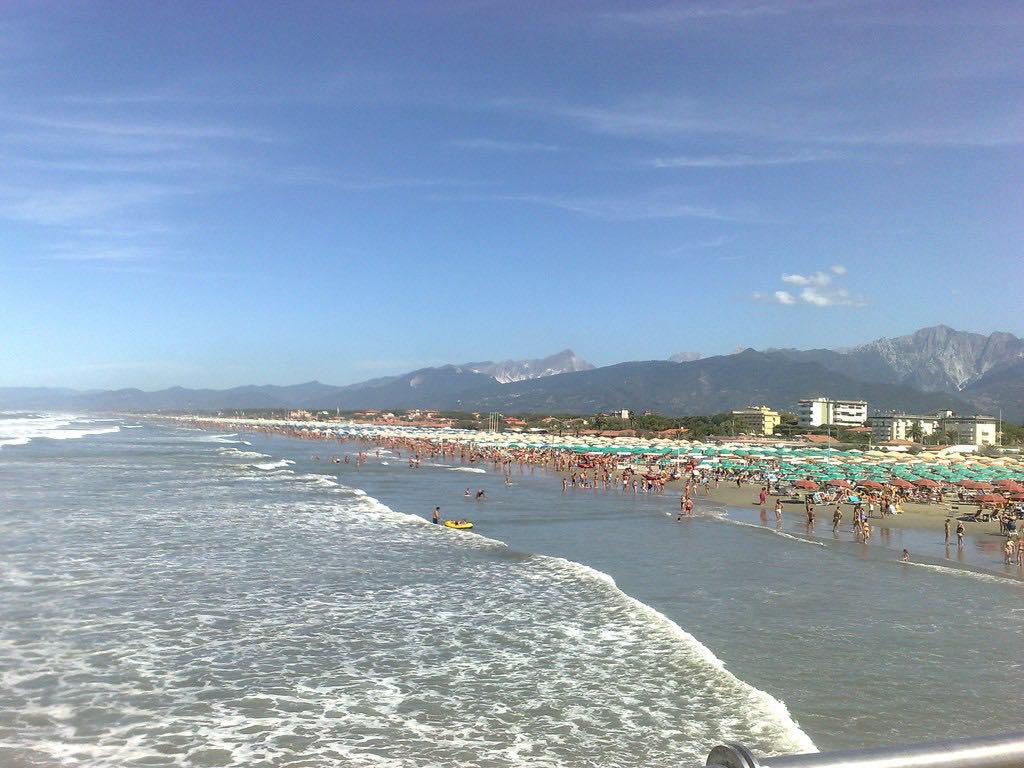
The former Hotel Tirreno and Le Ginestre in Focette have recently been acquired, while the identities of the new owners, final redevelopment plans and operating timelines remain largely undisclosed. And that is precisely what makes this stage so interesting from an investment perspective. The acquisitions have secured control of the assets, but they have not yet defined the future returns. The real risk now is not having acquired two closed hotels: it is committing CAPEX before determining which demand segments, ADR and GOP will ultimately be required to remunerate that capital. Le Ginestre historically operated with 39 rooms, a restaurant, bar, garden, terrace and parking approximately 250 metres from the beach; the Tirreno, by contrast, has been inactive for more than a decade. Two assets in the same micro-market — but potentially two entirely different investment theses.
In the hotel investment market, there is a phase during which potential value remains highly malleable.
It is the period between:
Acquisition
and
Final Investment Decision.
Ownership has transferred.
Capital has entered.
But several critical variables may not yet have been locked in:
positioning;
key count;
layout;
category;
F&B;
brand;
CAPEX;
operating model;
reopening timeline.
The former Hotel Tirreno and Le Ginestre in Focette appear to be precisely at this stage.
And this is where a significant proportion of future value can either be created — or destroyed.
Acquisition Transfers Ownership. It Does Not Yet Create Value
When a closed hotel is acquired, the market often treats the transaction as though the deal has been completed.
In reality, the acquisition resolves only:
Property Control.
Value creation still needs to progress through:
Strategic Optionality
→
Concept
→
CAPEX
→
Operating Model
→
GOP
→
ROIC
→
Exit Value.
That is the real economic value chain.
The purchase price creates the opportunity.
The business plan must convert that opportunity into returns.
The Risk Today Is Not the Price Paid. It Is CAPEX Committed to the Wrong Concept
Before construction begins, capital remains flexible.
It can still be allocated across:
guestrooms;
bathrooms;
F&B;
outdoor areas;
technology;
back of house;
brand standards;
services.
Once that capital has been converted into:
walls;
building systems;
layouts;
kitchens;
furniture,
reallocating it becomes much harder.
This is the real:
Concept Risk.
The negative sequence is straightforward:
Wrong Positioning
→
Wrong Product
→
Wrong CAPEX
→
Wrong Cost Structure
→
Lower GOP
→
Lower Asset Value.
This is why the period before construction may be more important than the renovation itself.
Le Ginestre: 39 Historical Rooms, but 39 Is Not Necessarily the Right Number
Le Ginestre historically operated with:
39 rooms
alongside:
a restaurant;
bar;
garden;
terrace;
parking;
hotel services.
The beach was reported to be approximately:
250 metres away.
These are useful data points.
But they describe the past.
They should not automatically determine the future.
The question should not be:
“How do we restore Le Ginestre to its previous configuration?”
It should be:
“What room count and product configuration will maximise the return generated by this building today?”
Maximum Keys Does Not Mean Maximum Value
Retaining all 39 rooms may be the right answer.
Or it may not.
A repositioning analysis could demonstrate that:
39 efficient rooms
produce the optimal outcome.
But it could equally show that:
35 larger rooms
a stronger room mix
higher ADR
lower operating pressure
generate more GOP.
The right metric is not:
Maximum Number of Keys.
It is:
Maximum Sustainable GOP per sqm.
That fundamentally changes the way the building should be designed.
The Tirreno: When the Historic Hotel Stops Being the Starting Point
The Tirreno presents a different challenge.
The property has been inactive for many years.
After such a prolonged closure, the historic hotel configuration becomes less relevant.
Several elements need to be reassessed:
building systems;
roofing;
façades;
bathrooms;
fire safety;
energy efficiency;
accessibility;
back of house;
technology;
room dimensions;
layout.
For an asset in these circumstances, perhaps the most useful question is:
“If this building had never previously been a hotel, what hospitality product would we create within it today?”
That exercise helps separate:
Physical Constraints
from
Historical Habits.
Le Ginestre and Tirreno Require Different Underwriting Approaches
Geographic proximity does not imply industrial similarity.
For Le Ginestre, the central challenge may be:
Reposition Existing Hospitality Product.
For the Tirreno, it may instead be:
Rebuild the Hospitality Investment Thesis.
In the first case, the analysis begins with a relatively understandable historic product.
In the second, it may need to begin with:
asset diagnosis;
surface efficiency;
final key count;
product-market fit;
CAPEX feasibility.
That difference is material.
Focette Is Entering a New Cycle of Capital Rotation
The most interesting signal is not simply that two hotels have been acquired.
It is that capital is returning to hospitality assets that had remained outside the investment cycle for years.
The process can be understood as:
Operational Decline
→
Asset Discount
→
Capital Entry
→
Repositioning
→
New Hospitality Cycle.
This is a classic:
Capital Rotation
dynamic.
Assets that were:
closed;
obsolete;
underutilised;
no longer competitive
enter a new phase.
But a transfer of ownership is not enough.
The new capital must finance:
the future competitiveness of the asset.
Marina di Pietrasanta Does Not Need to Be Created as a Destination
This is a major advantage.
Focette already sits within an established and recognisable tourism market.
The challenge is not to create a:
reason to visit.
It is to decide:
which demand to capture.
That is a very different investment problem.
The focus should be on:
segmentation;
pricing;
room product;
services;
F&B;
beach experience;
brand;
distribution.
The objective is not to create demand from scratch.
It is to capture existing demand more effectively than competitors.
The Wrong Move Would Be to Chase Luxury Automatically
Versilia naturally attracts premium capital.
But that does not mean every hotel should become:
5-star luxury.
Luxury positioning brings:
higher CAPEX;
higher staffing;
greater service intensity;
more expensive FF&E;
brand expectations;
higher working capital.
The question is not:
“How far can we move up in category?”
It is:
“Which category maximises risk-adjusted ROIC?”
Upscale Can Create More Value Than Luxury
A:
strong upscale hotel
may generate a better return than a:
small, under-scaled luxury hotel.
Stars do not remunerate capital.
What does is:
Revenue;
GOP;
cash flow;
capital efficiency.
The correct sequence is:
Target ADR
→
Required Product
→
Required CAPEX
→
Required Service Level
→
GOP
→
ROIC.
Category is the outcome.
Not the starting point.
Before Asking What the Renovation Will Cost, Determine What You Are Building
“How much CAPEX?”
It is often the first question.
It should not be.
First comes:
Market Analysis
→
Competitive Set
→
Positioning
→
Final Keys
→
Room Mix
→
F&B Strategy
→
Operating Model.
Only then:
CAPEX.
And finally:
Business Plan.
Requesting a renovation budget before defining the product risks producing:
a highly accurate price for the wrong project.
All-in Cost per Key Brings the Investment Back to Reality
For both assets, the real industrial cost will ultimately be:
Acquisition Cost
Transaction Costs
Technical CAPEX
FF&E
OS&E
Pre-opening
Working Capital
=
Total Invested Capital.
Then:
Total Invested Capital / Final Keys
=
All-in Cost per Key.
That metric should be assessed against:
ADR
Occupancy
RevPAR
GOPPAR
EBITDA
Yield on Cost
ROIC
Stabilised Asset Value.
Only at that point can we determine whether a good acquisition has become a good investment.
Proximity to the Beach Needs to Become Pricing Power
For Le Ginestre, the historical distance of approximately 250 metres from the beach is a real estate attribute.
But hospitality value is created when that attribute becomes:
Pricing Power.
Potential levers include:
beach partnerships;
dedicated beach service;
bike mobility;
family packages;
direct-booking benefits;
summer experiences;
F&B integration.
Being close to the sea does not create returns by itself.
It has to be converted into:
ADR Premium
and
Guest Value.
Hotel + Beach Ecosystem
In Versilia, the guest is not purchasing only a room.
They are purchasing a broader experience:
Hotel
Beach
F&B
Mobility
Events
Destination.
Hotel value may therefore depend partly on services located outside the physical boundaries of the property.
A well-designed repositioning strategy should control the:
Customer Journey
even beyond reception.
F&B Should Be Redesigned, Not Simply Reopened
Le Ginestre historically included a restaurant and bar.
That does not mean the future project should automatically recreate the same model.
F&B can be structured as:
Amenity
Profit Centre
Demand Generator
or:
Outsourced Function.
The relevant metric is not:
F&B Revenue.
It is:
F&B Contribution Margin.
For a hotel with 30–40 rooms, a full-service restaurant may create value.
Or it may destroy GOP.
It needs to be underwritten separately.
Hotel P&L and F&B P&L Should Begin as Separate Models
The correct way to assess the food and beverage component is to build:
Rooms P&L
and
F&B P&L
independently.
Only then should they become:
Consolidated Hotel P&L.
This shows whether the restaurant:
generates margin;
supports pricing;
creates demand;
or is simply being subsidised by the rooms division.
That distinction is critical.
If the Two Assets Have Different Owners, Competition Will Be About Product
It would be incorrect to assume that Tirreno and Le Ginestre share the same owner.
If the buyers are different, the simultaneous return of both properties to the market could create competition for:
staff;
guests;
ADR;
OTA visibility;
beach partnerships;
F&B;
management talent.
At that point, simply being a:
“hotel near the beach”
will not be sufficient.
Each property will need a:
clear Value Proposition.
If One Investor Controls Multiple Properties, Portfolio Economics Become Possible
More broadly, when an investor controls multiple small hotels in the same micro-market, it may be possible to centralise:
revenue management;
sales;
marketing;
HR;
procurement;
administration;
maintenance;
technology.
The equation becomes:
Multiple Properties
Centralised Platform
=
Lower Operating Cost per Key.
For smaller seasonal hotels, this can be a powerful source of margin improvement.
Payroll Should Be Underwritten Before the Final Design Is Locked In
A common mistake is to design the product first and only then ask how many people will be required to operate it.
The process should work in both directions.
Every design decision affects:
Labour Cost per Available Room.
The more the concept requires:
front desk coverage;
restaurant;
bar;
room service;
labour-intensive housekeeping;
concierge;
wellness,
the higher the payroll burden.
Hence the sequence:
Design
→
Staffing
→
Payroll
→
GOP.
That relationship is essential.
Hotel management therefore needs to enter the project before reopening.
Not afterwards.
Three Potential Investment Theses for Le Ginestre
Scenario 1 — Efficient Beach Hotel
Inventory broadly aligned with the historical 39 rooms.
Disciplined CAPEX.
Essential services.
Strong revenue management.
Driver:
Occupancy + Operating Efficiency.
Scenario 2 — Upscale Beach Hotel
Selective reduction in key count.
Better rooms.
Stronger outdoor areas.
Light F&B.
Higher ADR.
Driver:
ADR + Product Quality.
Scenario 3 — Lifestyle Focette Hotel
Distinctive design.
Beach-oriented guest experience.
Selective F&B.
Destination partnerships.
Driver:
Brand + ADR + Ancillary Revenue.
The decision should emerge from underwriting.
For the Tirreno, the Real Upside May Be Reinvention
Downside Case
Technical condition worse than expected.
High CAPEX.
Inefficient layout.
Limited ability to generate an ADR premium.
Base Case
Comprehensive redevelopment.
Product-market fit aligned with Focette.
Lean operating model.
Sustainable CAPEX.
Upside Case
A radical rethinking of the building.
New positioning.
Completely redesigned room mix.
ADR materially above the historic product.
For the Tirreno, the opportunity may not be:
Renovation.
It may be:
Reinvention.
The Absence of a Final Project Preserves Optionality
The lack of public information may appear to be a limitation.
From a financial perspective, however, it may also represent an advantage.
As long as the following have not been fixed:
layout;
category;
room count;
brand;
F&B;
CAPEX,
the owners retain:
Strategic Optionality.
Optionality allows multiple investment theses to be compared before irreversible capital is committed.
And therefore has value.
The Most Valuable Stage Is the One in Which CAPEX Has Not Yet Been Spent
Before construction, capital can still choose.
After construction, it can only attempt to earn a return on the choices already made.
That is the difference between:
Investment Design
and
Investment Recovery.
The phase during which apparently:
“nothing is happening yet”
may actually be the phase in which the largest share of future value is determined.
Due Diligence and Feasibility Should Precede the Final Design
For Tirreno and Le Ginestre, the correct process should combine:
Technical Due Diligence
Market Due Diligence
Commercial Due Diligence
Operating Model Analysis
Financial Feasibility.
The objective is not simply to determine:
whether the buildings can become hotels again.
The question is:
which hospitality product maximises the risk-adjusted return of each asset?
The specialist guides published on Robertonecci.it cover areas including hotel valuation, due diligence, contracts, governance and asset management.
The Real Signal Is Capital Returning to Inactive Hotels
Tirreno and Le Ginestre should also be viewed within a broader market dynamic.
When closed hotel assets begin changing ownership, the market is effectively signalling that:
expected future value is once again perceived as exceeding the combined cost of entry and transformation.
The cycle becomes:
Closure
→
Repricing
→
Acquisition
→
Repositioning
→
Stabilisation
→
Exit Value.
Not every project will succeed.
But this is precisely the phase from which some of the most interesting hotel turnarounds begin.
The Real Value-Creation Sequence
For both assets, the investment logic should remain straightforward:
Acquisition
→
Strategic Optionality
→
Concept
→
CAPEX
→
Operating Model
→
GOP
→
ROIC
→
Exit Value.
Each stage depends on the previous one.
If the concept is wrong, CAPEX is misallocated.
If CAPEX is misallocated, GOP suffers.
If GOP is insufficient, ROIC falls.
And if ROIC falls:
the asset is worth less.
Conclusion: Tirreno and Le Ginestre Have Been Acquired. The Returns Still Need to Be Designed
What we currently know is that the former Hotel Tirreno and Le Ginestre in Focette have recently been acquired.
Public information regarding the new owners, final development plans and operating timelines remains limited.
For Le Ginestre, we know that the previous configuration included:
39 rooms
alongside:
a restaurant;
bar;
garden;
terrace;
parking,
with the beach approximately:
250 metres away.
For the Tirreno, we know that the property has been inactive for more than a decade.
But none of those facts determines future value.
The real questions are:
What positioning?
How many keys?
What room mix?
How much CAPEX?
What ADR?
What F&B strategy?
Independent or branded?
What operating model?
What stabilised GOP?
What ROIC?
What Exit Value?
Today — before CAPEX becomes embedded in the physical asset — is when these questions matter most.
Because the acquisitions have bought:
the buildings.
The strategy now has to buy:
the returns.
That is the broader lesson from the two Focette assets.
A closed hotel can be acquired well.
A repositioned hotel must be designed to perform well.
The capital has already entered.
The next decision is:
which product should that capital become?
InvestimentiAlberghieri.it Advisory
InvestimentiAlberghieri.it analyses hotel acquisitions, disposals, turnarounds, repositioning strategies and hospitality special situations, with particular focus on inactive or recently acquired hotel assets that still need to define their industrial strategy.
For business plans, feasibility studies, CAPEX analysis, due diligence, repositioning, operator searches, brand selection and hospitality transaction structuring:
info@investimentialberghieri.it
Complementary expertise and insights:
Robertonecci.it — hospitality advisory, valuations and specialist guides
Investhotel.it — hotel acquisitions, disposals, turnarounds and hospitality transactions
HotelManagementGroup.it — hotel management, asset management, repositioning and performance optimisation