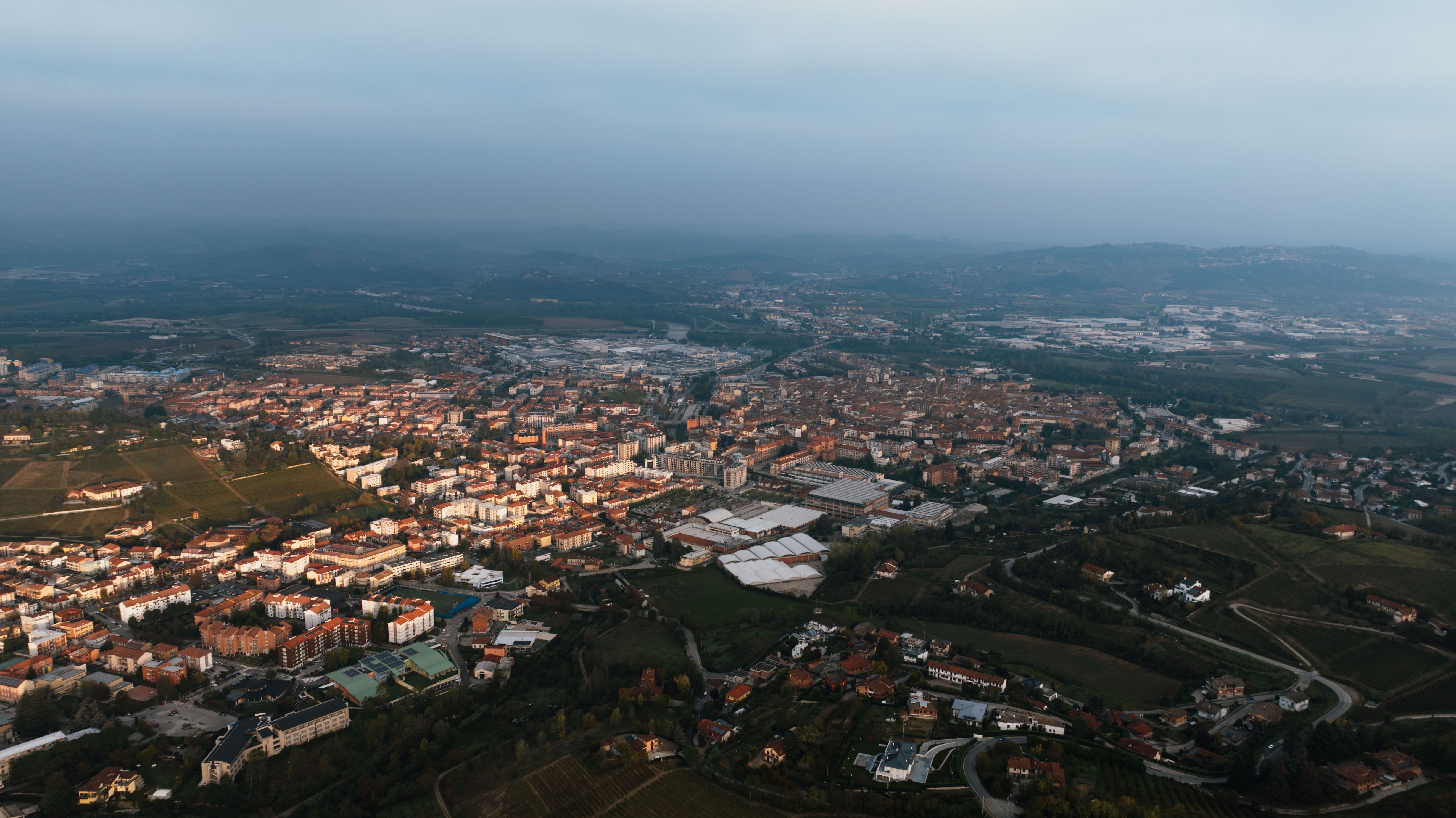
Eighty-nine planned guestrooms, 7,130 sqm of hotel space, more than 32,000 sqm of net land, plus a proposed swimming pool, restaurant, gym and conference facilities. Minimum bid: €533,934.75. That equates to approximately €6,000 per planned room and less than €75 per sqm of hotel space. Yet the Pantano di Sopra complex in Tarquinia is not simply a hotel requiring refurbishment: it is an unfinished hospitality development that has stood abandoned for years and has suffered theft and vandalism. In this case, the auction price may be almost the least important number in the entire transaction. The real investment is the capital required to transform what exists today into a fully authorised, completed, fitted-out hotel capable of generating EBITDA.
The hospitality complex in Pantano di Sopra, Tarquinia, is scheduled to return to auction on 14 December 2026, as part of Real Estate Enforcement Proceedings No. 44/2022 before the Court of Civitavecchia.
This will be the seventh sale attempt.
The current terms are:
Reserve price: €711,913
Minimum bid: €533,934.75
Minimum bid increment: €21,400
Sale date: 14 December 2026, 3:30 p.m.
Bid deadline: 11 December 2026, 1:00 p.m.
Occupancy status: vacant
From €5 Million to €711,000
The history of the sale process is one of the most significant elements of the case.
The first auction, in April 2023, started with a reserve price of:
€5,000,000
It was subsequently reduced to:
€3,750,000
€2,812,500
€2,109,375
€1,265,625
€949,218
and now:
€711,913
The reserve price has therefore fallen by approximately:
85.8%
compared with the first sale attempt.
The reduction is dramatic.
But this case demonstrates perfectly why:
Price Reduction ≠ Value Creation
An 85% discount does not mean that an investor is acquiring 85% more value.
It simply means that the entry price has fallen.
Value will depend on what happens after completion of the acquisition.
89 Rooms at Approximately €6,000 per Key
The hotel structure extends across approximately 7,130 sqm, while the original project provides for 89 en-suite guestrooms:
-
80 double rooms;
-
4 triple rooms;
-
5 rooms designed for six guests.
The theoretical capacity therefore exceeds 200 beds.
The development extends over several levels, including a substantial basement dedicated to ancillary functions and hotel services.
Based on the minimum bid:
approximately €6,000 per planned key
On a built-area basis:
approximately €75 per sqm
These figures are almost impossible to ignore.
But they are also highly misleading if considered in isolation.
Because here, price per key does not measure the cost of a hotel.
It measures only the cost of acquiring a structure that still has to become a fully operational hotel.
At InvestimentiAlberghieri.it, this distinction is fundamental when analysing special situations: purchase price and hotel investment cost are not the same thing.
This Is Not a Hotel Turnaround. It Is a Development Turnaround
In the case of an operating hotel in distress, the challenge is often to:
preserve the going concern.
Tarquinia is different.
There is no conventional hotel going concern to preserve.
There is a substantial hospitality real estate platform that still needs to be:
completed + restored + authorised + fitted out + positioned + opened.
The more appropriate definition is therefore:
Hospitality Development Turnaround
Value will not come from recovering an existing EBITDA stream.
EBITDA has to be created from scratch.
That is a fundamental difference.
KEY ISSUE — Hotel Turnaround vs Development Turnaround
Hotel Turnaround
An operating hotel business already exists.
The objective is to recover or preserve:
-
employees;
-
customers;
-
bookings;
-
distribution;
-
reputation;
-
EBITDA;
-
organisation;
-
the going concern.
The core challenge is:
restoring the performance of a business that already exists.
Development Turnaround
What primarily exists is an incomplete real estate platform.
The investor still has to create:
-
the finished hospitality product;
-
completed guestrooms;
-
services;
-
FF&E;
-
operating organisation;
-
staffing;
-
distribution;
-
brand;
-
working capital;
-
commercial demand.
The core challenge is:
transforming an unfinished property into a functioning hotel business.
Tarquinia clearly falls into the second category
This is not simply about relaunching a hotel.
It is about:
building the hotel business around the existing real estate.
And that is precisely why the auction price matters so little on its own.
The Project Is Far Larger Than the Guestroom Inventory
The basement extends across approximately 2,100 gross sqm and remains unfinished.
The original project envisaged:
-
restaurant;
-
kitchen;
-
gym;
-
conference room;
-
meeting room;
-
technical areas;
-
electrical plant;
-
air-treatment systems.
The potential hospitality platform is therefore:
Rooms + F&B + Meetings + Fitness + Pool
This is not a simple limited-service hotel.
But that additional complexity also increases the capital requirement.
The Swimming Pool Exists Only as an Unfinished Project
The pool and related service areas remain incomplete.
This is a perfect example of the distinction between:
a planned amenity
and
a productive amenity.
A swimming pool does not create value simply because it appears on a plan.
It creates value when it is:
-
completed;
-
tested;
-
authorised;
-
maintainable;
-
integrated into the product;
-
capable of supporting ADR or demand.
The Real Warning Is the Condition of the Property
The building has stood abandoned for years and has been affected by theft, vandalism and the removal of materials.
The documentation refers, among other things, to:
-
removal of piping;
-
removal of electrical components;
-
missing window and door elements;
-
removal of taps and drainage components;
-
damaged doors;
-
destroyed sanitary ware;
-
broken glazing.
This means that CAPEX must finance not only:
completion.
It must also finance:
the restoration of works that had already been completed and were subsequently damaged.
That distinction is critical.
KEY ISSUE — Four Layers of Capital Requirement
1. Completion CAPEX
The cost of completing works that were never finished.
2. Restoration CAPEX
The cost of reinstating components damaged through deterioration, theft or vandalism.
3. Hotel Fit-Out
The investment required for:
-
FF&E;
-
OS&E;
-
technology;
-
kitchen;
-
reception;
-
guestrooms;
-
common areas.
4. Opening Capital
The capital required for:
-
recruitment;
-
training;
-
PMS;
-
distribution;
-
marketing;
-
pre-opening;
-
working capital.
The auction only finances entry into the project.
Everything else comes afterwards.
There Is Also a Significant Technical and Regulatory Issue
The available documentation highlights several matters requiring extensive due diligence.
The hospitality structure does not yet appear to be fully registered in the land registry.
The documentation also refers to the absence, within the records of the relevant Civil Engineering authority, of final structural certification for reinforced concrete and steel works.
The original project also provided for two external fire-escape staircases, while only one appears to have been built.
These points do not automatically mean that the project cannot be completed.
They do mean that the route to opening needs to be reconstructed technically and administratively before any bid is submitted.
In an unfinished development, regulatory risk can be as material as construction risk.
The Site Is Extensive — But It Is Not Unconstrained Land
The complex includes approximately 32,400 sqm of adjusted land area, net of land affected by expropriation linked to road infrastructure associated with the A12 motorway.
The site is also crossed by a power-line easement.
The planning framework is the result of a combination of agricultural zoning, specific planning variations and earlier development instruments.
Parts of the site are also affected by setback areas and restrictions.
This point is essential.
32,000 sqm of land does not mean 32,000 sqm of freely developable land.
Any proposal involving:
-
extension;
-
new amenities;
-
alternative configuration;
-
new access arrangements;
-
different uses;
must first be tested against planning and regulatory constraints.
Access Also Requires Due Diligence
For an 89-room hotel, access is not a secondary issue.
An investor needs to verify:
-
guest access;
-
coach access;
-
suppliers;
-
emergency vehicles;
-
staff access;
-
parking;
-
loading and unloading;
-
signage;
-
internal circulation.
A large hotel without efficient operational access can lose value before it even opens.
The Historic Bill of Quantities Reveals the Scale of the Development
The procedure documentation includes a historic bill of quantities relating to the tourism and hospitality complex, with works measured in several million euros.
This figure requires caution.
It cannot be treated as the current residual CAPEX requirement.
A historic bill of quantities:
-
may include works already completed;
-
may rely on outdated construction pricing;
-
may not reflect subsequent deterioration;
-
is not the same as an updated cost-to-complete budget.
But it does reveal one fundamental point:
the industrial scale of the development is vastly greater than the €534,000 minimum bid.
That is precisely why the auction price risks becoming almost irrelevant.
The Budget Needs to Be Rebuilt from Scratch
A serious investor should commission a:
Technical Due Diligence
followed by a:
Cost to Complete Report.
The report should distinguish between:
Works Already Completed
Works to Be Completed
Damaged Works to Be Replaced
Works Required by Current Regulations
Hotel Fit-Out
Pre-opening Costs
Only then can the real capital requirement be established.
At Hotel Management Group, this integration of technical analysis, hotel product strategy and business planning is essential to avoid a situation in which an apparently extraordinary real estate price conceals an economically unsustainable overall investment.
€6,000 per Key Could Become a Completely Different Number
This is not a forecast for this specific asset.
It is the correct way to understand the investment risk.
If an investor acquires the complex for approximately €534,000 and subsequently has to commit several million euros to:
-
Completion CAPEX;
-
Restoration CAPEX;
-
compliance works;
-
building systems;
-
guestrooms;
-
bathrooms;
-
F&B;
-
swimming pool;
-
FF&E;
-
technology;
-
professional fees;
-
financing;
-
pre-opening;
-
working capital;
the initial:
€6,000 per key
may represent only a small proportion of the:
Total Development Cost per Key.
That is the figure that really matters.
Purchase Price vs Total Development Cost
The correct equation is not:
€533,934 / 89 rooms.
It is:
**Purchase Price
-
Completion CAPEX
-
Restoration CAPEX
-
Compliance CAPEX
-
FF&E
-
OS&E
-
Professional Fees
-
Financing Costs
-
Pre-opening
-
Recruitment
-
Marketing
-
Working Capital
= Total Development Cost**
Only after that does:
Stabilised EBITDA / Total Development Cost
become the relevant economic metric.
At Investhotel Capital Partners, this approach is particularly important in situations where the distress does not relate only to an operating company, but to a real estate development that must be fundamentally re-underwritten from an industrial perspective.
The Next Question: Does the Project Still Need 89 Rooms?
This is another question a new investor should be prepared to ask.
The original scheme provides for 89 guestrooms.
But the fact that 89 rooms were designed does not necessarily mean that, in 2026, the best hospitality concept should still contain:
89 rooms.
The investor needs to test:
-
demand;
-
market segment;
-
achievable ADR;
-
room sizes;
-
F&B;
-
MICE;
-
leisure demand;
-
groups;
-
accessibility;
-
CAPEX;
-
payroll;
-
break-even occupancy.
Retaining the entire inventory may prove correct.
Or the optimal product could look different:
-
fewer, larger rooms;
-
family rooms;
-
stronger MICE component;
-
wellness;
-
resort positioning;
-
different allocation of space.
The original project should not be completed automatically.
It should first be tested to determine whether it is still economically fit for purpose.
The Basement Is the Real Economic Question
Approximately 2,100 sqm of basement space was originally intended for a restaurant, kitchen, gym, conference facilities, meeting rooms and services.
That is a substantial amount of non-room space.
The business plan must therefore ask:
how much EBITDA will those areas produce?
Because constructing and operating:
-
restaurant;
-
meeting rooms;
-
gym;
-
extensive technical areas;
creates both CAPEX and operating costs.
The correct metric is therefore:
EBITDA per sqm
not simply:
available sqm.
A square metre that generates no direct revenue and does not effectively support room profitability is still a square metre that needs to be:
-
completed;
-
conditioned;
-
cleaned;
-
maintained;
-
financed.
Three Investment Scenarios
Scenario 1 — Complete the Original Scheme
Retain:
-
89 rooms;
-
restaurant;
-
swimming pool;
-
gym;
-
MICE;
-
planned services.
This is the most straightforward scenario.
But it must demonstrate that market demand can adequately remunerate the capital required.
Scenario 2 — Hospitality Re-engineering
Retain the existing structure but redesign the hotel product.
This could include:
-
revised room mix;
-
different space allocation;
-
greater operational efficiency;
-
new positioning;
-
revised F&B concept;
-
new MICE strategy.
This is likely to require the most sophisticated level of business planning.
Scenario 3 — Highest and Best Use
Assess whether, within the applicable planning and regulatory framework, alternative hospitality configurations could produce a superior return.
This does not mean that a change of use is automatically possible.
It means:
not assuming that yesterday’s project remains the best project for tomorrow.
The Due Diligence I Would Undertake
Before assigning a definitive value to the Tarquinia complex, I would verify at least:
-
sale notice;
-
full appraisal;
-
supplementary technical reports;
-
current survey;
-
bill of quantities;
-
title;
-
cadastral parcels;
-
land-registry status;
-
planning framework;
-
approved variations;
-
building permits;
-
structural certification;
-
Civil Engineering filings;
-
fire safety;
-
emergency staircases;
-
accessibility;
-
road access;
-
expropriations;
-
easements;
-
landscape restrictions;
-
remaining systems;
-
stolen or removed systems;
-
windows and doors;
-
bathrooms;
-
lifts;
-
HVAC;
-
wastewater treatment;
-
swimming pool;
-
parking;
-
Completion CAPEX;
-
Restoration CAPEX;
-
Compliance CAPEX;
-
FF&E;
-
OS&E;
-
professional fees;
-
approval timetable;
-
construction timetable;
-
financing costs;
-
pre-opening;
-
working capital;
-
achievable ADR;
-
occupancy;
-
RevPAR;
-
F&B;
-
MICE;
-
payroll;
-
GOP;
-
stabilised EBITDA;
-
Total Development Cost.
At RobertoNecci.it, further analysis explores precisely the relationship between real estate, industrial strategy and the ability of a hotel business to generate sustainable cash flows.
This Is Not a €534,000 Hotel
That is the real conclusion.
The financial headline may look extraordinary:
89 rooms at approximately €6,000 per key.
But stopping there would be a mistake.
The investor is not acquiring:
an operating 89-room hotel.
The investor is acquiring:
a large unfinished hospitality platform on which the actual investment still has to be built.
The reserve price has fallen from €5 million to €711,000.
But the auction discount has not automatically reduced:
-
the cost of building systems;
-
the cost of outstanding works;
-
material costs;
-
staffing costs;
-
energy costs;
-
financing costs;
-
regulatory risk;
-
operating risk.
That is the paradox.
The real estate price has fallen by 85%.
The cost of transforming it into a competitive hotel has not fallen by 85%.
The final question is therefore not:
“How cheaply can I acquire it?”
It is:
“How much total capital will be required to move from the transfer order to the first positive EBITDA?”
That is the true price of the hotel.
€534,000 may buy the construction site.
It does not automatically buy a hotel.
More importantly:
this is not about turning around a business that already exists.
It is about creating a hotel business around an unfinished real estate platform.
That is the difference between a hotel turnaround and a development turnaround.
And that is why, in Tarquinia, the real investment begins exactly where the auction ends.
Investimenti Alberghieri
InvestimentiAlberghieri.it monitors and analyses hotel investments, hospitality assets for sale, unfinished developments, distressed situations, NPL/UTP exposures, restructuring transactions and special situations across the Italian hospitality market.
The publication of an investment opportunity is for information and analytical purposes only and does not constitute an assessment of its economic attractiveness.
Every transaction requires dedicated:
real estate, planning, structural, technical, legal, financial and hospitality due diligence.
For confidential analysis of hotel investment opportunities, valuations, due diligence, business plans, Cost to Complete assessments, Total Development Cost analysis and distressed transactions:
info@investimentialberghieri.it
Further insights:
InvestimentiAlberghieri.it
Investhotel Capital Partners
Hotel Management Group
RobertoNecci.it