Not every relevant hotel transaction takes place in major capitals, famous seaside destinations or trophy assets. Sometimes the most interesting value lies in less obvious properties, located in secondary markets, where potential is not driven by location alone, but by the ability to turn a hotel into a commercial, operational and territorial platform.
This is the case of Hotel Antequera Hills, a four-star property with approximately 182 rooms in Antequera, in the province of Málaga, now incorporated into the Silken Hotels portfolio. The transaction, advised by Christie & Co, marks Silken’s return to Andalusia and offers a useful lens through which to read the evolution of hotel investment in Spain and, by analogy, in Italy as well.
The key point is not simply the change of ownership or brand. The real point is the repositioning potential of a hotel asset that combines rooms, event spaces, cultural tourism, nature, cycle tourism, leisure demand and MICE opportunities. In other words, this is not just a provincial hotel. It is an asset that can increase its value if placed within a coherent industrial strategy.
For anyone looking at hotels as an asset class, the transaction is interesting because it demonstrates an essential principle: hotel value does not coincide with the real estate alone. It emerges from the combination of property, management, brand, distribution, potential demand and execution capability.
On these topics, Investimenti Alberghieri analyses hotel transactions, market trends and investment strategies, while Investhotel.it explores the relationship between acquisitions, management, hotel contracts and asset value creation.
The transaction: Silken returns to Andalusia with a mixed-use four-star asset
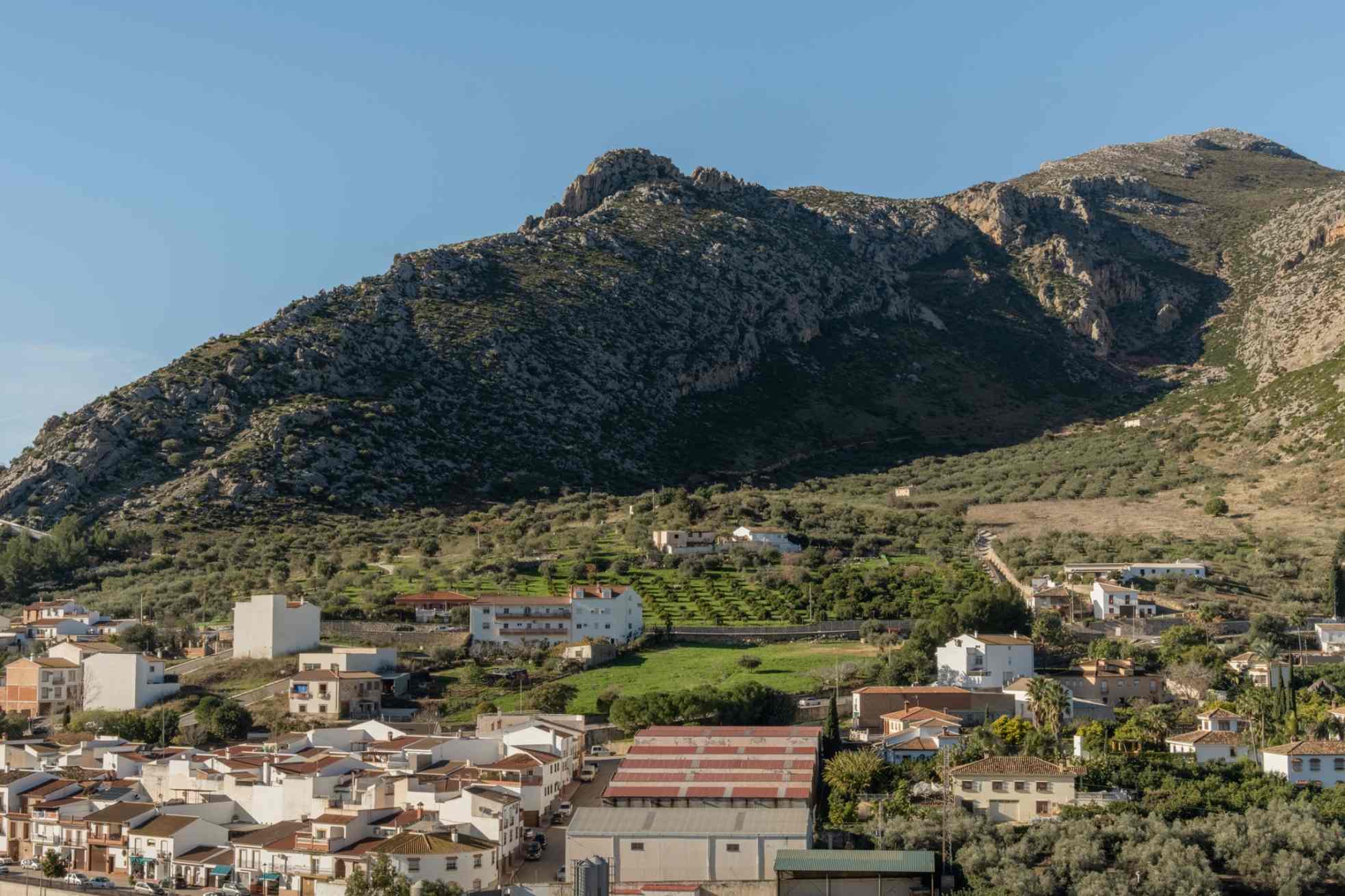
Hotel Antequera Hills, previously known as Antequera Golf, is located about one kilometre from the historic centre of Antequera, in a strategic position close to some of the area’s most important attractions: the UNESCO-listed Dolmens, the Paraje Natural de El Torcal and the inland area of the province of Málaga.
The property includes approximately 182 rooms, a restaurant, a bar and café, a seasonal swimming pool, Wi-Fi, common areas and a significant events offering, with meeting rooms capable of hosting corporate events, conventions, groups and private functions. It is also positioned in a setting that is well suited to active tourism, cycle tourism and nature-based itineraries.
The seller is understood to be linked to an investment fund that had controlled the asset since 2021, while the previous management was entrusted to GAT Hospitality. With the transition to Silken, the hotel enters a new phase: rebranding, commercial integration, repositioning and potential operational value creation.
The transaction price has not been disclosed. This makes a scenario-based analysis even more useful, because it allows us to focus not on the specific transaction value, but on the levers that determine the economic value of a hotel of this kind.
Why Antequera is more interesting than it may appear
At first glance, Antequera may seem like a secondary destination compared with Málaga, Marbella, Seville or Granada. In reality, this is precisely what makes the transaction significant.
The hotel market is not made up only of prime destinations. There is a growing segment of assets located in inland areas, smaller cultural cities, nature destinations and territories with a strong local identity. These are markets where value does not arise automatically from tourism flows, but from the ability to build product, demand and distribution.
Antequera has several favourable characteristics:
-
recognised cultural heritage;
-
accessibility to the main Andalusian hubs;
-
strong natural attractions;
-
potential for sports and outdoor tourism;
-
domestic and international demand;
-
the ability to work across weekends, groups, events and shoulder seasons;
-
lower competitive pressure than more mature coastal destinations.
For an investor, these elements do not automatically guarantee success. But they do provide a base from which value can be created, especially if the asset is integrated into an organised hotel platform.
This is where Silken’s role becomes decisive. An independent hotel, or one managed in isolation, may struggle to express its full potential. The same hotel, when integrated into a system of brand, revenue management, distribution and marketing, can change its economic profile completely.
The true value of the transaction: not buying rooms, but buying potential
In the hotel market, the number of rooms is only the starting point. A 182-room hotel can be either a management challenge or a major opportunity, depending on three factors: demand that can be captured, operational efficiency and positioning capability.
In the case of Silken Antequera Hills, the most interesting element is the asset’s versatility. The hotel does not depend on a single segment. It can work across several revenue lines:
-
leisure stays;
-
cultural tourism;
-
cycle tourism;
-
nature tourism;
-
corporate events;
-
organised groups;
-
regional meetings;
-
banquets and celebrations;
-
weekend packages;
-
proximity business demand.
This diversification is valuable, but it requires advanced management. Having meeting rooms is not enough to generate MICE demand. Being close to a natural park is not enough to attract outdoor tourism. Changing the sign above the door is not enough to increase ADR.
What is needed is an integrated strategy: product, pricing, channels, local partnerships, digital content, reputation, staff training and cost control.
This is exactly what makes the transaction relevant for investors: Silken is not merely acquiring a hotel property. It is acquiring repositioning potential.
Rebranding: when a new flag can create value
The transition from Hotel Antequera Hills to Silken Antequera Hills should not be seen as a simple cosmetic exercise. If executed properly, rebranding can have a direct impact on hotel performance.
A change of brand can create value through:
-
stronger customer trust;
-
better visibility on direct channels;
-
greater negotiating power with intermediaries and operators;
-
integration into distribution systems;
-
better pricing discipline;
-
clearer operating standards;
-
stronger commercial recognition;
-
greater ability to attract groups and events.
However, rebranding works only if it is accompanied by real transformation. A stronger flag can increase demand, but it cannot replace management quality. If the product is not coherent, if the staff is not trained, if pricing remains passive or if channels are not optimised, the potential value remains unrealised.
In the case of Silken Antequera Hills, this will be the most delicate phase: turning an existing hotel into a clearer, more marketable and more coherent product aligned with the brand’s positioning.
The role of event spaces: MICE as a lever for reducing seasonality
One of the most important features of the asset is its substantial event space. For a hotel in an inland destination, MICE is not an accessory. It can become a decisive lever for improving occupancy, margins and revenue continuity.
Hotels located outside purely seaside destinations often need to solve one key problem: how to fill weekdays and shoulder seasons. Corporate events, regional meetings, incentive groups, small and medium-sized conventions and private celebrations can help stabilise demand.
The advantage of the MICE segment is that it does not generate room revenue alone. It also produces food and beverage revenue, coffee breaks, ancillary services, room hire, technology, banqueting and greater use of common areas.
But here too, physical space is not enough. Meeting rooms need to be sold, packaged, priced and promoted. A dedicated commercial strategy is required, supported by corporate databases, local agreements, professional content, seasonal offers and margin monitoring by event.
A hotel with 182 rooms and relevant meeting spaces can become a small territorial conference platform. But only if management moves from a passive accommodation model to an active commercial model.
A financial reading: how much can management affect value?
Since the transaction price has not been disclosed, it is useful to build a purely indicative simulation. The aim is not to estimate the actual value of the hotel, but to understand how occupancy, ADR and margins can change the investment profile.
Assuming an acquisition value between €10 million and €15 million, and considering approximately 182 rooms, the economic performance could vary significantly depending on the quality of the repositioning.
| Scenario | Average occupancy | ADR | Indicative room revenue | EBITDA margin | Indicative EBITDA | Reading |
|---|---|---|---|---|---|---|
| Conservative | 30% | €80 | around €1.6m | 25% | around €0.4m | Underused asset, slow return |
| Base | 45% | €100 | around €3.0m | 25% | around €0.75m | Management stabilisation |
| Expansion | 60% | €130 | around €5.2m | 25% | around €1.3m | Successful repositioning |
This table shows something very simple: in a hotel of this size, value is not static. It changes according to management.
An improvement in ADR, if accompanied by stable occupancy, can have a significant impact on margins. Likewise, growth in MICE demand and ancillary revenues can make the asset more resilient and less dependent on room sales alone.
The real question, therefore, is not only “how much was paid for the hotel”, but “how much can the hotel produce after repositioning”.
This is the core of hotel valuation: not only recording the past, but credibly estimating future potential.
For further insights into hotel valuation, hotel business plans and investment models, the hotel guides by Roberto Necciand the dedicated articles on Investimenti Alberghieri provide useful additional perspectives.
The risks: why potential is not enough
Every hotel repositioning transaction carries risks. In the case of Silken Antequera Hills, there are five main areas to consider.
The first is seasonality. The destination has cultural and natural attractions, but it will need to prove that it can generate stable demand beyond peak tourism periods.
The second is positioning risk. An inland hotel, not located on the seafront and not in a major city, must explain very clearly why guests should choose it. It must sell an experience, not just a room.
The third is CapEx risk. Properties of this size require maintenance, technological upgrades and potential investment in rooms, meeting spaces, systems, food and beverage outlets and common areas. If the required investment is underestimated, the expected return may be reduced.
The fourth is operational risk. Integration into a brand requires training, process alignment, quality control, system upgrades and procedure reviews.
The fifth is competitive risk. Competition does not come only from other four-star hotels. It also comes from boutique hotels, independent properties, alternative accommodation and competing destinations.
These risks do not reduce the interest of the transaction. On the contrary, they confirm that value creation is not automatic. It depends on execution.
The levers to monitor during the first twelve months
To understand whether the transaction will create value, the first twelve months will be decisive. The indicators to monitor should not be limited to occupancy.
The most important KPIs will be:
-
ADR;
-
RevPAR;
-
GOPPAR;
-
share of MICE revenue;
-
direct revenue share;
-
distribution cost;
-
online reputation;
-
guest return rate;
-
ancillary revenues;
-
operating margin;
-
weekday performance;
-
shoulder-season performance;
-
conversion of commercial campaigns.
A hotel like Silken Antequera Hills should not be assessed only by looking at rooms sold. It should be assessed by measuring the ability to turn the whole asset into a diversified revenue generator.
The right question is not: “what occupancy does the hotel achieve?”. The right question is: “how much profitable occupancy can it generate, through which channel mix and at what margin?”.
This distinction is fundamental for every hotel investor.
The lesson for the Italian market
The Antequera Hills case offers a very useful lesson for Italy as well.
Italy has many hotels in secondary cultural cities, inland destinations, spa towns, historic villages, natural areas and non-metropolitan markets. Many of these assets are assessed only on the basis of historical results, often modest, without considering their repositioning potential.
Yet in many cases, the problem is not the building. The problem is the strategy.
A hotel with enough rooms, common areas, food and beverage facilities, parking, meeting rooms and a marketable territory can become an interesting asset if it is rethought in an industrial way. It can work across corporate training, events, experiential tourism, cultural routes, sport, wellness, corporate retreats, groups and themed stays.
Of course, not every hotel can be transformed. Some are too small, too obsolete, too constrained or located in markets that are too weak. But many underperforming assets are not lacking value. They are lacking a project.
The Silken Antequera Hills case reminds us precisely of this: sometimes the most interesting hotel investment is not buying the most obvious hotel, but identifying the hotel that can change its economic category through management, brand and repositioning.
Investing in hotels means reading potential, not just historical numbers
Less experienced investors often look at only three elements: price, rooms and historical revenue. More sophisticated investors look at something else: potential demand, ADR growth, compressible costs, monetisable spaces, improvable channels, recoverable reputation and brand value.
In the case of Silken Antequera Hills, the interest lies precisely in the interaction between these factors. The hotel has scale, destination, product, spaces and a new commercial platform. Its success will depend on the ability to turn these elements into performance.
This is what makes the transaction a useful case for anyone studying hotel investment. It is not just an acquisition. It is a management-led bet on a repositionable asset.
And in today’s market, where pure real estate yields are under pressure and operating costs remain high, management capability is becoming increasingly more important than capital alone.
Conclusion: hotel value is created, not inherited
The acquisition of Hotel Antequera Hills by Silken Hotels shows that the hotel market continues to search for value beyond the most obvious destinations. Secondary assets, when properly positioned, can become interesting when they combine scale, accessibility, territorial identity, monetisable spaces and professional management.
Silken Antequera Hills is not relevant only because it has changed ownership. It is relevant because it shows how a hotel can be reinterpreted, rethought and relaunched.
For investors, the lesson is clear: the value of a hotel is never only in the number of rooms, its official category or its geographical location. It lies in the ability to generate profitable demand, increase RevPAR, control costs, improve reputation, develop direct channels and build a product that is coherent with the market.
In this sense, the Silken Antequera Hills transaction is a case to watch. Not because it represents a model that can be replicated automatically, but because it brings together many of the variables that determine the success of a hotel investment today: vision, management, brand, territory and execution capability.
Anyone who owns, acquires or intends to enhance the value of a hotel should start from this question: not only how much the property is worth today, but how much it could be worth if it were managed, positioned and commercialised in the right way.
For hotel acquisitions, repositioning projects, business plans, management contracts and asset value strategies, Hotel Management Group supports owners, investors and operators with the technical, economic and operational analysis of hotel assets.
Methodological note: the financial simulations included in this article are illustrative and do not represent official transaction data. The acquisition price has not been publicly disclosed.
Roberto Necci - r.necci@robertonecci.it