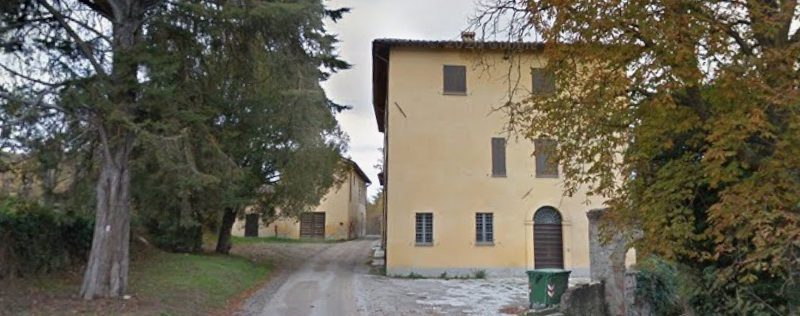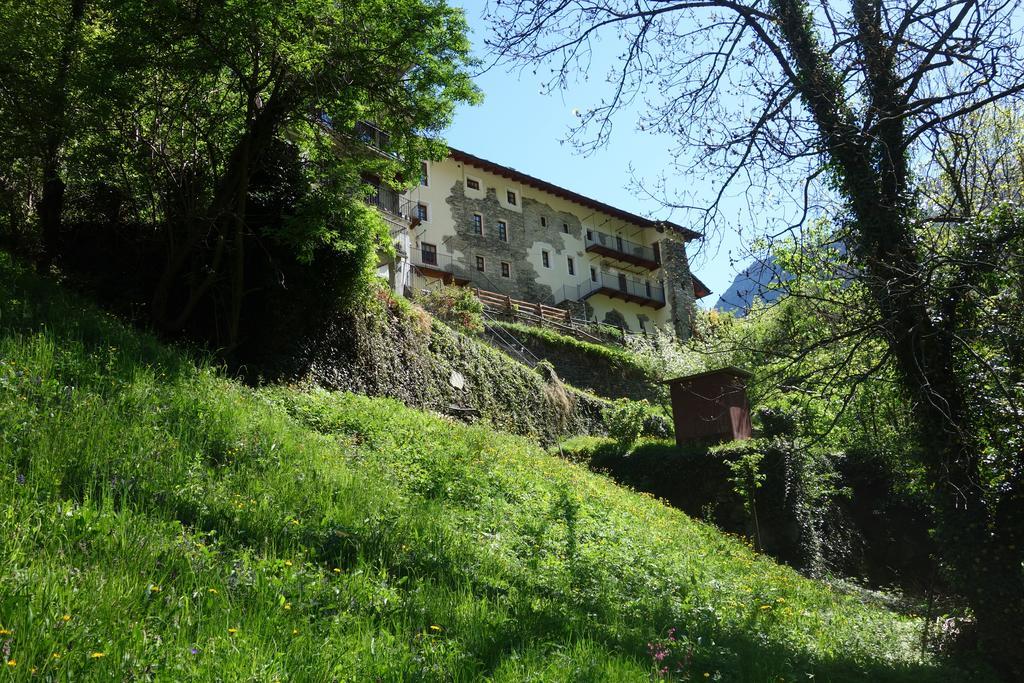
The Municipality of Penna San Giovanni has already committed more than €622,000 of public investment to the former hotel in Contrada Saline through post-earthquake reconstruction funding. The property has been refurbished, a temporary operating arrangement is in place, and the Municipality has formally stated its intention to award the management through a public tender. Yet the most important step still lies ahead: turning a refurbished real estate asset into a hospitality business capable of generating sustainable cash flow. And it is precisely this pre-tender phase that makes the opportunity particularly interesting.
In the hotel investment market, the most attractive opportunities do not always coincide with properties already offered for sale or concessions that have already reached the market.
There is an earlier stage.
It is the point at which:
the asset has been identified;
the owner has decided to reposition or activate it;
the core real estate investment has already been made;
the search for an operator has been formally contemplated;
but the final economic structure of the transaction has not yet been brought to market.
The former hotel in Contrada Saline, Penna San Giovanni, in the inland area of the Marche region, sits precisely at this stage.
Municipal Resolution No. 35 of 28 April 2026 formally expressed the Administration’s intention to proceed with a public tender for the management of the property, instructing the relevant technical department to launch the procedure.
In the meantime, the property continues to be used under a temporary operating arrangement.
The future operator has therefore not yet been selected.
This is a genuine case of early-stage hospitality origination.
The Real Estate Has Already Been De-Risked. Now the OpCo Has to Be Built
The first figure that matters is the amount of public capital already invested.
The property was included in the reconstruction programme following the Central Italy earthquake.
Official reconstruction documentation identifies the project as:
“Former Mineral Waters Hotel, Contrada Salina.”
The originally planned investment was approximately:
€580,000.
Following completion of the works and final technical-administrative testing, the definitive public contribution increased to:
€622,561.39.
That figure materially changes the nature of the opportunity.
A significant portion of the real estate risk has already been absorbed by the public sector.
The future operator should therefore not primarily be focused on rebuilding the property.
The challenge is the next one:
how can a refurbished asset be converted into a profitable hospitality operation?
This is where the project moves from:
Real Estate
to
Hospitality Operating Business.
A Refurbished Building Is Not Automatically an Investable Hotel
This distinction is fundamental.
A property may be technically complete.
But to become a hospitality product it still needs:
positioning;
inventory;
pricing;
distribution;
services;
staffing;
marketing;
technology;
governance;
financial control.
In other words:
real estate CAPEX creates the asset.
Management creates the return.
It is at this stage that professional hotel management becomes an integral part of the value-creation process.
The Municipality has effectively completed the first half of the work.
The second half now has to be delivered by the market.
The Former Hotel Is More Complex Than Its Name Suggests
The municipal documentation provides a clearer picture of the property perimeter.
The spaces identified include:
a ground-floor apartment of approximately 105 sqm;
two first-floor units of approximately 47 sqm and 53 sqm;
one second-floor unit of approximately 105 sqm;
lower-ground-floor areas previously used as bathrooms;
an attic of approximately 125 sqm.
The property is also associated with a meaningful amount of surrounding land.
The total land area referred to in the documentation exceeds 14,000 sqm.
This raises a strategic question.
Should the asset simply be brought back to market as a traditional former hotel?
Or could it be repositioned through a broader combination of:
hospitality;
long stay;
wellness;
outdoor;
experiences;
food & beverage;
destination integration?
The business plan should begin with that question.
Not with the room count.
The Product Should Be Defined Before the Operator Is Chosen
One of the most common mistakes in the repositioning of publicly owned tourism assets is to begin immediately with the search for a concessionaire.
But before selecting who will operate the asset, the public owner should first determine:
what the asset is actually supposed to become.
A hotel?
A residence?
Serviced apartments?
Distributed hospitality?
A wellness retreat?
An outdoor-focused property?
A hybrid concept?
That decision changes everything:
target market;
ADR;
staffing;
service model;
CAPEX;
distribution;
concession term;
sustainable rent.
The first project, therefore, should not be the tender.
It should be the product strategy.
A Bridge Management Structure Is Already in Place
The property is not simply sitting vacant.
The Municipality has maintained temporary operations through its participating company Saline Terme S.p.A.
The transitional arrangement, originally introduced in 2025, was extended for the period:
1 January – 31 December 2026.
The municipal resolution also provides that the arrangement will terminate once the definitive award of the future public procedure becomes effective.
This is therefore a very clear example of:
bridge management.
The property remains operational while the Municipality prepares its transition to the market.
From an industrial perspective, this matters.
Because it allows the asset to preserve at least part of its:
operational continuity;
market presence;
product knowledge;
relationship with the destination.
The Temporary Economic Structure Is Almost Entirely Variable
The economics of the current temporary arrangement are particularly interesting.
The agreement provides for:
a minimum payment of €40 per month
plus
20% of the income attributable to the use of the property.
This is clearly not a conventional fixed-rent hotel lease.
The fixed component is almost symbolic.
The meaningful return to the property owner is linked instead to the economic performance generated by the asset.
We do not know whether the future tender will retain this model.
But the current structure raises a central question:
how should the future rent be structured?
Fixed Rent, Variable Rent or Hybrid Rent?
There are three principal alternatives.
Fixed Rent
The operator pays a predetermined amount.
It is simple.
It provides certainty to the owner.
But it transfers almost all operating risk to the operator, including:
demand;
seasonality;
cost inflation;
pricing;
payroll;
energy costs.
Variable Rent
The payment is linked to a percentage of revenue or operating performance.
This reduces the operator’s initial risk.
But creates greater income volatility for the owner.
Hybrid Rent
A minimum guaranteed component is combined with a variable element.
This can be particularly effective where:
the business still needs to stabilise;
the public owner requires a minimum return;
the operator must build the market from scratch.
Penna San Giovanni may be particularly suitable for this type of analysis.
But rent should only be determined after the PEF has been built.
Fair Rent Should Be the Output of the Underwriting
The correct sequence should be:
Demand
→ Inventory
→ ADR
→ Occupancy
→ Ancillary Revenue
→ GOP
→ Operator CAPEX
→ Required Operator Return
→ Fair Rent.
That is how a sustainable contractual structure is created.
Not:
property value → owner’s target return → rent → search for someone willing to pay it.
In the transactions analysed by Investhotel Capital Partners, this point is fundamental: PropCo and OpCo need to remain economically compatible.
A rent that maximises the property owner’s return while destroying operating profitability does not create value.
It simply postpones the problem until the next crisis.
The Real Asset May Be the Saline Destination Ecosystem
The former hotel should not be analysed in isolation.
Penna San Giovanni is also home to the Parco delle Saline, set within a wider tourism and natural environment associated with:
trekking;
mountain biking;
relaxation;
nature;
mineral waters;
wellness;
outdoor activities.
This materially changes the positioning thesis.
The product does not necessarily have to be:
“a small hotel in inland Marche.”
It could become:
“the hospitality hub of the Saline destination ecosystem.”
That is a major difference.
Because the value of the location would no longer derive solely from the municipality in which the property sits.
It would derive from the wider system of experiences that can be built around the guest.
From Visitors to Guests
The destination has already demonstrated an ability to generate leisure traffic.
But visitors to a park and hotel guests are not the same thing.
The real commercial challenge is converting part of that existing demand into:
overnight stays;
F&B revenue;
wellness revenue;
experience revenue;
repeat business.
The logic is simple:
Visitors → Guests → Revenue → GOP.
The value of the former hotel increases if it becomes the mechanism through which the destination monetises a larger share of the demand it already attracts.
RevPAR May Not Be the Only Relevant KPI
If the future model integrates the accommodation business with the wider Saline ecosystem, conventional RevPAR may be insufficient.
Other relevant metrics could include:
Total Revenue per Guest
and, for certain services:
Revenue per Visitor.
A guest may generate revenue through:
accommodation;
breakfast;
restaurant spending;
pool access;
wellness;
outdoor activities;
events;
experiences.
Value creation therefore depends on increasing total customer spend, not simply room rate.
The Real Unresolved Issue Is Scale
The documentation currently available provides a useful description of the physical spaces.
It does not yet allow a precise traditional hotel inventory to be built.
Before the tender is launched, it will therefore be necessary to define:
number of commercially usable units;
number of beds;
accommodation category;
common areas;
service model;
F&B potential;
relationship with the pool and the park;
operating standard.
The fundamental question is:
does the property, on a standalone basis, have sufficient scale to support professional management?
If the answer is no, the model may require:
automation;
self check-in;
lean staffing;
shared personnel;
integration with other municipal tourism assets.
The scale of the business must remain consistent with the cost structure.
€622,000 of Public Investment Does Not Eliminate Operator CAPEX
The fact that the Municipality has already financed substantial structural investment is positive.
But the future operator will still require capital.
Potential requirements may include:
FF&E;
OS&E;
PMS;
channel manager;
website;
access-control systems;
furniture;
equipment;
linen;
opening inventory;
branding;
commercial launch;
working capital;
pre-opening payroll.
The future tender should therefore make a very clear distinction between:
Landlord CAPEX
and
Operator CAPEX.
That distinction is fundamental to investability.
A publicly owned property can be fully refurbished and still fail to attract operators if the capital required to make it commercially operational is too high relative to achievable returns.
CAPEX and Concession Term Need to Be Designed Together
The duration of the future concession is not yet publicly known.
But it will be one of the key drivers of the transaction.
The logic is straightforward.
High CAPEX + short term = weak payback.
Low CAPEX + long term = stronger investability.
An operator committing €100 of capital will think very differently depending on whether the investment can be recovered over:
3 years;
6 years;
12 years;
18 years.
The concession term is therefore a financial variable.
Not merely an administrative one.
Why This Is the Best Time to Study the Asset
The most interesting feature of Penna San Giovanni is timing.
Once a public tender is published, most variables are already fixed:
rent;
duration;
investment obligations;
operating requirements;
award criteria;
contractual terms.
At that point, the operator can only decide:
participate or walk away.
Before the tender, however, there is time to develop:
demand analysis;
benchmarks;
competitive set analysis;
product strategy;
ADR assumptions;
business plan;
CAPEX plan;
staffing model;
distribution strategy;
rent sensitivities.
This does not mean interfering with the future public procedure.
It means understanding the business before the opportunity formally reaches the market.
This is pre-market underwriting.
And it is often where the informational advantage is created.
Early-Stage Origination Is More Valuable Than Simple Deal Sourcing
There are two ways to identify hospitality opportunities.
The first is to read a tender once it has been published.
The second is to identify the asset before the tender reaches the market.
In the first case, the operator enters an already structured competitive process.
In the second, there is time to build:
an investment thesis;
analysis;
market intelligence;
benchmarks;
a business case.
The value of origination therefore does not lie merely in learning about an asset earlier than others.
It lies in understanding earlier how the asset can work economically.
The Five Questions the Future Tender Should Answer
1. What Should the Former Hotel Become?
Hotel, residence, serviced apartments or destination hospitality?
The strategy comes before the concessionaire.
2. What Is the Minimum Sustainable Inventory?
The number of units and beds must be sufficient to absorb the operating cost base.
3. What Is the Right Rent Structure?
Fixed, variable or hybrid?
The answer should be derived from GOP.
4. Who Funds the Operator CAPEX?
The allocation of investment responsibilities must be clear before bids are submitted.
5. Should the Former Hotel Operate on a Standalone Basis or as Part of the Saline Ecosystem?
This is probably the question with the greatest potential impact on economic value.
The PEF Should Come Before the Tender
The future contractual structure should be tested against at least three scenarios.
Downside Case
Seasonal demand, weak occupancy, limited ancillary revenue and a model driven mainly by accommodation.
This case measures risk.
Base Case
Effective integration with the Parco delle Saline, realistic pricing, regional leisure demand, digital distribution and selective ancillary services.
This is the scenario that should determine:
fair rent;
duration;
CAPEX;
minimum guarantee.
Upside Case
A genuine:
Saline Hospitality & Wellness Destination
integrating:
accommodation;
nature;
pool;
wellness;
trekking;
food;
events;
experiences.
This is the value-creation case.
The financial logic should remain:
Revenue → GOP → CAPEX → Operator Return → Fair Rent.
A Compelling Public-Private Hospitality Model
Penna San Giovanni is particularly interesting because it illustrates a potential division of roles.
The public sector has:
recovered the property;
financed the reconstruction;
maintained interim operations;
decided to bring the management opportunity to market.
The private operator will need to:
position the asset;
fit it out;
commercialise it;
manage it;
generate cash flow.
The structure is therefore:
Public Real Estate + Private Operating Capability.
This is one of the most compelling models for activating publicly owned tourism assets in Italy.
For InvestimentiAlberghieri.it, this segment represents an increasingly relevant market.
Because private capital does not necessarily need to acquire the real estate.
It can be deployed to activate it.
Conclusion: The Advantage Lies in Arriving Before the Tender
Penna San Giovanni currently presents a relatively rare situation.
The real estate has already benefited from more than:
€622,000 of public investment.
There is:
an interim operating arrangement.
The Municipality has formally contemplated:
a future public tender.
But the final transaction structure has not yet been fully defined.
We do not yet publicly know:
the final rent;
the concession term;
the award criteria;
the Operator CAPEX;
the operating model.
And that is precisely what makes the opportunity interesting.
The correct question today is not:
“How much will an operator need to bid?”
It is:
“What operating model would allow this asset to support private capital, operating risk and an appropriate return?”
Once that answer is clear, the market can determine:
rent;
duration;
CAPEX;
contract structure.
Not the other way around.
Penna San Giovanni is therefore a clear example of early-stage hospitality origination.
The advantage does not simply lie in discovering the opportunity before others.
It lies in being able to study it before the economic terms are crystallised by the tender.
Because in hospitality, the best opportunities are not always the ones already visible.
Very often, they are the ones that are still becoming transactions.
InvestimentiAlberghieri.it Advisory
InvestimentiAlberghieri.it analyses concessions, leases, acquisitions, management opportunities, turnarounds and repositioning strategies across publicly and privately owned hospitality assets, including pre-tender opportunities and early-stage hospitality origination.
For business plans, PEFs, rent-sustainability analysis, valuations, due diligence, operator searches and hospitality transaction structuring:
info@investimentialberghieri.it
Complementary expertise and insights:
Robertonecci.it — hospitality advisory, analysis and specialist guides
Investhotel.it — hotel acquisitions, disposals and hospitality transactions
HotelManagementGroup.it — hotel management, asset management and performance optimisation