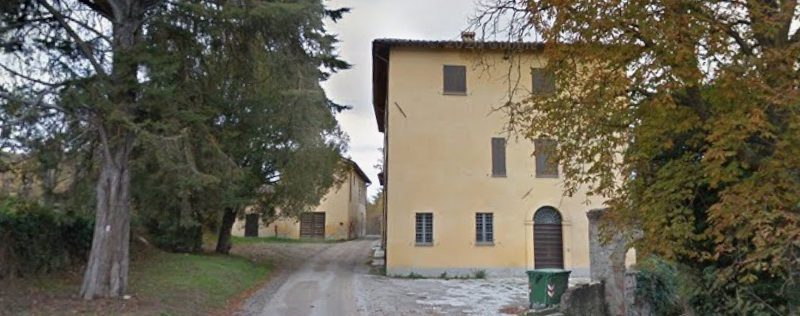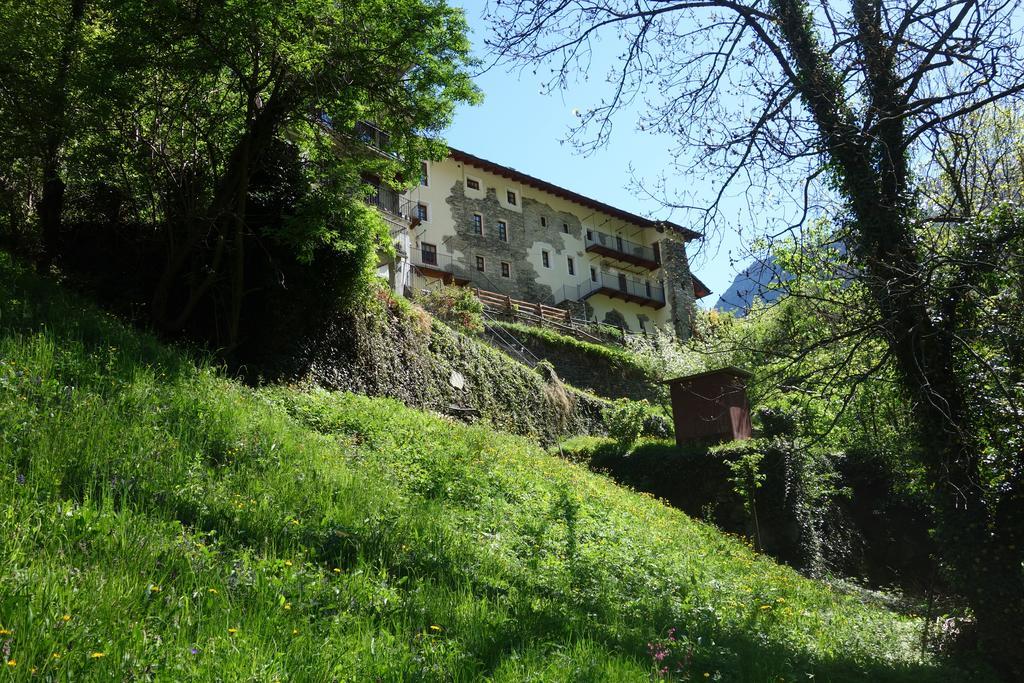
The Municipality of Pontboset, in Italy’s Aosta Valley, is seeking a new operator for Lou Créton du Lui. The concession may run for up to ten years, the minimum rent is €600 per month, and the Financial and Economic Plan prepared by the municipality assumes annual revenues of €76,140 and an operating margin of €9,440. These figures make the opportunity interesting, but not automatically attractive: the real value will depend on the operator’s ability to increase occupancy, average rate and ancillary revenues without undermining the cost structure.
Within the hotel investment market, there is a segment that remains relatively overlooked: publicly owned hospitality properties that are not being sold, but instead offered to private operators under concession agreements.
These transactions are fundamentally different from traditional hotel acquisitions.
The required capital commitment is lower.
Real estate risk is reduced.
But operational capability becomes far more important.
The Lou Créton du Lui in Pontboset, in the Aosta Valley, is a particularly interesting case because the tender documentation already makes it possible to assess the opportunity as a small hospitality business case.
The Municipality has relaunched the procedure for the concession of the property for 5 years, renewable for a further 5 years, with bids due by 12:00 noon on 22 September 2026.
Investment Snapshot
| Metric | Lou Créton du Lui |
|---|---|
| Ownership | Municipality of Pontboset |
| Location | Pontboset – Aosta Valley |
| Property type | Hostel / outdoor hospitality property |
| Minimum capacity | 25 beds |
| Concession term | 5 + 5 years |
| Minimum monthly rent | €600 |
| Annual base rent | €7,200 |
| Annual revenues estimated in the PEF | €76,140 |
| Estimated annual costs | €66,700 |
| Estimated operating margin | €9,440 |
| Base-case occupancy | 50% |
| Estimated annual overnight stays | 1,500 |
| Minimum operating season | 1 June – 30 September |
| Bid deadline | 22 September 2026 – 12:00 noon |
The relationship between these figures is the first thing to examine.
The annual base rent of €7,200 is set against projected revenues of €76,140.
Yet the estimated operating margin is only €9,440.
In other words, the opportunity does not work simply because the rent is low.
It works only if the operating model works.
The Municipality Provides the Asset. The Operator Must Build the Cash Flow
The core structure of the concession is straightforward.
The future operator does not need to acquire the real estate.
It needs to operate it.
This substantially reduces the amount of real estate capital required to enter the transaction.
At the same time, however, the concessionaire assumes the entrepreneurial risk:
-
demand risk;
-
commercial risk;
-
operating risk;
-
cost inflation risk;
-
profitability risk.
The Municipality provides the property.
The operator must turn it into a financially sustainable hospitality business.
That is the real nature of the investment.
25 Beds: A Small Asset Highly Dependent on Management Quality
Lou Créton du Lui provides at least 25 beds.
This places it at the opposite end of the spectrum from a large-scale transaction such as the Sestriere Olympic Village.
There are no meaningful economies of scale.
There is no distribution engine supporting more than a thousand beds.
Every variable therefore matters more.
One unsold room.
One unproductive day of opening.
One additional employee on the payroll.
An energy bill above expectations.
A food and beverage operation that fails to achieve critical mass.
In a property of this size, each operational decision can materially affect the bottom line.
That is precisely why the quality of the operator becomes part of the value of the transaction itself.
The Municipality’s PEF Assumes €76,140 of Annual Revenue
The financial documentation prepared by the Municipality provides a direct view into the operating model.
The base case assumes:
25 beds;
122 days of operation;
50% average occupancy;
1,500 overnight stays per year;
€30 per overnight stay;
€10 for breakfast;
€5 for linen service.
These assumptions generate:
€45,000 from accommodation;
€15,000 from breakfast;
€7,500 from linen services.
Total:
€67,500.
The Financial and Economic Plan then adds a further €8,640 from the assumed operation of a wine bar.
Total annual revenues therefore reach:
€76,140.
The Estimated Operating Margin Is Only €9,440
Against those revenues, the PEF assumes total annual costs of €66,700.
The resulting operating profit is therefore:
€9,440.
That equates to a margin of approximately 12% of projected revenue.
This figure matters because it prevents an overly simplistic reading of the opportunity.
A rent of €600 per month may appear exceptionally low.
But low rent does not automatically mean high returns.
With an operating margin of only around €9,400, even a modest deterioration in occupancy, cost inflation or pricing could quickly erode profitability.
The underwriting therefore needs to start with a different question:
how much can that margin realistically be improved?
How Much Must the Business Improve to Become Truly Attractive?
The Municipality’s PEF represents a base case.
For a professional operator, the opportunity lies in the ability to improve performance across four main levers.
1. Occupancy
The first variable is volume.
With only 25 beds, higher occupancy can have an immediate impact on profitability, particularly once the minimum fixed-cost base has been absorbed.
2. ADR
The PEF assumes an average rate of approximately €30 per overnight stay.
The strategic question is whether the property should compete purely as a low-cost hostel or whether it could be repositioned as a more experiential outdoor hospitality product capable of sustaining a higher average rate.
3. Length of Season
The mandatory operating period runs from 1 June to 30 September.
Extending the season could increase revenue.
But only if incremental demand generates a contribution margin greater than the additional costs of labour, energy, housekeeping and distribution.
4. Ancillary Revenues
The real upside may sit outside the rooms:
-
food and beverage;
-
wine bar;
-
tastings;
-
events;
-
experiences;
-
partnerships with local guides;
-
trekking packages;
-
cycling tourism;
-
destination-based activities.
The combination of these four variables will determine whether the operating margin remains around €9,000 or can move towards materially more attractive levels.
Occupancy Is the Real Break-Even Variable
The sensitivity analysis included in the PEF is particularly useful.
The base case assumes 50% occupancy.
At lower occupancy levels, the business may remain viable, but profitability compresses quickly.
This means the real risk is not the €600 monthly rent.
It is the ability to generate sufficient demand.
An operator should therefore analyse:
-
actual tourism flows;
-
outdoor demand;
-
seasonality;
-
guest origin;
-
customer behaviour;
-
rate benchmarks;
-
OTA performance;
-
direct demand;
-
groups;
-
associations;
-
local events.
Only after this analysis can a credible occupancy forecast be developed.
The Real Upside May Be in Food & Beverage
The concession documentation allows the operator, subject to obtaining the required authorisations, to develop:
bar services;
restaurant operations;
wine bar activities;
tastings;
events;
cultural initiatives;
promotion of local products.
This is strategically important.
A 25-bed property inevitably has a limited room-revenue ceiling.
Integrating food and beverage and experiential activities can increase revenue per guest and broaden the commercial catchment beyond overnight customers.
The point, however, is not simply to “open a restaurant”.
Food and beverage should be assessed as a standalone business unit:
revenue → food cost → labour → energy → waste → margin.
If it generates turnover without EBITDA, it can actually worsen the economics of the overall operation.
Events Represent Upside Not Fully Reflected in the Base Case
The financial documentation assigns a prudent contribution to the wine bar, but does not build significant revenue from events or experiential activities into the base case.
This means that some of the potential upside is not already embedded in the public forecast.
An operator could potentially develop:
-
wine tastings;
-
themed dinners;
-
small corporate events;
-
retreats;
-
micro-weddings;
-
sports groups;
-
partnerships with mountain guides;
-
outdoor packages;
-
cultural events;
-
collaborations with local producers.
But once again, the key word is margin.
Every new activity should be judged on its ability to generate positive contribution, not simply additional turnover.
A Four-Month Mandatory Season Could Be an Advantage
The minimum required opening period runs from 1 June to 30 September.
For an operator, this can actually become an advantage.
A concentrated season allows the business to limit its initial exposure to year-round fixed costs.
The operating model could begin as a strongly seasonal business and then expand over time.
The correct sequence would be:
test demand → verify profitability → extend the season.
Not the other way around.
Opening for more months without sufficient demand simply adds costs.
Heating Becomes a Strategic Variable
Energy performance becomes particularly important if the operator plans to reduce seasonality over time.
Heating systems and any future energy-efficiency investments therefore need to be assessed alongside the commercial strategy.
A property operating for four summer months has one energy profile.
A property operating into spring, autumn or winter has a completely different one.
This is another example of why hospitality due diligence cannot separate technical analysis from financial analysis.
Five Years Plus Five Changes the Investment Logic
The concession term is one of the most attractive elements of the opportunity.
An initial five-year period, renewable for a further five years, creates a potential ten-year investment horizon.
That is long enough for the operator to evaluate investments in:
-
technology;
-
distribution;
-
direct-booking infrastructure;
-
furniture;
-
equipment;
-
marketing;
-
branding;
-
food and beverage;
-
commercial development.
Under a short concession, many of these investments might be difficult to recover.
Over a ten-year horizon, the economics change.
The real question becomes:
how much capital is required upfront, and over how many years can it be recovered?
The Winning Model May Not Be a Traditional Hostel
This is probably the most important strategic decision.
Running Lou Créton du Lui purely as a hostel means competing mainly on:
price;
bed nights;
seasonality.
A more sophisticated model could instead transform it into a micro hospitality destination.
A property combining:
accommodation + outdoor activities + local identity + food + wine + experiences.
In that model, value would no longer depend solely on the 25 beds.
It would depend on the economic value generated by each guest.
That represents a shift from bed selling to revenue per guest.
Distribution Could Completely Change the Outcome
For a small hospitality property, distribution is crucial.
OTAs can generate demand, but at a cost.
Direct bookings generate higher margins, but require investment in reputation, digital marketing, CRM and positioning.
Sports groups, associations, schools, organised trekking tours and outdoor networks may generate volume through different acquisition-cost structures.
The channel mix therefore needs to be carefully designed.
The objective is not simply to fill beds.
It is to fill them at the right acquisition cost.
This is one of the core principles underpinning the work of Investhotel Capital Partners: the value of a hospitality asset does not depend only on revenue, but on the economic quality of that revenue.
What an Operator Should Verify Before Submitting a Bid
| Area | Critical Question |
|---|---|
| Demand | How many overnight stays can Pontboset realistically generate? |
| Occupancy | Is the 50% occupancy assumed in the PEF achievable? |
| ADR | Is €30 the correct price point, or could the product support a higher positioning? |
| Seasonality | How many months should the property realistically remain open? |
| Distribution | What proportion of demand should come from OTAs, direct bookings, groups and outdoor channels? |
| F&B | Does food and beverage improve margin or merely increase turnover? |
| Events | Which activities can generate genuine incremental profitability? |
| Payroll | What is the minimum sustainable staffing structure? |
| Energy | What is the cost of extending operations beyond summer? |
| CAPEX | Which investments must be funded by the concessionaire? |
| Working capital | How much liquidity is required for the start-up phase? |
| Return | What return can the operator earn on the capital actually invested? |
This is the difference between participating in a tender and building a genuine investment thesis.
Further analysis on valuations, hotel contracts, management control and operating performance is also available through the specialist guides published on Robertonecci.it.
Small Asset, High Dependence on the Operator
Small hospitality properties have one defining characteristic.
Their performance depends much more directly on the entrepreneurial quality of the operator.
An operator capable of:
-
driving direct bookings;
-
building a strong reputation;
-
creating local partnerships;
-
controlling labour costs;
-
optimising procurement;
-
developing ancillary revenue;
-
executing marketing effectively;
-
managing the guest experience;
can generate radically different outcomes from a passive operator.
That is why hotel management is not simply a phase that follows the concession award.
It is the variable that determines the return.
Public Hospitality Concessions Are an Overlooked Operating Asset Class
The Pontboset case also raises a broader point.
Across Italy, there are numerous hospitality properties owned by public-sector entities that do not necessarily need a buyer.
They need an operator.
Former hotels.
Hostels.
Guesthouses.
Mountain lodges.
Tourist residences.
Municipal properties.
Regional assets.
This creates a parallel market alongside conventional hotel transactions.
A market where the investment is not about buying the bricks and mortar.
It is about building cash flow on top of an asset that already exists.
For InvestimentiAlberghieri.it, this segment is particularly interesting because it brings together three components:
public ownership;
private capital;
operating expertise.
Conclusion: €600 Is Not the Number That Matters
The headline will inevitably attract attention because of the rent.
€600 per month.
But that is not the number that determines the quality of the investment.
The figures that really matter are:
25 beds.
1,500 overnight stays.
50% occupancy.
€76,140 of revenue.
€66,700 of costs.
€9,440 of operating profit.
The real question is:
how much can that margin be increased without increasing risk disproportionately?
If the operator can improve occupancy, average rate and ancillary revenues while keeping payroll and operating costs under control, the economics of the concession could improve materially.
If real demand proves insufficient, even a near-symbolic rent may fail to create value.
Lou Créton du Lui therefore offers a lesson that extends well beyond this specific tender:
in hospitality, returns are not determined by how little it costs to use the property. They are determined by the cash flow the operator is able to build on top of it.
InvestimentiAlberghieri.it Advisory
InvestimentiAlberghieri.it analyses opportunities involving the acquisition, concession, leasing, management, turnaround and repositioning of publicly and privately owned hospitality properties.
For preliminary assessments, business plans, concession viability analysis, valuations, due diligence, operator searches and hospitality transaction structuring:
info@investimentialberghieri.it
Complementary expertise and insights:
Robertonecci.it — hospitality advisory, analysis and specialist guides
Investhotel.it — hotel acquisitions, disposals and investment transactions
HotelManagementGroup.it — hotel management, asset management and performance optimisation
|
|
|