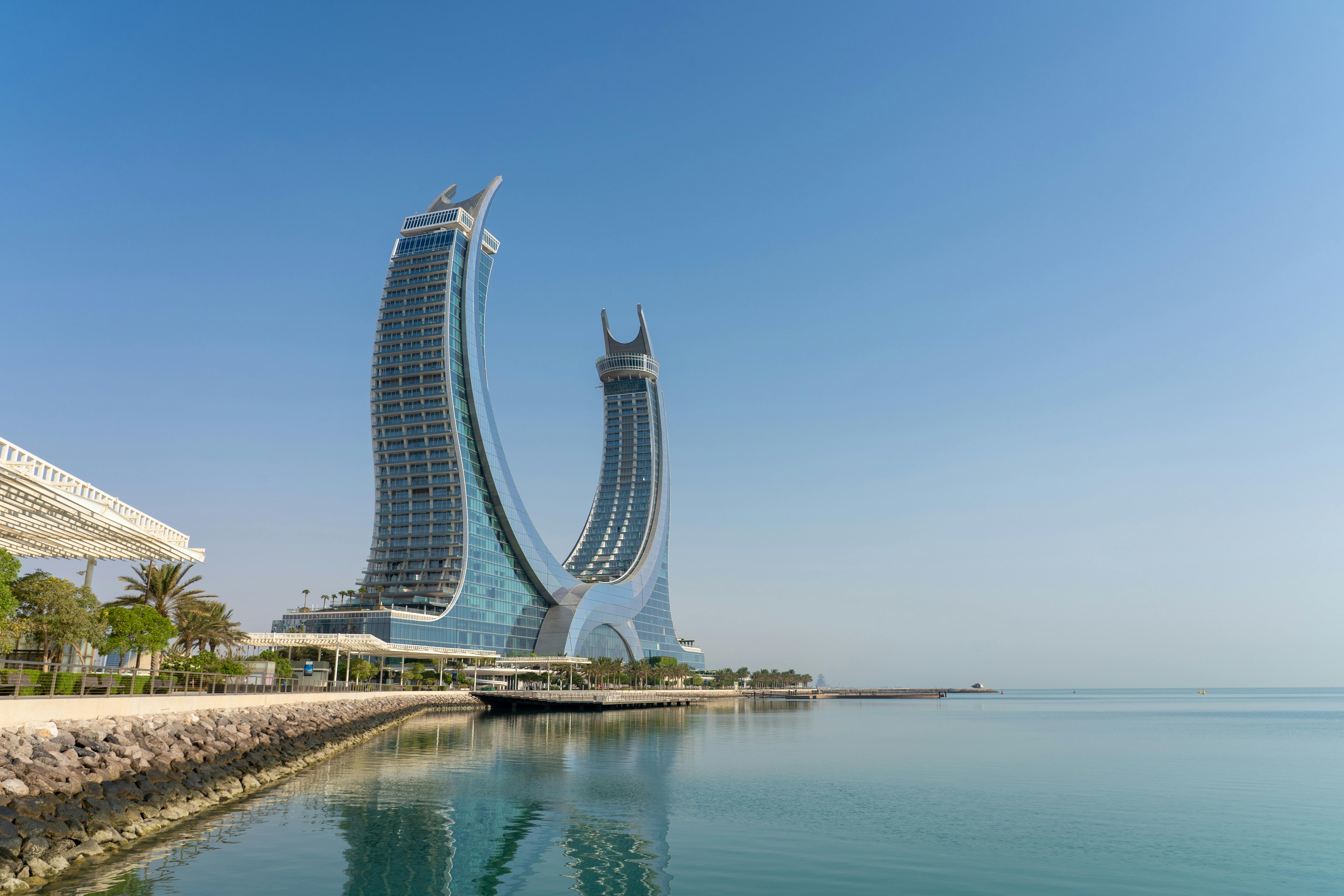
Katara Hospitality is one of the most distinctive investors in the global hospitality real estate market. Originating in Qatar and closely connected to the Qatar Investment Authority ecosystem, the group represents a highly relevant case study for understanding how sovereign capital approaches hotel ownership, luxury hospitality, and long-term real estate value creation.
Unlike the major asset-light hotel groups, whose growth is primarily driven by management agreements, franchise contracts, brand affiliation, distribution platforms, and loyalty programs, Katara Hospitality follows a markedly different model. It acquires, develops, restores, repositions, and holds iconic hotel assets.
Its strategy is not that of a conventional hotel chain. It is the strategy of a long-term owner and hospitality real estate investor.
Katara is not simply looking for hotel rooms to operate. It targets rare assets, prime locations, historic buildings, landmark properties, and hospitality platforms capable of generating real estate value, reputational value, and strategic value over time.
In this respect, Katara Hospitality is one of the clearest examples of a sovereign-backed, asset-heavy hotel investor focused on trophy hospitality assets.
For investors, owners, advisors, and operators involved in hotel investment, hotel valuation, acquisitions, development, and asset management, the Katara case is particularly instructive. It highlights the fundamental distinction between owning a hotel, operating a hotel, and creating long-term value from a hospitality asset.
Origins: from Qatar national hotels to Katara Hospitality
Katara Hospitality traces its origins back to 1970, when the Government of Qatar established Qatar National Hotels Limited to oversee the development of the country’s first major five-star hotel, the Doha Gulf Hotel.
At that stage, the company had a primarily domestic mandate: to help build the foundations of a modern hotel infrastructure in a country that was beginning to transform its economy. Hospitality was not yet the global investment asset class it is today, but Qatar had already understood that hotels and tourism could become instruments of economic development, international positioning, and tourism diplomacy.
In 1993, the company was reorganized as QNH through an Emiri decree, gradually assuming a broader role in the ownership and development of Qatar’s hotel assets. From the early 2000s onward, the group entered a phase of international expansion, with acquisitions outside Qatar and a growing focus on historic hotels, mature destinations, and luxury hospitality markets.
The decisive turning point came in 2012, when the group adopted the name Katara Hospitality. The rebranding was not merely cosmetic. It signaled a new ambition: to transform a national hotel platform into a global hospitality investor specializing in iconic assets.
Ownership, governance, and investor profile
Katara Hospitality is a sovereign-backed investor. The company is connected to Qatar Investment Authority, Qatar’s sovereign wealth fund, which was established to diversify the national economy and allocate public capital into strategic assets worldwide.
This point is essential to understanding the group’s investment behavior.
Katara Hospitality does not operate like an opportunistic fund seeking to acquire a hotel, implement a short value-add plan, and exit within a compressed investment horizon. Its approach is more patient, patrimonial, and strategic.
Sovereign capital allows the group to support complex transactions, multi-year restoration programs, major repositioning projects, and acquisitions of trophy assets whose returns may unfold over long timeframes.
The group’s governance reflects its connection with Qatar’s institutional and financial system. The presence of figures linked to Qatar Investment Authority and to the country’s public-sector ecosystem confirms that hospitality is not treated merely as an operating business, but as a strategic asset class.
For hotel investors, this is a critical distinction. Katara Hospitality does not invest for yield alone. It also invests for positioning, reputation, asset control, geographic diversification, and long-term economic influence.
Business model: owner, developer, and asset manager
Katara Hospitality is best understood as a hotel owner, developer, and asset manager. The group does not define itself primarily through the day-to-day operation of hotels, but through ownership, strategic control, and long-term value creation.
Its business model can be summarized around four core pillars.
1. Real Estate ownership
The first pillar is real estate ownership.
Katara invests in hotels where the underlying property value is central to the investment thesis. The hotel is not viewed solely as an operating business, but as a complex, rare, and difficult-to-replicate real estate asset.
A historic grand hotel in an international gateway destination is not comparable to a standard commercial property. It combines real estate value, operating performance, reputation, architecture, history, and cultural relevance.
2. Development and repositioning
The second pillar is development and repositioning.
Katara does not limit itself to acquiring fully stabilized assets. In several cases, it invests in properties that require restoration, capital expenditure, repositioning, or a complete redefinition of their market profile.
This requires substantial financial resources, long execution timelines, and the ability to coordinate design, permitting, construction, heritage constraints, brand standards, operator requirements, and commercial strategy.
3. Hotel asset management
The third pillar is hotel asset management.
Katara does not necessarily manage the front desk, housekeeping, food and beverage operations, or revenue management directly. Instead, it oversees the key decisions that determine the long-term value of the asset: brand selection, management agreements, capex strategy, positioning, performance monitoring, market strategy, and potential exit scenarios.
In the hotel sector, this role is crucial. A hotel is not simply a leased property. It is an operating real estate asset whose value depends on demand, pricing, reputation, distribution, labor, product quality, guest experience, and operating discipline.
4. Partnerships with global hotel operators
The fourth pillar is collaboration with leading international hotel operators.
Katara works with global brands and operators such as Marriott, Accor, IHG, Fairmont, Raffles, Regent, Ritz-Carlton, Westin, Peninsula, Hilton, and other upper-upscale and luxury hospitality platforms.
This confirms that the group is not a single-brand hotel company. It is a multi-brand owner and strategic asset manager that selects the most appropriate operator or brand for each asset.
Investment strategy: Heritage, trophy assets, and patient capital
Katara Hospitality’s strategy can be described as a “heritage plus trophy assets” strategy.
The group typically invests in hotels that share several of the following characteristics:
-
prime location;
-
international recognition;
-
historic or architectural relevance;
-
asset scarcity;
-
repositioning potential;
-
suitability for a luxury or upper-upscale brand;
-
strategic relevance within the destination;
-
strong real estate fundamentals;
-
capacity to generate reputational value.
This explains why Katara has been associated with assets such as The Plaza in New York, The Savoy in London, The Westin Excelsior in Rome, the Bürgenstock Resort in Switzerland, Raffles Singapore, Le Royal Monceau in Paris, and other landmark properties.
In these cases, value is not determined solely by current hotel EBITDA. The investment thesis also depends on the rarity of the property, the strength of the destination, pricing power, historical relevance, brand potential, and the ability to transform the asset into a long-term store of value.
This is a different logic from that of many traditional financial investors, who primarily focus on entry yield, leverage, cash flow visibility, and exit timing.
Katara can operate over longer cycles because it benefits from patient capital and a broader strategic mandate.
Hotel portfolio: A global platform
Katara Hospitality’s portfolio combines a strong domestic base in Qatar with international assets across Europe, Asia, Africa, and the Americas.
The Qatari component is consistent with the group’s original mandate: to support the development of the country’s hotel infrastructure and strengthen Qatar’s position as an international destination. Hotels such as The Ritz-Carlton Doha, Sheraton Grand Doha, Raffles Doha, Fairmont Doha, and other domestic assets contribute to the country’s luxury, leisure, business, and events offering.
The European component is focused on mature markets with strong tourism reputations and high barriers to entry. France, the United Kingdom, Switzerland, Italy, Spain, and the Netherlands are markets where historic hotel assets can carry substantial real estate, operational, and symbolic value.
The group’s presence in the United States, particularly in New York, follows the same logic: securing exposure to one of the world’s most visible and liquid hospitality markets through properties that represent far more than standard hotel operations.
In Asia and Africa, Katara’s presence is more selective, but it remains consistent with a focus on luxury, wellness, destination resorts, and high-profile hospitality assets.
Main transactions and investments
The following table summarizes some of the main transactions and initiatives linked to Katara Hospitality’s international investment strategy.
| Transaction / Asset | Country | Investment Rationale | Strategic Relevance |
|---|---|---|---|
| The Westin Excelsior Rome | Italy | Acquisition of a historic hotel in a prime location | Roman trophy asset with strong real estate and reputational value |
| The Plaza New York | United States | Acquisition of a globally iconic hotel | Control of one of the world’s most recognizable hospitality assets |
| The Savoy London | United Kingdom | Investment in a historic luxury hotel | Exposure to one of London’s most prestigious hotel properties |
| Bürgenstock Resort | Switzerland | Major development and repositioning project | Example of patient capital and destination-led luxury value creation |
| Raffles Singapore | Singapore | Ownership of an international heritage asset | Control of one of Asia’s most iconic hotels |
| Le Royal Monceau – Raffles Paris | France | Parisian luxury asset | Reinforcement of the group’s high-end French portfolio |
| Carlton Cannes, a Regent Hotel | France | Repositioning of a historic property | Value creation in a luxury leisure destination |
| European InterContinental portfolio | Europe | Acquisition of multiple assets in mature markets | Scale expansion and partnership with a global hotel operator |
| Fairmont Tazi Palace Tangier | Morocco | Repositioning of a historic asset | Expansion into North Africa through luxury hospitality |
| Africa fund with Accor | Sub-Saharan Africa | Hotel development partnership | Platform-based expansion with an international operator |
This table highlights the consistent logic behind Katara’s strategy: the group is not simply pursuing scale. It is pursuing recognizable assets, strong destinations, and properties capable of supporting a long-term investment narrative.
Presence in Italy: Rome and Milan as strategic hospitality markets
Italy is a highly coherent market for Katara Hospitality’s investment strategy.
The country offers historic hotels, iconic buildings, internationally recognized destinations, deep luxury demand, and a hospitality real estate stock that is often undercapitalized relative to its potential.
The most significant example is The Westin Excelsior Rome, located on Via Veneto. The asset displays all the typical characteristics of a Katara target: history, location, visibility, repositioning potential, and affiliation with the international luxury segment.
Milan also fits the logic of controlling assets in Italy’s main gateway cities. For a sovereign investor, Rome and Milan are not merely hotel markets. They are institutional, economic, tourism, and reputational platforms.
Katara’s presence in Italy points to a broader trend: high-end Italian hotels attract international capital because they combine real estate scarcity, heritage, global demand, and growth potential in the luxury segment.
However, this dynamic also raises a strategic question for the Italian market. Many high-quality hotel assets require substantial capital, professional asset management, the ability to fund restoration programs, and a long-term investment vision. When these elements are not sufficiently available domestically, international investors naturally step in.
The key issue is not the presence of foreign capital. The real question is whether the Italian hospitality market can develop financial structures, professional capabilities, and management platforms capable of competing at the same level.
Iconic hotels are not enhanced through ordinary management alone. They require strategy, capital, brand selection, contractual control, and a sophisticated understanding of hospitality real estate.
Readers interested in hotel management, hotel valuation, asset development, and hospitality strategy may also consult the hotel guides available on www.robertonecci.it, the insights published on the Investimenti Alberghieri blog, and the market updates available on the InvestHotel blog.
Katara Hospitality and the asset-heavy model
One of the most important aspects of the Katara case is its asset-heavy positioning.
Over the past few decades, many major international hotel groups have progressively reduced direct real estate ownership and shifted toward asset-light models. This has allowed them to grow faster, improve return on invested capital, expand their brand systems, and reduce direct exposure to real estate risk.
Katara follows a different logic.
The group deploys capital directly into the assets themselves. This means committing significant resources, funding capex, assuming real estate exposure, and operating over long investment cycles.
But it also means controlling the asset that ultimately generates value.
The asset-heavy model offers several advantages:
-
it allows the investor to benefit from long-term real estate appreciation;
-
it gives the owner control over asset strategy;
-
it creates patrimonial protection over time;
-
it provides flexibility in brand and operator selection;
-
it allows direct intervention on the physical product;
-
it strengthens control over positioning and long-term value creation.
There are, however, also disadvantages:
-
capital remains tied up for extended periods;
-
exposure to tourism and real estate cycles is higher;
-
recurring capex requirements can be significant;
-
liquidity is lower than in financial assets;
-
management agreements with operators can be complex;
-
restoration and repositioning projects may face delays, cost overruns, or execution risk.
This structure is sustainable primarily for investors with patient capital, strong financial capacity, and long-term strategic objectives.
For this reason, Katara Hospitality is not easily replicable by undercapitalized owners, short-term investors, or operators whose model depends on rapid capital rotation.
The separation between ownership and operations
The Katara case clearly illustrates one of the central principles of modern hospitality investment: ownership and operations do not necessarily coincide.
One party may own the hotel real estate, another may operate the hotel, and a third may provide the brand, distribution platform, reservation systems, loyalty program, and commercial standards.
In some cases these roles overlap. In major international hotels, however, they are often separated.
Katara tends to focus on ownership and asset management, while day-to-day operations are entrusted to specialized operators. This separation is rational because a major international brand can contribute:
-
global distribution systems;
-
loyalty programs;
-
operating standards;
-
commercial expertise;
-
recognition among luxury travelers;
-
revenue management capabilities;
-
negotiating power with intermediaries and distribution channels.
For the owner, however, brand selection is a strategic capital decision. The wrong brand can limit an asset’s potential. The right brand can increase average rates, occupancy, reputation, guest profile, and real estate value.
Katara therefore uses brands as instruments of patrimonial value creation. The brand does not define the entire identity of the group. Instead, the group selects the brand most appropriate for each asset.
Why Katara Invests in iconic hotels
Iconic hotels have distinctive characteristics.
They cannot be easily replicated, they cannot be built anywhere, and they often have a deep relationship with the city or destination in which they are located.
A hotel such as The Plaza in New York, The Savoy in London, or The Westin Excelsior in Rome is not valuable only because of its rooms, revenues, or operating margin. It is valuable because of what it represents.
This type of asset offers three layers of value.
The first is operating value: room revenue, food and beverage, events, spa, ancillary services, and hotel profitability.
The second is real estate value: location, scale, use, scarcity, appreciation potential, and building quality.
The third is symbolic value: reputation, history, recognition, narrative power, and the ability to enhance the owner’s institutional profile.
Katara Hospitality appears to invest precisely where these three layers overlap.
The objective is not only to generate financial returns, but to control assets that matter strategically within the global hospitality market.
Financial reading: Capital, capex, and time horizon
From a financial perspective, Katara Hospitality demonstrates a clear willingness to support capital-intensive transactions.
Several publicly known investments point to meaningful orders of magnitude. The Bürgenstock project in Switzerland required substantial capital commitment. The Westin Excelsior Rome was acquired for a significant amount in the Italian market. The Plaza in New York represented both a symbolic and financially important acquisition. The fund with Accor for Sub-Saharan Africa was designed with investment capacity exceeding one billion dollars.
These figures confirm a fundamental point: Katara does not approach hospitality as a tactical allocation. It approaches hospitality as a strategic investment platform.
The returns on these investments should not be assessed only on a short-term basis. A restoration may take years. A repositioning may produce results gradually. A historic hotel may require significant upfront capex before the full investment thesis becomes visible.
But if the asset is genuinely rare, well located, properly branded, and professionally managed, long-term value creation can be substantial.
For this reason, Katara is closer to a long-term institutional owner than to a real estate trader.
Risks of the Katara Hospitality model
Even a financially strong investor such as Katara Hospitality is exposed to meaningful risks.
Capex risk
Historic and luxury hotels require continuous investment. Restoration, technical upgrades, brand standards, guest rooms, public areas, food and beverage outlets, wellness facilities, technology, and sustainability improvements all create significant funding requirements.
The risk is not only spending large amounts of capital. The real risk is deploying that capital effectively, on time, and in a way that enhances long-term asset value.
Execution risk
Repositioning a hotel does not simply mean changing its brand.
It requires coordination across design, construction, permits, operations, staffing, distribution, pricing, marketing, and guest experience.
A trophy asset can lose part of its potential if the value creation process is slow, inconsistent, underfunded, or strategically unclear.
Operator dependency
When operations are entrusted to international hotel brands, the owner also depends on the quality of the operator.
The management agreement therefore becomes a critical instrument for protecting value. Incentives, performance tests, capex obligations, brand standards, owner approval rights, and termination mechanisms all matter.
Transparency risk
Katara does not provide the same level of disclosure as a listed company.
Complete information on profitability, leverage, portfolio value, asset-level performance, financing structure, and return metrics is not always publicly available.
For external analysts, this represents a limitation. The strategic profile is clear, but a precise quantitative measurement of investment returns is more complex.
Geopolitical and reputational risk
As a sovereign-backed investor, Katara may also be assessed through the lens of geopolitics, international relations, regulatory scrutiny, and perceptions of the investing country.
This is not an ordinary hotel operating risk, but it can influence public perception, institutional relationships, and transaction dynamics in certain markets.
What the italian market can learn
The Katara Hospitality case offers at least five important lessons for the Italian hotel market.
The first is that high-quality hotels are complex patrimonial assets, not merely operating businesses. Valuing them requires real estate expertise, hotel expertise, financial analysis, and contractual understanding.
The second is that patient capital is often decisive. Many Italian hotels need restoration, repositioning, new commercial strategies, and multi-year investment plans. Without adequate capital, value remains trapped.
The third is that the brand must be selected according to the asset. Not all hotels should be managed or branded in the same way. A historic palazzo in Rome, a lake resort, a business hotel in Milan, and a seasonal leisure property require very different strategies.
The fourth is that hotel asset management is a central capability. It is not enough to own the property and appoint an operator. Performance, capex, contracts, positioning, distribution, guest profile, and real estate value must all be actively managed.
The fifth is that Italy must become better at organizing its own hotel capital. International investors enter the market because they see value, scarcity, and potential. The real question is whether domestic capital can develop equally competent, well-capitalized, and professionally managed platforms.
Katara Hospitality as a benchmark for hotel investors
Katara Hospitality can be considered a benchmark for three categories of market participants.
The first category is institutional investors seeking to understand hospitality beyond a purely real estate perspective. A hotel is not an office building, a retail unit, or a logistics warehouse. It is an operating property with far more complex management dynamics.
The second category is family owners of historic hotels. The Katara case shows that a hotel asset can have strategic value when it is managed with a patrimonial vision, an appropriate brand, sufficient capital, and coherent long-term positioning.
The third category is operators and advisors working on acquisitions, disposals, valuations, and repositioning projects. Katara demonstrates the importance of connecting real estate analysis with hotel strategy.
Readers wishing to explore these topics further may consult the hotel guides published on www.robertonecci.it, the articles available on the Investimenti Alberghieri blog, and the market updates published on InvestHotel, which cover hotel investments, hotel management, acquisitions, development, and hospitality market trends.
FAQ on Katara Hospitality
What is Katara Hospitality?
Katara Hospitality is a Qatari hotel investor specializing in the ownership, development, and asset management of upper-upscale and luxury hotels, often with iconic, historic, or trophy characteristics.
Is Katara Hospitality a hotel chain?
Not in the traditional sense. Katara does not primarily operate as a single-brand hotel chain. It is mainly an owner and asset manager of hotels that are often operated by international hotel companies.
Who controls Katara Hospitality?
Katara Hospitality is connected to the Qatar Investment Authority ecosystem, Qatar’s sovereign wealth fund.
What is Katara Hospitality’s investment strategy?
Its strategy focuses on trophy assets, historic hotels, luxury real estate, prime destinations, and long-term projects with a strong real estate, operational, and reputational component.
Is Katara Hospitality present in Italy?
Yes. Italy is consistent with the group’s strategy, particularly because of its historic hotels, luxury demand, and high-quality assets in destinations such as Rome and Milan.
Why does Katara invest in historic hotels?
Because historic hotels can combine operating income, real estate value, scarcity, reputation, and symbolic relevance. They are difficult-to-replicate assets and are often highly valuable within the luxury hospitality market.
What is the difference between Katara and operators such as Marriott or Hilton?
Marriott and Hilton are primarily global hotel operators and asset-light brand platforms. Katara is an asset-heavy owner and investor that may appoint operators such as Marriott, Accor, IHG, or others to manage its hotels.
Why is Katara Hospitality relevant for hotel investors?
Katara is relevant because it demonstrates how patient capital, real estate ownership, brand selection, asset management, and long-term positioning can be combined to create value in the hospitality sector.
Katara Hospitality is one of the most significant examples of a sovereign, patrimonial, and long-term hotel investor.
The group is not simply building a hotel chain. It is selecting, owning, repositioning, and enhancing iconic hospitality assets.
Its strategy is based on a clear set of principles: patient capital, real estate ownership, trophy assets, partnerships with global brands, disciplined asset management, strong attention to positioning, and a strategic view of hospitality as an investment asset class.
For the Italian market, Katara is an important signal. Historic and high-end hotels attract global capital because they are rare, recognizable, and potentially highly valuable. But competing in this market requires expertise, capital, governance, and professional asset management capabilities.
The future of hotel investment will not be determined only by who manages rooms better. It will be shaped by those who understand the full value of the asset: real estate, brand, operations, destination, contracts, capital, and strategy.
Historic hotels, trophy assets, resorts, repositioning opportunities, and hotel portfolios require an integrated understanding of real estate, operations, finance, brand strategy, and market dynamics.
For strategic hotel advisory, hotel valuations, investment transactions, development projects, repositioning plans, and value creation processes, visit Hotel Management Group.
Hotel Management Group supports owners, investors, and operators in the valuation, development, repositioning, and enhancement of hotel assets.
Roberto Necci - r.necci@robertonecci.it