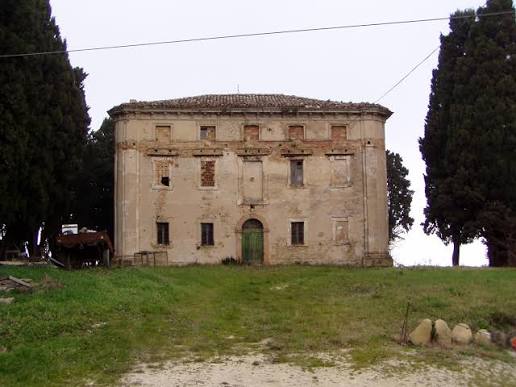
The problem for many independent hotels is not demand. It is the model.
For many independent hotels in Italy, the real issue over the coming years will not simply be selling more rooms.
It will be choosing a model.
Remaining independent.
Joining a brand.
Appointing a professional operator.
Entering into a franchise agreement.
Or moving towards managerial discipline.
This is where a significant part of future hotel value will be decided.
Because the market no longer rewards only those who own a hotel. It rewards those who know how to govern it.
Tourism may grow, demand may remain strong and Italian destinations may continue to attract interest, but none of this automatically protects independent hotels.
In many cases, it increases the pressure.
The more competitive the market becomes, the higher standards rise.
The more alternatives customers have, the harder it becomes to stand still.
The more brands, chains, soft brands and hotel management groups expand, the more independent hotels must clarify their positioning.
The issue is no longer simply having rooms to sell.
The issue is having a management structure capable of competing.
Independence is no longer a given advantage. It is a responsibility.
For years, hotel independence was perceived as a value in itself.
An independent hotel could rely on location, history, repeat guests, local relationships, family reputation and direct entrepreneurial involvement.
In many cases, that model worked.
But the market has changed.
Guests compare options faster.
Distribution channels are more expensive.
Revenue management requires ongoing expertise.
Staff are harder to recruit and retain.
Operating costs weigh more heavily.
Online reputation directly affects demand.
Finance looks more closely at the readability of the numbers.
Investors are looking for governable assets, not just well-located properties.
In this environment, remaining independent is still possible.
But it can no longer mean remaining isolated.
A hotel can remain independent in ownership, identity, positioning and relationship with its territory. But it must equip itself with managerial tools, management control, advanced revenue capabilities, commercial direction, procedures, governance and decision-making discipline.
Independence without managerial discipline risks becoming fragility.
The decisive question: Is the hotel independent, or simply alone?
Many hotels describe themselves as independent.
But in some cases, they are not truly independent.
They are simply alone.
Alone in distribution.
Alone in staff management.
Alone in cost control.
Alone in revenue management.
Alone in investment decisions.
Alone in contract negotiation.
Alone in reading the market.
Alone in building value.
Independence is a strategic choice when it is supported by skills, method and governance.
It becomes a weakness when it coincides with isolation, improvisation and lack of control.
An independent hotel can compete successfully against brands and chains, but only if it adopts an appropriate management model.
The future will not be against independent hotels.
It will be against independent hotels without managerial discipline.
Remaining independent, joining a brand, appointing an operator or moving towards managerial discipline
Many hotel owners approach the issue as if there were only two options: remain independent or join a brand.
In reality, the choices are more nuanced.
An independent hotel has at least four possible routes:
| Model | When It Makes Sense | Main Risk |
|---|---|---|
| Remain independent | When the hotel already has strong, autonomous and competent management | Commercial and managerial isolation |
| Join a brand or soft brand | When the hotel needs distribution power, reputation and recognition | Costs, standards and constraints that may not be proportionate |
| Appoint a professional operator | When ownership wants to retain the asset but separate ownership from operations | Choosing the wrong partner or signing weak contracts |
| Move towards managerial discipline | When the hotel wants to remain independent while adopting method, control, procedures and evolved governance | Stopping halfway: wanting change without truly changing the decision-making model |
The fourth route is often the most interesting and the least understood.
Moving towards managerial discipline does not necessarily mean selling the hotel, losing identity, handing the property over to a major brand or giving up ownership control.
It means introducing a more advanced management culture.
It means moving from predominantly intuitive management to a model based on data, control, roles, objectives, procedures, accountability and measurable results.
It means transforming the hotel from a business run “by habit” into a hotel enterprise governed with method.
Independence vs Managerial discipline: the real difference
| Independence without managerial discipline | Independence with managerial discipline |
|---|---|
| Decisions based on experience and urgency | Decisions based on data, budgets and objectives |
| Financial control often only after the fact | Periodic and forward-looking control |
| Discontinuous revenue management | Structured revenue management |
| Costs monitored without a systematic method | Costs analysed by department and incidence |
| Staff managed according to operational necessity | Organisation based on roles and responsibilities |
| High dependence on OTAs and intermediaries | More balanced distribution strategy |
| Investments decided case by case | Capex linked to expected returns |
| Ownership absorbed by daily emergencies | Ownership focused on control and strategy |
| Hotel readable only by those who run it | Hotel readable also by banks, investors and partners |
This is the real distinction.
Not between independent hotels and affiliated hotels.
But between hotels governed with method and hotels governed without method.
The false myth: “If an operator comes in, I lose control”
One of the most common concerns among hotel owners is that opening up to a professional operator, a Hotel Management Group or a managerial model means losing control of the business.
In reality, the opposite is often true.
An unstructured management model can make ownership lose control far more than a managerial one.
When budgets, reporting, cost control, revenue analysis, operating procedures, pricing policies, clear contracts and shared objectives are missing, ownership no longer has real control. It only has the perception of control.
It sees the hotel.
It knows the staff.
It follows daily emergencies.
It intervenes in operational decisions.
But it often does not truly govern value.
Managerial discipline does not reduce ownership control.
It makes it more visible and measurable.
Because it allows ownership to understand:
-
which departments generate margin;
-
which costs are increasing;
-
which channels create value and which absorb it;
-
which customer segments are truly profitable;
-
which rates are sustainable;
-
which investments generate returns;
-
which operational decisions affect asset value.
Real control is not being physically present in the hotel every day.
Real control is knowing what is happening in the numbers.
Hotel value depends less and less on the property alone
Many owners still evaluate a hotel primarily as a real estate asset.
Location.
Walls.
Rooms.
Category.
Surface area.
Urban planning potential.
Maintenance condition.
These elements matter, but they are not enough.
A hotel is also worth what its management is worth.
A hotel with solid performance, a readable profit and loss account, strong margins, organised staff, coherent reputation, controlled distribution channels and a replicable operating model will be increasingly attractive to banks, investors, potential buyers and industrial partners.
By contrast, a hotel with a good location but confused numbers, uncontrolled costs, weak contracts, poor margins and no managerial direction may be worth less than ownership believes.
The hotel market no longer rewards location alone.
It rewards the ability to turn location into income.
Why many independent hotels lose value without realising It
The loss of value in an independent hotel rarely happens suddenly.
It is usually progressive.
It begins with small signals:
-
average rate grows less than the market;
-
OTAs weigh more and more;
-
labour costs increase without improving service;
-
online reputation remains stable but not excellent;
-
the direct website generates few bookings;
-
management control is weak;
-
budgeting is approximate;
-
key staff make decisions without real direction;
-
ownership reacts to emergencies but not to strategy;
-
investments are postponed;
-
the profit and loss account remains positive, but does not create sufficient value.
The problem is that many of these signals do not look like emergencies.
They are slow erosions.
Over time, however, they reduce margins, attractiveness, bankability and asset value.
An independent hotel may remain open, occupied and apparently healthy, while gradually losing competitive strength.
Managerial discipline is precisely what allows these signals to be identified before they become structural problems.
Brands and Franchising: When they truly make sense
Joining a brand or entering into a franchise agreement can be the right decision.
But it is not an automatic solution.
A brand can bring distribution, reputation, standards, recognition, access to loyalty programmes, greater commercial strength and support in international markets.
It can be useful especially when the hotel:
-
operates in a competitive destination;
-
needs greater international visibility;
-
wants to increase average rate;
-
needs to reposition towards a higher segment;
-
has a product consistent with brand standards;
-
can sustain fees, investments and operating constraints.
But a brand does not replace management.
A hotel can be affiliated and still be poorly managed.
It can have a stronger sign above the door, but weak margins.
It can receive more bookings, but have uncontrolled costs.
It can increase occupancy, but not operating profit.
It can improve its image, but not its governance.
This is why the decision should never be ideological.
The issue is not brand or no brand.
The issue is whether the brand truly increases the net value of the asset after costs, constraints, capex and operational impact.
Management contract: opportunity or trap?
The management contract is one of the most delicate tools in the hotel sector.
It can be highly effective when ownership wants to retain the property and entrust operations to a specialised operator.
But it can become problematic if signed without fully understanding incentives, responsibilities, fees, budgets, decision-making powers, investment obligations, duration, termination clauses and control systems.
A good management contract must align the interests of ownership and operator.
A poor management contract can transfer value away from the asset.
Ownership should ask:
-
who controls the budget?
-
who decides on staffing?
-
who approves capex?
-
how are fees calculated?
-
is there a performance-based component?
-
what are the minimum performance thresholds?
-
what termination rights exist?
-
how is the value of the property protected?
-
what reports does ownership receive?
-
who governs commercial positioning?
To explore contractual models and the differences between business leases, management contracts, franchising and direct management, it is useful to consult the hotel guides published on Roberto Necci’s website, which focus on hotel management, governance, contracts, financial control and the enhancement of hotel enterprises.
Moving towards managerial discipline: The hardest choice, but often the most useful
Moving towards managerial discipline is different from joining a brand or fully outsourcing hotel operations.
It is an internal transformation in the way the hotel is governed.
It means introducing a method.
It means building a decision-making structure.
It means separating roles, responsibilities and objectives.
It means stopping the habit of managing only emergencies and starting to govern value.
For an independent hotel, moving towards managerial discipline may mean:
-
building a serious annual budget;
-
introducing monthly reporting;
-
measuring GOP, RevPAR, ADR, departmental costs and margins;
-
defining commercial objectives;
-
strengthening revenue management;
-
reducing dependence on unprofitable channels;
-
improving control over purchasing, staffing and maintenance;
-
reorganising roles and responsibilities;
-
building operating procedures;
-
analysing investments and expected returns;
-
making the hotel more readable for banks and investors;
-
preparing the asset for a future sale, affiliation or external management.
Managerial discipline is not bureaucracy.
It is value protection.
When an independent hotel should consider a Hotel Management Group
Working with a Hotel Management Group can be an effective solution when ownership wants to retain control of the asset while introducing a more structured management model.
It is a route worth considering when:
-
the hotel has potential but does not express it;
-
the profit and loss account can be improved;
-
revenue management is weak;
-
costs are not fully controlled;
-
staff organisation needs to be restructured;
-
the product needs repositioning;
-
ownership wants to separate investment from operations;
-
more transparent governance is required;
-
the hotel needs to become more bankable;
-
the asset must be prepared for future sale or enhancement;
-
ownership does not want to lose identity, but wants to gain method.
The point is not to replace the entrepreneur.
The point is to support or represent ownership with a more advanced management structure.
In some cases, the professional operator can take over operations.
In others, it can support ownership in control, repositioning, revenue management, commercial direction and margin improvement.
The right formula depends on the asset.
But the principle is always the same: without appropriate management, even a good hotel can lose value.
The Checklist to Understand Whether a Hotel Needs to Change Model
An owner should seriously question the management model if at least some of these signals are present:
| Signal | What It May Indicate |
|---|---|
| Revenue grows but margin does not | Uncontrolled costs or weak revenue mix |
| Occupancy is good but ADR remains low | Inadequate pricing or weak positioning |
| OTAs weigh too heavily | Unbalanced distribution |
| Staff make decisions without clear objectives | Fragile operational governance |
| There is no structured annual budget | Lack of managerial control |
| The P&L is reviewed only after the fact | Reactive, not preventive, management |
| Investments are postponed | Risk of progressive value erosion |
| Ownership is constantly involved in emergencies | Lack of organisational structure |
| The real value of the hotel is unclear | Asset not easily readable by banks and investors |
When these signals are present, the issue is no longer merely operational.
It is strategic.
The hotel must decide whether to continue as before or move towards a more managerial model.
Remaining independent is possible. Remaining still is not.
The message is not that all independent hotels must join a brand, enter into a franchise agreement or appoint an external management group.
That would be the wrong interpretation.
Many independent hotels can continue to be competitive, profitable and attractive from an asset-value perspective.
But they must evolve.
They must equip themselves with tools, skills, numbers, control, strategy and managerial discipline.
Independence can be a major strength when it allows flexibility, identity, authenticity and decision-making speed.
But it becomes a limitation when it turns into isolation, improvisation or lack of external challenge.
In the market that is taking shape, the distinction will no longer be between independent hotels and affiliated hotels.
It will be between hotels managed with method and hotels managed without method.
The future of independent hotels depends on managerial discipline
The future of independent hotels will not depend only on tourism demand, location or category.
It will depend on the ability to evolve.
Independent hotels are not destined to disappear.
But independent hotels without managerial discipline risk losing competitiveness, margins and asset value.
The choice, therefore, is not only between remaining alone and joining a brand.
The deeper choice is between continuing to manage by habit or moving towards managerial discipline.
Because in the new hotel market, value will not depend only on where the hotel is located.
It will depend on how it is governed.
In the next hospitality cycle, independence will be an advantage only if it is supported by managerial discipline.
This content is part of the Investimenti Alberghieri editorial series dedicated to the strategic analysis of the hospitality market. To explore all published insights, visit the full blog archive.
FAQ on Independent hotels and managerial discipline
What does moving towards managerial discipline mean for a hotel?
Moving towards managerial discipline means adopting a management model based on data, budgets, control, procedures, objectives, defined roles and measurable responsibilities. It does not mean losing identity. It means governing the hotel with method.
Does an independent hotel necessarily need to join a brand?
No. An independent hotel can remain autonomous, but it must equip itself with adequate managerial capabilities. A brand is useful only if it truly increases value, distribution, reputation and profitability after costs and constraints.
When does it make sense to work with a Hotel Management Group?
It makes sense when ownership wants to retain the asset but needs more professional management, stronger financial control, revenue management, operational reorganisation, repositioning or hotel value enhancement.
What is the main risk for an independent hotel?
The main risk is remaining formally independent but operationally isolated, without management control, commercial strategy, governance or the ability to read the market.
What is the difference between franchising and a management contract?
In franchising, the hotel uses a brand, standards and distribution systems, while management may remain with ownership or another operator. In a management contract, operational management is entrusted to a professional operator under defined rules, fees, objectives and contractual responsibilities.
Does managerial discipline reduce the role of ownership?
No. When properly built, managerial discipline strengthens the role of ownership because it makes numbers, responsibilities, results and strategic decisions clearer.
Are you evaluating whether to keep your hotel independent, join a brand, appoint a professional operator or move towards managerial discipline?
Before choosing a formula, it is essential to understand which model can best protect profitability and increase the value of the asset.
Hotel Management Group supports hotel owners, investors and operators in the management, repositioning and enhancement of hospitality assets, with an approach focused on financial control, operating profitability and long-term asset value growth.
Request a preliminary managerial assessment of your hotel.
Because the real question is not only whether to remain independent.
It is whether the hotel is ready to compete in the new market.
Roberto Necci