Hotel Savioli Spiaggia: why a historic grand hotel can lose value before it even reopens
The problem with closed hotels is not only that they generate no revenue.
The real problem is that, year after year, they become more expensive to reopen, harder to finance and increasingly difficult to bring back to market.
That is how a historic grand hotel can start losing value long before it ever welcomes guests again.
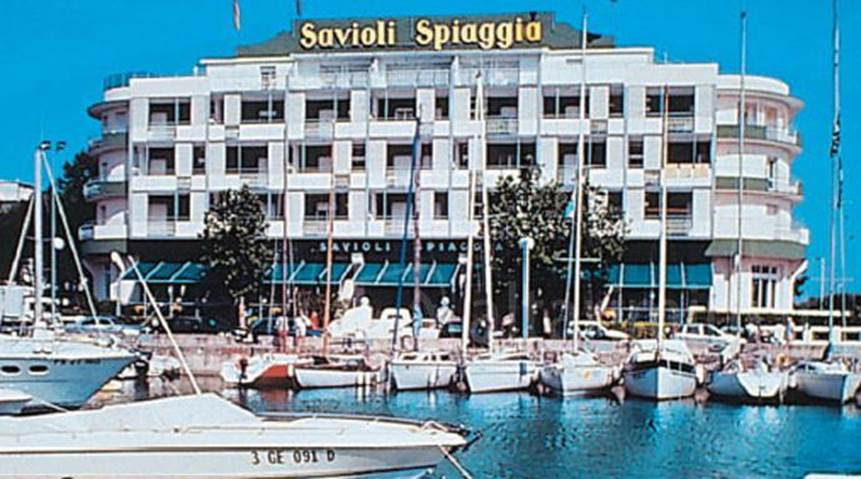
The case of Hotel Savioli Spiaggia in Riccione is emblematic. Not because it is merely the story of a closed hotel, but because it clearly illustrates a recurring dynamic in the Italian hospitality market: assets with strong locations, historical identity and significant tourism potential that gradually shift from being real estate opportunities to complex, financially risky and operationally difficult investments.
Hotel Savioli Spiaggia was built in 1933 as the Grand Hotel Savioli Spiaggia. In the post-war period, it became one of the symbols of Riccione’s hospitality industry. Then came decline, closure around 2007, years of abandonment, demolition and reconstruction plans, legal appeals, redevelopment proposals, the condhotel model, suites, spa facilities, a conference centre and a possible move towards the upper end of the market.
As of 2026, according to the dossier analysed, the redevelopment process still appears to be awaiting final implementation, despite several administrative and planning steps having already taken place.
This case is not just about Riccione.
It is about a central issue in the hotel investment market: a hotel is not worth what it could theoretically become, but what it can realistically convert into operating income within sustainable timeframes, costs and constraints.
A closed hotel is not a hotel on pause.
It is immobilised capital that consumes value.
Hotel value is not the value of the walls
One of the most common mistakes in hotel investment is valuing a hotel as if it were merely a real estate asset.
In traditional real estate, location, size, planning status and development potential may account for a substantial part of the value.
In hospitality, that is not enough.
A hotel is a business.
It is not just a building.
It is not just a permitted use.
It is not just a surface area to be refurbished.
A hotel creates value only if it can generate revenue, margins, reputation, occupancy, recurring demand and sustainable cash flows.
For this reason, a historic seaside hotel is not automatically more valuable simply because it has an important past or a prestigious location. It becomes more valuable only if that history and location can be converted into a competitive hotel product.
The distinction is decisive:
a property may have asset value; a hotel must have business value.
And business value depends on very specific questions:
-
what hotel product will be created?
-
which demand segments will it capture?
-
what average daily rate can it realistically sustain?
-
what occupancy level is achievable?
-
what EBITDA can it generate?
-
what capex will be required?
-
how long will the investment take to pay back?
-
will the project be bankable?
-
who will operate the hotel?
-
under which model: direct management, lease, management contract, franchise or condhotel?
Without clear answers, value remains an assumption.
And in the hotel market, assumptions do not finance construction sites.
For further insights into hotel transactions, investment cases and market dynamics, visit the Investimenti Alberghieri blog.
Time is the first multiplier of risk
In the case of Hotel Savioli Spiaggia, time is a central variable.
A prolonged closure does not merely create physical deterioration. It produces economic devaluation, reputational damage, higher perceived risk and greater financial complexity.
Every year of inactivity changes at least three fundamental variables.
The first is capex.
A building that has been closed for years requires increasingly extensive intervention: systems, façades, rooms, public areas, safety standards, fire prevention, accessibility, energy efficiency, technology, back-of-house areas, kitchens, laundries, lifts, furniture and operating equipment.
The more time passes, the harder it becomes to estimate the real cost of reopening.
The second is the expected return.
An investor does not only assess how much money can be made. An investor assesses how uncertain the path is to achieving that return. If timelines are long, procedures are complex, authorisations are not fully settled and final costs are difficult to predict, the required return increases.
And when the required return increases, the current value of the asset decreases.
The third variable is bankability.
A bank does not finance potential. It finances a sustainable plan, supported by solid authorisations, measurable costs, credible timelines, adequate equity and future cash flows consistent with the debt structure.
This is why a hotel that has been closed for many years may still have significant theoretical value, but a much lower financeable value.
This is a distinction many owners underestimate.
The seller tends to reason on the basis of the imagined future value.
The investor reasons on the basis of current value adjusted for risk.
The bank reasons on the basis of debt sustainability.
The operator reasons on the ability to generate operating margin.
When these four perspectives do not align, the transaction stalls.
Legal disputes do not only affect rights. They affect value.
In the case of Hotel Savioli Spiaggia, one of the most significant issues concerns the administrative dispute linked to the demolition and reconstruction plans.
In 2011, the Regional Administrative Court of Emilia-Romagna upheld the appeal relating to the project, resulting in the annulment of the building permit. The matter also generated compensation claims and further procedural complexity.
For a hotel investor, this point is fundamental.
An urban planning dispute is not only a legal problem. It is an economic variable.
It affects timing.
It affects the cost of capital.
It affects bankability.
It affects perceived risk.
It affects the future liquidity of the asset.
A project blocked for years does not preserve its value intact. It consumes it.
In the meantime, construction costs change, regulations change, markets change, guest expectations change, distribution models change, interest rates change and banks’ willingness to finance complex transactions changes.
In a serious hotel due diligence process, therefore, it is not enough to ask whether a planning title exists.
One must ask whether that title is stable, defensible, consistent with the business plan and sufficient to bring the hotel back to market within a timeframe capable of remunerating the capital invested.
The right question is not:
“Can it be built?”
The right question is:
“Can it be built soon enough, with predictable costs and with a product capable of generating income?”
Authorised does not mean sustainable
One of the most dangerous mistakes in hotel investment is confusing authorisation with feasibility.
A project may be authorised but not sustainable.
It may be possible from a planning perspective but financially fragile.
It may be architecturally attractive but operationally weak.
Authorisation tells you what can be done.
Feasibility tells you whether it is worth doing.
In the hotel sector, that difference is enormous.
A project must bring together acquisition price, technical costs, planning charges, demolition, reconstruction, furniture, fixtures and equipment, pre-opening costs, launch marketing, initial working capital, cost of debt, stabilisation period, commercial risk and operating model.
If even one of these variables is underestimated, the expected return decreases.
If several of them are underestimated, the transaction can shift from opportunity to financial trap.
The Savioli Spiaggia case is particularly interesting because it shows the gap between the asset’s potential and the complexity of execution.
And it is precisely within that gap that value is often lost.
The condhotel model can help, but it cannot save a weak project
Among the redevelopment options discussed for Savioli Spiaggia, the condhotel model also emerged. This model combines hotel operations with privately owned units, alongside suites, services, a conference centre and an evolved hospitality component.
The condhotel model can be useful, especially in complex hotel regeneration projects. It can help support the financial structure of the intervention, improve the overall balance of the transaction and create a more articulated asset enhancement strategy.
But one point must be clear: the condhotel is not a magic formula.
It does not replace the business plan.
It does not eliminate operating risk.
It does not automatically make a project bankable.
It does not, on its own, turn an inactive property into a profitable hotel.
To work properly, a condhotel requires clear governance, solid operating rules, a correct separation between the hotel component and the real estate component, consistent service standards, a coherent brand, effective distribution and a credible commercial plan.
Otherwise, the risk is that the real estate component is used to compensate for the weakness of the hotel project.
But a hotel does not become sustainable because part of it is sold.
It becomes sustainable if the product works, if the operation generates margins, if the market recognises the positioning and if governance remains solid over time.
Luxury is not a construction category
In large hotel redevelopment projects, a common temptation often emerges: moving upmarket.
Five stars, suites, spa facilities, high-end restaurants, conference space, premium services.
These elements may be valid. But they are not enough.
Luxury is not a construction category.
It is an operating model.
An upper-upscale or luxury hotel requires qualified staff, service standards, reputation, international distribution, commercial investment, technology, cost control, management culture and the ability to maintain high rates over time.
It is not enough to build more attractive rooms.
You must create a system capable of selling those rooms at the right price and with adequate margins.
In the case of a historic hotel redevelopment, moving upmarket may be the right strategy, but only if it is supported by solid numbers.
The question is not:
“Can we turn it into a luxury hotel?”
The question is:
“Will the market recognise rates high enough to remunerate the capital invested?”
That is the difference between an architectural project and a hotel investment.
Real value comes from governance, not renderings
In the hotel industry, renderings can create expectations.
But they do not create value.
Value is created when the project is governed.
Governing a hotel investment means defining, before the intervention begins:
-
concept;
-
positioning;
-
operating model;
-
brand;
-
commercial strategy;
-
pricing strategy;
-
staffing requirements;
-
forecast profit and loss;
-
break-even point;
-
return on capital;
-
financial structure;
-
authorisation risk;
-
pre-opening plan;
-
exit or hold strategy.
Without governance, redevelopment remains incomplete.
Many Italian hotel assets suffer precisely from this problem: they are interesting properties, but they lack strategic and operational direction.
The real transition is not from old building to new building.
The real transition is from inactive property to functioning hotel business.
The lesson for investors, banks and owners
The Savioli Spiaggia case shows that a hotel asset must be assessed across several layers.
1. Real estate value
Location, size, physical condition, permitted use and planning potential.
2. Authorisation value
Permits, constraints, appeals, administrative stability, approval timelines and risk of opposition.
3. Business value
Rooms, services, departments, positioning, demand, seasonality and operating model.
4. Financial value
Capex, sustainable debt, required equity, IRR, payback period, DSCR and sensitivity analysis.
5. Operating value
Operator, brand, management contract, lease, franchise and management control.
6. Reputational value
History, public perception, relationship with the local area and ability to relaunch the image of the asset.
A professional investor cannot simply ask:
“How much does it cost to buy?”
They must ask:
How much capital is really needed to make it competitive again?
How long will it take to reopen?
What EBITDA can it produce at maturity?
What level of risk must be discounted today?
Who will govern the project?
Which model makes the investment bankable?
The hotel guides by Roberto Necci explore these themes in depth: hotel valuation, business distress, revenue management, operating agreements, asset management and hotel value creation models.
Why this case concerns the entire Italian hotel market
Savioli Spiaggia is not an isolated case.
Across Italy there are many historic hotels, closed properties, underused tourism assets, family-run hotels without generational transition, financially distressed assets, conversion opportunities and owners who still hold real estate value but no longer have a hotel project.
The market, however, no longer rewards generic potential.
It rewards execution capability.
In the past, it may have been enough to say:
“It is a hotel in a good location.”
Today, that is no longer enough.
Investors require numbers.
Banks require sustainability.
Operators require clear management models.
The market requires product.
The territory requires impact.
Guests require experience.
For this reason, every hotel transaction must be read as a balance between real estate, finance and operations.
When one of these three pillars is missing, value weakens.
When all three are missing, the asset remains stuck.
The real question: what is a future risk worth today?
The most important point is this: in hotel investment, future risk is discounted today.
If a hotel requires long timelines, complex authorisations, high capex, uncertain governance and an undefined operating model, the market does not wait until reopening to adjust the value.
It adjusts it immediately.
It adjusts it in the price.
It adjusts it in the amount of debt available.
It adjusts it in the required return.
It adjusts it in the willingness of operators to commit.
It adjusts it in the caution of investors.
That is why a historic grand hotel can lose value before it even reopens.
Not because it has no potential.
But because potential, when it is not executable, becomes risk.
And in a professional market, risk always has a price.
Potential is not value until it becomes income
Hotel Savioli Spiaggia remains an emblematic case because it brings together many of the variables that determine the success or failure of a hotel investment.
History.
Location.
Abandonment.
Legal disputes.
Redevelopment.
Condhotel.
Luxury.
Governance.
Finance.
Time.
Its lesson is clear: a grand hotel can lose value even before reopening if the path back to market becomes too long, too uncertain or financially too fragile.
In hospitality, the winner is not the investor who imagines the most ambitious project.
The winner is the one who can turn a property into a business capable of producing margins.
Because a hotel is not worth what it promises.
It is worth what it can generate.
And between promise and value creation, there is only one word:
execution.
Do you own a closed hotel, a hospitality asset to be redeveloped, a distressed property or an investment opportunity to assess before acquisition?
Contact Hotel Management Group, an operational and strategic partner for owners, investors and hotel operators.
Hotel Management Group supports hotel value creation projects through an integrated approach covering:
-
asset analysis;
-
financial and economic assessment;
-
business planning;
-
repositioning;
-
revenue management;
-
management control;
-
operating models;
-
investment advisory;
-
turnaround and relaunch of complex hotel assets.
Before investing in a hotel, measure the real risk.
Before redeveloping it, build the operating model.
Before imagining future value, verify whether that value can actually be produced.
Request a strategic assessment from Hotel Management Group.
Roberto Necci - r.necci@robertonecci.it