Some hotels simply change their name.
Others reveal how an entire market is evolving.
Hotel Midas in Rome belongs to the second category.
Its story is not merely the story of a large congress hotel built along Via Aurelia. It is the story of a hospitality asset that moved through politics, hotel chains, financial stress, credit recovery, international investors, rebranding, capital expenditure and industrial repositioning.
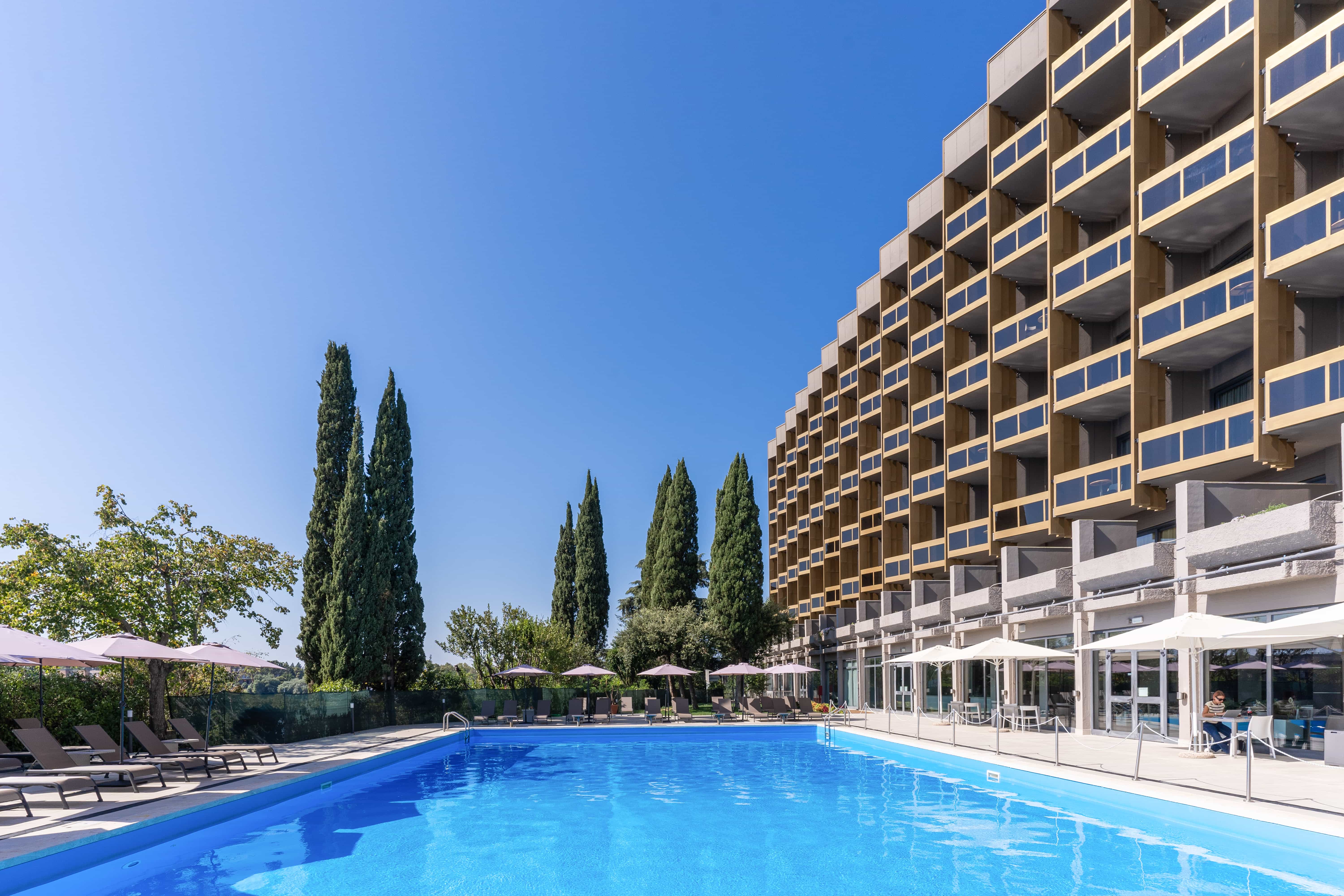
Today, the former Hotel Midas is marketed as Barceló Roma, a recently renovated four-star hotel with 352 rooms, extensive event facilities and a clear business and MICE positioning. Barceló presents the property as a hotel designed for both leisure and business demand, with 17 meeting rooms and total event capacity of up to 1,300 people. (Barceló)
For Investimenti Alberghieri, the Hotel Midas case matters because it demonstrates a principle many owners still underestimate: hotel value does not sit in the walls, the room count or the history of the building. Hotel value is created when real estate, operations, capital, brand and governance are aligned.
Hotel Midas is not just a hotel.
It is a lesson in how value is lost, rebuilt and ultimately repriced.
Why the Hotel Midas case matters
The easy interpretation is this: Barceló acquired a hotel in Rome, renovated it and relaunched it under a new brand.
That is chronologically correct, but strategically incomplete.
The better interpretation is this: Hotel Midas is a case study in hospitality value reconstruction through capital, brand, management, capex and commercial repositioning.
This is not just about refurbished rooms, a redesigned lobby or a new logo on the façade. It is about a historic hotel asset that, at a certain point in its life cycle, could no longer be analysed as a conventional operating hotel. It had to be analysed as the intersection of:
-
real estate;
-
debt;
-
operating performance;
-
MICE potential;
-
international branding;
-
Rome’s demand structure;
-
capital expenditure;
-
exit value;
-
stabilized income generation.
This is the analytical lens of Investimenti Alberghieri: hotels should not be viewed as isolated accommodation businesses, but as complex investment assets where ownership, management and finance must converge.
From Midas Palace to Barceló Roma: an asset that changed skin several times
Available sources indicate 1973 as the year the hotel was built. Pambianco Hotellerie, reporting on the 2023 transaction, described the Midas as a four-star hotel in Rome’s Aurelio district and noted that it had undergone a major redevelopment in 2021, including façade renewal, energy-efficiency works and the installation of a photovoltaic system. (Pambianco Hotellerie)
Over time, the asset moved through several identities: Midas Palace, Jolly Hotel Midas, NH Midas, Wyndham Rome Midas and, today, Barceló Roma.
This sequence should not be read as a simple list of name changes. It should be read as a series of attempts, across different market cycles, to give the asset a coherent commercial role.
A hotel of this scale cannot live on inertia. It needs distribution. It needs organised demand. It needs standards. It needs a commercial model capable of supporting a high fixed-cost structure.
Hotel Midas was never a small independent property able to survive on spontaneous demand, local relationships and family-style management. It has always been a large hospitality and congress asset.
And large assets, if they are not actively governed, become fragile very quickly.
The symbolic capital: the “Midas turning point”
Hotel Midas also occupies a specific place in Italy’s political memory. It is associated with the so-called “svolta del Midas”, the 1976 “Midas turning point” linked to the rise of Bettino Craxi as leader of the Italian Socialist Party. Il Sole 24 Ore recalled the hotel as a place where a page of Italy’s republican history was written. (Il Sole 24 Ore)
This is not folklore.
It is symbolic capital.
Some hotels have only real estate value. Others also have narrative value. The Midas had both. It was part of Rome’s political, institutional, union and congress landscape. It was not merely a place to sleep; it was a place where meetings were held, balances were negotiated and public life passed through.
But this is the first major lesson: historical reputation does not automatically protect economic value.
A hotel can have memory, recognition and visibility. Yet if the product ages, if management fails to evolve, if the market changes and if the financial structure becomes heavy, symbolic capital is not enough.
History may support positioning.
It cannot replace governance.
When a hotel stops being just an operating business and becomes a credit issue
The most instructive chapter in the recent history of Hotel Midas is the one linked to financial stress.
In 2020, Guber Banca stated that its real estate division had supported the US investor Värde Partners in taking over Hotel Midas through the credit it held. The development plan involved approximately €9 million for the enhancement and relaunch of the property, including a new hotel licence, architectural and structural upgrades, compliance works and a long-term lease to Zeus International, which opened the hotel as Wyndham Rome Midas.
This is where the case becomes especially important.
When a hotel is taken over through a credit position, the issue is no longer only operational. It becomes financial, strategic and asset-backed.
The hotel is no longer merely a business that needs better management. It becomes an asset to be recovered. A collateral position to be enhanced. Income to be rebuilt. A product to be made bankable and sellable again.
The sequence is typical of distressed hospitality real estate:
-
the asset enters financial tension;
-
credit becomes the lever of control;
-
licence, compliance, maintenance and product are addressed;
-
a specialised operator or tenant is introduced;
-
a recognisable brand is restored;
-
income is rebuilt;
-
the asset is prepared for a new market phase.
This is the central point.
In some cases, a hotel crisis cannot be solved with more marketing, more OTA visibility or a light refurbishment. It can only be solved by redesigning the entire relationship between property, debt, management and market demand.
Värde, Zeitgeist, Barceló: three stages, one industrial logic
After the Värde-Guber-Wyndham phase, Zeitgeist Asset Management Italia acquired Hotel Midas in 2023. Pambianco Hotellerie reported that the property passed from Värde Partners to Zeitgeist, describing Zeitgeist as a real estate developer and asset manager active across Germany, Central and Eastern Europe and Italy.
This confirmed the increasingly financial and real estate-driven nature of the asset.
Hotel Midas was no longer just an operating hotel. It had become an asset to be managed within a capital markets logic.
Then came the most visible stage. In 2024, Barceló Hotel Group announced an investment of approximately €60 million for the acquisition and subsequent renovation of the hotel. Trade sources described the property as a four-star hotel of around 350 rooms on Via Aurelia, previously owned by Alpine Capital, with the goal of repositioning it as one of Rome’s leading events and congress hotels.
Legal-sector reporting described the transaction as the acquisition by Barceló of 100% of Devar Midas, the company owning the Midas Palace Hotel, while FairWise assisted the seller, Alpine Capital.
This is where the case moves to its final strategic level.
Barceló did not enter merely as a nameplate. It entered as a player capable of giving the asset a new industrial destination: renewed product, international distribution, operating standards, MICE positioning, commercial strength and renewed market legibility.
The point is not that a foreign hotel group bought an Italian hotel.
The point is that a complex asset, after a period of financial stress, was brought back into an integrated logic of ownership, brand and management.
That is value creation.
Strategic timeline of Hotel Midas
| Period | Event | Advisory interpretation |
|---|---|---|
| 1973 | Hotel built | Birth of a large congress-oriented asset on Via Aurelia |
| 1976 | “Midas turning point” | Creation of symbolic and reputational capital |
| 1980s-2000s | Midas Palace / Jolly Hotel Midas | Consolidation as a Rome congress hotel |
| 2007-2014 | NH Midas phase | Integration into an international chain logic |
| 2020 | Värde, Guber, Zeus, Wyndham | Credit workout and operational relaunch |
| 2023 | Zeitgeist acquisition | Real estate asset management phase |
| 2024 | Barceló acquisition | Industrial investment and repositioning |
| 2026 | Barceló Roma | New MICE, business and urban leisure platform |
This timeline shows one thing clearly: the Midas was not relaunched in a single step.
It was progressively returned to the market through several phases, each with a different function.
Credit enabled recovery.
Capex enabled repositioning.
Brand enabled commercial legibility.
Governance rebuilt the value thesis.
The €60 million question: why it is not just a price
The €60 million figure is the strongest number in the entire transaction. But it must be interpreted correctly.
It should not automatically be read as a pure real estate valuation. Trade sources describe it as an overall investment for acquisition and subsequent renovation. That means the number likely includes the purchase price, capital expenditure and the costs required to bring the asset to a new standard. (Hotel Domani)
From an advisory perspective, this is precisely what makes it interesting.
It means Barceló did not simply buy what the Midas was.
It invested in what the Midas could become.
That distinction is decisive.
A sophisticated investor does not only look at the current value of a hotel. It looks at the spread between current value and potential value. That spread depends on very concrete variables:
-
achievable ADR uplift;
-
stabilized occupancy;
-
operating efficiency;
-
MICE revenues;
-
F&B contribution;
-
capex requirements;
-
cost of debt;
-
brand strength;
-
exit liquidity;
-
management quality;
-
normalized EBITDA potential.
The value, therefore, was not only in the walls.
It was in the possibility of making a complex hospitality machine productive again.
Transitional accounts are not asset value
One of the most common mistakes in transactions of this kind is to read the profit and loss account of a transition year as though it represented the stabilized performance of the asset.
That is technically weak.
When a hotel is going through acquisition, works, change of control, renovation, repositioning and operational discontinuity, the P&L captures the transition more than the potential.
The correct analysis should ask different questions:
-
What EBITDA can the hotel produce at stabilization?
-
What occupancy can be sustained after repositioning?
-
What ADR is realistic under the new brand?
-
What share of revenue will come from MICE?
-
What margin will events, meetings and banqueting generate?
-
What is the normalized operating cost base?
-
What terminal value can the asset command after ramp-up?
In hospitality real estate, transition-year numbers rarely tell the full story of value.
They usually tell the cost of change.
Value emerges later, when the new product meets the market.
MICE as the core of the industrial thesis
The new Barceló Roma has 17 meeting rooms and a total capacity of up to 1,300 people. Barceló describes the spaces as multipurpose and multifunctional, suitable for conventions, kick-offs, research meetings, seminars, training, networking and workshops. It also highlights the hotel’s connectivity to Rome, Fiumicino and Ciampino airports, Roma Aurelia railway station and the GRA ring road.
This clearly indicates the heart of the transaction.
The core thesis is not only urban leisure.
It is MICE.
A hotel of this size, in this location, cannot rely only on individual room sales. It must work across a more complex demand structure:
-
groups;
-
corporate demand;
-
congresses;
-
events;
-
meetings;
-
incentives;
-
organised tourism;
-
business travel;
-
banqueting;
-
F&B linked to events.
MICE is powerful because it can stabilize occupancy, generate ancillary revenue and monetize spaces that would otherwise remain underused.
But MICE is not a room with chairs and a projector.
It is an industrial discipline.
It requires dedicated sales, fast quotation processes, lead management, corporate databases, dynamic pricing, logistics, technology, operational coordination, banqueting quality, reputation management and the ability to convert events into margin.
Many hotels have meeting rooms.
Far fewer have a real MICE model.
The difference is not real estate.
It is management.
The true lesson: hotel value is not inherited
The Midas had history. It had scale. It had visibility. It had political memory. It had congress potential. It had a functional location.
And yet that was not enough to avoid financial stress and ownership redefinition.
This is the most important lesson.
Hotel value is not inherited. It must be continuously rebuilt.
A hotel may have been important in the past and still become fragile in the present. It may have a known name but an uncompetitive product. It may have a large room count but an unsustainable cost base. It may have meeting space but no real MICE strategy. It may have a good location but weak commercial positioning.
The Midas shows that history helps, but does not save.
Scale helps, but is not enough.
A brand helps, but does not replace management.
Capex helps, but without an industrial thesis it can become mere spending.
The advisor’s matrix: how to read a hotel before it loses value
The Hotel Midas case offers a useful matrix for analysing any mature hospitality asset.
1. Product
Is the hotel still aligned with demand?
Do the rooms, common areas, F&B, meeting spaces and guest experience justify the target rate?
2. Positioning
Does the market understand why this hotel should be chosen?
Or has the property become a generic product sold mainly through discounts and intermediaries?
3. Management
Does management govern revenue, costs, reputation, staff, maintenance and distribution as one integrated system?
Or does each area operate separately?
4. Finance
Is debt sustainable relative to the hotel’s real cash-generating capacity?
Is capex financeable?
Does the asset generate enough income to protect value?
5. Brand
Does the brand bring demand, reputation and commercial channels?
Or is it merely a sign above the entrance?
6. Exit value
Could the hotel be sold to a professional investor?
Are the numbers readable, governance clear, documentation organised and potential demonstrable?
These questions should be asked before a crisis, not after.
When a hotel enters distress, the problem is rarely sudden. It is usually the result of years in which value was slowly consumed without being properly measured.
What Hotel Midas teaches hotel owners
For owners, the Hotel Midas case sends a direct message: owning a hotel does not mean governing its value.
Real estate ownership is only one component. Value is created when the building generates sustainable income, has clear positioning, maintains adequate standards, attracts profitable demand and remains liquid in the investment market.
A hotel owner should ask periodically:
-
Is my hotel still competitive?
-
Is my product aligned with the rate I want to charge?
-
Is my capex planned or merely reactive?
-
Is my operator creating value or just occupancy?
-
Does my distribution protect margin?
-
Is my P&L readable for an investor?
-
Is my asset value supported by income, or only by expectation?
The Midas proves that an asset can be recovered.
But it also proves that recovery requires capital, time, expertise and strong strategic direction.
Preventing value erosion is cheaper than rebuilding value after it has been impaired.
What Hotel Midas teaches investors
For investors, the Midas confirms that distressed hotels are not necessarily bad assets.
They can be opportunities, provided certain conditions exist:
-
recoverable location;
-
critical mass;
-
potential demand;
-
rebranding potential;
-
sustainable capex;
-
operational upside;
-
manageable financial structure;
-
adequate management;
-
credible exit market.
The mistake is to confuse a low price with an opportunity.
A distressed hotel is attractive only when there is a credible recovery thesis. Without that thesis, a low price is often just the first instalment of future losses.
In the Midas case, the thesis existed: scale, MICE, Rome, international brand, product renewal and repositioning potential.
This was not a simple speculative deal.
It was a complex value reconstruction operation.
What Hotel Midas teaches hotel operators
For hotel operators, the Midas is a reminder that management cannot be limited to daily operations.
Managing a hotel means protecting and increasing the value of the asset.
That requires:
-
advanced revenue management;
-
management control;
-
structured sales;
-
planned maintenance;
-
service standards;
-
margin culture;
-
digital reputation management;
-
staff organisation;
-
the ability to communicate with owners, banks and investors.
An operator that produces occupancy but not margin is weakening the asset.
An operator that improves the P&L, protects the product and builds qualified demand is increasing the underlying real estate value.
This distinction will become increasingly important in the Italian hotel market.
Why many Italian hotels should study the Midas case
The Midas case is not only about Rome.
It is not only about Barceló.
It is not only about large hotels.
It concerns every mature hotel with a strong past and a weak strategic thesis.
Many Italian hotels live in a similar condition, even if less visibly:
-
ageing buildings;
-
postponed capex;
-
revenues growing more slowly than costs;
-
excessive dependence on intermediated distribution;
-
compressed margins;
-
difficulty retaining staff;
-
confused positioning;
-
ownership focused on the building more than the business;
-
weak reporting;
-
perceived value higher than financeable value.
These hotels are not necessarily destined to decline.
But they must be analysed with professional tools.
For deeper work on management, revenue, control, crisis situations, contracts, investment and hotel value creation, Roberto Necci’s hotel management guides provide a useful knowledge base for owners, managers and investors.
The value formula: not rooms, but governance
The Hotel Midas case can be summarised in a simple formula:
Hotel value = asset + management + brand + demand + capital + governance.
If one of these elements is missing, value weakens.
A good building without management remains underused.
Good management without capex runs into obsolescence.
A strong brand without product can damage reputation.
Potential demand without sales does not become revenue.
Capex without strategy does not generate return.
Ownership without governance does not control the asset’s destiny.
The Midas is interesting because, in its recent history, all these elements came into play.
First misaligned.
Then progressively recomposed.
That recomposition is where value is created.
The real warning for the Italian hotel market
The Hotel Midas case sends a clear warning.
A hotel can lose value long before the market notices.
It loses value when the product is not updated.
It loses value when debt is not aligned with cash flow.
It loses value when management produces occupancy but not margin.
It loses value when capex is postponed.
It loses value when the brand no longer supports positioning.
It loses value when ownership looks at the building but not the business.
Then, when the problem becomes visible, recovery requires far more capital, expertise and time.
This is the point many owners should understand: value is not protected when it is already impaired. It is protected earlier, through governance, control and industrial vision.
Conclusion: Hotel Midas is a mirror for the hotel market
The rebirth of Hotel Midas as Barceló Roma should not be read as a simple real estate transaction.
It is a mirror.
It shows what can happen to a large hotel when the product ages, value weakens and finance becomes the central actor. But it also shows what can happen when capital, brand, management and positioning are realigned.
Historic hotels are not saved by nostalgia.
Large hotels are not relaunched by refurbishment alone.
Distressed hotels are not recovered by unguided liquidity.
Complex hotels need direction.
The Midas proves that value can be lost, but also rebuilt.
On one condition: the hotel must be treated for what it really is — not a building with rooms, but a real estate-backed operating business.
For owners, investors and operators, the decisive question is no longer:
What is my hotel worth today?
The real question is:
How much value am I leaving unexpressed because the right governance is missing?
Anyone who owns or manages a hotel should look at the Midas not as a distant case, but as a signal. Every hospitality asset, sooner or later, must decide whether to remain trapped in its past or build a new value thesis.
If you own, manage or are evaluating a hotel that needs repositioning, value enhancement or a return to profitability, visit HotelManagementGroup.it and start a strategic review of your hotel asset.
Hotel value is not protected through improvisation. It is built through method, control, positioning and governance.
Roberto Necci - r.necci@robertonecci.it