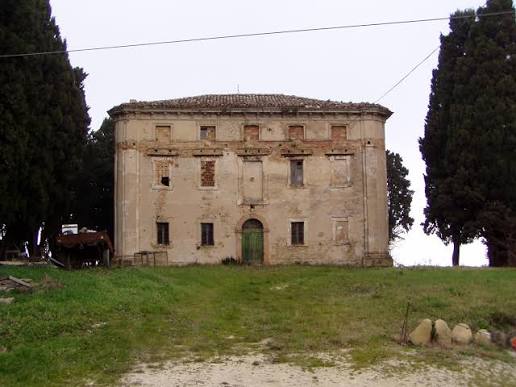
A hotel can lose value without losing guests.
It can lose value through poorly organised shifts, badly handled complaints, absent procedures, high turnover, weak training, departments that fail to communicate, and the daily fatigue of a team that is not properly governed.
In the hotel industry, much attention is usually given to location, rooms, CapEx, ADR, RevPAR, EBITDA, contracts, rents, debt, and real estate value. These are critical variables. But they are not enough.
Because a hotel is not simply a property that generates revenue. It is a human-intensive operating machine in which people, processes, procedures, and organisational wellbeing determine guest experience, cost stability, reputation, margins, and ultimately the value of the asset.
People are not merely a cost.
They are operating capital.
Processes are not internal bureaucracy.
They are economic infrastructure.
Wellbeing is not an accessory issue.
It is operational continuity, perceived quality, and EBITDA protection.
This is why, in advanced hotel investment, the question cannot be only: how much revenue does this hotel generate?
The more important question is: how much value can it truly convert into performance through the quality of its organisation?
The most common mistake: valuing the hotel while underestimating the organisation
Many investors analyse a hotel by starting from the most visible elements:
location;
number of rooms;
category;
physical condition;
revenue;
profitability;
rates;
occupancy;
contracts;
required CapEx;
real estate value.
These elements matter. But they tell only part of the story.
A hotel is a daily operating organisation made of people, shifts, responsibilities, standards, controls, procedures, communication, leadership, and service culture.
The mistake is to treat this dimension as something to be addressed after the investment.
First, the hotel is acquired.
Then it is managed.
Then, eventually, the team is reorganised.
This sequence is weak.
In reality, organisational quality should be assessed before the investment, because it directly affects the sustainability of EBITDA and the true value potential of the asset.
A hotel may look attractive in the numbers, while hiding deep inefficiencies in its staffing structure.
It may show strong revenue, but achieve it with excessive labour costs.
It may have good reviews, but depend on a few irreplaceable key people.
It may generate EBITDA, but through processes that are not replicable.
It may have growth potential, but lack a team capable of supporting it.
In the hotel sector, organisation is not an internal matter.
It is an integral part of asset value.
The Human & Process Hotel Value Matrix
To assess the real impact of people, processes, and wellbeing on hotel value creation, an integrated reading is required.
It is not enough to ask whether the hotel has “good people” or “internal procedures”.
The real question is whether the organisational structure is capable of supporting revenue, margins, reputation, and growth.
The Human & Process Hotel Value Matrix reads five critical dimensions.
1. People Quality
The first dimension is the quality of people.
Not only technical skills, but also attitude, reliability, relational ability, autonomy, customer orientation, leadership, and fit with the hotel’s positioning.
A business hotel requires speed, precision, corporate communication, and efficient time management.
A boutique hotel requires personalisation, aesthetic sensitivity, attention to detail, and storytelling ability.
A leisure resort requires relational energy, coordination, peak-period management, and a strong focus on experience.
The quality of the team must be aligned with the product the hotel promises to the market.
A team that is not aligned with the positioning weakens perceived value.
2. Process Discipline
The second dimension is process discipline.
A hotel can operate thanks to the experience of its people. But if that operating knowledge is not codified, measurable, and replicable, the asset remains fragile.
Process Discipline concerns operating procedures, departmental standards, controls, handovers, internal communication, preventive maintenance, complaint management, housekeeping, purchasing, revenue management, and reporting.
The point is not to create bureaucracy.
The point is to reduce improvisation, errors, dependence on individual people, and loss of control.
A hotel without processes can operate.
A hotel with solid processes can be governed.
3. Operational Wellbeing
The third dimension is operational wellbeing.
In the hotel sector, wellbeing is not just workplace climate. It is the sustainability of daily work.
Poorly designed shifts, excessive workloads, weak communication, absent leadership, interdepartmental conflicts, and lack of recognition generate stress, turnover, errors, and quality loss.
Organisational wellbeing is not a “soft” cost.
It is an economic condition that protects service continuity, team stability, reputation, and margins.
A stable team produces more consistent service.
More consistent service produces better reviews.
Better reviews support pricing and conversion.
Pricing and conversion support asset value.
4. Performance Governance
The fourth dimension is performance governance.
A hotel organisation must be measurable.
It is not enough to say that “the department works” or that “the team is good”. Concrete indicators must be read:
productivity by department;
labour cost as a percentage of revenue;
turnover;
absenteeism;
room cleaning times;
response times;
complaints;
reviews;
upselling;
direct sales;
maintenance costs;
food cost;
budget-to-actual variances.
Performance governance connects people and processes to economic results.
Without indicators, management becomes perception.
With indicators, it becomes control.
5. Asset Impact
The fifth dimension is the impact on asset value.
People, processes, and wellbeing should not be analysed only as operational variables. They must be read in terms of their effect on reputation, EBITDA, bankability, operating risk, continuity of cash flows, and final asset value.
An organised hotel is more readable.
A readable hotel is more financeable.
A financeable hotel is more attractive to investors, banks, operators, and potential buyers.
In the hotel investment market, anything that reduces opacity and risk increases value.
People as operating capital
In financial statements, staff are usually read as a cost.
In the strategic governance of a hotel, they should also be read as operating capital.
People affect perceived quality, reputation, sales capability, complaint management, cleanliness, maintenance, departmental efficiency, productivity, cost control, and guest loyalty.
A skilled receptionist can increase conversion, upselling, and satisfaction.
A competent executive housekeeper can improve standards, timing, and quality control.
An effective maintenance technician can reduce breakdowns, out-of-order rooms, complaints, and corrective costs.
A capable revenue manager can materially change the profitability of the asset.
A strong general manager can transform a disordered hotel into a readable operating machine.
People do not merely execute tasks.
They interpret the product.
They protect reputation.
They reduce operating risk.
They turn the commercial promise into a real experience.
This is why, in a hotel, staff selection is not an administrative function. It is a strategic decision.
Poor selection increases turnover, training costs, operating errors, internal conflict, negative reviews, and loss of control.
Strong selection increases stability, quality, productivity, accountability, and the ability to grow.
Staff selection as an investment lever
In the context of hotel investment, staff selection should be treated as a lever of asset value creation.
This means moving beyond the traditional approach based only on previous experience, availability, cost, and urgency to fill the role.
The question should not be only: who can cover this position?
The right question is: which profile can increase the hotel’s ability to create value?
For every key role, at least four dimensions must be assessed.
The first is technical competence: departmental knowledge, operating ability, experience, precision, and autonomy.
The second is alignment with positioning: a business hotel, a boutique hotel, a resort, an independent property, or an aparthotel requires different behaviours, language, and priorities.
The third is the ability to work within processes: being individually capable is not enough; the person must be able to operate within a system.
The fourth is relational maturity: hospitality is made of pressure, guests, unexpected events, shifts, interdependencies, and continuous communication.
A wrong hire in a critical position can damage an entire department.
The right hire can raise the level of the organisation.
In hotels, the cost of poor selection is not just the salary paid unnecessarily.
It is the value lost in quality, time, reputation, and margin.
Processes and procedures: the difference between an operating hotel and a governable hotel
A hotel can function even without formalised processes.
Many properties do.
The problem is that functioning does not mean being governable.
A hotel without clear processes depends on people’s habits.
A hotel with solid processes depends on a system.
For an investor, the difference is decisive.
In a governable hotel, the main activities are codified, measurable, and replicable:
check-in;
check-out;
complaint management;
housekeeping;
maintenance;
purchasing;
cost control;
supplier management;
revenue management;
room control;
cleaning standards;
shift planning;
training;
reporting;
review management;
emergency procedures;
communication between departments.
This does not mean turning the hotel into a rigid, bureaucratic organisation.
It means creating an operating system that reduces improvisation, errors, dependence on individual people, and loss of control.
Procedures are not designed to complicate work.
They are designed to make it clearer, more measurable, and more stable.
A hotel without procedures can be brilliant on some days and weak on others.
An organised hotel produces more consistent standards.
And in hospitality, consistency is as valuable as excellence.
Intelligent standardisation
In hospitality, the word “standardisation” is sometimes perceived negatively, as if it meant loss of authenticity.
That is a mistake.
Intelligent standardisation does not remove the personality of the hotel. It removes confusion.
An independent hotel can preserve identity, style, relationship, and flexibility while operating with solid procedures. In fact, procedures often free up time and energy to improve the guest experience.
Standards define what should not be left to chance:
response times;
room quality;
bathroom control;
complaint handling;
internal communication;
opening and closing shifts;
revenue control;
cost verification;
safety;
preventive maintenance;
operating priorities.
True professionalism is not improvising well.
It is making what works replicable.
A hotel that depends only on individual talent is fragile.
A hotel that turns talent into method becomes scalable.
This is especially important for hotel groups, multi-property operations, turnarounds, and assets to be repositioned or enhanced.
Organisational wellbeing: not welfare, but continuity of value
Staff wellbeing is often treated superficially, as a matter of workplace climate, benefits, or ancillary initiatives.
In hospitality, organisational wellbeing has a much deeper meaning.
A hotel is an environment of high relational, physical, and emotional intensity. Shifts, seasonality, difficult guests, workload peaks, unexpected events, performance pressure, and interdepartmental coordination make wellbeing directly connected to performance.
A stressed organisation produces errors.
A misaligned organisation produces conflict.
An overloaded organisation produces turnover.
An unheard organisation produces disengagement.
An organisation without leadership produces operational chaos.
All of this has a cost.
The cost of turnover.
The cost of repeated training.
The cost of absenteeism.
The cost of errors.
The cost of complaints.
The cost of negative reviews.
The cost of lost control.
Organisational wellbeing is therefore not only an ethical issue, although it is that too. It is an economic component of hotel management.
A stable, trained, listened-to, and well-organised team produces higher quality, fewer errors, better reputation, and stronger execution capacity.
In hotels, wellbeing is not soft management.
It is performance infrastructure.
The link between wellbeing, reputation, and revenue
A hotel’s online reputation is not created only by the room or the location.
It is created by the overall guest experience. And the guest experience is heavily influenced by the quality of the team and the state of the internal organisation.
A tired, disorganised, or pressured team tends to communicate worse, respond more slowly, handle complaints poorly, and transmit tension.
A trained, coordinated, and motivated team is more likely to prevent problems, personalise service, solve issues, and generate positive perception.
This affects reviews.
And reviews affect rates.
An improvement in reputation can support higher ADR, reduce dependence on discounts, increase conversion, and strengthen direct sales.
Organisational wellbeing, therefore, is not separate from revenue management.
It is one of the conditions that make price sustainable.
A hotel can try to increase rates through pricing.
But it can sustain them only if the perceived experience justifies them.
And perceived experience depends largely on people and processes.
Organisation as a defence of EBITDA
Hotel EBITDA does not depend only on revenue.
It also depends on the organisation’s ability to prevent leakage.
A disorganised hotel can lose margin in many ways:
inefficient shifts;
uncontrolled overtime;
ungoverned purchasing;
reservation errors;
rooms remaining out of order too long;
reactive-only maintenance;
unmonitored energy costs;
poor communication between departments;
badly handled complaints;
excessive commissions;
weak direct sales;
uncontrolled food cost;
unprofitable ancillary services.
Many of these issues do not arise from poor strategy, but from poor organisation.
And poor organisation, over time, becomes poor profitability.
This is why internal organisation must be read as a tool for protecting EBITDA.
Increasing revenue is not enough.
One must prevent value from leaking through processes.
A well-organised hotel does not eliminate complexity.
It governs it.
The risk of irreplaceable key people
In many hotels, especially independent or family-run properties, the functioning of the hotel depends on a few key people.
The long-standing general manager.
The executive housekeeper.
The front office manager.
The maintenance technician.
The administrative manager.
The external revenue manager.
The hands-on owner.
These people can represent great value, but also significant risk.
If operating knowledge remains in the minds of a few individuals and is not transformed into processes, the hotel becomes fragile.
What happens if a key person leaves?
Who really knows the procedures?
Who manages suppliers?
Who controls costs?
Who maintains standards?
Who reads the data?
Who trains new hires?
An asset that is too dependent on irreplaceable people is less governable, less scalable, and less attractive to a professional investor.
Professionalisation does not mean losing valuable people.
It means transforming their knowledge into organisational capital.
True value is not having indispensable people.
It is building a system in which skills become replicable.
Selection, training, and retention: the triangle of continuity
In hospitality, selecting well is not enough.
People must be trained and retained.
Selection brings the right people into the organisation.
Training makes them coherent with the operating model.
Retention protects the investment made in people.
These three elements must be read together.
A hotel that selects well but does not train disperses potential.
A hotel that trains but does not retain loses human capital.
A hotel that retains unsuitable people freezes inefficiency.
A hotel that does not measure performance and climate operates in the dark.
Professional people management requires clear tools:
job descriptions;
onboarding procedures;
departmental standards;
training plans;
feedback systems;
performance indicators;
growth paths;
operational meetings;
climate assessment;
turnover analysis;
skills mapping.
This is not about importing complex corporate models.
It is about making the organisation more aware, more stable, and more capable of execution.
In hotels, quality is not born from a manual.
It is born from people trained within a method.
Processes and technology: digitalising without organising is not enough
Many hotels try to improve efficiency by buying software.
PMS, channel managers, RMS, CRM, control systems, business intelligence tools, reputation platforms, automation, artificial intelligence.
These tools are useful. In some cases, they are essential.
But technology does not solve a weak organisation.
If data are entered poorly, the software produces weak information.
If responsibilities are unclear, automation creates confusion.
If processes are not defined, digitalisation accelerates disorder.
If staff are not trained, tools remain underused.
If management does not read the reports, business intelligence becomes decoration.
Technology amplifies the existing organisation.
If the organisation is solid, technology makes it more efficient.
If the organisation is fragile, technology makes its weaknesses more visible.
This is why, before digitalising a hotel, processes, roles, procedures, and responsibilities must be clarified.
Digital transformation does not replace organisational transformation.
Organisation and CapEx: before refurbishing the hotel, rebuild the method
Many owners believe that relaunching a hotel begins with refurbishment.
Sometimes this is true.
Often, it is only partially true.
CapEx can improve the physical product, but if the organisation remains weak, the value created by the investment risks being dispersed.
Renovated rooms with disorganised housekeeping generate complaints.
A more attractive lobby with untrained staff does not increase conversion.
A new spa without an operating model becomes a cost.
A redesigned restaurant without food cost control remains fragile.
A new energy system without monitoring loses part of its benefit.
Before investing in the container, one must assess the management machine that will have to make it perform.
CapEx improves potential.
Organisation turns it into results.
A refurbished but poorly organised hotel is only apparently enhanced.
Organisational due diligence in hotel investment
Every hotel investment should include organisational due diligence.
Not only accounting, legal, technical, and real estate due diligence.
Organisational due diligence as well.
An organisational due diligence should analyse:
the real organisational chart;
roles and responsibilities;
labour cost by department;
productivity;
turnover;
absenteeism;
internal climate;
dependence on key people;
operating procedures;
service standards;
control systems;
quality of internal communication;
training;
management capability;
relationship between staff and reputation;
coherence between organisational model and hotel positioning.
This analysis makes it possible to understand whether the hotel’s economic result is sustainable, replicable, and improvable.
A hotel with good numbers but a fragile organisation may be riskier than it appears.
A hotel with average numbers but an organisation that can be improved may represent a value creation opportunity.
Organisational quality is one of the areas where the real upside is often hidden.
Asset enhancement passes through professionalisation
Enhancing a hotel does not only mean increasing revenue or refurbishing rooms.
It means making it more solid, more readable, more controllable, and more scalable.
A professionalised hotel has specific characteristics:
clear roles;
defined procedures;
trained staff;
measurable standards;
controlled costs;
monitored reputation;
managed turnover;
regular reporting;
replicable processes;
accountable management;
organisational wellbeing under control;
continuous improvement capability.
This type of hotel is more attractive to banks, investors, operators, and potential buyers.
Because it reduces opacity.
It reduces operating risk.
It increases predictability.
It makes cash flows more defensible.
It makes value more demonstrable.
In the investment market, what is readable is worth more.
And organisation is one of the most important tools for making a hotel readable.
Wellbeing as a competitive advantage in a labour-constrained market
The hotel sector is facing increasing difficulty in recruiting and retaining qualified staff.
This makes organisational wellbeing even more strategic.
Hotels that do not invest in workplace quality, training, role clarity, leadership, internal communication, and sustainable shift patterns risk entering a negative cycle:
recruitment difficulty;
rushed hires;
insufficient training;
operating errors;
team stress;
turnover;
further staff shortages;
decline in service quality;
weaker reviews;
margin erosion.
By contrast, a hotel that builds a more stable professional environment can gain a real competitive advantage.
Not because it becomes “kinder”, but because it becomes more reliable.
In today’s market, retaining good people is a form of value protection.
Team continuity generates service continuity.
Service continuity generates reputation.
Reputation supports price.
Price supports asset value.
The role of Hotel Management Group
In this context, the role of Hotel Management Group is not simply to manage people or control shifts.
It is to build an operating model capable of transforming people, processes, procedures, and organisational wellbeing into measurable hotel value.
Professional management must intervene across several levels:
selection of key profiles;
definition of organisational charts;
development of operating procedures;
staff training;
labour cost control;
improvement of internal communication;
intelligent standardisation of processes;
reputation monitoring;
reduction of inefficiencies;
protection of organisational wellbeing;
development of reporting systems;
alignment between people, product, and positioning.
The objective is not to create a more rigid organisation.
It is to create an organisation that is clearer, more stable, more accountable, and more capable of producing value.
Because a hotel is not enhanced only through capital invested in the property.
It is also enhanced through the quality of the people who manage it, the processes that govern it, and the organisational climate that sustains its performance.
Conclusion: hotel value appears in the numbers, but it is born in the organisation
In the hotel sector, final numbers are only the visible expression of a deeper system.
Behind strong RevPAR there are pricing, reputation, service, distribution, and commercial capability.
Behind sustainable EBITDA there are controlled costs, efficient processes, trained people, and solid procedures.
Behind an asset that can be enhanced there are management continuity, readable organisation, internal wellbeing, and operating quality.
This is why, in hotel investment, managing people, processes, and wellbeing cannot be considered a secondary issue.
It is a central component of value creation.
A hotel may have attractive walls, but lose value through poor organisation.
It may have renovated rooms, but fail to turn them into reputation.
It may have demand, but fail to capture it.
It may have potential, but fail to convert it into EBITDA.
In hospitality, capital invested in the property creates the conditions.
Human and organisational capital creates the result.
Asset enhancement starts here: from the ability to build a hotel in which people, processes, procedures, and wellbeing work together to generate quality, margin, and trust.
Hotel Management Group
If you own, manage, or are evaluating a hotel, the question is not only how much revenue the property generates today.
The more important question is: how much value is it losing, or could it generate, through better organisation of people, processes, and internal wellbeing?
Hotel Management Group supports owners, investors, and operators in the management and value enhancement of hotel assets, integrating staff selection, departmental organisation, operating procedures, cost control, training, organisational wellbeing, and performance governance.
The objective is not merely to keep the hotel running.
It is to build a management system capable of transforming people, method, and organisation into measurable value.
Before acquiring, refurbishing, refinancing, or entrusting the management of a hotel to an operator, submit the asset to an independent organisational and management diagnosis.
Roberto Necci
Further Reading
For further insights on hotel investments, hotel asset value, contracts, operations, and capital allocation, visit www.investimentialberghieri.it.
For professional guides on hotel management, revenue management, hotel valuation, and the strategic management of hospitality assets, also visit www.robertonecci.it.