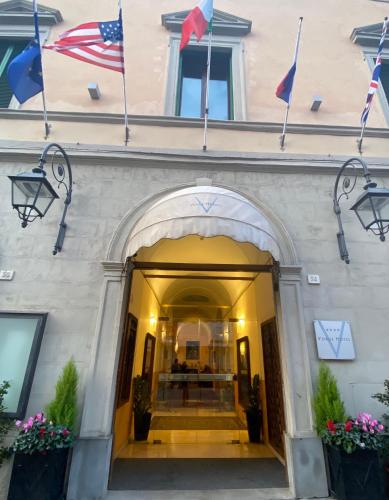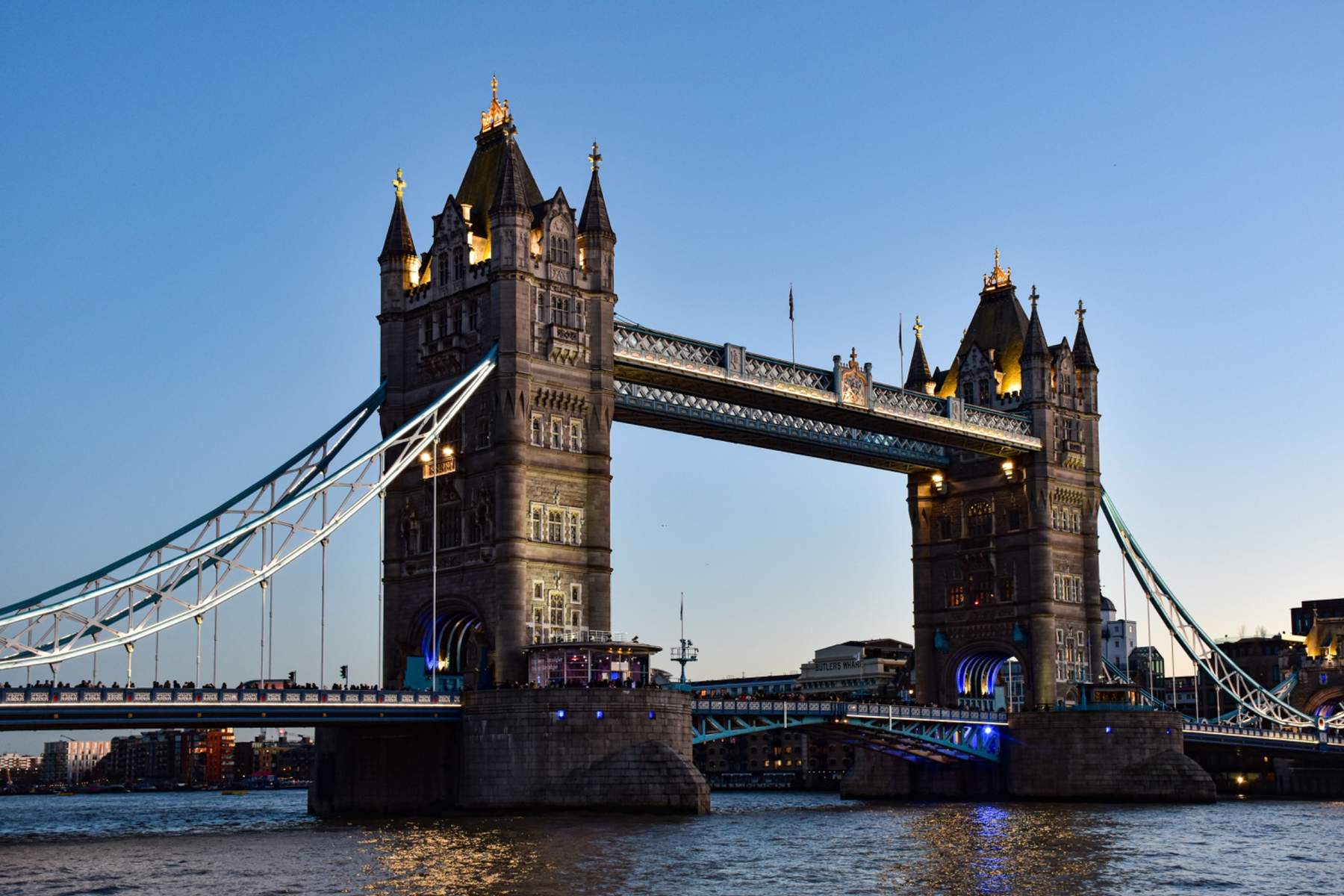
Generali Real Estate has entered the UK hospitality market with the acquisition of the Novotel London Tower Bridge, a 203-key four-star hotel located at 10 Pepys Street, in the heart of the City of London.
The transaction value has not been disclosed, but its strategic relevance is clear: following this acquisition, Generali Real Estate’s pan-European hospitality portfolio now stands at approximately €1 billion.
This is not merely the purchase of a hotel.
It is a signal to the market.
After a period in which many investors approached the hotel sector with caution, institutional capital is once again targeting high-quality hospitality assets: hotels in prime locations, liquid markets, recognised brands, diversified demand and the ability to generate recurring income.
The Novotel London Tower Bridge fits this profile perfectly.
The market data that makes this deal even more relevant
Generali’s acquisition should be read within a very specific market context.
In the first quarter of 2026, the UK hotel investment market recorded a strong acceleration. Cushman & Wakefield reported transaction volumes of approximately £1.6 billion, more than double the figure recorded in the same period of the previous year. Savills also reported volumes in excess of £1.1 billion, up 63% compared with the first quarter of 2025.
The message is clear: the UK hospitality market is once again liquid, selective and attractive to capital.
London, in particular, remains one of the most closely watched hotel markets in Europe. It is a global gateway market, supported by international demand, financial depth, tourism, business travel, events, culture and strong real estate liquidity.
Against this backdrop, the acquisition of the Novotel London Tower Bridge does not appear to be an isolated transaction, but rather part of a broader movement: the return of investors to prime hotel assets capable of combining income stability with value creation potential.
Why this acquisition matters
The acquisition of the Novotel London Tower Bridge is significant for at least four reasons.
The first is geographical: Generali Real Estate enters the UK hospitality market, expanding its exposure beyond its existing footprint in Italy, Spain, France and the Czech Republic.
The second is dimensional: the company’s pan-European hotel portfolio now reaches approximately €1 billion, confirming that hospitality is no longer a marginal allocation, but a fully recognised real estate asset class.
The third is strategic: the deal shows that prime hotels in gateway markets continue to attract long-term institutional investors.
The fourth is financial: a well-located, branded hotel in a liquid market can offer recurring income, capital preservation and upside potential over time.
For an institutional investor, this combination is particularly compelling.
Novotel Tower Bridge as an institutional-grade asset
The Novotel London Tower Bridge has many of the characteristics sought by professional capital.
It is a four-star hotel.
It has 203 rooms.
It is located in a central position.
It sits within a global gateway market.
It operates under an international brand.
It captures both business and leisure demand.
It is located in an urban area with significant market depth.
These factors make the asset more legible, more defensible and potentially more liquid.
In hotel investment, liquidity does not depend solely on the quality of the property. It also depends on the asset’s ability to be understood, financed, operated and ultimately resold by professional investors.
A hotel in a weak location can be difficult to enhance, even when acquired at what appears to be an attractive price. By contrast, a prime hotel in a strong market can retain its appeal even in more selective economic conditions.
This is precisely the logic that makes London a natural destination for an investor such as Generali Real Estate.
A hotel is not just real estate: It is an economic engine
One of the most common mistakes in hotel valuation is treating a hotel as a simple real estate asset.
In reality, a hotel is an operating asset.
Its value does not depend solely on location, floor area or number of rooms. It depends on the ability to convert those elements into revenue, margins and cash flow.
Two hotels in the same city, with the same category and the same number of rooms, can have very different values.
Why?
Because they may have different performance levels, reputations, demand mixes, contracts, cost structures, capital expenditure requirements and growth potential.
This is where hotel investment becomes a discipline of its own, distinct from traditional real estate valuation.
A hotel is real estate, business, brand, commercial platform and experiential product at the same time.
Those who value it only as “bricks and mortar” risk missing its true economic value.
Those who value it only as an operating business risk underestimating its underlying real estate component.
Value is created at the intersection between property and operations.
What the Generali deal teaches hotel investors
The acquisition of the Novotel London Tower Bridge offers several important lessons, including for the Italian hotel market.
1. Location remains the first layer of value protection
Hotels located in strong, well-connected markets with diversified demand tend to retain greater liquidity. Location does not eliminate risk, but it reduces it.
2. A brand helps, but it is not enough
An international brand can strengthen recognition, distribution and asset reliability. However, value ultimately depends on the hotel’s ability to generate consistent economic performance.
3. Investors are looking for stable income
In the current market, cash flow stability is critical. Hotels are assessed not only for their real estate value, but also for their ability to produce sustainable income.
4. Growth potential still matters
A stabilised asset can be attractive if it offers room for improvement: pricing, distribution, rooms, common areas, meetings, food and beverage, reputation, sustainability and cost control.
5. Documentation makes the difference
Institutional investors look for assets they can clearly understand. This means organised data, clear contracts, traceable performance, estimated capital expenditure and realistic financial scenarios.
To explore market trends, transactions and capital allocation strategies in the hotel sector, visit the Investimenti Alberghieri blog.
The signal for the italian market
Generali Real Estate’s London transaction also offers an important perspective for Italy.
Italy has some of the strongest hotel destinations in Europe: Rome, Milan, Venice, Florence, Naples, the Amalfi Coast, Lake Como, Sardinia, Sicily and many other internationally attractive markets.
And yet, the Italian hotel market remains highly fragmented.
Many hotels are still family-owned.
Many properties require significant refurbishment.
Many assets lack structured operating data.
Many transactions never reach institutional investors because they are not properly prepared for the market.
This creates a gap between the potential of Italian hotel assets and their ability to attract professional capital.
But that gap is also where the opportunity lies.
Investors are looking for assets that are understandable, well documented, well positioned and supported by a clear value creation strategy. They are not simply looking for “hotels for sale”. They are looking for transactions that are measurable, credible and financially sustainable.
For this reason, hotel owners who wish to sell, reposition or bring in an investment partner need to adopt a more sophisticated approach: data, positioning, business plan, capital expenditure, competitive landscape, real estate value, operating value and growth potential.
For further insights, the Investhotel blog covers hotel sales, hotel real estate transactions and opportunities for investors and property owners.
From ownership to value creation
The difference between an interesting hotel and a genuinely investable hotel often lies not only in the property itself, but in the way it is presented to the market.
A professional investor wants to understand:
-
how much revenue the hotel generates;
-
what margins it produces;
-
which sales channels it relies on;
-
how much intermediation weighs on performance;
-
which demand segments it captures;
-
what investment will be required;
-
which operating contract is in place;
-
what growth potential exists;
-
what risks are attached to the asset;
-
what the exit strategy could look like.
Without this information, even a good property can become difficult to sell or enhance.
By contrast, a well-documented asset with a clear strategy and reliable data can become significantly more attractive.
In today’s market, the winners are not those who simply “put a hotel up for sale”. The winners are those who structure an investment opportunity.
Why hotels are becoming attractive again for institutional capital
Hotels are returning to the centre of investor attention for several reasons.
International tourism demand has shown strong recovery capacity.
Major European cities remain highly attractive markets.
Prime assets are relatively scarce.
The sector offers revenue growth potential through pricing and operational management.
The real estate component can help preserve capital over the long term.
The operating component can generate greater upside than more static real estate asset classes.
Of course, this does not mean that every hotel is a good investment.
On the contrary, the market is becoming increasingly selective.
Investors are distinguishing between truly strategic assets and problematic assets; between well-positioned properties and obsolete buildings; between hotels with real upside and hotels requiring unsustainable levels of capital expenditure.
Selection will become increasingly rigorous.
This is why transaction preparation is now decisive.
What owners and investors should do today
For hotel owners, the lesson is clear: to attract capital, sell well or enhance an asset, it is no longer enough to present a hotel as a property.
It must be presented as an investment.
Data is required.
Market analysis is required.
Performance analysis is required.
A realistic estimate of capital expenditure is required.
An assessment of potential is required.
A positioning strategy is required.
Clear documentation is required.
For investors, the challenge is the opposite: not to stop at location or asking price, but to understand the asset’s real ability to create value.
The purchase price is only the beginning.
Returns depend on what happens afterwards.
For those wishing to explore these topics further, the hotel guides by Roberto Necci provide useful resources on hotel management, valuation, strategy, development and value creation.
Summary box: Why this deal really matters
Transaction: acquisition of the Novotel London Tower Bridge by Generali Real Estate.
Asset: 203-key four-star hotel in London.
Market: United Kingdom, one of Europe’s most liquid hospitality markets.
Strategy: geographical expansion of a pan-European hotel portfolio.
Indicative value of Generali’s hospitality portfolio: approximately €1 billion.
Market message: prime hotels in gateway markets remain attractive to institutional capital.
Lesson for Italy: hotels with location, data, strategy and growth potential can become attractive assets for professional investors.
Conclusion
Generali Real Estate’s acquisition of the Novotel London Tower Bridge confirms that prime hotels in gateway markets remain strategic assets for institutional investors.
London offers liquidity, depth of demand and resilience. The Novotel Tower Bridge offers scale, brand, location and income potential. Generali Real Estate strengthens a pan-European hospitality portfolio now worth approximately €1 billion and expands its geographical exposure into the United Kingdom.
But the message goes beyond the individual transaction.
The European hotel market is entering a more mature, selective and professional phase. The best assets will continue to attract capital. Less prepared assets will need to be rethought, repositioned or restructured.
For the Italian market, this is a major opportunity.
Italian hotels have location, history, demand and potential. But to compete in the capital market, they must be presented, managed and enhanced with the right tools.
A hotel is not just real estate.
It is a business, a financial asset and a value creation platform.
Those who understand this will have a decisive competitive advantage.
Are you considering the acquisition, sale, repositioning or value enhancement of a hotel?
Hotel Management Group supports owners, investors and operators in advisory, analysis, development, value creation and strategic hotel management.
Through an integrated approach combining real estate, operations and market intelligence, Hotel Management Group helps transform a hotel from a simple hospitality property into a structured, legible and value-driven investment.
Visit www.hotelmanagementgroup.it to request a preliminary assessment or explore the firm’s areas of expertise.
Roberto Necci - r.necci@robertonecci.it