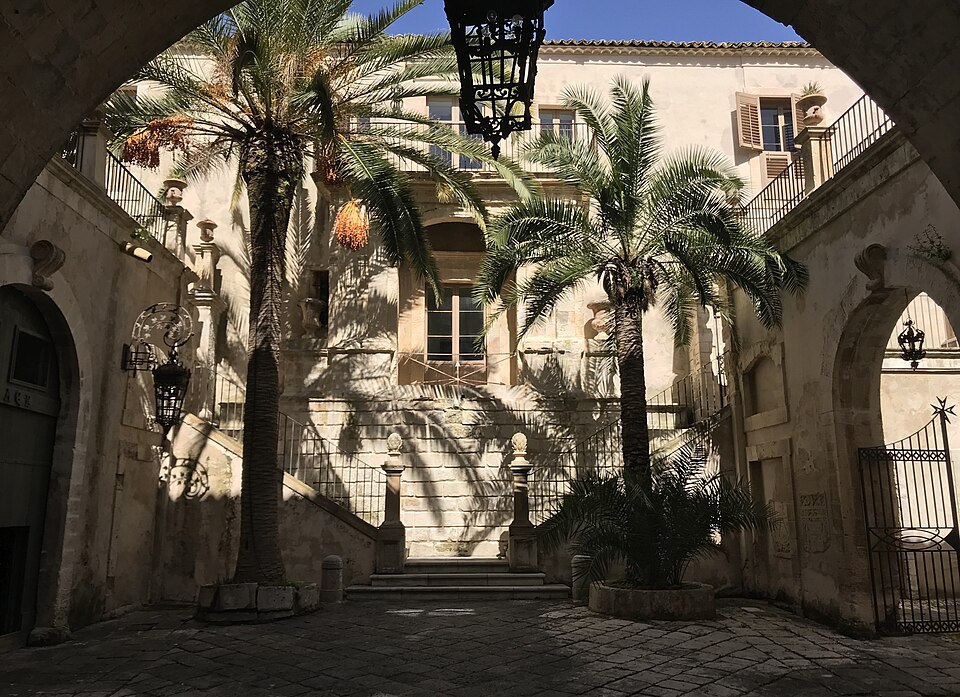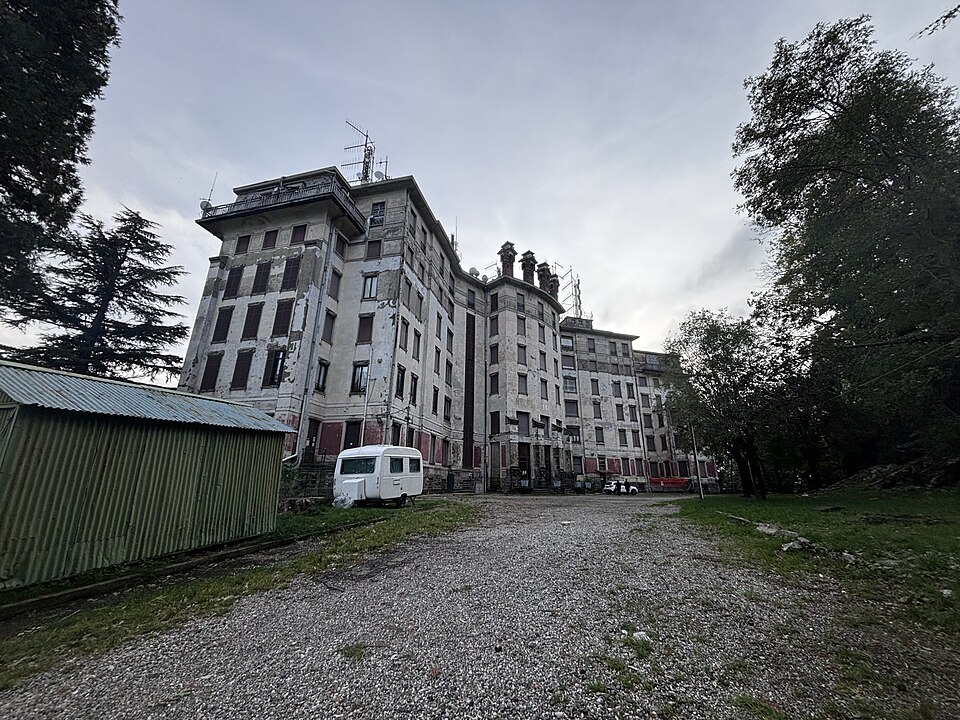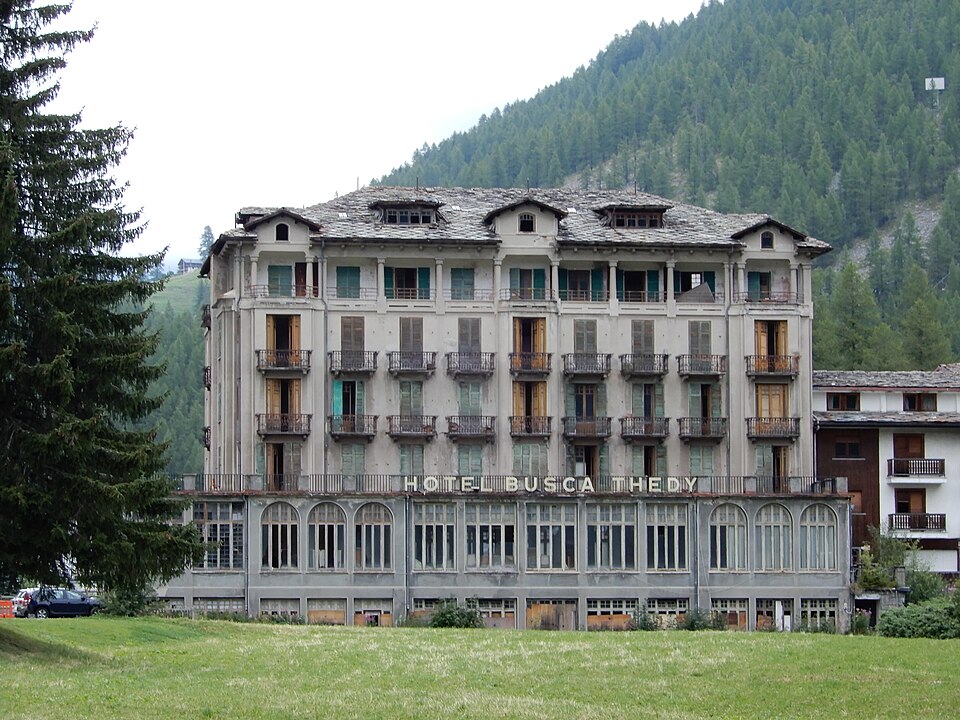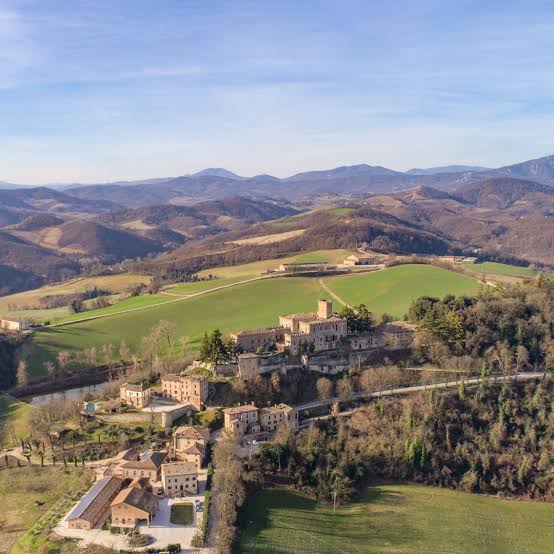
Salsomaggiore Terme (Parma) — Property file PRB0483, Cultural/Tourism portfolio of the Italian State Property Agency. Viale delle Fonti 4, Tabiano. Land area: 1,289 sqm. Gross floor area: 915 sqm. Five above-ground floors in masonry construction, dating from the second half of the 1950s. Closed since 2008.
Eighteen years out of operation.
That is the first number that should go into the model before any real estate valuation begins.
The second is distance: approximately fifty metres from the Tabiano thermal baths.
In a public property brochure, that is the figure most likely to catch an investor’s attention. In a proper investment analysis, however, proximity to the thermal facilities comes only after several more important questions: how much of the building is actually usable, how many units can realistically be created, how much capital is required to reactivate the property, and which operating model can generate a return commensurate with the risk?
That is the approach that should guide any investment involving obsolete or closed hotel assets: do not start with the asking price. Start with the industrial sustainability of the business model.
It is the same methodology we apply in the analyses published on InvestimentiAlberghieri.it, Investhotel.it and RobertoNecci.it.
What the State Property Agency is really offering
Not a hotel.
A real estate shell.
The public documentation indicates that the building still retains finishes dating back to its original 1950s configuration: terrazzo-style flooring, ceramic wall finishes, timber single-glazed windows and roller shutters.
The same property file states that the building’s service and technical systems require modernisation and upgrading to current standards.
Translated into due diligence language: the existing building services should prudently be assigned close to zero value unless proven otherwise.
Electrical systems, plumbing, HVAC, fire safety, lifts, data cabling, hot-water production and energy efficiency all need to be assessed from scratch.
After eighteen years of inactivity, the real question is no longer which systems can be retained.
It is which parts of the building still have meaningful technical value.
The envelope is therefore the second major unknown.
Five masonry floors, a building dating from the second half of the 1950s, an irregular plot, sloping ground and the presence of retaining structures all require a much deeper level of technical investigation than a standard refurbishment.
A structural survey is not a box-ticking exercise.
It is the first potential deal-breaker.
Before any investment thesis is developed, the masonry, floor slabs, foundations, retaining walls and geotechnical conditions of the site should all be tested.
The first industrial question: how many rooms actually fit?
The stated gross floor area is 915 sqm.
Spread across five floors, this means approximately 183 sqm gross per floor.
In a 1950s load-bearing masonry building, applying a prudent net-to-gross efficiency ratio of between 80% and 84% produces approximately:
145-155 sqm net per floor.
The ground floor would need to accommodate, at a minimum:
-
reception;
-
common areas;
-
potentially a breakfast room;
-
office space;
-
guest toilets;
-
staff changing areas;
-
technical rooms;
-
storage.
That would leave four floors mainly available for accommodation.
Approximately 600 sqm net in total.
After allowing for corridors, staircases, lift core, landings and technical areas — which in an irregular floorplate can easily account for 25-28% of the area — the effective space available for guest rooms falls to approximately:
430-450 sqm.
Assuming average room sizes of 18-20 sqm including bathrooms, the realistic outcome is approximately:
22 to 26 keys.
Twenty-four rooms is therefore a sensible central assumption.
And this is where the economics of the deal change completely.
A 24-room independent hotel must absorb many of the same operating functions required by a much larger property, but spread those costs over a substantially smaller inventory.
In a highly seasonal market such as Tabiano, that becomes a decisive constraint.
CapEx: how much capital is really required?
For a property that has been closed for eighteen years, the correct assumption is a near-total refurbishment.
Subject to technical investigations and the relevant approvals, the scope would likely include:
-
structural works;
-
seismic improvement or compliance measures where required;
-
complete replacement of MEP systems;
-
fire-safety works;
-
accessibility;
-
building envelope;
-
energy-efficiency improvements;
-
new windows;
-
lift installation or replacement;
-
internal reconfiguration;
-
finishes;
-
external works.
For a sober mid-scale product with no luxury specification, a reasonable preliminary refurbishment range could be:
€1,400-1,900 per sqm gross.
Applied to 915 sqm:
approximately €1.3-1.7 million of construction works.
FF&E and OS&E must then be added.
Using an indicative range of €15,000-25,000 per key across 24 rooms:
€360,000-600,000.
Then come:
-
design fees;
-
project management;
-
site supervision;
-
health and safety;
-
testing and certification;
-
permitting;
-
professional fees;
-
contingency.
The total capital requirement could therefore readily fall within:
€1.9-2.4 million
or approximately:
€79,000-100,000 per key
before factoring in any concession fee, the duration of the arrangement with the State Property Agency or additional investment obligations.
Why the traditional hotel case may not work
At this stage, an operating model is required.
Not a forecast.
A stress test.
For a renovated upper-midscale three-star hotel in Tabiano, purely for modelling purposes, one might assume:
-
ADR: €75-90;
-
significant seasonality;
-
annualised occupancy: 50-55%;
-
indicative annual RevPAR: €38-48.
Using a central RevPAR assumption of €43:
24 rooms × 365 days × €43 = approximately €377,000 in rooms revenue.
Adding breakfast, light F&B and ancillary income:
€450,000-480,000 in total revenue.
At an indicative GOP margin of 24-28%:
€110,000-135,000 in GOP.
From this result, the investor would still need to deduct:
-
any concession or lease payment;
-
FF&E reserve;
-
financing costs;
-
taxation;
-
potential corporate overhead.
On a €2.1 million investment, €120,000 of GOP represents approximately:
5.7% on invested capital before rent or concession charges and financing structure.
With even a modest annual payment of €25,000-30,000, the operating return on invested capital could quickly move towards or below 4.5%.
For an illiquid asset, within a destination characterised by substantial obsolete hotel stock and potentially subject to a concession structure, that risk-adjusted return becomes difficult to justify.
The conclusion is not that the property has no value.
The conclusion is different:
based on these assumptions, traditional hotel use appears to be the least compelling operating model.
The word that comes before “hotel”
The State Property Agency documentation identifies a number of possible uses:
Accessible tourism – Senior accommodation / Collective residence, Hotel, Wellness activities, Tourist residence, Existing uses.
The interesting point is not simply that hotel use is permitted.
It is that the list explicitly includes accessible tourism, senior accommodation and collective residential use.
This does not mean that the State Property Agency has already determined which business model is economically superior.
But it does show that the property is being considered within a broader range of uses than traditional hotel accommodation alone.
And that is precisely where the industrial value of the asset may lie.
Senior hospitality does not automatically mean a nursing home
The models must be clearly distinguished.
A regulated nursing or long-term care facility is one thing.
A senior residence is another.
A senior hospitality long-stay product for independent or partially independent guests staying for extended periods while using hotel-style services, light assistance and external healthcare or thermal treatments is different again.
These three models involve:
-
different authorisations;
-
different space standards;
-
different staffing intensity;
-
different CapEx;
-
different pricing structures.
The most interesting option, therefore, is not necessarily to turn the building into a regulated healthcare facility.
It may instead be to create a hybrid product combining hospitality, extended therapeutic stays, temporary senior living and accessible tourism.
That distinction is fundamental.
Why senior long-stay changes the economics
Let us build a second scenario.
24 units.
Average occupancy: 85%.
Average revenue per occupied unit: €78 per day.
24 × 85% × €78 × 365 = approximately:
€581,000 per year
But the point is not merely that revenue could be higher than under the traditional hotel model.
The real difference is the quality of that revenue.
| Variable | Traditional thermal hotel | Senior hospitality / long stay |
|---|---|---|
| Annualised occupancy | 50-55% | 80-90% |
| Opening pattern | Seasonal | 12 months |
| Average length of stay | 3-5 nights | Weeks or months |
| Distribution | OTAs + direct | Direct + partnerships + agreements |
| Customer acquisition cost | High | Lower |
| Demand volatility | High | Lower |
| Cash-flow visibility | Low-medium | Medium-high |
The advantage is not necessarily a higher percentage margin.
It is the ability to create cash flow that is more stable, more predictable and easier to finance.
That is what may ultimately make a near-€2 million investment more bankable.
The real intangible asset sits fifty metres away
The proximity of the Tabiano thermal establishment becomes meaningful only if it can be converted into an industrial relationship.
Tabiano’s sulphurous waters have historically been associated with treatments for respiratory conditions and other therapeutic uses.
That positioning may be compatible with longer stays aimed at an older demographic.
But physical proximity does not automatically create economic value.
The investor should verify:
-
volumes generated by the thermal establishment;
-
continuity of operations;
-
services currently available;
-
customer profile;
-
healthcare partnerships;
-
reimbursement or convention arrangements;
-
ability to create packaged products;
-
potential commercial agreements.
Fifty metres without an operating agreement are worth very little.
Fifty metres embedded within an integrated accommodation, treatment and services model could instead become the property’s main competitive advantage.
The risk no real estate teaser highlights: the destination itself
Tabiano does not merely have a problem with individual buildings.
It has a destination-level problem.
The gradual decline of traditional thermal tourism has left a significant stock of closed or underused hotel properties.
For an investor, that has at least three consequences.
1. Negative externalities affect value
A fully renovated building may still sit next to closed or deteriorating properties.
In such a scenario, refurbishment primarily creates use value, not necessarily real estate appreciation.
That distinction matters.
Cash flow can improve even while surrounding property values remain weak.
2. Exit value must be built on cash flow
In markets with substantial distressed or obsolete inventory, conventional real estate comparables become less meaningful.
Exit value depends primarily on the operating business’s ability to generate sustainable income.
That means the investment should be approached with the mindset of an industrial operator, not simply as a property acquisition, refurbishment and resale strategy.
It is one of the principles we also apply in turnaround and asset-repositioning analyses through Investhotel.it.
3. Salsomaggiore and Tabiano are not the same market
The reopening of the Berzieri thermal baths in Salsomaggiore is an important signal for the wider area.
But it would be risky to assume that the revival of central Salsomaggiore will automatically translate into the same economic impact for Tabiano.
The two locations have:
-
different positioning;
-
different waters;
-
different tourism histories;
-
different thermal products.
The true demand driver for the Former Hotel Salsomaggiore is therefore not a generic spillover from Salsomaggiore.
It is the relationship with Tabiano itself and its thermal facility.
Nine questions to ask before submitting any expression of interest
1. What is the legal structure of the transaction?
A regeneration concession?
A lease?
An outright disposal?
The answer determines the entire financing structure of the project.
A concession, in particular, has different bankability characteristics from full ownership.
2. What is the annual payment?
With potential GOP of only €120,000-140,000, even a few tens of thousands of euros in annual rent or concession fees can materially alter the investment return.
It must be known before any bid is made.
3. Are there heritage restrictions?
Given the age of the property, the investor should verify in advance whether it is subject to heritage-protection rules applicable to public property and whether any cultural-interest assessment has already been completed.
A heritage designation could affect:
-
façades;
-
layouts;
-
structural works;
-
timing;
-
cost.
This needs to be established before detailed design begins.
4. Which uses are actually permitted under planning law?
Senior hospitality, collective accommodation and a regulated healthcare facility are not interchangeable concepts.
Each configuration requires a specific planning, administrative and regulatory assessment.
5. What is the real structural condition?
A proper engineering survey with testing and invasive investigation is required.
Not merely a visual inspection.
Particular attention should be paid to:
-
load-bearing masonry;
-
floor structures;
-
foundations;
-
retaining walls;
-
drainage;
-
ground conditions.
6. What is the status of utilities?
After eighteen years of inactivity, the investor needs to verify:
-
utility connections;
-
available electrical capacity;
-
gas supply;
-
water;
-
drainage and sewer connections;
-
fibre connectivity;
-
reconnection costs.
7. Can a formal agreement be reached with the thermal establishment?
This may be one of the most important questions of all.
Without an industrial relationship with the thermal baths, physical proximity loses much of its economic relevance.
8. What investment obligations apply?
Minimum investment?
Development timetable?
Penalties?
Opening deadlines?
An authorisation delay can become a financial problem if the tender documentation imposes rigid milestones.
9. How much surrounding stock can be aggregated?
This may ultimately be the most interesting question.
Because the main weakness of this asset could simply be its size.
Twenty-four units are limited.
But three nearby properties, sharing centralised services and providing 70-80 units overall, constitute a completely different investment proposition.
The real opportunity may not be the individual building. It may be the platform.
From property to platform
This is where the Tabiano case becomes substantially more interesting.
A single 900-sqm property may struggle to independently support:
-
management;
-
administration;
-
maintenance;
-
kitchen operations;
-
laundry;
-
healthcare-related services;
-
commercial functions;
-
marketing.
Those functions, however, can be centralised.
Imagine three nearby properties.
One predominantly dedicated to accommodation.
One to shared services.
One to long-stay units or assisted apartments.
The unit cost of common functions falls.
Critical mass increases.
The operator’s negotiating position with healthcare providers, thermal operators and lenders improves.
And, above all, the investor’s bargaining power changes.
The real investment case for the Former Hotel Salsomaggiore
Based on the publicly available information, the Former Hotel Salsomaggiore in Tabiano does not appear to be merely an opportunity to reopen a closed hotel.
It is primarily a case of:
functional repositioning of an obsolete hotel property within a destination that needs to reinvent its underlying economic model.
The building’s value will not depend primarily on its hotel history.
It will depend on the business that can be built inside it.
A conventional 24-room three-star hotel may generate a return that is too low relative to the capital requirement and operating risk.
A senior hospitality, long-stay and accessible tourism product integrated with the thermal offering could instead materially change:
-
occupancy;
-
length of stay;
-
customer acquisition cost;
-
seasonality;
-
predictability of revenue.
This is the principle that should guide many investment decisions involving closed hotels.
Do not ask what the property is worth today.
Ask instead:
which operating model can generate the highest sustainable value from this property?
This is the type of analysis developed on InvestimentiAlberghieri.it, RobertoNecci.it and through the advisory activities of Hotel Management Group.
When a hotel property has been closed for years, the real decision is not necessarily whether to sell it or reopen it.
The first question may instead be whether to:
-
retain the existing use;
-
convert the property;
-
appoint an operator;
-
lease it;
-
aggregate it with neighbouring assets;
-
transform it into a new operating platform.
For a detailed assessment of a hotel investment, conversion or value-creation opportunity:
info@investimentialberghieri.it
Conclusion
Tabiano is likely to contain many buildings that can be analysed through the same lens.
Individually, they may appear difficult assets.
Combined, they may become a platform.
That is where the real strategic optionality lies.
In markets with significant obsolete inventory, the first investor does not necessarily need to find the lowest purchase price.
The real objective is to identify the critical mass required to rebuild the economics of the destination.
Because when there are many available properties and few buyers, the first operator capable of aggregating them is not simply buying buildings.
It begins to influence the price of every asset that comes next.
Primary source: Agenzia del Demanio, “Crea valore, investi con noi” portal, file PRB0483 — Former Hotel Salsomaggiore, Salsomaggiore Terme. Estimates relating to usable floor area, room count, CapEx, revenue and operating margins are the author’s sector-based modelling assumptions and do not replace technical, planning, legal, operational or valuation due diligence. Any rent or concession payment, duration of the arrangement and mandatory investment commitments should be verified against the official transaction documentation.