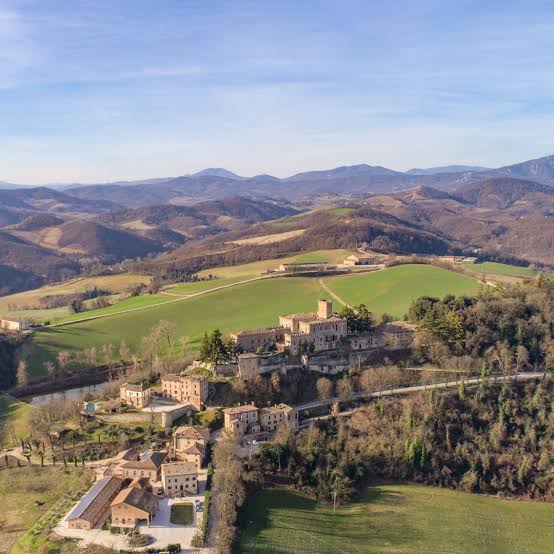
A company founded just four years ago, with expected group revenue of around €10 million, is issuing a bond of up to €15 million carrying a fixed 9% coupon. The Essence Corporate Company transaction matters not because of its size alone, but because of what it says about the cost of capital for Italian hotel operators attempting to move from managing properties to owning them.
The facts
Essence Corporate Company S.A. (ECC), a Luxembourg company controlled by entrepreneur Antonio Cafarelli, has obtained admission to trading on the Vienna MTF, operated by the Wiener Börse, for a bond issuance of up to €15 million.
The publicly disclosed terms are:
| Item | Details |
|---|---|
| Denomination | €100 |
| Coupon | 9% fixed annual |
| Maturity | 27 August 2031 |
| Term | 5 years |
| ISIN | LU3455103542 |
| Expected trading start | 27 August 2026 |
| Legal advisers | Francesco Guarnieri – Guarnieri & Partners; Luca Lo Pò – Capital Markets, Ashurst |
The stated use of proceeds is particularly relevant to anyone following hotel investments: the acquisition of hotel properties across mainland Italy and the islands, which would subsequently be operated directly by Essence Hotels.
According to publicly available information, the group is expected to reach nine properties by the end of 2026, employ around 400 people and generate approximately €10 million in revenue, with boutique hotels and resorts generally ranging between 60 and 120 rooms.
Its portfolio includes destinations such as Favignana, Pantelleria, the Tuscan Maremma, Elba, Castellammare del Golfo and Zanzibar, alongside a planned opening in the Swiss Alps.
From a financial standpoint, however, another element is even more important.
The group’s expansion has so far been driven predominantly through management, lease or long-term concession agreements, with only a limited number of properties acquired outright.
The bond therefore represents more than a financing transaction.
It represents an attempt to change the group’s capital structure and ownership model.
From hotel operator to hotel owner.
And that is where the transaction becomes relevant to the wider Italian hospitality market.
Vienna MTF: “listed in Vienna” does not mean a regulated market
The first distinction is essential.
Vienna MTF is not a regulated market.
It is a Multilateral Trading Facility under MiFID rules, operated by the Vienna Stock Exchange, with admission procedures and requirements that differ from those applying to an official regulated market.
Admission to trading should therefore not be confused with an assessment of the issuer’s creditworthiness by either the exchange or a supervisory authority.
The platform is widely used by European and Italian companies seeking tradability for bond issues through a more streamlined admission process.
This distinction is not merely technical.
It is financial.
Admission is not the same as placement
The second point is even more important.
The stated amount is “up to €15 million.”
That is the maximum authorised size of the transaction, not evidence that the entire €15 million has already been subscribed.
To understand the transaction properly, investors would need to know:
-
how much will actually be placed;
-
who the investors will be;
-
whether the issue will be completed in one or several tranches;
-
what guarantees and covenants will apply.
These are material considerations because they can significantly alter the risk profile.
A listing does not guarantee liquidity
There is also a third point.
Trading on an MTF does not automatically create a liquid secondary market.
In the absence of a market maker or meaningful trading volumes, an investor purchasing this type of bond should realistically approach it primarily as a hold-to-maturity investment.
The number that really matters is 9%
The entire transaction revolves around one figure.
9%.
At the time of writing, Italian government debt of comparable maturity yields significantly less.
A 9% coupon therefore incorporates a substantial credit-risk premium.
That pricing is consistent with a high-yield instrument issued by a relatively young group with no public credit rating and a limited financial track record.
That is not inherently negative.
Capital has a price.
And that price reflects the risk perceived by the market.
The real question is different:
how much do the investments financed with those €15 million need to generate for a 9% cost of capital to remain sustainable?
Debt service
Assuming the full amount is issued and remains outstanding:
-
annual coupon: €1.35 million;
-
aggregate interest over five years: €6.75 million;
-
principal repayment at maturity: €15 million;
-
total theoretical cash outflow between 2026 and 2031: €21.75 million.
Compared with expected group revenue of around €10 million, the annual interest bill alone would amount to approximately 13.5% of current revenue.
Revenue and debt service are, of course, not directly comparable financial metrics.
The comparison is useful only to illustrate the scale of the financing obligation relative to the group’s current operating platform.
In a leisure hospitality business where operating cash flow must already absorb leases, payroll, energy costs, distribution, maintenance and central overheads, €1.35 million of annual interest represents a substantial financial commitment at the group’s current scale.
The implication is straightforward:
the bond cannot be assessed purely on the basis of the existing portfolio. Its sustainability will depend primarily on whether the assets acquired with the proceeds can generate additional EBITDA and additional real-estate value.
Debt is financing the growth.
But the growth will have to finance the debt.
The real challenge: buying at 5–6% with capital costing 9%
This is the central technical issue.
And it goes far beyond Essence.
Italy’s hotel real-estate market has become increasingly competitive in recent years.
International capital continues to target hotel assets in the country’s strongest destinations, progressively compressing yields on the best properties.
The mathematics is simple.
If an investor acquires a hotel generating a property yield of 5–6% using capital costing 9%, the transaction begins with a negative carry of 300–400 basis points.
The investment therefore cannot rely on passive real-estate income alone.
It must generate value creation.
And this is precisely where the Essence model becomes interesting.
The group does not appear to be pursuing stabilised properties simply to collect rental income.
Its strategy is different:
acquire, reposition, operate directly and retain the operating margin within the group.
In other words, it is not merely acquiring real estate.
It is acquiring a platform on which to create EBITDA.
That is fundamentally a value-add strategy.
And it can work.
But it introduces a crucial characteristic:
the economic thesis resembles an equity thesis, while the funding instrument is debt.
And there is one fundamental difference between equity and debt.
Equity can wait.
The coupon cannot.
Time is the most important risk
Consider the acquisition of a hotel requiring repositioning.
Before the asset can reach its full potential, the process may involve:
acquisition, design, permits, refurbishment, capex, pre-opening, recruitment, commercial launch, opening and ramp-up.
In many hotel repositioning projects, the full cycle can realistically take 24 to 36 months.
On a five-year bond, that means a significant proportion of the instrument’s life may pass before the underlying investment reaches operational maturity.
That is the real risk embedded in the model.
Not necessarily buying the wrong property.
But taking too long to generate cash flow.
Because interest accrues even while the hotel is still being refurbished.
What can €15 million actually buy?
The second question is one of scale.
Fifteen million euros is meaningful capital for an independent hotel operator.
But it remains relatively modest compared with the values currently seen in Italian hotel real estate.
Using purely illustrative values of €150,000–€250,000 per room, €15 million would theoretically equate to approximately 60–100 rooms.
In the luxury segment, where values per key can be materially higher, the acquisition capacity falls further.
The reference in the public communication to several “prestigious hotel properties” therefore points to at least two possible structures.
Scenario 1 — The bond is combined with bank debt
The bond may provide one layer of the acquisition capital stack, supplemented by secured mortgage financing at property level.
That structure could make economic sense, as it would potentially reduce the weighted average cost of capital.
However, the ranking of security would then become critical.
If senior mortgage financing were placed against the acquired hotels, bondholders could find themselves economically subordinated to secured lenders.
Scenario 2 — Value-add hotel acquisitions
The alternative is the acquisition of hotels requiring redevelopment, repositioning or operational turnaround at values significantly below those of stabilised prime assets.
That would be entirely consistent with the group’s operating strategy.
In that case, however, the term “prestigious” would describe primarily the value the group intends to create, rather than necessarily the economic quality of the property at acquisition.
Both scenarios are commercially plausible.
But they imply very different risk profiles.
And this is precisely where professional hotel due diligence becomes essential.
The disconnect between the luxury narrative and the current portfolio
There is also a financial-communication issue worth examining.
The investment narrative refers to the growth of the five-star and luxury segment, which remains one of the most dynamic areas of Italian hospitality.
That reference is understandable.
But Essence’s current operating portfolio appears more heavily concentrated in four-star leisure and experiential resorts.
The segments are adjacent.
They are not identical.
They differ in terms of:
-
ADR;
-
occupancy patterns;
-
seasonality;
-
customer profile;
-
labour intensity;
-
service levels;
-
capex requirements;
-
real-estate multiples;
-
exit valuations.
A professional investor should therefore avoid automatically transferring luxury-market dynamics onto four-star leisure assets.
A hotel’s value does not depend on the segment in which it is presented.
It depends on the cash flow it can actually generate.
This is the same principle applied in the analyses published on RobertoNecci.it: always separate the narrative value of a project from its economic value.
Seasonality: the risk that does not immediately appear in the P&L
Favignana.
Pantelleria.
Elba.
Maremma.
Castellammare del Golfo.
A significant part of the Italian portfolio is exposed to highly seasonal leisure destinations.
This creates at least three financial consequences.
Cash-flow concentration
A large share of annual revenue is generated within a limited number of months.
Debt service, by contrast, exists throughout the year.
Working-capital requirements
The season must be financed before it begins.
Payroll, maintenance, purchasing, marketing, pre-opening costs and overheads often precede the associated cash inflows.
Non-recoverable demand risk
In an urban hotel, a weak week can sometimes be offset by stronger demand later in the year.
At a highly seasonal island resort, demand lost during peak season cannot simply be recovered in winter.
Diversification into mountain destinations and less seasonal market segments can therefore be interpreted as an industrially sensible attempt to reduce portfolio seasonality.
But here too, timing remains critical.
Vertical integration and related-party transactions
The industrial structure introduces another important feature.
Essence Corporate Company raises the capital and acquires the real estate. Essence Hotels, within the same entrepreneurial group, operates the properties.
Vertical integration can create substantial value.
Instead of paying an external operator, the group can retain control over:
-
product;
-
pricing;
-
distribution;
-
marketing;
-
organisation;
-
guest experience;
-
asset repositioning.
That is precisely what can make the move from operator to owner economically attractive.
At the same time, in a bond-financed structure, related-party arrangements deserve careful scrutiny.
The correct question is not to assume that management fees necessarily rank ahead of debt service.
The correct question is:
how are the management fees calculated, and how do they affect the cash flow available for debt service?
If intragroup agreements are structured on arm’s-length terms and supported by appropriate governance mechanisms and covenants, the potential conflict can be adequately controlled.
If they are not, part of the economic value generated by the property could theoretically be transferred to the operating company before reaching the cash flows available to lenders.
This is precisely the type of issue that professional due diligence is designed to examine.
The six questions that really matter
The publicly available material does not currently answer several fundamental questions.
They are the same questions that should be asked in any comparable transaction.
1. Is the bond secured or unsecured?
Are there first-ranking mortgages or other forms of security over the properties acquired?
2. What financial covenants apply?
Are there restrictions relating to:
-
LTV;
-
leverage;
-
additional indebtedness;
-
dividend distributions;
-
asset disposals?
3. How are the proceeds controlled?
Are there binding use-of-proceeds mechanisms or escrow arrangements pending investment?
4. How are related-party agreements governed?
What management fees will be paid to the operator, and on what basis?
5. Who are the target investors?
The €100 denomination makes the security technically accessible beyond institutional investors.
That makes the distribution regime, target market and placement structure particularly relevant.
6. How will the €15 million principal be repaid in 2031?
This may be the most important question of all.
A bullet bond does not amortise progressively.
The principal must be repaid at maturity.
The main alternatives are therefore:
cash generation, refinancing or asset disposals.
The exit strategy is not a secondary consideration.
It is part of the investment thesis itself.
The real issue is not Essence. It is the Italian hotel market
Focusing only on the risks of this transaction would miss the more important story.
Italy has one of the most significant hotel real-estate markets in the world.
It has thousands of properties, globally recognised destinations and an enormous pool of fragmented hotel assets.
Yet it still has relatively few domestic operators capable of evolving into meaningful property-owning platforms.
At Investhotel.it, we have long analysed this transition: operating a hotel and owning a hotel are economically connected businesses, but financially they are very different disciplines.
Building a hotel-owning platform requires:
-
equity;
-
debt;
-
governance;
-
underwriting capability;
-
management control;
-
asset management;
-
capital-allocation discipline.
An Italian operator that builds a portfolio in just a few years and then seeks to move from manager or lessee to owner is pursuing precisely the type of path the Italian market needs to see more often.
The problem is the price of that transition.
When property growth must be financed with capital costing 9%, the margin for error narrows dramatically.
That does not mean the transaction cannot work.
It means it must work extremely well.
What the 9% coupon really tells us
This is, in our view, the most interesting aspect of the entire transaction.
Not the bond.
Not Vienna.
Not the €15 million.
The 9%.
That number measures the distance that still exists between an independent Italian hotel operator and institutional capital.
A large institutional investor will typically have access to a combination of equity, bank financing, governance structures and longer investment horizons capable of absorbing the transformation period of an asset.
An independent operator often has to finance the same growth through more expensive instruments.
That reflects a structural weakness in the Italian market:
the limited availability of patient equity dedicated to scaling domestic hotel operators.
The banking system can, of course, finance hotel transactions, particularly where there are strong guarantees, stabilised assets, an appropriate equity contribution and sound financial metrics.
What is significantly more difficult is using traditional bank debt alone to finance the transformation of an operating platform into a property-owning platform while the assets still need to be acquired, repositioned and brought to maturity.
That is precisely the gap where private equity, club deals, family offices, institutional investors and hospitality merchant-banking structures should play a greater role.
The Essence bond is not a case to judge. It is a test.
This is perhaps the most important conclusion.
The Essence bond is not a case to judge. It is a test.
If the capital raised is deployed into assets acquired at the right price, if operations generate higher EBITDA, if repositioning creates additional real-estate value and if the portfolio can be refinanced on better terms before or at maturity in 2031, the group will have demonstrated that the transition from operator to owner can be achieved even from a relatively modest starting scale.
If, on the other hand, the cost of capital proves higher than the returns generated by the acquired hotels, the transaction will once again expose a structural challenge within Italian hospitality:
funding with high-yield debt a growth strategy that would ideally require equity.
This is therefore not simply a story about Essence Corporate Company.
It is a story about the financial maturity of the Italian hotel industry.
Because the future of the sector will not depend only on how many hotels are acquired.
It will depend above all on who provides the capital, at what cost and with what investment horizon.
That is where a significant part of the consolidation of the Italian hotel industry will be decided over the coming years.
We will be watching.
Hotel investment analysis and advisory
InvestimentiAlberghieri.it analyses transactions, assets, investments and structural developments across the Italian hospitality market.
For hotel valuations, due diligence, investment analysis, business planning, asset management and strategic transaction advisory, further information is available through Hotel Management Group, Investhotel and RobertoNecci.it.
For analysis and advisory enquiries: info@investimentialberghieri.it
Methodology note
This analysis is based exclusively on publicly available information at the time of writing, including information relating to the bond’s admission to trading, statements made by management to the press, aggregate data on the Italian hotel real-estate market, government-bond yield data and publicly available documentation relating to the Vienna MTF.
The full terms and conditions of the bond, the information memorandum, the issuer’s complete financial statements and the economic terms of intragroup agreements have not been reviewed for the purposes of this analysis.
The observations contained in this article therefore constitute scenario analysis and financial assessments based on publicly available information.
They do not constitute an assessment of the issuer’s creditworthiness, nor an investment or divestment recommendation.
Right of reply. The issuer and its advisers are invited to provide any additional information, clarifications or corrections, which may be incorporated with appropriate prominence.
Investimenti Alberghieri — an independent observatory focused on capital, assets and transactions in the Italian hotel market.