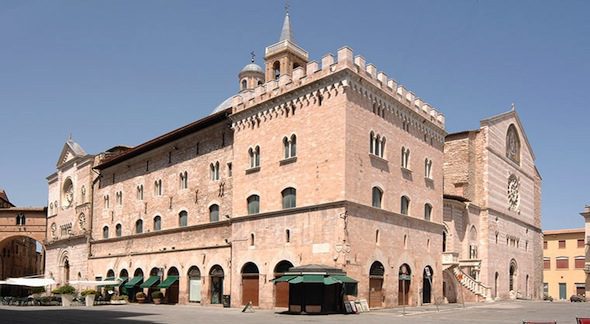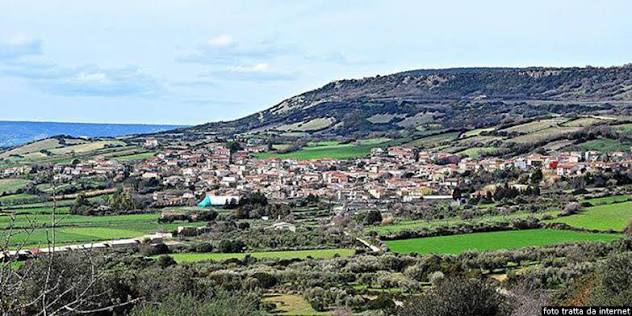
A municipally owned hospitality asset in inland Sardinia, a procedure with an indicated value of €14,400 and a bid deadline set for 10:00 a.m. on 28 August 2026. But the most important fact is another one: the tender published on SardegnaCAT is restricted exclusively to operators already invited by the Contracting Authority. To understand where access to the opportunity was really decided, it is necessary to go back to 16 July, when the Municipality published the expression of interest that closed on 31 July. Anyone discovering the deal only at the final deadline can see the opportunity — but can no longer enter it. The Escolca case shows why, in public hospitality concessions, origination must begin before the tender.
In the hotel investment market, there are two very different ways to source opportunities.
The first is to monitor:
tenders;
auctions;
procurement procedures;
open competitions;
upcoming deadlines.
The second is to identify assets before they reach the final competitive stage.
These are fundamentally different activities.
The first is:
monitoring.
The second is:
origination.
The concession of the tourism accommodation facility owned by the Municipality of Escolca is particularly interesting because it illustrates that distinction very clearly.
The 28 August Tender Is Not Open to the Market
The current phase of the procedure concerns the concession of a tourism accommodation facility in the Municipality of Escolca.
The value indicated on the procurement portal is:
€14,400.
The award criterion is:
the most economically advantageous tender.
The final deadline is:
10:00 a.m. on 28 August 2026.
But the fact that completely changes the interpretation of the opportunity is this:
only operators already invited may participate.
For an external operator, therefore, 28 August is not the moment to decide whether to enter the deal.
By then, the competitive perimeter has already been defined.
The Real Access Window Closed on 31 July
It is therefore necessary to go back by roughly one month.
On 16 July 2026, an expression of interest for the same concession was published.
The deadline was:
31 July 2026.
That was the real gateway into the process.
The sequence can be summarised as follows:
Public Signal
→
Expression of Interest
→
Operator Screening
→
Shortlist
→
Invitation
→
Restricted Competition.
On 28 August, the market only sees the final step.
But the deal began much earlier.
For Anyone Discovering It Today, the Opportunity Is Already Gone
This is the most important point in the entire case.
An investor or operator may arrive on 28 August and find:
the Municipality;
the property;
the procedure value;
the deadline;
the award criterion.
They may even build an excellent business plan.
But they may still be unable to participate.
Because they are not among the invited bidders.
The strategic question is therefore not:
“How can I win this tender?”
It is:
“Why was I not already on the shortlist?”
That is a much more important question.
Because it shifts attention away from bid execution and towards the quality of the origination system.
In Public Hospitality, Competition Starts Before the Final Tender
Many operators treat publication of the final tender as the beginning of the opportunity.
In negotiated procedures, that is not necessarily true.
Real access may occur through:
expressions of interest;
exploratory notices;
market sounding;
preparatory resolutions;
operator searches;
preliminary consultations.
By the time the final tender appears, the market may already have been filtered.
It is therefore entirely possible to:
understand a deal perfectly
and, at the same time,
have arrived too late to participate.
That is the real lesson from Escolca.
Monitoring Looks at Deadlines. Origination Looks at Signals
A traditional system asks:
“What expires this week?”
An origination system asks:
“Which assets are entering the process that will eventually bring them to market?”
That is a major difference.
Because an apparently minor notice may be the first signal of a future concession.
A professional hospitality database should therefore classify assets not only by location or value, but also by stage:
Pre-Market
Market Sounding
Expression of Interest
Shortlist
Invitation Stage
Open Tender
Award
Failed Tender
Re-Tender.
That classification generates far more intelligence than a simple list of deadlines.
The €14,400 Should Not Automatically Be Read as “Annual Rent”
The value stated in the procedure is:
€14,400.
But a professional analysis should avoid a common mistake.
It would be incorrect to automatically turn that figure into:
“€14,400 annual rent”
without first reviewing the full contractual framework.
To understand the real economic cost of the concession, one would need to verify:
duration;
payment structure;
possible uplifts;
indexation;
deposits;
guarantees;
CAPEX;
maintenance;
utilities;
operator obligations;
handover conditions.
The figure shown on the procurement portal is an administrative value.
Underwriting must translate it into an economic metric.
Those are two different things.
The Concession Value Does Not Tell Us Whether the Business Works
Even with perfect knowledge of the concession payment, the decisive question would remain:
how much cash flow can the property generate?
The correct sequence should be:
Demand
→
Inventory
→
ADR
→
Occupancy
→
Ancillary Revenue
→
GOP
→
CAPEX
→
Working Capital
→
Concession Cost
→
Operator Return.
That is the logic required to determine whether a concession is sustainable.
Not a simple comparison with the value stated in the procedure.
The same principle applies to the transactions analysed by Investhotel Capital Partners: a low real estate cost does not automatically make a weak business attractive, while a higher occupancy cost can be perfectly sustainable if the asset generates sufficient GOP.
Escolca Should Be Underwritten as a Micro-Destination
Escolca does not compete with Sardinia’s better-known coastal tourism product.
Its positioning is fundamentally different.
The destination should be viewed through:
inland Sardinia;
authenticity;
archaeology;
rurality;
landscape;
food;
culture;
slow tourism.
The model should therefore not attempt to replicate a coastal destination.
The property should instead help create a reason to stay in the area.
The question is not:
“How many tourists already come here?”
It is:
“What product could persuade them to stay?”
That is the real hospitality strategy question.
In Micro-Destinations, the Property Must Help Create Demand
In a high-demand destination, a hotel captures demand that already exists.
In a micro-destination, the opposite can happen.
The property must help create the reason for the trip itself.
That may mean integrating:
rural experiences;
gastronomy;
archaeology;
itineraries;
events;
outdoor activities;
culture;
local partnerships.
Value does not come only from the room.
It comes from creating both:
a reason to visit
and, more importantly,
a reason to stay.
Operating Scale Must Be Extremely Disciplined
For smaller hospitality assets, fixed-cost rigidity is often the principal challenge.
Payroll.
Software.
Marketing.
Maintenance.
Administration.
Distribution.
Compliance.
These costs can represent a much larger percentage of revenue than in a large hotel.
The model should therefore be built around:
Lean Operations.
That means:
multi-skilled staff;
technology;
automation;
self-service where appropriate;
selective outsourcing;
staffing aligned with actual demand.
The quality of hotel management becomes particularly important in smaller assets.
Because there is less room to absorb mistakes.
ADR Should Not Be the Only KPI
In a business linked to slow tourism and destination experiences, focusing only on room rate can be too narrow.
Other relevant metrics may include:
Total Revenue per Guest
and
Average Length of Stay.
A guest who stays longer and purchases:
accommodation;
food;
experiences;
activities;
local services
may generate more value than a high-ADR guest staying only one night.
The strategy should therefore maximise the total economic value of each stay.
Three Underwriting Scenarios
Downside Case
Limited demand, heavy weekend concentration, low ancillary revenue and relatively rigid costs.
This case measures the maximum operating risk.
Base Case
Positioning aligned with the territory, effective digital distribution, local partnerships, a lean cost structure and sufficiently stable leisure demand.
This is the scenario on which the economic balance should be built.
Upside Case
Escolca becomes part of a broader:
Inner Sardinia Experience
combining:
accommodation;
archaeology;
food;
rurality;
culture;
territory.
This is the value-creation case.
But the financial sequence should always remain:
Revenue → GOP → CAPEX → Working Capital → Concession Cost → Operator Return.
The Most Economically Advantageous Tender Confirms That Offering More Money Is Not Enough
The procedure uses the criterion of:
the most economically advantageous tender.
That is consistent with the nature of a publicly owned hospitality asset.
The Municipality is not simply selecting the bidder willing to offer the highest financial amount.
It is also selecting the operator that will need to:
manage;
preserve;
position;
commercialise;
represent the property;
ensure operational continuity.
The operator therefore becomes part of the property’s value-creation process.
Not merely a user of the asset.
Why a Restricted Tender Still Matters Even if You Are Outside It
For an operator that was not invited, the current procedure is not directly contestable.
But it is still useful.
For at least three reasons.
1. It Identifies a Public Hospitality Asset
The Municipality has clearly decided to preserve a tourism and accommodation use for the property.
2. It Reveals the Operator-Search Process
It helps explain how the public authority builds its pool of potential operators.
3. It Creates Intelligence for the Future
If the procedure fails, is relaunched or other assets emerge, anyone who has already studied the market starts from a stronger position.
Intelligence is not only useful for winning today’s tender.
It is useful for being present before the next one.
The Real Advantage Is Not Knowing About the Tender. It Is Knowing About the Asset Before the Tender
This is the most important strategic conclusion.
A professional origination system should monitor:
municipal registers;
resolutions;
administrative decisions;
expressions of interest;
exploratory notices;
asset-enhancement programmes;
planning documents;
operator searches;
tenders.
Not just final-stage procurement procedures.
Because real competition may begin months before the financial offer is ever submitted.
From Monitoring to Origination Intelligence
The qualitative leap is this.
Monitoring
means knowing what is available.
Origination
means understanding what is becoming available.
Origination Intelligence
means also knowing:
stage;
timing;
accessibility;
decision-maker;
procedure;
potential business model.
That is the genuinely strategic dimension.
Further analysis on due diligence, contracts, investment structures and hospitality operating models is available through the specialist guides published on Robertonecci.it.
Conclusion: In Escolca, the Final Tender Mainly Reveals Who Arrived in Time
In July 2026, the Municipality of Escolca launched the process for the concession of a tourism accommodation facility.
The sequence involved:
expression of interest
→
selection
→
invitation
→
negotiated tender.
The final stage includes:
indicated value of €14,400;
most economically advantageous tender criterion;
28 August 2026 deadline;
participation restricted to invited bidders.
But the real deal did not open on 28 August.
It had already opened in July.
And that is the point that matters.
For an operator discovering the opportunity only at the final stage, the question is no longer:
“How do I participate?”
It is:
“How do I make sure I do not miss the next one?”
The answer is to build a system capable of identifying:
administrative signals
before they become:
competitive tenders.
Escolca is a small opportunity in absolute size.
But it contains a much larger lesson.
In the public hospitality concession market, competitive advantage does not come only from the ability to submit the best bid.
It comes from already being present:
when the shortlist of bidders entitled to submit that bid is being built.
Monitoring observes the market.
Origination gets there earlier.
And that is often where the real edge is created.
InvestimentiAlberghieri.it Advisory
InvestimentiAlberghieri.it analyses public concessions, procurement procedures, expressions of interest, operator searches and pre-market opportunities involving publicly and privately owned hospitality assets.
For business plans, PEFs, valuations, rent-sustainability analysis, due diligence, operator searches and hospitality transaction structuring:
info@investimentialberghieri.it
Complementary expertise and insights:
Robertonecci.it — hospitality advisory, analysis and specialist guides
Investhotel.it — hotel acquisitions, disposals and hospitality transactions
HotelManagementGroup.it — hotel management, asset management and performance optimisation