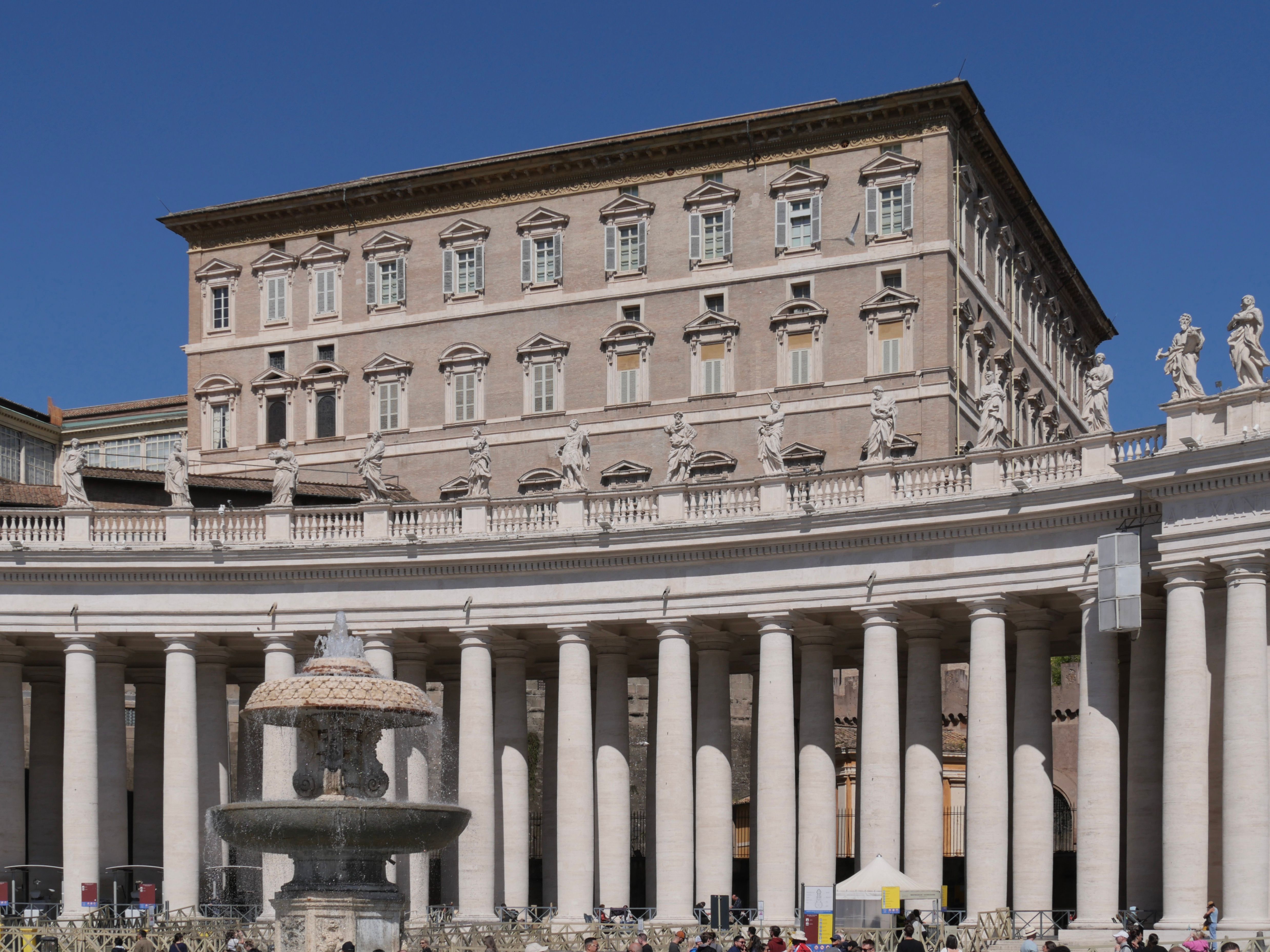
The conversion of this historic property may be built around a clearly defined industrial model: a financially robust tenant, a competitive operator-selection process and the commercial support of a major international hotel brand. The names have not been disclosed, but the economics and structure of the transaction can already be assessed
The conversion of Domus Paolo VI into a hotel is not simply one of the most significant real estate transactions currently taking shape in Rome’s historic centre.
It is, above all, an industrial test.
The decisive question is not merely who will secure control of the property, but whether that party will genuinely be capable of supporting a project which, once rent and initial capital expenditure are taken into account, could involve nominal commitments exceeding €200 million over a thirty-year period.
A previous InvestimentiAlberghieri.it analysis of the Domus Paolo VI conversion examined the potential thirty-year term, the reported rent level, the required capital expenditure and the principal risks associated with the transaction.
The next issue is to understand which corporate, financial and operating structure could make the project genuinely sustainable.
APSA’s financial statements confirm that the approvals required for the hotel conversion have been obtained, that a potential tenant has been identified and that the signing of a preliminary agreement is now awaited.
The following details have not, however, been disclosed:
-
the identity of the future tenant;
-
the hotel brand;
-
the financing structure;
-
the final room count;
-
the contractually confirmed capital expenditure;
-
the expected opening date.
The transaction therefore remains subject to a reasonable degree of confidentiality.
That does not prevent an assessment of the industrial model most consistent with the size and complexity of the investment.
Securing the property is not enough
In a conventional hotel transaction, an operator leases a property, carries out a limited refurbishment programme and launches the business.
At Domus Paolo VI, the future operator may instead be required to assume several major obligations simultaneously:
-
a particularly significant rent commitment;
-
an initial investment amounting to several tens of millions of euros;
-
construction and redevelopment risk;
-
planning and authorisation risk;
-
financing risk;
-
opening risk;
-
operating risk during the first years of trading.
This would therefore be far more than a conventional hotel-management assignment.
The tenant would need to act as the transaction’s true industrial sponsor: raising equity, securing financing, guaranteeing the completion of the works, developing the hotel product, managing the pre-opening process and establishing a business capable of generating revenue and cash flow within a relatively short period.
This is precisely the type of balance assessed by specialist investment and transaction-structuring platforms such as Investhotel, particularly when project sustainability depends on the relationship between rent, capital expenditure, debt and operating profitability.
The potential role of operator selection
One of the central issues concerns the process through which the potential tenant may have been identified.
In hotel projects of this scale, a property owner may appoint a specialist adviser to conduct an operator-selection process.
This is not simply a matter of accepting the proposal offering the highest headline rent.
A professional selection process should assess:
-
financial strength;
-
ability to fund the investment;
-
experience in developing new hotels;
-
quality of the guarantees offered;
-
credibility of the business plan;
-
sustainability of the rent;
-
proposed capital structure;
-
architectural and hospitality concept;
-
operating capabilities;
-
reputational compatibility;
-
any proposed agreement with an international hotel brand.
The strongest candidate is not necessarily the party promising the highest rent.
An exceptionally aggressive offer without sufficient financial and industrial backing can result in delays, unfinished works, requests for renegotiation and contractual disputes.
From the property owner’s perspective, the real objective should be to identify the counterparty capable of fulfilling the property agreement, delivering the investment programme and executing the business plan at the same time.
The owner, tenant, hotel manager and brand are not necessarily the same party
To understand the transaction, it is important to avoid one of the most common misconceptions in the hotel industry.
The company entering into the agreement with the property owner may not be the company that will ultimately operate the hotel. It may also be entirely separate from the brand whose name will appear above the entrance.
A hospitality transaction may involve several distinct layers.
Property owner
The owner holds the real estate asset and grants the right to use it under a lease, concession or another contractual structure.
Tenant company
The tenant signs the property agreement, assumes the rent obligation, funds the capital expenditure and bears the overall business risk.
Hotel manager
The manager oversees employees, departments, operating standards, costs and the day-to-day running of the hotel.
International brand
The brand provides its name, commercial distribution, operating standards, reservation systems and loyalty programme.
Lenders and investors
These parties provide the equity, debt or other financial instruments required to fund the investment.
The transaction could therefore be structured as follows:
institutional property owner → tenant and investment company → hotel manager → international brand.
Some of these functions may be combined within the same group, but understanding the distinction between them is essential when assessing the actual risk profile of the project.
Why a locally established operator may be necessary
Redeveloping a historic property in central Rome requires considerably more than the ability to sell hotel rooms.
The tenant will presumably need to coordinate:
-
design and planning;
-
regulatory approvals;
-
heritage and planning restrictions;
-
contractors;
-
project management;
-
suppliers;
-
lenders;
-
institutional relationships;
-
recruitment;
-
commercial pre-opening activities.
A strong understanding of the Roman market could therefore represent a significant competitive advantage.
An operator already established in the city may possess relationships, technical expertise and execution capabilities that would be difficult for a purely financial investor or a company without a local operating platform to replicate.
The experience of operators such as Necci Hotels illustrates how, in hotel investments, execution quality can be just as important as the quality of the underlying property.
Location creates the opportunity.
Operations convert that opportunity into profitability.
Why an international brand could prove decisive
A financially robust local operator may still not be sufficient.
A project involving substantial initial capital expenditure and a significant rent obligation must generate revenue above the level expected from a conventional city-centre hotel.
The location provides exceptional appeal, but it does not automatically guarantee:
-
premium room rates throughout the year;
-
international guests with high spending power;
-
corporate demand;
-
global distribution;
-
a rapid transition to stabilised trading performance.
An international hotel brand could contribute:
-
a global sales network;
-
a central reservation system;
-
access to millions of loyalty-programme members;
-
relationships with international companies and travel agencies;
-
technical and operating standards;
-
design and development support;
-
advanced revenue-management systems;
-
greater credibility with lenders;
-
a faster ramp-up following the opening.
The brand would therefore serve more than a purely commercial purpose.
It could make a direct contribution to the bankability of the investment.
A lender may be more comfortable financing a project connected to an international distribution platform, provided that the associated fees, standards and contractual obligations remain compatible with the hotel’s projected economics.
RobertoNecci.it regularly examines the relationship between hotel operations, management and franchise agreements, asset enhancement and the financial sustainability of hospitality investments.
Franchise agreement or hotel management agreement?
If an international hotel group becomes involved, the contractual structure will be critical.
Franchise agreement
Under a franchise model, the tenant company would retain operational control of the hotel while using the brand, commercial systems and loyalty programme of the international group.
The principal advantages would include:
-
greater operational autonomy;
-
direct control over employees;
-
greater management flexibility;
-
the potential to retain a larger proportion of the operating margin.
The model would, however, require a highly capable local management organisation able to comply with international brand standards without delegating the entire operation.
Hotel management agreement
Under a hotel management agreement, the international group could assume direct responsibility for managing the property.
The brand would normally receive:
-
a base management fee;
-
an incentive fee;
-
reimbursements for centralised services;
-
additional commercial and distribution charges.
This structure could provide greater assurance that brand standards would be maintained, but it would also increase the overall fee burden and reduce the tenant’s operational autonomy.
Hybrid model
A hybrid structure is also possible.
The local company could retain formal responsibility for operations while delegating selected strategic functions to the international brand, including:
-
distribution;
-
revenue management;
-
marketing;
-
loyalty programmes;
-
procurement;
-
training;
-
operating audits;
-
quality control.
The decision should not be based solely on the prestige of the brand.
It should be assessed according to its overall effect on GOP, cash flow and the hotel’s ability to service both rent and debt.
A four-star hotel that may need to generate upper-upscale revenues
According to the available reports, the future hotel may be classified as a four-star property.
An administrative classification does not, however, necessarily reflect the commercial positioning required by the business plan.
A project involving potential capital expenditure of between €50 million and €60 million and reported annual rent close to €5 million would struggle to compete as a conventional four-star city hotel.
It would likely need to be:
-
four-star in its official classification;
-
upper-upscale in product quality;
-
premium in its pricing;
-
international in its distribution;
-
distinctive in its concept;
-
exceptionally efficient in its cost structure.
The objective cannot simply be to achieve a strong occupancy rate.
The central challenge will be to generate sufficient RevPAR and total revenue per available room to support:
-
rent;
-
payroll;
-
utilities;
-
maintenance;
-
brand fees;
-
distribution commissions;
-
interest expenses;
-
debt repayment;
-
the required return on equity.
A hotel can be full and still fail to create value.
The real challenge will therefore be the economic quality of demand, not merely the number of guests.
Sustainability must be measured through cash flow
A nominal commitment exceeding €200 million over thirty years creates an impressive headline, but it is not enough to establish whether the transaction is financially attractive.
The analysis must include:
-
the present value of the rent;
-
indexation provisions;
-
the commencement date of rent payments;
-
any rent-free period;
-
the construction programme;
-
any contribution from the property owner;
-
cost of debt;
-
the relationship between equity and financing;
-
the level and quality of guarantees;
-
extraordinary maintenance obligations;
-
ownership and residual value of the works;
-
termination provisions;
-
performance tests;
-
conditions precedent.
The nominal figure may attract attention.
The real value of the transaction will depend on the hotel’s ability to generate sufficient, stable and recurring cash flow throughout the contractual term.
The reputational dimension
Domus Paolo VI is not an ordinary hotel property.
Its history, previous use and distinctive position within Rome’s urban and institutional landscape will require careful reputational management.
The project will need to avoid two opposing risks:
-
an overly aggressive conversion that fails to respect the identity of the building;
-
an excessively conservative concept that cannot generate the rates required by the business plan.
The hotel concept will need to reconcile:
-
history;
-
restraint;
-
quality;
-
distinctiveness;
-
international appeal;
-
economic sustainability.
The brand should therefore be assessed not only according to its global recognition, but also according to its compatibility with the character of the property and the proposed market positioning.
The signals to monitor
Before an official announcement is made, the final structure of the transaction may gradually become visible through a number of signals:
-
the incorporation of a special-purpose vehicle;
-
capital increases;
-
the appointment of directors connected to hotel operators;
-
trademark registrations;
-
planning applications;
-
appointments of specialist hotel architects and consultants;
-
financing agreements;
-
development announcements by international hotel groups;
-
recruitment for pre-opening positions;
-
construction contracts aligned with international brand standards.
None of these elements would constitute definitive proof when considered in isolation.
Only a coordinated analysis of corporate, financial, planning and hotel-industry information will make it possible to reconstruct the actual architecture of the transaction.
The most coherent industrial hypothesis
At present, there is insufficient public information to attribute the transaction to a specific group or international hotel chain.
Naming individual parties would therefore be premature.
It is, however, possible to formulate an industrial assessment.
The scale of the capital expenditure, the potential rent level, the duration of the agreement and the complexity of the redevelopment make one model particularly coherent:
a financially robust operator with local execution capabilities working alongside an international hotel group able to provide brand recognition, distribution, demand generation and financial credibility.
The tenant company could assume the property and entrepreneurial risk.
The international brand could provide the commercial strength required to support the revenue plan.
The real story would therefore not simply be the arrival of another international hotel flag in central Rome.
It would be the creation of an industrial platform combining capital, local expertise and global distribution.
The preliminary agreement will only be the beginning
The signing of a preliminary agreement will not mark the completion of the transaction.
The parties will still need to define:
-
conditions precedent;
-
guarantees;
-
development timetable;
-
final design;
-
financing;
-
room count;
-
operating standards;
-
commencement of rent payments;
-
treatment of cost overruns;
-
ownership of the works;
-
the agreement with the brand;
-
the opening date.
The success of the project will not depend solely on the value of the property or the prestige of the potential hotel brand.
It will depend on the balance between contractual terms, capital, costs, timing, pricing and operating capabilities.
The real competition is not about who promises the highest rent.
It is about who can genuinely transform an exceptional property into a hotel business capable of supporting capital expenditure, debt, rent and the required return on investment for thirty years.
Assessing the transaction before assuming the risk
A thirty-year concession, a hotel lease or an agreement with an international brand cannot be evaluated solely on the basis of the property’s value or projected revenue.
Before any agreement is signed, it is essential to assess:
-
rent sustainability;
-
capital-expenditure requirements;
-
financing structure;
-
expected profitability;
-
contractual provisions;
-
the terms of any management or franchise agreement;
-
construction risk;
-
the quality of the guarantees;
-
the resilience of the business plan under downside scenarios.
Hotel Management Group advises property owners, investors and hotel operators on hospitality transactions, operator-selection processes, business planning and the review of hotel-management, lease and franchise agreements.
For confidential dossiers, off-market opportunities, feasibility assessments and editorial information: