In hotel real estate, the transactions that matter most are not the ones that simply add exposure. They are the ones that reveal how sophisticated capital is choosing to allocate today.
Covivio Hotels’ acquisition of a portfolio of four hotels in Milan for €217 million, structured as a sale-and-leasebackwith Invest Hospitality retaining operational control, should be read in precisely those terms. Not as simple portfolio expansion. Not as a generic bet on Italian hospitality. But as a targeted allocation to contracted urban income, built around a distinctly institutional logic: protect the downside, retain a measured share of the upside, and remain exposed only where market depth is sufficient to support performance over the long term.
So the key point is not that Covivio has bought four hotels.
The key point is that it has acquired an income structure.
The deal makes one thing clear: capital is no longer buying assets alone, but risk architecture
The headline terms already tell the story: a 21-year lease, minimum guaranteed rent, a minimum yield of 6%, a target yield of around 7% including the variable component, roughly 900 rooms, and a two-stage closing split between Q2 2026 and Q1 2027.
But the strength of the transaction does not lie in those figures individually. It lies in the way they have been assembled.
Covivio is not entering Milan by taking on the full volatility of hotel operations. It is making a more sophisticated choice: separating property risk from operating risk, while preserving exposure to the strength of the underlying market. The guaranteed minimum rent establishes an income floor. The variable component preserves a direct link to trading performance. The 21-year term gives the structure the duration and visibility required for institutional capital rather than opportunistic money.
That is the difference between a conventional hotel real estate transaction and a well-constructed one. In the first case, an investor buys an asset and hopes performance follows. In the second, it builds a pre-ordered risk-return profile from day one.
And that is where Covivio is sending a very clear message to the market: serious capital is no longer looking for undifferentiated hospitality exposure. It is looking for hospitality with cash-flow discipline.
Location matters, but it is not the whole story: the real underwriting is the operator
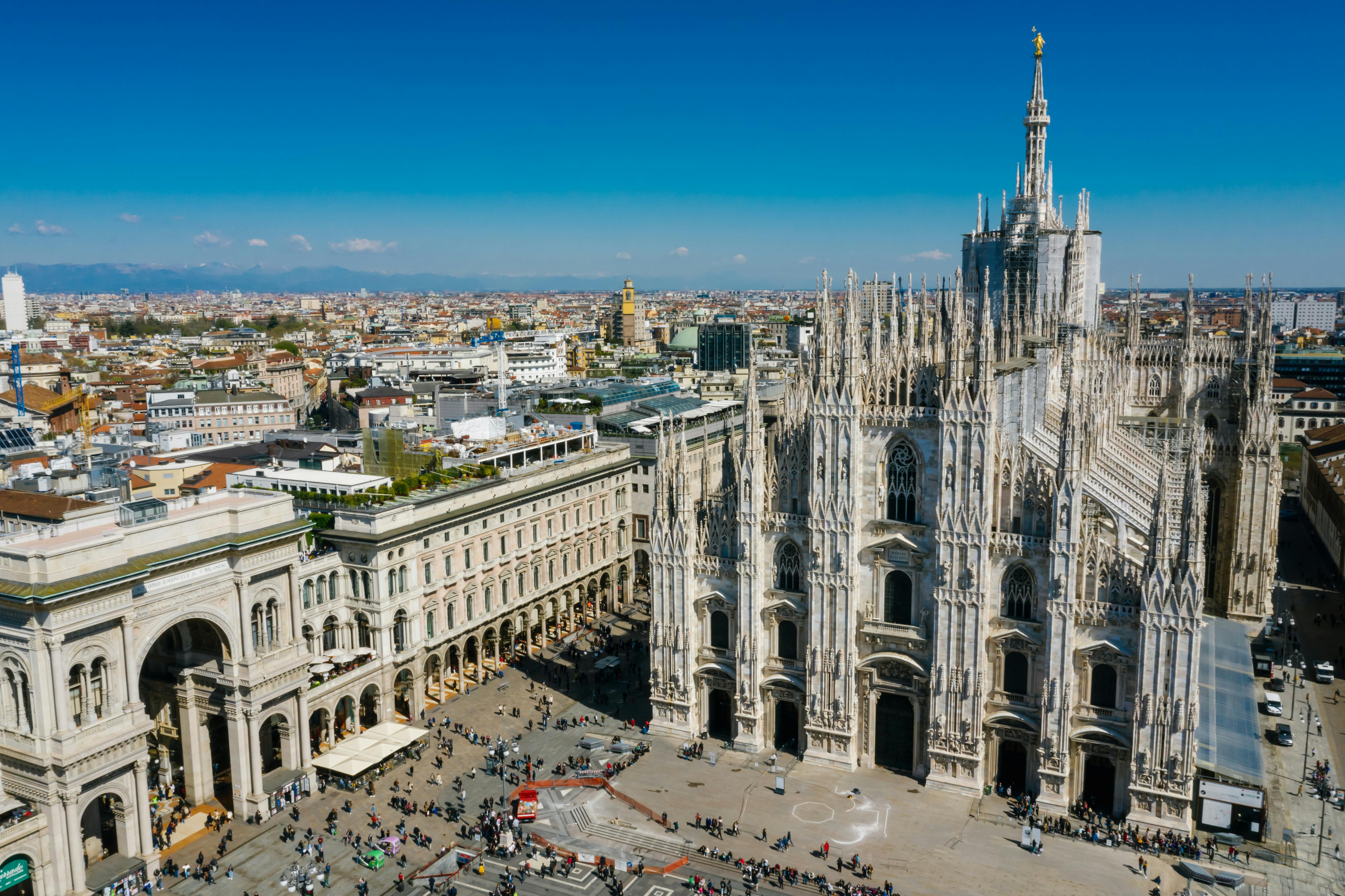
The four areas referenced in the deal — Scalo Farini, Bicocca, Porta Venezia/Corso Buenos Aires and Piazzale Loreto— are entirely consistent with a strong urban thesis. These are parts of Milan where regeneration, accessibility, visibility and diversified demand all intersect.
But stopping at geography would be a shallow reading.
In a leased hotel portfolio, the central question is not only where the assets are located. It is who makes the rent sustainable over time. In other words, the core of the underwriting is not Milan alone. It is Invest Hospitality.
By leaving operations with the incumbent platform, Covivio is not merely preserving continuity. It is making a judgement that the operating counterparty is sufficiently credible to support a long-dated lease with a variable rent component. That point is crucial. In the leased hotel model, the tenant is not a secondary contractual feature. It is the bridge between paper yield and actual income.
If the operator is weak, minimum guaranteed rent offers only superficial comfort. If the operator is strong, specialised and deeply embedded in the market, a long lease becomes a genuine income-stabilisation mechanism. And if that operator also has the ability to extract value from a complex urban market such as Milan, the variable component is not a cosmetic feature. It is the element that gives the deal its positive convexity.
That is why the most accurate reading of this transaction is a direct one: Covivio has not simply acquired a portfolio. It has underwritten Invest Hospitality’s ability to convert urban demand into defensible cash flow.
Milan is no longer a recovery story. It is a pricing-power market
The second major strength of the transaction is the city itself. But here too, lazy interpretations should be avoided.
Milan is not attractive simply because it is “doing well”. Milan is attractive because it is one of the very few Italian markets that has moved beyond recovery dynamics and into a different phase altogether: one defined by structural depth of demand. Business travel, fashion, trade fairs, major events, conferences, city breaks, international traffic and premium domestic demand: the differentiator is not volume alone. It is the density of the calendar, the continuity of demand drivers, and the city’s ability to sustain ADR levels that remain exceptional by Italian standards.
For investors, that means something very tangible: Milan today offers more than occupancy. It offers pricing power. And in hotel real estate, pricing power is one of the most valuable forms of downside protection because it supports the top line, reinforces variable rent and underpins long-term asset values.
Anyone allocating to Milan today is not chasing a post-pandemic rebound. They are buying the city’s ability to convert economic intensity, international relevance and urban momentum into recurring income.
That is exactly the kind of underlying market that makes a structure like this compelling.
The pricing does not look aggressive. For investors, that may be the strongest signal of all
Pricing deserves particular attention.
The best hotel real estate deals are not the ones that impress by headline value. They are the ones that show discipline in the relationship between price paid and income quality acquired. In this case, the 6% minimum yield and c.7% target yield suggest that Covivio has not paid an inflated trophy multiple. Rather, it appears to have acquired a four-star leased portfolio in a gateway city, backed by a credible operator and structured in a way that balances protection with growth.
That is a critical distinction.
Less sophisticated investors buy scarcity.
Better investors buy repeatable income quality.
And that is precisely the impression here: Covivio has not paid for the story around the asset. It has paid for its ability to generate cash flow that is underwritable, financeable and defensible.
ESG is not window dressing. It is value protection
There is also an aspect of the transaction that is too often treated as a reputational add-on when it should be read for what it actually is: a core underwriting component.
The references to LEED Gold, BREEAM In-Use Very Good, alignment with the EU Taxonomy and CRREM 2030targets are not there to make the deal look more elegant on paper. They are there to mitigate future risk. In a market where capital is becoming progressively more selective on the technical and environmental quality of assets, compliance is no longer a secondary virtue. It is a defensive layer.
Anyone still treating ESG as presentation rather than substance is analysing a market that has already changed. In the new European real estate cycle, the quality of income increasingly depends on its regulatory and financial durability. Strong income generated by a weak asset will be discounted. Strong income generated by an asset already aligned with future standards is far more likely to hold its value.
Viewed through that lens, Covivio is not only buying today’s income stream. It is also protecting tomorrow’s exit quality.
Where the real risk lies
No serious advisory analysis is complete unless it identifies the residual risk with precision.
Here, the principal risk is not Milan. Nor, at least at first glance, is it the entry price. The real risk lies in the translation of theoretical upside into actual contractual performance. The 6% floor provides protection. But the real quality of the deal is measured by the spread between the minimum yield and the target outcome.
That spread will not be closed by the city alone. It will be delivered by the operator, through execution, revenue management, commercial positioning, product resilience, distribution discipline and the ability to convert a strong market into sustainable margin.
In substance, then, this is less a bet on Milan itself than a bet on the ability to turn Milan into stable, credible cash flow.
And that is exactly where the quality of an institutional transaction should be assessed: not by room count, but by the precision with which risk, counterparty and contractual structure have been selected.
What this deal really tells the Italian market
The lesson extends well beyond the transaction itself.
Institutional capital is not returning to Italian hospitality indiscriminately. It is returning where it finds deep markets, credible operating counterparties, intelligent contracts and defensible assets. A good location is no longer enough. A strong brand is no longer enough. A persuasive regeneration story is no longer enough. What matters now is an overall structure in which the income is genuinely visible, sustainable and aligned with the standards capital will demand over the coming years.
That is why this transaction deserves attention. Not because it is large, but because it is highly instructive.
It shows that, in urban hospitality today, value no longer resides in the asset alone. It resides in the quality of the structure that makes that asset investable.
The strength of the Covivio transaction lies not in its size, but in its precision.
It buys Milan, but without absorbing the full volatility of hotel operations.
It buys hotels, but is really targeting income.
It locks in a floor while preserving room for growth.
It buys real estate, but the real underwriting is on the operator.
It buys the present, while also protecting the future exit.
That is why the deal matters. It does not merely describe a transaction. It reflects the new criteria by which serious capital is selecting urban hospitality exposure in Italy.
So the conclusion is straightforward: Covivio has not bought four hotels. It has bought well-priced risk, defensible income and a strategic position in Milan built on genuine institutional logic.
That is the difference between doing deals
and allocating capital strategically.
For those who want to read the hotel sector through the same strategic lens, hotelmanagementgroup.it can serve as a useful point of reference.
Roberto Necci
If you need assistance for deal in Italy: r.necci@robertonecci.it