In Italy’s hospitality investment market, the operations carried out by Cassa Depositi e Prestiti are much more than a series of hotel real estate transactions.
The issue is not simply that CDP has invested in hotels, resorts, tourism funds and urban regeneration projects.
The issue is deeper: CDP is helping redefine how the market understands the hotel asset.
Not merely as a building with rooms.
Not merely as a family-run business.
Not merely as an accommodation facility.
Increasingly, the hotel is being treated as economic infrastructure: an asset capable of generating real estate value, operating value, financial value, employment value and destination value.
This is where the real question begins.
Hotel owners who hold the asset but do not control its value risk losing strategic relevance.
Hotel operators without a financial vision risk becoming vulnerable.
Investors who buy hotels without understanding the relationship between property, operations and capital risk acquiring a problem rather than an opportunity.
Italy’s hotel market is entering a more mature phase. CDP’s activity is one of the clearest signals of that transition.
CDP is not just investing in hotels: it is treating tourism as strategic infrastructure
CDP-related activity in the hospitality sector includes equity investments in hotel groups, tourism-focused real estate funds, resort acquisitions, urban regeneration projects, sale and leaseback transactions and financial support mechanisms.
Among the most significant cases are:
-
the investment in Rocco Forte Hotels;
-
the investment in TH Resorts;
-
the acquisition of tourism resorts through dedicated funds;
-
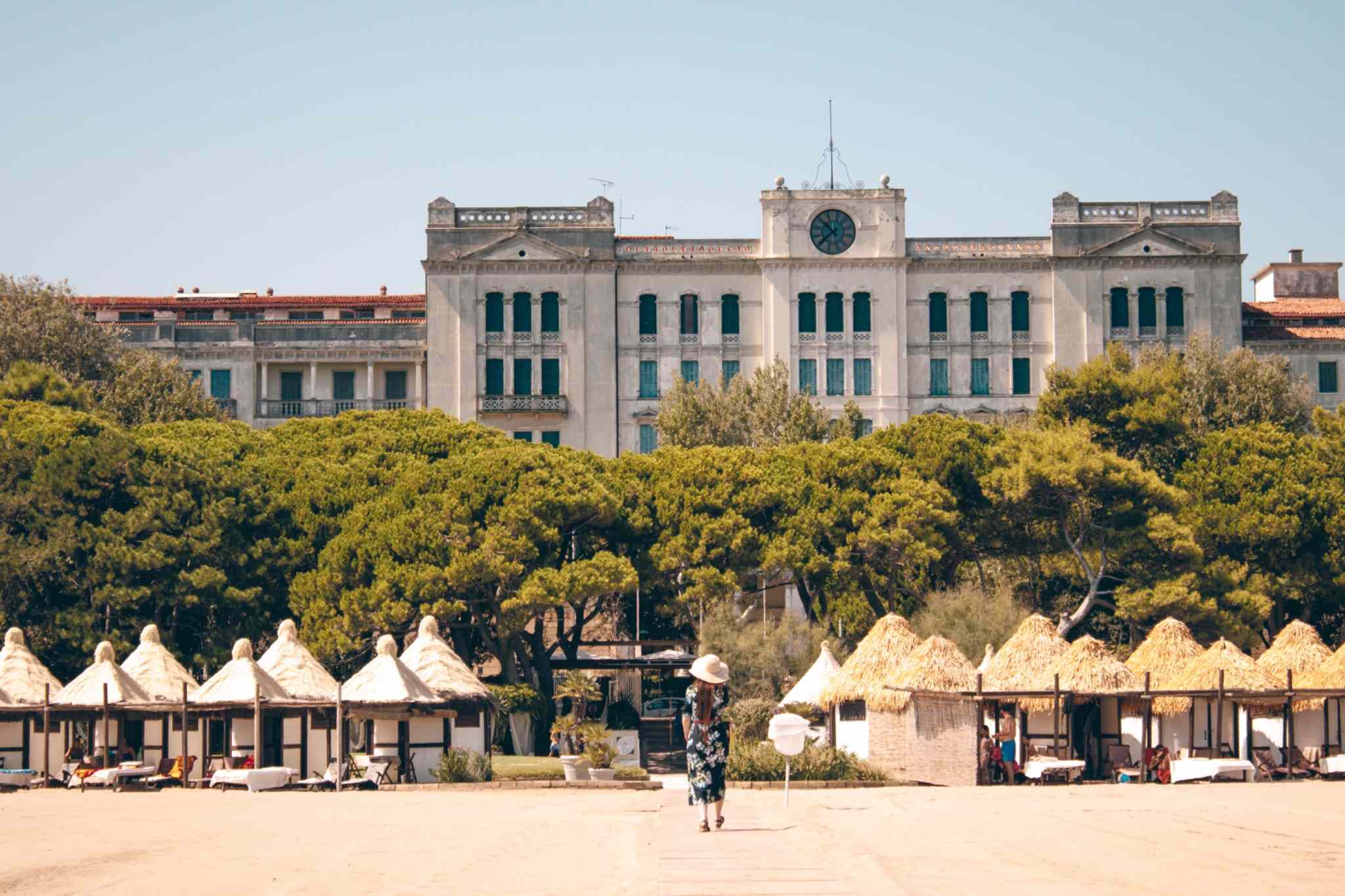
the redevelopment project for the former Ospedale al Mare on the Venice Lido;
-
the creation of the Fondo Nazionale del Turismo;
-
the redevelopment of the Cavallerizza Reale in Turin;
-
the sale and leaseback of the Ibis Styles Roma EUR hotel.
The underlying analysis highlights a substantial sequence of transactions: approximately €76 million for the investment in Rocco Forte Hotels, €92 million for the acquisition of five tourism resorts, €20.4 million for the investment in TH Resorts, approximately €110 million planned for the Venice Lido project, a National Tourism Fund with potential assets of up to €2 billion, approximately €35 million for the Cavallerizza Reale project in Turin and €28 million for the sale and leaseback of the Ibis Styles Roma EUR.
This is not a random sequence of deals.
It is a strategic pattern.
CDP is not stepping in simply because there is a hotel building. It is stepping in where a hotel can become a lever for industrial policy, urban regeneration, market consolidation or the protection of a nationally relevant tourism asset.
In other words, the hotel is being treated as infrastructure.
And when a hotel becomes infrastructure, everything changes: how it is financed, valued, managed, sold, acquired and repositioned.
The traditional Italian owner-operator model is under pressure
For decades, the dominant model in Italian hospitality was the owner-operator model.
The same family owned the property, managed the hotel, dealt with the bank, decided on investments, supervised staff, set prices and controlled commercial relationships.
That model shaped a significant part of Italy’s hotel history.
But today it is no longer enough.
The modern hotel requires capital, technology, management control, revenue management, energy efficiency, distribution strength, digital marketing, contractual discipline, sophisticated banking relationships and the ability to engage with funds, brands, operators and investors.
Owning the property no longer guarantees value.
In many cases, it can even become a constraint.
A hotel in a strong location but without investment, governance, margin control or commercial capability can lose value even if the underlying property appears attractive.
Conversely, an underperforming hotel can become highly attractive if it has location, scale, repositioning potential, efficiency upside and the right contractual structure.
The real question is no longer: “How much is the property worth?”
The real question is: “How much value could this asset generate if it were properly redesigned?”
The separation between ownership and operations is the decisive shift
Many institutional hotel transactions are built around one principle: separating real estate ownership from hotel operations.
In Italy, this shift is still widely underestimated.
In a more mature model, the owner of the property does not necessarily have to be the hotel operator. The owner may be a fund, a real estate company, an institutional investor, a holding company or a dedicated vehicle.
Operations may then be entrusted to a specialised operator through a hotel lease, an operating lease, a management agreement, a franchise structure or a hybrid model.
This makes it possible to distinguish two levels that are often confused:
the real estate return of the asset;
the operating profitability of the hotel business.
When these two levels are confused, valuation errors multiply.
An unsustainable rent can destroy the operating business.
Weak operations can devalue the property.
An underinvested building can prevent repositioning.
A poorly structured contract can transfer risk without creating value.
The separation between ownership and operations is therefore not an abstract financial formula.
It is a more mature way to manage risk.
This is also one of the central themes explored in the Investimenti Alberghieri blog, where hotels are analysed not simply as real estate assets, but as the combination of property, operations, debt, contracts, cash flows and value creation potential.
Sale and leaseback is not a shortcut: it is a test of maturity
One of the most interesting structures in the new hospitality market is sale and leaseback.
The mechanism is well known: the owner sells the property and continues to operate the hotel by paying rent.
On paper, it looks simple.
In practice, it is one of the most delicate transactions in hospitality.
For the operator, sale and leaseback can unlock capital, reduce bank exposure, finance renovations, strengthen the balance sheet and support new investments.
For the investor, it can mean acquiring an operating hotel asset with an industrial tenant and a potentially stable income stream.
But sale and leaseback creates value only if the rent is sustainable.
If the rent is poorly structured, the transaction can become a trap.
The hotelier receives liquidity in the short term but is left with an excessive fixed cost. The investor acquires an apparently solid asset, but one supported by an operating business that may not be able to sustain the lease. The result is a progressive loss of value for both parties.
The point, therefore, is not to sell the property and remain as operator.
The point is to understand whether, after the transaction, the hotel will be stronger, more competitive and more bankable.
If the answer is no, sale and leaseback is not sophisticated finance. It is simply debt disguised as liquidity.
A hotel’s value is not the same as its current EBITDA
One of the most common mistakes in hotel valuation is stopping at current performance.
EBITDA, revenue, occupancy, RevPAR, ADR and GOP are essential indicators, but they do not fully capture value.
A hotel can have modest numbers and significant upside potential.
It can have apparently strong numbers and high hidden risk.
It can be profitable today but fragile tomorrow.
It can be loss-making but located in a strategic position that justifies a repositioning plan.
In hospitality, value is created through the interaction between the present and the possible future.
That is why a serious valuation must consider at least four dimensions.
The first is real estate: location, size, physical condition, restrictions, planning status, potential for expansion or conversion.
The second is operational: revenue, costs, margins, staffing, distribution, brand reputation, operating standards and commercial capability.
The third is financial: debt, cash flow sustainability, capex requirements, capital structure and ability to attract investors or lenders.
The fourth is strategic: repositioning potential, interest from third-party operators, brand compatibility, destination outlook and exit strategy.
Without these four perspectives, the value of a hotel remains incomplete.
For this reason, the hotel guides published on RobertoNecci.it offer a further point of reference for those who want to understand valuation, management, crisis situations, contracts, investment and governance in the hospitality sector.
Operational box: what hotel owners and investors should do now
CDP’s operations point in a clear direction: the market is becoming more selective, more financial and more professional.
Hotel owners and investors should therefore carry out a number of checks before making decisions on sale, lease, refinancing, management or repositioning.
1. Separate real estate value from operating value
A hotel may have a strong property component and weak operations. Or it may have an interesting operating business but require significant capex. The two dimensions must be analysed separately.
2. Test rent sustainability
Every lease, operating lease or sale and leaseback transaction must start from the hotel’s real ability to sustain rent after costs, payroll, maintenance, commissions and investment needs.
3. Assess capex requirements
An apparently profitable hotel may conceal deferred maintenance, outdated rooms, inefficient systems or public areas no longer aligned with market expectations.
4. Analyse debt before it becomes an emergency
Hotel debt must be assessed against future cash flows, not only against the value of the property. A hotel may be asset-rich but financially fragile.
5. Understand whether the hotel needs an operator, a brand or a financial partner
Not every hotel should be sold. Some need better management. Others need refinancing. Others should be contributed to a vehicle, leased, branded or repositioned.
6. Build a strategy before entering negotiations
Negotiating power is preserved when the asset is still under control. It is lost when decisions are driven by urgency, debt or banking pressure.
This is the point: the market no longer rewards those who wait. It rewards those who arrive prepared.
The market will no longer reward property-only owners, but builders of hospitality value
The statement may sound blunt, but it captures the essence of the shift.
The Italian hotel market will no longer automatically reward those who merely own the property.
It will reward those who can transform that property into a value-generating hospitality platform: capable of producing cash flow, attracting demand, supporting investment, engaging professional operators and creating long-term value.
This applies to urban hotels.
It applies to resorts.
It applies to historic properties.
It applies to distressed hotels.
It applies to conversion assets.
It applies to family-owned hotels with no succession plan.
It applies to former public buildings.
It applies to palazzi, former convents, former clinics, former office buildings and complex assets to be transformed into hospitality products.
The future of hotel investment in Italy will not be limited to already-performing hotels.
It will be built above all around transformable situations.
This is where the difference emerges between a speculative investor and a competent investor.
The first looks for a discount.
The second looks for a gap between current value and potential value.
What hotel owners must understand
For hotel owners, the message is clear: value must be governed before the market imposes its own rules.
Many owners start considering a sale, lease, management agreement, refinancing, renovation or partnership only when financial pressure is already high.
That is a mistake.
The best time to decide what to do with a hotel is not when the bank is pushing, margins are shrinking or debt has become difficult to manage.
The best time is when the asset is still negotiable.
A hotel owner should know in advance:
-
whether it makes sense to continue operating directly;
-
whether it would be better to lease the hotel business;
-
whether the potential rent is sustainable;
-
whether a management agreement could create more value;
-
whether an international brand is useful or unnecessary;
-
whether selling the property releases value or weakens the business;
-
whether the debt structure is consistent with cash flows;
-
whether the hotel needs capital, management or both.
Those who cannot answer these questions risk being driven by the market.
Those who address them early preserve negotiating power.
What investors must understand
For investors, the lesson is just as clear.
Buying hotels does not mean buying buildings with a hotel sign on the facade.
It means buying complexity.
A hotel is an operating asset. It depends on demand, reputation, staffing, technology, distribution, maintenance, seasonality, contracts, capital and managerial capability.
Those who look at it only as real estate risk underestimating operations.
Those who look at it only as a business risk underestimating the asset.
Those who look at it only as yield risk underestimating the risk.
The best opportunities will not necessarily be the most beautiful, famous or central hotels.
They will be those where there is a meaningful gap between current performance and real potential.
Hotels with excessive debt but strong locations.
Family-owned hotels with no generational transition.
Properties with low margins but high commercial potential.
Underused assets in growing destinations.
Historic assets to be repositioned.
Resorts to be refocused.
Independent hotels that could benefit from a more sophisticated operator.
Returns are created there: in the ability to see value where the market sees only a problem.
The greatest risk: confusing capital with competence
The entry of institutional capital into hospitality is a positive signal.
But capital alone is not enough.
Capital can buy a property.
It can finance a renovation.
It can support a business plan.
It can unlock liquidity.
It can make urban regeneration possible.
But capital does not replace competence.
A badly renovated hotel remains a weak hotel.
A poorly financed hotel remains a fragile hotel.
A hotel with the wrong contract remains a risk.
A hotel without management control remains opaque.
A hotel without positioning remains vulnerable.
A hotel without management remains a building with costs.
The critical factor is therefore not the availability of money.
It is the ability to turn capital into operating value.
This is where many hotel projects fail.
They do not fail because the property is missing.
They fail because the model is missing.
The next phase of hospitality investment in Italy
CDP’s operations point to a broader direction: the Italian hospitality market will increasingly move toward integrated models combining capital, operations and real estate value creation.
This will have several consequences.
Undercapitalised hotels will attract increasing attention.
Hotel assets with weak operations will be rethought.
Family-owned properties with no succession plan will enter the radar of investors and operators.
Lease and management agreements will become more sophisticated.
Real estate funds will look more closely at hospitality assets.
Professional operators will gain greater negotiating power.
Hotel valuation will become less purely real estate-driven and increasingly industrial.
Those who understand this transformation early will gain a competitive advantage.
Those who continue to think with the categories of the past may discover too late that owning a hotel no longer means controlling its value.
Conclusion: Italian hotels are entering the age of industrial finance
The CDP case tells a story that goes beyond individual transactions.
It tells the story of Italian hospitality entering a more sophisticated phase, in which real estate, operations, capital, contracts and industrial strategy become inseparable.
This does not mean the family-owned model is over.
It means it must evolve.
It does not mean property ownership no longer matters.
It means ownership must be managed with more professional logic.
It does not mean funds will replace hoteliers.
It means hoteliers must learn to engage with funds, banks, investors, operators, advisors and institutional players.
The hotel of the future will not be valued only for where it is located.
It will be valued for what it can become.
And this is the real battleground of hospitality investment in Italy: transforming complex properties, fragile operations and misaligned capital into value-generating hotel platforms.
Those who can do it will lead the market.
Those who cannot may end up selling it to someone else.
CTA
If you own a hotel, are evaluating a hospitality investment, want to analyse a hotel asset, or need to structure a lease, sale, management agreement, sale and leaseback or repositioning project, the first step is not to look for a buyer.
The first step is to understand where the real value lies.
Hotel Management Group supports hotel owners, investors and operators in the strategic, operational and financial analysis of hospitality assets.
Before selling, buying, leasing or refinancing a hotel, analyse the real value of the transaction.
Request a strategic discussion with Hotel Management Group and turn the hotel from a mere property into a value-generating hospitality asset.
Roberto Necci - r.necci@robertonecci.it