The Cala Finanza – Tavolara Bay case is a lesson every hotel investor should study carefully.
It proves a simple but often underestimated point: even a luxury investment backed by international capital, a strong brand and an exceptional location can become fragile if permitting, planning and reputational due diligence are not built with the same discipline as the financial model.
In hotel investment, capital is not enough.
A rendering is not enough.
A brand is not enough.
The beauty of the location is not enough.
A hotel investment becomes truly solid only when it is sustainable across five dimensions: real estate, operations, permitting, finance and local context.
The Tavolara Bay project, linked in public sources to the Brazilian group JHSF Participações / JHSF Capital and to the luxury hospitality world of Fasano, has become one of the most relevant Italian case studies for understanding the evolving relationship between hotel investment, landscape protection, special permitting procedures and institutional consent.
From green light to revocation: what happened at Cala Finanza
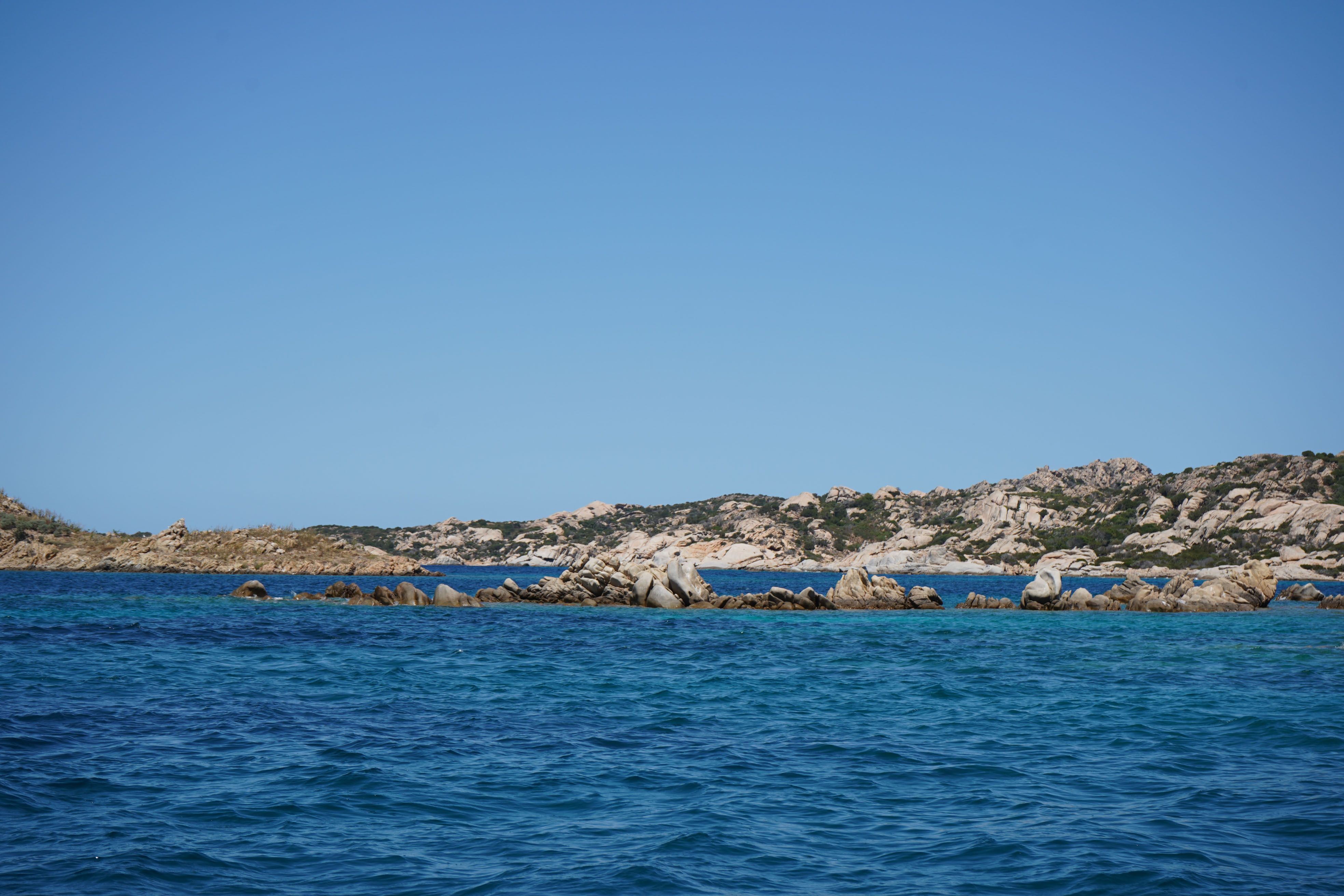
The project concerns the Cala Finanza area, in the municipality of Loiri Porto San Paolo, Sardinia, facing one of the most sensitive and recognizable landscapes in the Mediterranean: the Tavolara – Punta Coda Cavallo system.
In its first phase, the project obtained a favourable step within the procedure connected to the single Special Economic Zone for Southern Italy. The Council of Ministers had rejected the objection raised by the Region of Sardinia, opening the way for the first permitting phase.
But the picture changed quickly.
Following strong opposition from the Region, local mobilisation and the revocation of the municipal resolution that had supported part of the administrative process, the Department for Southern Italy of the Presidency of the Council of Ministers revoked single ZES authorisation no. 74/2026.
This should not be read merely as an administrative setback. It should be read as a market signal.
Because when a hotel investment reaches this level of institutional conflict, the issue is no longer simply whether a permit can be obtained. The issue becomes the bankability of the transaction, the protection of invested capital, the resilience of the business plan and the reputation of the investor.
The strategic issue: first phase, masterplan and public perception
One of the most delicate aspects of the Cala Finanza case is the distinction between the first authorised phase and the broader public narrative surrounding the masterplan.
Some sources referred to an initial intervention involving a limited area and the enhancement of existing buildings. At the same time, public debate connected the project to a much broader development, including a luxury hotel, villas, services, a beach club, a marina and ancillary real estate components.
For an investor, this distinction is crucial.
Assessing a single permitted phase is one thing.
Assessing the overall perception of the transaction is another.
Assessing the reputational impact of the full masterplan is another matter entirely.
In the hotel market, especially in the luxury segment, public perception can affect investment value almost as much as the technical content of the official documents. If a project is perceived as being forced onto the local context, the debate no longer remains confined to planning offices. It becomes political, media-driven and identity-based.
That is exactly what happened at Cala Finanza.
The false dilemma: development versus environment
Framing Cala Finanza as a battle between development and the environment would be too simplistic.
The real question is different: what kind of hotel development is compatible with a landscape of exceptional sensitivity?
Sardinia is not an ordinary destination. Its coastal landscape is not just a backdrop. It is an essential component of the island’s tourism, real estate and hotel value.
In a luxury investment, the landscape is not an aesthetic accessory. It is part of the product. It is what allows an operator to sell rooms at premium rates, attract high-spending international demand, build positioning and generate real estate value.
For this reason, landscape should not be seen only as a constraint. It must be understood as an asset.
Anyone investing in luxury hospitality in Italy must understand this difference. The local context is not an empty space to be filled. It is a resource to be interpreted. If a project enhances it, the investment becomes stronger. If the project is perceived as invasive, the investment becomes weaker.
The lesson for funds, banks and hotel investors
The Tavolara Bay case should become part of the analytical framework used by anyone evaluating, financing or structuring complex hotel transactions.
Because it shows that permitting risk is not a secondary risk. It is a primary risk.
A bank financing a hotel project should not only ask what the property will be worth once stabilised. It should ask whether that project can realistically reach stabilisation.
A fund should not look only at potential real estate upside. It should assess the risk of suspension, litigation, revocation, institutional conflict and procedural delay.
An investor should not limit the analysis to ADR, occupancy, RevPAR, GOP and cap rate. They should also measure planning robustness, local consent, landscape compatibility and the ability of the project to withstand legal and institutional challenges.
Because a hotel investment can look excellent in a financial model and become unmanageable in reality.
Permitting risk destroys value before construction even begins
In hotel real estate, permitting risk is often treated as a preliminary phase: an obstacle to be overcome before the “real” investment begins.
That is a mistake.
Permitting risk is already part of value.
An unstable authorisation reduces asset value.
Pending litigation increases the cost of capital.
An administrative revocation weakens bankability.
Strong local opposition damages reputation.
Institutional conflict slows down or compromises the exit strategy.
In a hotel transaction, time is not neutral. Every month of delay can change the expected return. Every procedural uncertainty can increase financing costs. Every public conflict can reduce the attractiveness of the investment.
That is why, when evaluating a hotel project, the question should not only be “how much can it yield?” but also “how deliverable is it in practice?”
JHSF, Fasano and the paradox of international luxury
The involvement of an international group such as JHSF and the connection with the Fasano universe make the case even more relevant.
In the luxury market, brand strength is a value multiplier. It can attract high-spending guests, increase the international visibility of the destination, enhance the perceived value of the asset and improve the ability to generate premium revenues.
But a brand does not neutralise permitting risk.
In some cases, it amplifies it. The stronger the brand, the more visible the project becomes. The more visible the project, the more decisive its social and political acceptability becomes.
A local investment may remain confined to a technical debate. An international luxury investment, in a symbolic location, immediately becomes a public case.
This is the paradox of contemporary luxury hospitality: the brand increases commercial value, but it also increases reputational exposure.
Hotel investment or real estate transaction?
Another decisive issue concerns the true nature of the operation.
Many projects presented as hotel investments are in fact mixed-use transactions, where hospitality coexists with villas, residences, private services, a marina, a beach club or land-development components.
There is nothing inherently illegitimate about this. But the analysis must be clear.
A pure hotel investment is assessed on the ability of the hotel business to generate cash flow: room revenue, food and beverage, services, GOP, EBITDA, capex, commercial positioning, reputation and operational management.
A tourism real estate transaction is also assessed on planning uplift, land value creation, the sale or management of ancillary components, location scarcity and the ability to generate real estate upside.
When these two logics overlap, risk increases.
Because a destination may be more willing to accept a genuinely integrated hotel project than an operation perceived as the private appropriation of collective landscape value.
The question every advisor should ask is therefore very concrete: where does the real value of the transaction come from? From hotel operations or from real estate transformation?
The seven questions an investor should have asked
The Cala Finanza case shows that, before entering a complex hotel transaction, investors need much tougher questions than those usually found in commercial teasers.
First: is the project fully consistent with the planning instruments in force?
Second: are there landscape, environmental or coastal constraints that could make the process unstable?
Third: is the special procedure being used truly resistant to challenge?
Fourth: are the Region, municipality, technical bodies and local community aligned, or is there a latent institutional conflict?
Fifth: does the business plan still hold if the project is delayed by 24 or 36 months?
Sixth: can the project be presented as an enhancement of the destination, or does it risk being perceived as the private appropriation of a landscape asset?
Seventh: how would a permitting stop affect asset value, invested capital, reputation and exit potential?
These questions are not ancillary. They are part of the valuation.
Why hotel due diligence must evolve
Traditional hotel due diligence often focuses on financial statements, historical performance, the physical condition of the property, competitive benchmarking, capex, contracts, staffing, distribution channels and commercial potential.
All of this is necessary. But it is no longer sufficient.
In development, conversion, coastal transformation and luxury mixed-use projects, broader due diligence is required. Integrated due diligence.
It must include:
-
planning analysis;
-
landscape review;
-
environmental constraint assessment;
-
mapping of institutional stakeholders;
-
litigation-risk assessment;
-
local reputation analysis;
-
permitting timeline stress testing;
-
business-plan resilience in the event of delays;
-
consistency between the real estate project and the actual hotel operating model.
Only in this way is it possible to understand whether an investment is genuinely feasible or merely attractive in theory.
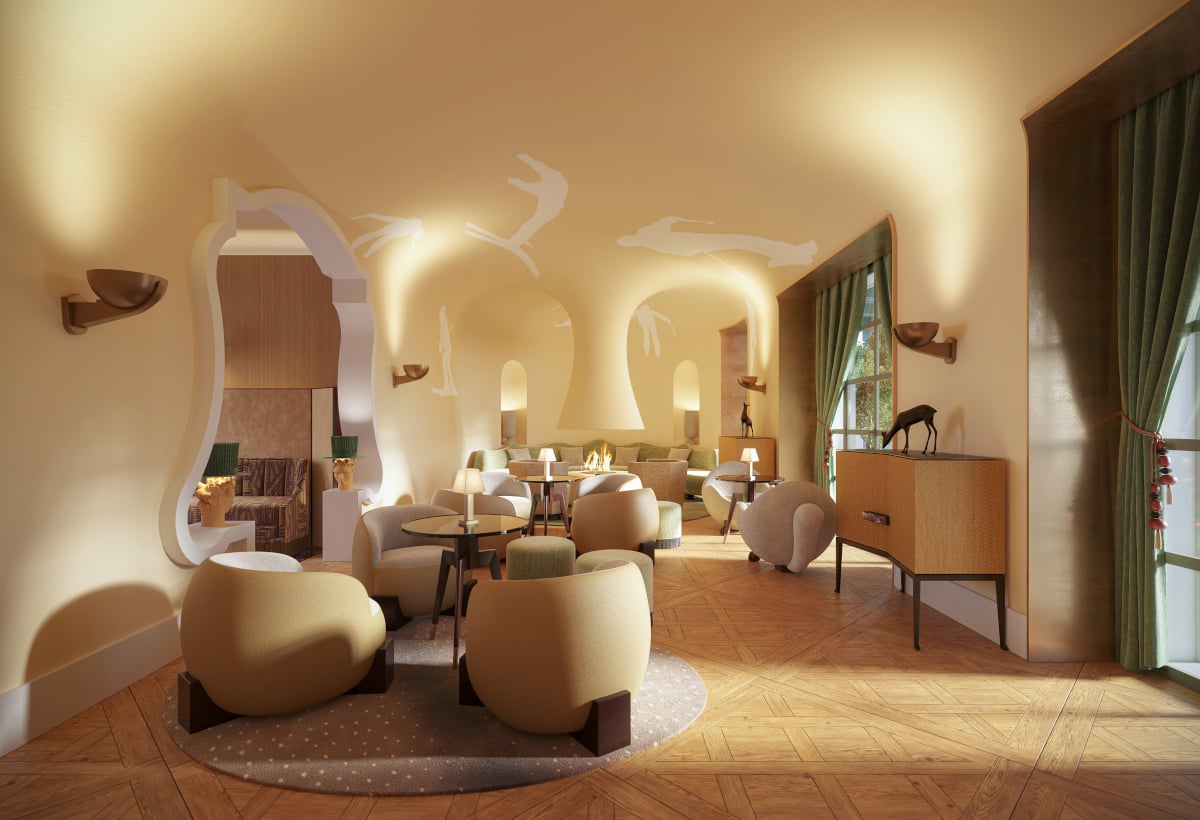
Value is not in the rendering. It is in deliverability.
One of the most dangerous mistakes in hotel investment is falling in love with the rendering.
The rendering shows the project as it is supposed to be.
Due diligence shows whether that project can actually exist.
Between the two, there is often a wide gap.
The rendering does not show the administrative court.
It does not show the services conference.
It does not show the Regional Landscape Plan.
It does not show local opposition.
It does not show dead time.
It does not show the financial cost of delays.
It does not show reputational loss.
That is why the value of a hotel investment cannot be measured only by the beauty of the idea. It must be measured by its concrete deliverability.
Cala Finanza is an exemplary case: a project potentially very strong in terms of luxury positioning, yet exposed to such permitting and local-context fragility that it became a national case.
What this case teaches the Italian market
The Italian hotel investment market remains extremely attractive. Italy offers unique destinations, iconic properties, art cities, extraordinary coastlines, international demand and a hospitality stock that often still has significant value-creation potential.
But precisely for this reason, it cannot be approached with simplified logic.
Italy is not a market where one can simply buy an asset, apply a brand, execute capex and wait for revaluation. It is a market where value comes from the ability to understand context.
The best transactions will be those capable of combining capital, hotel expertise, patience, respect for the destination and knowledge of the rules.
The weakest transactions will be those built on a purely financial reading of the asset, without a real understanding of its legal, planning and social complexity.
The role of hotel guides and the hospitality analysis ecosystem
This is why a more advanced culture of hotel investment is essential.
The hotel guides on RobertoNecci.it examine key topics such as hotel valuation, investments, business distress, management contracts, revenue management, governance, asset management and risk control.
The blog InvestHotel.it offers an operational and strategic reading of the hotel sector, useful for entrepreneurs, operators and investors who want to understand the real dynamics of the hotel as a business.
InvestimentiAlberghieri.it was created specifically to analyse transactions, capital, assets, funds, acquisitions, conversions and market cases with a dedicated focus on hospitality investment.
NecciHotels.it completes the ecosystem with a focus on hotel management, operational control, commercial positioning and the concrete critical issues that turn a real estate investment into a sustainable hotel business.
Because this is exactly the point: a hotel is not just a property. It is a complex business, embedded in a destination and exposed to rules, people, markets, reputation and operational capability.
Cala Finanza as a case study
Cala Finanza is a case study because it concentrates all the typical risks of contemporary hotel investments:
-
permitting risk;
-
landscape risk;
-
reputational risk;
-
political and institutional risk;
-
litigation risk;
-
misalignment between investor and local context;
-
confusion between real estate value and hotel value.
For an advisor, a bank or a fund, this case shows that the decisive question is not only: “how much is the project worth if completed?”
The decisive question is: “what is the real probability that the project will be completed on time, in the expected form and under the expected conditions?”
This difference changes everything.
Because a project worth hundreds of millions on paper may be worth far less if its permitting path is unstable.
Conclusion: capital must learn to read the local context
The Tavolara Bay case does not prove that luxury hotel investments in Sardinia are impossible.
It proves something more important: luxury hotel investments are possible only if they are built on a solid, transparent and locally compatible foundation.
International capital will continue to look at Italy. It will continue to seek iconic coastlines, historic buildings, high-demand destinations, undervalued properties and repositioning opportunities.
But Italy is not a blank page.
It is a country made of landscape, constraints, local autonomies, planning rules, communities, history, institutional conflicts and public sensitivity.
Those who see all this as an obstacle risk making the wrong investment.
Those who see it as an integral part of due diligence can build stronger, more defensible, more financeable and more durable transactions.
Cala Finanza teaches that hotel value does not come from forcing the local context. It comes from turning that context into the main ally of the investment.
Are you evaluating a hotel investment?
Before acquiring, financing, developing, converting or repositioning a hotel asset, an independent and integrated assessment is essential.
It is not enough to estimate the value of the property.
It is not enough to imagine the brand.
It is not enough to build an optimistic business plan.
You need to understand whether the transaction is truly sustainable, capable of being permitted, manageable, financeable and defensible over time.
For investment dossiers, hotel valuations, strategic due diligence and advisory support on hospitality transactions, write to:
info@investimentialberghieri.it
A hotel investment does not fail when it starts losing money.
It fails much earlier: when it is assessed without seeing the risk.