Aldrovandi Villa Borghese Is Not Just a Hotel Transaction. It Is a Market Signal.
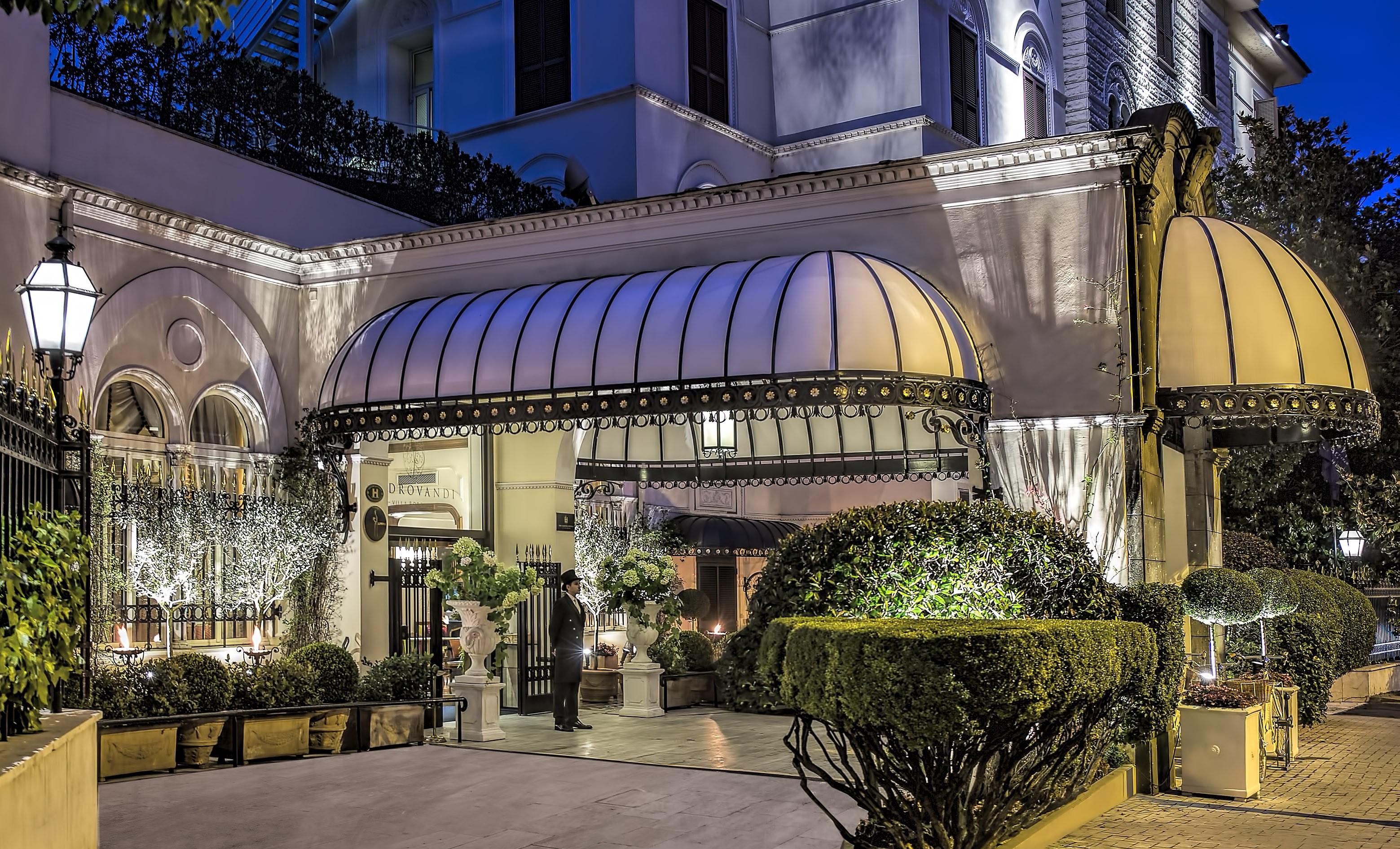
The Aldrovandi Villa Borghese is not merely a five-star luxury hotel in Rome’s Parioli district. It is one of the most revealing hospitality assets for understanding the new phase of hotel investment in Italy.
Its recent history tells a clear story: a prestigious hotel is no longer valued only as real estate, nor simply as an operating business. It is increasingly viewed as a complex platform of capital, governance, repositioning, reputation and future value creation.
First came family ownership.
Then the entry of an international group.
Finally, the transition to a specialised financial investor.
The owning company, Mercati S.p.A., is now fully controlled by Spain-based Arlaes Management S.L., a private equity firm headquartered in Madrid. Full control followed an earlier phase in which Arlaes had already acquired a minority stake, before purchasing the remaining shareholding previously held by Doğuş Group.
But ownership is only the surface of the story.
The real question is not: who owns Aldrovandi Villa Borghese today?
The right question is: why does an asset like Aldrovandi attract private equity, and how much value can be created after the acquisition?
That is where this case becomes relevant for investors, hotel owners, family offices, banks, real estate funds and hospitality operators.
From iconic hotel to capital platform
For years, Aldrovandi Villa Borghese reflected a familiar model in high-end Italian hospitality: family ownership, historical identity, luxury positioning, strong real estate value and local prestige.
In 2016 came the first decisive shift. Doğuş Holding, the Turkish conglomerate active in tourism, real estate, marine, finance, food and beverage, and automotive, acquired 100% of Mercati S.p.A. from the Ossani family.
Industry sources reported a transaction value of approximately €90 million.
That first sale already marked a change in paradigm. Aldrovandi was no longer just a prominent family-owned Roman hotel. It became an asset capable of fitting into an international investment strategy.
Then came Arlaes Management S.L.: first with a 49% stake, and later with the acquisition of the remaining 51%, reaching full control between November and December 2024.
This sequence matters because it does not simply describe a change in ownership. It shows how the way capital looks at luxury hotels has changed.
| Phase | Main Ownership | Strategic Interpretation |
|---|---|---|
| Historical phase | Ossani family | Family-owned luxury hotel |
| 2016 | Doğuş Group | Internationalisation of the asset |
| 2021 | Arlaes 49% / Doğuş 51% | Entry of financial capital |
| 2024 | Arlaes 100% | Unified governance and transformation strategy |
The point is not just the change of shareholder.
The point is the change of logic.
The hotel is no longer seen as a static property. It is seen as an asset that can be transformed, repositioned and monetised.
The real deal is not the acquisition. It is what happens next.
In the hotel market, transactions are often read through three basic elements: price, seller and buyer.
In the case of Aldrovandi, that reading is not enough.
The real story is not the acquisition itself. The real story is the transformation of the asset.
A historic five-star hotel is not automatically a competitive five-star hotel. It may have location, reputation, architecture, heritage, gardens, rooms, history and prestige. But in today’s luxury market, those elements alone are no longer sufficient.
High-end guests do not simply buy a room. They buy experience, privacy, service, design, dining, wellness, security, identity, international recognition and product consistency.
That is why an asset such as Aldrovandi must be assessed across four levels:
-
Real estate value: the rarity of the location, the quality of the building and the scarcity of comparable supply.
-
Hotel value: the ability to generate revenue, margins, reputation and operational continuity.
-
Transformation value: the potential for repositioning after renovation, capex and a renewed concept.
-
Financial value: the ability of the asset to become legible, financeable and resalable to professional investors.
Private equity does not simply buy walls. It buys an arbitrage opportunity: acquire a complex asset, transform it, normalise its cash flows, strengthen its governance and make it more attractive to the capital market.
Technical box: The question that determines value
Does Aldrovandi derive its value from its history, or from the new owner’s ability to convert history, location and capital into sustainable operating profit?
This is the central question.
In hospitality, value is not the same as memory. Heritage helps. It creates reputation, supports positioning and makes the product recognisable. But it does not automatically generate profitability.
A historic hotel can be exceptional as a real estate asset and fragile as an operating business.
It can be beautiful, but expensive.
It can be famous, but underperforming.
It can be well located, but inefficient.
It can be iconic, but in need of significant investment.
Value is created only when prestige is converted into economic performance.
Prestige and value are not the same thing
The Aldrovandi case is especially useful because it highlights one of the most common misconceptions in the Italian hotel market: the idea that prestige automatically equals value.
It does not.
Prestige creates attention.
Value requires profitability.
Profitability requires management.
Management requires method.
Method requires governance.
Many Italian hotels carry a high perceived value because they are located in strong destinations, have an important history or belong to well-known families. Yet when they are analysed by a professional investor, very concrete issues often emerge: deferred capex, insufficient margins, weak contracts, misaligned staffing, rooms that do not support the desired pricing, fragmented distribution and unclear brand positioning.
In the case of Aldrovandi, the appeal of the asset is undeniable. But its final value will depend on the new owner’s ability to turn that appeal into a modern economic machine.
This is the most important lesson: a hotel is not worth what it once was. It is worth what it can sustainably produce once it has been rethought.
The €90 Million figure: Why price alone does not explain value
The reported transaction value of approximately €90 million for the 2016 acquisition is significant.
But price alone does not explain value.
Considering a hotel of roughly 97 rooms, the figure implies a very high value per key. In the luxury segment, however, value per room cannot be reduced to a simple mathematical ratio.
It depends on multiple variables:
-
average room size;
-
quality of common areas;
-
food and beverage potential;
-
gardens, outdoor areas and ancillary services;
-
potential for wellness, events and dining;
-
planning and urban constraints;
-
technical condition of the property;
-
required capex;
-
future pricing power;
-
possible affiliation with an international brand or soft brand;
-
quality of management;
-
sustainability of operating margins.
A luxury hotel is not valued by multiplying rooms by a unit price. It is valued by estimating normalised future income, the capex required to achieve it and the execution risk attached to the plan.
The price paid in 2016 tells us what the market was willing to recognise for the asset at that time.
The true value of the transaction, however, will only be measured after the transformation.
Capex is the bridge between potential and value
Every major hotel repositioning project has one decisive variable: capex, the capital expenditure required to bring the asset to a level consistent with its target positioning.
In the case of a hotel such as Aldrovandi, capex is not merely a renovation budget. It is the bridge between potential value and realised value.
Well-designed capex can:
-
increase ADR;
-
improve RevPAR;
-
strengthen profitability;
-
attract international demand;
-
make the product more competitive;
-
reinforce positioning;
-
increase both the property value and the financial value of the asset.
Poorly designed capex, by contrast, can destroy value. It can create excessive costs, extended timelines, product inconsistency and returns below expectations.
This is why hotel investment requires specific expertise. It is not enough to know how much a renovation costs. The key is understanding which economic model can justify that renovation.
For further insight, the hotel guides by Roberto Necci explore the relationship between hotel valuation, management, contracts, margins, business distress and value creation.
Hotel Due Diligence: What an advisor should look at
Before acquiring an asset such as Aldrovandi Villa Borghese, a professional investor should not limit the analysis to ownership, square metres, category and location.
A proper hotel due diligence process must go much deeper.
The right questions include at least the following.
1. What is the real revenue potential after renovation?
Not historical revenue.
Not aspirational revenue.
Sustainable revenue based on the final product.
A hotel business plan cannot start from the owner’s ambition. It must start from actual demand, competitive positioning and the product’s ability to support a specific rate structure.
2. What ADR can be achieved without moving outside the market?
In luxury hospitality, pricing cannot be imposed by ownership. It is earned through product, service, reputation, brand, distribution and consistency of experience.
A high ADR without a coherent product creates commercial instability.
3. What will the normalised Gross Operating Profit be?
A hotel can generate very high revenues and still deliver insufficient margins.
The real question is not how much revenue the hotel can produce.
The real question is how much of that revenue actually converts into operating profit.
In luxury hospitality, this question is even more important because operating standards are expensive: staffing, maintenance, service, quality, dining, amenities, security, technology and distribution all absorb significant resources.
4. What Capex is needed to make the repositioning credible?
The greatest risk is underestimating the investment required.
An incomplete product is not forgiven in the high-end segment. Luxury is selective: if it promises excellence and delivers inconsistency, it damages reputation faster than other categories.
5. What governance will be required?
An asset of this level cannot be managed through improvisation.
It requires control, reporting, expertise, cost discipline, revenue analysis, financial discipline, management quality and alignment between ownership, management and capital.
6. What exit value can be assumed?
Private equity always thinks in terms of exit.
A transformed asset must be able to speak the language of future buyers: numbers, contracts, performance, positioning, governance, reputation and stability of cash flows.
These questions mark the difference between a professional hotel investment and a simple real estate acquisition.
Rome Luxury: A very strong market, but not a simple one
Rome is one of Europe’s strongest hotel markets, but also one of its most complex.
The city benefits from structural international demand, unique historical heritage, stable tourism appeal and a global reputation few markets can replicate. At the same time, it comes with constraints: lengthy approval processes, complex buildings, high costs, bureaucracy, planning restrictions and intense competition in the upper segment.
For this reason, luxury hotel assets in Rome are highly attractive, but they are not easy to manage.
An investor looking at Rome must understand that value does not arise from scarcity alone. It arises from the ability to manage complexity.
In the case of Aldrovandi, the location is strong. The name is recognisable. The history is there. The product has potential. But value creation will depend on very concrete operating and financial variables:
-
effectiveness of the repositioning;
-
final product level;
-
target clientele;
-
sustainable pricing power;
-
real cost of transformation;
-
operating model;
-
post-renovation profitability;
-
ability to refinance or sell the asset in the future.
This is the difference between seeing a hotel and reading an investment.
Management continuity is a signal worth reading
One interesting element of the dossier is the confirmation of Demetrio De Giorgio as CEO of Mercati S.p.A.
In a transformation phase, management continuity can be read as a sign of stability. A change in ownership does not always require an immediate change in management. In some cases, continuity helps preserve operating knowledge, relationships, asset-specific expertise and the ability to manage a complex transition.
Of course, continuity has value only when it is part of a broader governance framework.
Management must be aligned with the business plan, capital objectives, renovation timeline, economic controls and future positioning.
In a luxury hotel, ownership can fund the transformation. But management makes that transformation credible every day.
The greatest risk: confusing luxury with profitability
There is a dangerous misconception in hospitality: the belief that luxury automatically means high profitability.
It does not.
Luxury requires elevated standards, qualified staff, constant maintenance, generous spaces, ancillary services, attention to detail, high-quality food and beverage, international marketing and a far more expensive operating structure than other segments.
A luxury hotel may command high rates and still produce margins below expectations.
This is why the repositioning of an asset such as Aldrovandi must be assessed not only in terms of image, but in terms of economic balance.
The question is not simply: “How much can a room sell for?”
The real question is: what margin can that room generate after all the costs required to maintain the promised standard?
That is the difference between luxury marketing and hotel finance.
Why the Aldrovandi case also matters to owners of smaller hotels
One might think the Aldrovandi case concerns only major investors, funds and luxury hotels.
It does not.
It contains a lesson that is equally relevant for owners of four-star hotels, upper-midscale properties, boutique hotels, independent hotels and family-owned assets.
The lesson is this: the market no longer buys hotel real estate alone. It buys organised potential.
A hotel is worth more when it is legible.
It is worth more when the numbers are clean.
It is worth more when management is traceable.
It is worth more when contracts are clear.
It is worth more when positioning is defined.
It is worth more when capex is estimated.
It is worth more when risk is governed.
Many Italian hotel owners believe they own a high-value asset because the hotel is in a strong location or because they own the property. But a sophisticated investor does not buy the owner’s perception.
They buy a verifiable value thesis.
And a verifiable value thesis requires numbers, method and industrial vision.
On Investimenti Alberghieri, this theme is central: reading the hotel not as a static asset, but as a property-backed business capable of generating income, attracting capital and supporting value creation.
Aldrovandi’s future will be decided on three levels
In the coming years, the success of the Aldrovandi operation will depend on three closely connected levels.
1. The real estate level
Quality of renovation, timing, constraints, costs, architectural consistency and enhancement of spaces.
An intervention on an asset of this calibre cannot simply refresh the building. It must create a product consistent with the international luxury segment.
2. The hotel level
Rooms, service, dining, wellness, events, distribution, pricing, reputation, experience and margins.
Real estate quality must translate into operating performance. Without that step, the investment remains incomplete.
3. The financial level
Capital structure, investment sustainability, ability to generate cash flows, refinancing potential and exit value.
When these three levels are aligned, the hotel becomes a strong asset.
When they are misaligned, even an extraordinary property can become a fragile investment.
The most important point: Aldrovandi cannot be valued on its past
Aldrovandi’s past matters, but it is not enough.
History creates reputation.
Location creates scarcity.
Capital creates possibility.
Renovation creates product.
Management creates performance.
Governance creates continuity.
Only the combination of these elements will determine the final value of the transaction.
This is what every hotel investor should understand: a hotel is not valued only for what it represents, but for what it can become under an owner capable of transforming it.
In the case of Aldrovandi, Arlaes is not simply acquiring a prestigious address. It is acquiring a platform to rethink, recapitalise, reposition and align with the international luxury market.
It is a bet on the product, but also a bet on execution.
The lesson for the italian market: hotel value is not inherited. It is Built.
The Aldrovandi Villa Borghese case tells a story that goes far beyond a Roman luxury hotel.
It marks the end of a phase in which hotels were considered primarily as real estate holdings. And it points to the beginning of a phase in which hotels are understood as industrial, financial and operating assets.
Family ownership represented history.
The international group represented the opening of capital.
Private equity represents the transformation phase.
This transition contains the future of many Italian hotel assets.
The best hotels will not necessarily be the most beautiful, the oldest or the most celebrated. They will be the ones capable of becoming legible to capital, sustainable in management and coherent with increasingly selective demand.
The market will not reward beautiful buildings alone.
It will reward hotels capable of demonstrating value.
And value, in hospitality, is not a claim made by ownership. It is a measurable combination of location, product, capital, management, margins, risk and perspective.
Aldrovandi Villa Borghese is the manifesto of a new era in italian hotel investment
Aldrovandi Villa Borghese is far more than a luxury hotel that has changed ownership.
It is a manifesto for a new era of Italian hotel investment.
It shows that iconic assets can no longer be read only as real estate holdings. They must be read as complex businesses, where capital, management, renovation, product and governance determine real value.
The question is no longer simply how much a luxury hotel in Rome is worth.
The real question is:
how much value can be created, protected and monetised through the industrial management of the asset?
Those who read a hotel as real estate see the price.
Those who read it as a business see the risk.
Those who read it as a capital platform see the value.
The Aldrovandi Villa Borghese case proves exactly this: hotel value is not inherited. It is built.
And it is built with capital, method, governance, numbers and vision.
Sources referenced in the dossier
The corporate and operational information referred to in this article is based on the Aldrovandi Villa Borghese analysis dossier, with particular reference to:
-
corporate data relating to Mercati S.p.A.;
-
reconstructions of the Doğuş / Ossani / Arlaes transactions;
-
industry sources relating to the 2016 acquisition;
-
industry sources relating to the transfer to Arlaes Management S.L.;
-
public communications on the asset transformation project;
-
information on Arlaes Management’s portfolio;
-
available data on ownership, governance and renovation of the hotel.
Before buying, selling or renovating a hotel, investors need an independent view of the asset’s industrial value.
A hotel is not just real estate. It is a complex business that must generate revenue, margins, reputation and long-term value.
Hotel Management Group supports owners, investors, banks and operators at the decisive stages of a hotel transaction: asset analysis, due diligence, valuation, turnaround planning, management control, strategic renovation and value enhancement.
Before committing capital, setting an asking price or submitting an offer, investors need to understand how much value the hotel can realistically create.
Roberto Necci - r.necci@robertonecci.it